 Like others, we’ve been paying mind on these pages to the 20th anniversary of Spike Lee’s “Do the Right Thing,” a film that now finds itself in the odd position of being both a period piece and a still-resonant state-of-the-nation address. Certainly nothing in the two decades since its release has surpassed it as a study of the intricacies of race relations in modern America. (Even supporters of “Crash” would have to admit that.)
Anyway, my attention was brought to this beautiful tribute to the film’s legacy in black-interest magazine The Root, in which Kai Wright reflects on what changed — and remained — in the Bedford-Stuyvesant neighborhood that the film immortalized:
Much has changed since 1989, my older neighbors say, but much hasn’t. We’ve got a few coffee shops for hipster art students—black and white alike—but Spike’s Sweet Dick Willie, Coconut and M.L. still set up their own corner cafes. They lounge on paint buckets and tumble out of parked gypsy cabs, interrupting their endless debates only to ogle women young enough to be their daughters.
It’s hard to imagine a race riot anywhere in New York City these days, let alone Bed-Stuy. Frustrations are more likely to erupt inward—into domestic violence, drug abuse and depression, small beefs that spiral up into shootings. Maybe Spike can make another film about it, and this time Bed-Stuy’s people will actually do the right thing—and take their riot over to Wall Street.
 Around this time last year, we did a mid-year
 We’re all accustomed by now to Hollywood’s
 •
 Isn’t it funny how there are some high-profile films that you anticipate, see, thoroughly like at the time … and then promptly forget about until they crop up on late-night TV, in conversation or in some news archive, and you think, “Hey, that wasn’t half bad?”
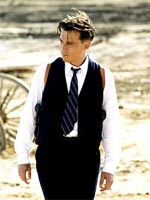 Amid the mixed critical reaction to “Public Enemies,” I’ve been surprised at how few critics have responded to the film’s contemporary resonances: the dialogue (intentional or otherwise) between the film’s portrait of the Great Depression and the bleak economic landscape of the present day.
 I was tickled by — and completely related to —
 I must admit upfront that I don’t really get the Harry Potter franchise. I don’t dislike it — not having exposed myself enough to its components to justify such a response — but I’ve never felt remotely compelled to deepen my acquaintance with the material. I’ve tackled one of my J.K. Rowling’s novels, but the lumpen functionality of her prose didn’t tempt me further.
 •
 *Historical figures quoted are adjusted to today’s dollars.

 I expect Chad may get into some of this later in today’s Sunday Cents column (unless his silly inflation observation gets in the way), but Pixar’s “Up” grossed another $6.5 million today, bringing the domestic total to $264.8 million, surpassing the $261.4 million “The Incredibles” racked up in the fall of 2004 to become the studio’s second-highest domestic grosser ever behind 2003’s “Finding Nemo.”
 I’ve had a busy week, so I’m a bit late to
 For the most part, I feel like