 Bryce Dallas Howard dominated M. Night Shyamalan’s “The Village” with a beautiful performance of intensity, ferocity, gentle sensitivity and vulnerability. She made the audience fall almost instantly in love with her character, the blind, though all-seeing Ivy.
With her flowing red locks, warm smile, and imposing gaze, the young actress appears to be to be an old soul in the body of a youth. And she has fast made a name for herself as a major rising talent.
Talking to an actress on the cusp of greatness is always interesting because in many ways the attitude she brings to interviews will define her to the media. With Howard, there is no trace of ego at all. There is, however, an excited young mother eager to discuss her role as a mom, the trials and tribulations of being a mom for the first year, etc. And, of course, there is the work.
Howard’s latest role comes in Jodi Markell’s “The Loss of the Teardrop Diamond,” from a lost screenplay written by legendary playwright Tennessee Williams. The film is the story of Fisher, a spirited young southern lady, vivacious, exciting to be around, fun loving, and perhaps in love with a young man she convinces to be her escort during the party season of the roaring 1920s.
When an incident occurs that could forever alter their relationship, she is forced to make a decision that will decide which way her life goes, and the manner of woman she will become.


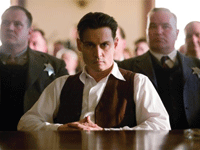
 LA Times music critic Todd Martens has posted a useful series of short interviews with the men behind some of the year’s most distinctive film scores. Indeed, it’s group of five names that isn’t too hard to imagine mirroring the year’s eventual Oscar slate:
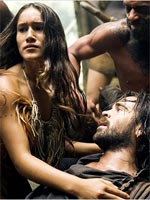 From Nick Davis’s appreciation of Terrence Malick’s
 I took Richard Corliss to task
 Any regular Oscar-watcher is familiar with the finicky rules and regulations that, year in and year out, keep some of the year’s most talked-about foreign-language titles from contending for the Oscar.
 Ben Foster became an actor I knew I would watch for a long time during an episode of the now canceled TV drama “Boston Public.”
 We’re currently in that month where precursors do their utmost to reduce a year’s worth of cinematic achievement to a small handful of oft-repeated names and titles. It’s understandable (if disappointing) when groups or committees compile these identikit lists — but when individuals (and serious critics at that) stick rigidly to the formula, it becomes a little depressing.
 While South Africa’s currently high Hollywood profile is putting smiles on the faces (and much-needed cash in the pockets) of many figures in the country’s film industry, it appears that not all local actors are as pleased.
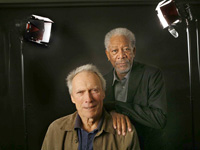
 It is true. The annual Oscar season has forged an epidemic of instant judgment and facile analysis that has become a fairly significant blight on the fraternity of film criticism.
 The progression of
 For 17 years, Matt Tyrnauer worked for Vanity Fair writing up profiles of major artists and pop culture figures such as architect Frank Gehry, producer Robert Evans, writer Bret Easton Ellis, actor Greg Kinnear, designer Tommy Hilfiger, Martha Stewart (her post-prison cover story) and legendary designer Valentino Garavani.
 A few weeks ago
