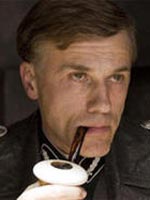
UPDATE: Jeff Wells’s unenthusiastic take lines up with what I had personally feared from reading the script:
It’s not great. It’s a Quentin chit-chat personality film in World War II dress-up. It’s arch and very confidently rendered from QT’s end, but it’s basically talk, talk, talk. Tension appears in a couple of scenes (especially the first — an interrogation of a French farmer by a German officer looking for hidden Jews) but overall story tension is fairly low. A couple of shootings occur but there’s no real action in the Michael Mann sense of the term except for the finale. No characters are subjected to tests of characters by having to make hard choices and stand up for what they believe — they all just talk their heads off, is what it comes down to.
EARLIER: Total Film’s two men on the spot are split on the film. Sam Ashurst finds his expectations happily exceeded, and seconds the good word for Christoph Watz:
This is Quentin’s best film since Jackie Brown. It might even be his best film since Pulp Fiction … QT’s magpie eye has never been sharper, swooping down on Italian cinema and plucking the very best shots, framing and music to create a deserving homage to the spaghetti westerns of my youth.
Make no mistake, this is Landa’s (Watz’s) film. He is the Blonde Jules of the movie; the stand-out character that will be on everyone’s lips when they’re walking out of the screen.
 Jane Shilling has a
 This strikes me as quite a coup for Overture Films, the young indie outfit that recently made their presence felt with a hard-won Oscar nod for “The Visitor.” In the biggest Cannes acquisition so far, Overture has
 Pedro Almodovar’s “Broken Embraces” has just had its Cannes debut, and the notices emerging so far largely supplement the good-but-not-ecstatic slate of reviews the film
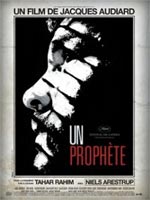 With 12 the 20 Cannes Competition titles out of the way (that’s counting the already

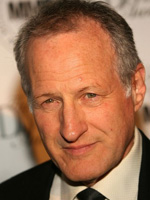 Maybe I’m slow on the uptake here, but I had no idea Johnny Depp has been circling the role of John Dillinger for 20 years now. Chalk it up to one more reason to be chomping at the bit in anticipation of this summer’s “Public Enemies” from director Michael Mann.
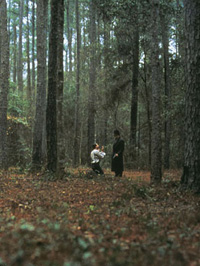 So here we go again. The 1990s were an odd decade cinematically, ripe with excellent films, ground-breaking work, innovations as well as a large number of duds. There were also films released to rave reviews that never found an audience.
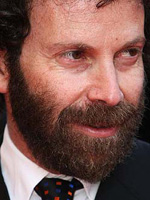 Flipping through Empire Online’s typically entertaining list of features recently, I stumbled across
 Now this is an exciting pairing. You might remember that I’m
 As I expected, Ken Loach’s “Looking For Eric,” his first Cannes entry since winning the Palme d’Or in 2006, hasn’t exactly set the Croisette alight. Critics seem to agree that the football-themed comedy is a modest charmer, but too slight to really hold its own in the competition. (Probably a welcome shift in pace, what with critics still