In Contention

Author: Guy Lodge

  • CANNES CHECK: ‘The Tree of Life’

    The director: Terrence Malick (USA)

    The talent: Do you need reminding by this point? The Competition’s most high-profile film stars Brad Pitt, Sean Penn and the soon-to-be-ubiquitous Jessica Chastain; the name I’m most pleased to see in the supporting cast, meanwhile, is Irish stalwart Fiona Shaw.

    The technical crew is, obviously, first-class: DP Emmanuel Lubezki, Oscar-nominated for his work on Malick’s “The New World,” returns, as does the director’s career-long production designer Jack Fisk. Also returning from Malick’s last feature: editors Hank Corwin and Mark Yoshikawa (along with three others, including “City of God”‘s Daniel Rezende) and Oscar-nominated costume designer Jacqueline West. New to Team Malick is the industry’s current favorite composer, Alexandre Desplat.

    (more…)

  • CANNES CHECK: ‘Polisse’

    The director: Maïwenn (France)

    The talent: Actress-turned-writer-director Maïwenn Le Besco (who prefers going by her first name, and whom US viewers might remember as the blue-tentacled soprano from “The Fifth Element”) takes the lead role herself, starring opposite French rapper-turned-actor Joeystarr. Supporting them, a host of familiar French faces, including Nicolas Duvauchelle (“White Material”), Frédéric Pierrot (“I’ve Loved You So Long”) and Louis-Do de Lencquesaing (“The Father of My Children”). Among the below-the-line names is Oscar-winning composer Stephen Warbeck (“Shakespeare in Love”).

    The pitch: Maïwenn’s third feature as director appears to be equal parts romantic drama and socially conscious tract. She stars as a photojournalist assigned to document goings-on at the Paris police department’s Juvenile Protection Unit, where she falls in love with a sensitive, unorthodox cop; the official synopsis emphasises the former’s bourgeois background, which implies class difference could play a significant role in the relationship. The synopsis also stresses the gruelling day-to-day routine of policemen in the unit, which may or may not hint at a kind of urban docudrama treatment.

    (more…)

  • CANNES CHECK: ‘Sleeping Beauty’

    [Due to my usual sloppy planning, we’re doubling up on this series with two entries a day, so as to be finished in time for next week. Catch up with all the Cannes Check posts so far here.]
    The director: Julia Leigh (Australia)

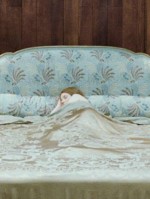
    The talent: With novelist Leigh making her directorial debut here, the name being most prominently used to sell the film is that of Leigh’s mentor Jane Campion: though not actually a producer, the 1993 Palme d’Or champ is credited as “presenting” the film. Having replaced Mia Wasikowska, rising star Emily Browning heads the cast, fresh off (and hopefully with more success than) her lead turn in “Sucker Punch,” while followers of Australian cinema should recognize a number of faces in the supporting cast — notably Rachael Blake from “Lantana.” Below the line, DP Geoffrey Simpson is a veteran of Hollywood and Australian cinema, his diverse CV ranging from “Oscar and Lucinda” to, er, “Glitter.”

    (more…)

  • CANNES CHECK: ‘The Artist’

    After the announcement of 19 Competition titles at last month’s Cannes press conference, some insiders suggested that as many as three films could be added to the lineup before the festival kicks off — and through a kind of online Chinese-whispers game, that number became accepted as truth, without any such promise from Thierry Frémaux himself.

    As it turns out, we should have been wary. Just one film was added to the Competition this afternoon, bringing the total to a nice round 20, and that’s all she wrote. Forget any lingering hopes you had for Yorgos Lanthimos or Brillante Mendoza: the latecomer to the party is “The Artist.”

    The director: Michel Hazanavicius (France)

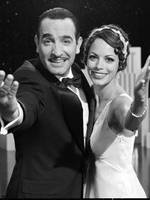
    The talent: Ever thought you’d see Missi Pyle ascending the Palais steps at a Cannes Competition premiere? Me neither, but she’s just one of the unexpected names attached to French farceur Hazanavicius’ fourth feature film.

    (more…)

  • CANNES CHECK: ‘Hanezu’

    The director: Naomi Kawase (Japan)

    The talent: Details on Kawase’s film are so thin on the ground that I can’t find so much as a DP credit. This much we know: Kawase wrote the screenplay from a novel by female Japanese novelist Masako Bando, and the film’s little-known stars are Tohta Komizu and Hako Oshima. I could add that Bando has odd views on cat murder, but that would just be filling space.

    The pitch: Announcing the selection of “Hanezu” at the press conference, festival director Thierry Frémaux described the film as one that tackles “the issue of the future of the globe, from a philosophical point of view.” The film’s cryptic official synopsis (peppered with helpful lines like “the mountains were an expression of human karma”) suggests an across-the-centuries study of Japan’s rural Hasuka region, landing upon two young protagonists in the present day, their story “representing the uncountable souls that have accumulated in this land.” I suppose it’ll add up when we see it, while the film’s environmental themes could prove timely in light of Japan’s recent misfortunes.

    (more…)

  • INTERVIEW: ‘The Double Hour’ director Giuseppe Capotondi

    With this year’s Cannes circus just a week away, now is as good a time as any to point out the strangely hobbled journey taken by so many festival films to our cinema screens. For all the concentrated media attention and occasional trophies lavished upon arthouse titles at Cannes, Sundance and the like, the festival itself is little more than a starting block in a long race for distribution — and “The Double Hour,” a wickedly splintered Italian thriller currently on limited release in the US, has been running it for a while.

    The debut feature of Giuseppe Capotondi, a director hitherto acclaimed for his commercial and music-video work, “The Double Hour” was one of the under-the-radar hits of the 2009 Venice Film Festival — the only title amid a lackluster slate of homegrown features to capture critics’ imaginations, it surprised many by landing the Best Actress award for striking Russian lead Ksenia Rappoport. Despite this success, it’s taken 18 months to reach American arthouses; in the UK, it still hovers in distribution limbo.

    The wait should have been shorter, not least because Capotondi’s film is anything but obscure in sensibility: a sharp, sexy hybrid genre piece generously bookmarked with cinematic references, it touches on heist thriller, psychological horror and romantic drama, all with equal panache.

    (more…)

  • CANNES CHECK: ‘Le Havre’

    The director: Aki Kaurismäki (Finland)

    The talent: Writer-director-producer Kaurismäki’s latest features a gaggle of names that should be familiar to his fans. Veteran French actor André Wilms, whose association with the filmmaker dates back to 1992’s “The Bohemian Life” (for which he won a European Film Award) takes the lead here, while other Kaurismäki alumni in the cast include New Wave icon Jean-Pierre Léaud and, of course, the director’s favorite actress Kati Outinen. His regular crew returns as well, notably his career-long DP Timo Salminen.

    The pitch: The Finnish auteur’s second French-language effort (and his first since 1992) is a comedy-drama set and filmed in the French port city that gives the film its title. That the name also translates as “the haven” is no coincidence: the film tells the story of an elderly boot polisher (Wilms) who takes an African refugee child under his wing. The premise seemingly lends itself to Kaurismäki’s usual brand of melancholy whimsy, though perhaps with a touch more sentiment than usual.

    (more…)

  • REVIEW: “Thor” (***)

    As superheroes go—and go they do, with alarming frequency, at the cape-wearers’ convention that the multiplex has become in recent years—Thor, or at least the Marvel-authored Artist Formerly Known As Norse God Thor, is more super than most. Where most beloved superheroes are humans (at least ostensibly so) who grow into their superhuman powers as a kind of parallel puberty, Thor needn’t waste time on any such learning curve.

    He is, to reappropriate a quote from “Almost Famous,” a Golden God—quite literally golden as played by aggressively blond Australian up-and-comer Chris Hemsworth—and as such, preternatural strength and ability are things to which he feels entitled, not enslaved. Marvel’s Thor may be as boyish as the gangly Peter Parker or the gizmo-rapt Bruce Wayne, but it’s a boyishness of lifelong petulance rather than golly-gee self-awe; he may be better than his superhero brethren, but he’s also harder to know.

    That obstacle of relatability is both a debit and a distinguishing asset in Kenneth Branagh’s poppy, spirited addition to the Marvel adaptation gallery, and something that ultimately cleaves the film in two. An odd couple of films jostles for space in Branagh’s surprisingly trim 114-minute package: one a dourly earnest celestial battle epic set in Thor’s mythical, CGI-built home realm of Asgard, the other a sweetly goofy alien comedy set in the decidedly unmagical realm of New Mexico.

    (more…)

  • CANNES CHECK: ‘The Kid With a Bike’

    The directors: Jean-Pierre and Luc Dardenne (Belgium)

    The talent: Dardennes regulars Jérémie Renier and Olivier Gourmet (who won Best Actor at Cannes for the brothers’ 2002 film “The Son”) return in supporting roles, but “The Kid With a Bike” is headlined by perhaps the most established star they’ve yet worked with: Cécile De France, the Belgian actress mainstream audiences will remember from her recent turn in Clint Eastwood’s “Hereafter.” Still, the directors’ proven knack with untested actors stands to continue: starring opposite De France is pre-teen newcomer Thomas Doret. Meanwhile, the Dardennes’ usual crew, including DP Alain Marcoen, is once more on board.

    The pitch: Abandoned by his father in a children’s home, 11 year-old Cyril (Doret) escapes and returns to an empty apartment; pursued by social workers, he seeks refuge in the arms of a stranger (De France) in a doctor’s waiting room. The synopsis and recently-released trailer suggest the blend of humanism and hard realism we’re accustomed to from the Belgian brothers, though perhaps less grim than some of their work. (The film’s reasonably upbeat shooting title was “Set Me Free!”)

    (more…)

  • ‘Melancholia’ poster

    One of the mostly eagerly awaited films of next month’s Cannes Film Festival, Lars von Trier’s latest has just unveiled an international one-sheet — and while it’s less than illuminating, employing only a single (lovely) still we’ve already seen amid an ocean of white space, I’m happy for this one to play coy. Meanwhile, I suspect the wedding-invitation look is intentional. (On a side note, I’m amused by the number of outlets already labelling the film “controversial” before we’ve even laid on eyes on it. At this point, von Trier could do a shot-for-shot remake of “The King’s Speech” and still get the fainthearts quivering ahead of time.) Full poster, courtesy of the film’s website, after the cut.

    (more…)

  • CANNES CHECK: ‘Once Upon a Time in Anatolia’

    The director: Nuri Bilge Ceylan (Turkey)

    The talent: By this point in his career, auteur-photographer Ceylan is a self-standing arthouse brand — which is just as well, since the other names involved are unlikely to ring many bells with non-Turkish viewers. Leading man Yilmaz Erdoğan, a 43 year-old actor-writer-director, is a hugely popular figure in his home country, but his domestic hits haven’t crossed over. IMDb claims Ceylan wrote the film with his wife Ebru, as was the case with 2008’s “Three Monkeys”; other sources give him sole script credit. Cinematographer Gökhan Tiryaki, who shot Ceylan’s last two features, returns — arguably the more important concern, given the director’s reputation as a visual stylist.

    The pitch: Details on this one are closely guarded — even the usually long-winded Thierry Frémaux had nothing to add about the film at the Competition press conference. This much I have gleaned: Ceylan’s most expansive production yet, the 150-minute film covers a night in the lives of a doctor and a prosecutor on the harsh terrain of the Anatolia steppe. (Suffice to say the title’s promise of a Turkish spaghetti western is unlikely to be fulfilled.)

    (more…)

  • CANNES CHECK: ‘Footnote’

    (Thanks to Israeli film critic Yonatan Doron for chipping in with extra information about this title. If any readers think they can help with further entries in this series, do get in touch.)

    The director: Joseph Cedar (Israel)

    The talent: Good news for fans of 2001’s wonderful arthouse hit “Late Marriage”: that film’s leading man, Lior Ashkenazi, headlines here. Other names will be less familiar to those outside Israel: Ashkenazi’s older co-lead, Shlomo Bar-Abba, is famed in his homeland as an eccentric TV comedian, but hasn’t appeared in a film in 22 years. Cedar himself, of course, carries his own level of cachet — more on that below.

    The pitch: In the press conference unveiling this year’s Cannes slate, festival director Thierry Frémaux described “Footnote” as one of the Competition’s more light-hearted entries, though there’s conflicting word on whether or not we should expect an outright comedy.

    (more…)

  • CANNES CHECK: ‘Pater’

    (Apologies for the break this feature took over the Easter weekend — blame the holiday spirit and the London sunshine.)

    The director: Alain Cavalier (France)

    The talent: The internet is currently not rife with details on this entry, but we do know that the film is a two-hander of sorts, headlined by the veteran director himself and sturdy 51 year-old French star Vincent Lindon (seen most recently in last year’s “Mademoiselle Chambon”), both seemingly appearing as themselves. Producer Michel Seydoux, who has worked with Cavalier for the past decade, has a notable résumé, including “Cyrano de Bergerac,” “Burnt by the Sun” and last year’s “Leaving.”

    The pitch: In the last decade, Cavalier has shifted from narrative cinema to more self-reflexive video diaries straddling drama and documentary. His latest, pitched as a comedy, appears to be a further excursion in that vein, though the synopsis offered by French distributor Pathé is otherwise cryptic, promising viewers a glimpse of the director and his leading man “at once in real life and in the fiction they have invented together.” (My translation.)

    (more…)

  • CANNES CHECK: ‘House of Tolerance’

    The director: Bertrand Bonello (France)
    The talent: Unsurprisingly for a brothel-set narrative, the film is heavy on rising female stars, including Hafsia Herzi (“The Secret of the Grain”) and Italian ingenue Jasmine Trinca (“The Son’s Room”); their more senior co-star, Noémie Lvovsky, is arguably more of an institution in France than on the international arthouse scene. Two male cast members also prompt interest: Louis-Do DeLencquesaing, so excellent in last year’s “The Father of My Children,” and the more unlikely figure of “Of Gods and Men” director Xavier Beauvois.

    The pitch: An evidently sumptuous period affair, Bonello’s film (also known by its French title “L’apollonide”) examines the goings-on in a Paris brothel at the beginning of the 20th century. After one prostitute is brutally disfigured for life by a client, the other women of the house shut themselves off from the outside world; the film tracks the rivalries and camaraderie of their isolated day-to-day existence. Bonello has been something of a controversy-monger with sexually frank films like “The Pornographer” and “Tiresia”; expect that trend to continue with his latest.

    (more…)

  • Tim Hetherington (1970-2011)

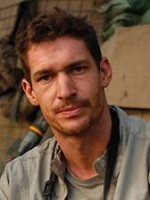
    This is terribly sad news. Tim Hetherington, the gifted British photojournalist who justly shared a Best Documentary Feature Oscar nomination with Sebastian Junger earlier this year for their joint debut “Restrepo,” has died on the front line in Misrata, Libya, where he was documenting the conflict. Also killed was his colleague, Pulitzer Prize-winning photographer Chris Hondros.

    I haven’t adequate words to respond to this. Hetherington, Hondros and his ilk are braver, better men than the rest of us: they risk their lives so that the rest of the world can see what would otherwise be unimaginable. “Restrepo,” which both Kris and I listed as one of 2010’s finest, is a vivid portrayal of combat unprecedented in its sensory immediacy, the result of many months spent embedded in a US Army unit in Afghanistan’s Korengal Valley.

    Hetherington broke his leg on the assignment; would that the injury remained the biggest misfortune of his career. (On the same assignment, he took the now-famous shot posted below, for which he won the World Press Photo of the Year award in 2007.)

    (more…)

  • CANNES CHECK: ‘The Skin I Live In’

    [This is the first in a daily series of posts, wherein I size up the 19 films–pending further additions–in the Competition at next month’s Cannes Film Festival. We’re running through them alphabetically, by director, so it just happens that we start with a biggie: the length of the entries will vary according to the availability of information.]
    The director: Pedro Almodóvar

    The talent: The star, as you surely know by now, is Antonio Banderas, a one-time Almodóvar regular who hasn’t collaborated with the director in 21 years. When Penelope Cruz proved unavailable, Spanish star Elena Anaya (who previously appeared in “Talk to Her”) stepped into the female lead. Meanwhile, the names of cinematographer José Luis Alcaine, composer Alberto Iglesias and actress Marisa Paredes will all be familiar to the Almodóvar faithful.

    (more…)

  • Cannes jury includes Law, Thurman, Assayas

    [NOTE: We’re kicking off our daily Cannes preview series later today — stay tuned.]

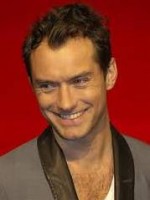
    We knew months ago that Robert De Niro was presiding over this year’s Cannes jury, but the eight people joining him on the bench were finally named yesterday. Red-carpet stargazers should be pretty happy with this year’s crop: joining De Niro from the Hollywood side of things are Jude Law and Uma Thurman. (Perhaps festival director Thierry Frémaux is as big a fan of “Gattaca” as we are.)

    Filling the big-name auteur slot on the panel is Olivier Assayas, a three-time Competition entrant who some might say has earned jury president status. Other Cannes alumni include Chadian filmmaker Mahamat-Saleh Haroun, who took the Jury Prize at last year’s festival for “A Screaming Man,” and Hong Kong action merchant Johnnie To, twice a Palme d’Or contender.

    (more…)

  • First still of Sean Penn in ‘This Must Be the Place’

    Or “Bigger, Better, Faster, More: The Linda Perry Story.” Paolo Sorrentino’s latest, due to compete for the Palme d’Or at Cannes next month, stars the two-time Oscar champ as a rock star turned Nazi hunter. Bernardo Bertolucci (due to receive an honorary Palme at the fest, by the by) reportedly describes the film (if not Penn’s Robert Smith wig) as “quite something.”

    [Photo: Premier PR]