 I didn’t get a chance to mention it during our recent hiatus, but last Wednesday I saw a film that stands, for me, head and shoulders above any other 2009 release so far — one I can easily imagine still coming into play for my own Best of 2009 honours come December. A heady artistic breakthrough from a filmmaker I had never previously rated, with an immaculate cast of rising talent, it’s truly significant, surprising cinema.
There’s a catch, however. It’s not showing at a theatre near you — or any other, for that matter. For the film I’m talking about is “Nineteen Seventy-Four,” the first part of Channel 4’s ambitious, much-hyped TV endeavour “Red Riding” — a trilogy of self-standing films chronicling the infamous Yorkshire Ripper murders of the 1970s and early 1980s.
Deftly adapted by Tony Grisoni (“In This World,” “Fear and Loathing in Las Vegas”) from a quartet of novels by David Peace (a brilliant writer occasionally labelled, not without justification, as the UK’s answer to James Ellroy — he’s also behind the upcoming “Damned United”), the films examine both the social and official levels of corruption stirred by the crimes over an entire decade, but each has its own distinct thematic and cinematic character.
I was first alerted to the project when interviewing James Marsh last year — the Oscar-winning “Man on Wire” filmmaker helmed “Nineteen Eighty,” the second instalment of the trilogy. Marsh’s contribution is a sober, intelligent piece of procedural drama, enlivened by a terrific lead turn from Paddy Considine, but it’s really “Nineteen Seventy-Four,” the more oblique, mood-driven piece, that has stuck with me these past two weeks.
 That’s how Pedro Almodovar describes “Broken Embraces,” which is now mere days from opening in Spain. Reviews should arrive soon enough, but for now,
 We have yet to see how Joe Wright’s first foray into contemporary American cinema turned out, though the demotion of “The Soloist” from prime 2008 awards-bait to quiet 2009 spring release has had the sceptics whispering for some time now.
 After taking a backseat to younger, scrappier film industries in recent years, 2008 marked a defiant resumption of the throne for a number of traditional world-cinema stalwarts – Italy was the talk of May’s Cannes festival, while France churned out one masterwork after the other. Joining them at the top, meanwhile, was Sweden, with a pair of exquisite, acclaimed titles that otherwise couldn’t be more diametrically opposed.
 Somewhere out there, wherever such souls reside, Anne of Great Britain must be wondering what she had to do during her reign to merit her own prettily mounted biopic. She may be the last relatively untapped figure in British heritage cinema’s well-worn library of queenly narratives, but she has once more been passed over for the privilege of fronting the latest middlebrow, true-life royal drama, fast becoming an annual fixture on the UK film calendar.
 Last week’s server switch-induced hiatus prevented me from commenting on the César Awards — perhaps the ceremony I was eyeing most keenly this year given the prominence of my personal favourites in their rich pool of
 I’m sure many of you by now have seen the gorgeous European poster artwork for Pedro Almodóvar’s upcoming “Broken Embraces,” in all its lurid Warholian variations. (If you haven’t, Nat Rogers has the lot
 In the largely good-natured responses to a largely good-natured Oscar ceremony, only one result has been greeted with any real rancour from critics or pundits –- the “upset” (
 If, like yours truly, you’re one of those who believe that British auteur Mike Leigh was robbed on Sunday night, you’ll thoroughly enjoy his
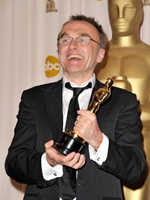 Two days after the fact, in the comedown after six months of relentless Oscar hype, and the beautiful, surreal nature of what happened on Sunday is starting to sink in. Sure, “Slumdog Millionaire” was the red-hot favorite. Sure, it had won everything else going and had been ingeniously campaigned by one of the savviest studios in the business.
 (Expanded thoughts and reasonings on yesterday’s list of predictions.)