 Year after year, the original song category tends to prove that something is broken in the music branch of the Academy. But to be fair, that’s a bit of a half-truth overall, as the original score field has begun to loosen up a bit and allow for newbie talent to get a foot in the door as of late.
Still, when it comes to voting on the songs with a seemingly arbitrary system, not to mention a rash of rules that feel made up along the way (and overtly subjective at that), the branch certainly makes a given tune earn it with one hell of an uphill climb along the way. That having been said, the category nailed down a decent slate of nominees this season.
The nominees are:
“Almost There” from “The Princess and the Frog” (Randy Newman)
“Down in New Orleans” from “The Princess and the Frog” (Randy Newman)
“Loin de Paname” from “Paris 36” (Reinhardt Wagner; Frank Thomas)
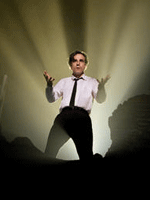
“Take It All” from “Nine” (Maury Yeston)
“The Weary Kind (Theme from Crazy Heart)” from “Crazy Heart” (T Bone Burnett and Ryan Bingham)
 This year’s Best Supporting Actress race made for, in many ways, one of the most wide open categories of the major nominees. While three of the contenders seemed fairly locked in place, the other two slots appeared up for grabs, and there was no shortage of deserving contenders waiting to fill out the field.
 So

 The Best Original Song race gets an awful lot of stick for its wonky voting system and sometimes questionable musical judgment — problems that have lately converged to scupper the hopes of many well-regarded contenders, with last year’s snub of Bruce Springsteen’s

 Along with the WGA, the American Society of Cinematographers will also be announcing nominees Monday. Guesses as to which way they’ll go?
 The most striking thing about the slate of nominees unveiled this morning by the Producers Guild of America is a heavy genre slant: all three of 2009’s acclaimed science-fiction mega-hits made the cut in the top category.
 *All historical figures cited are adjusted to
 Welcome to the first installment of Oscar Talk of 2010 and, indeed, of the new decade. Oscar Talk is your weekly kudocast between yours truly and Anne Thompson of

 In the last week or two, the buzz for Rob Marshall’s

 “It might as well rain until September,” wrote Carole King in her jaunty 1960s ditty of that title, an ode to summertime breakup blues that may as well have been composed for the autumnally-activated awards season. Swap September for December, and you have an apt description of the approach many studios and Oscar-watchers alike take to the race — a short-memory mentality that I argued against in a column almost

 Oscar ballots are being mailed to AMPAS members today. So now is the time to pay attention to the buzz, as most ballots are returned within the first couple of weeks (which says everything you need to know about how much time and care is put into the process by voters).