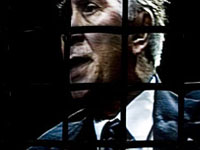
As Ron Howard’s “Frost/Nixon” continues to step up during the film awards season this year, it might be worth noting that Liberation Entertainment has gone to the trouble of putting together a hell of a study guide: “Frost/Nixon: The Original Watergate Interviews,” currently available on DVD.
Patching together the Watergate portion of Sir David Frost’s legendary four-part interview session with the former Commander-in-Chief, the DVD captures a moment in time that was of course expanded to an edge-of-your-seat drama by playwright Peter Morgan two years ago.
One thing that I paid attention to, seeing as I’ve never taken the time to view these interviews in the past (and certainly wasn’t around for their original airing), was Nixon’s unmitigated manipulation, reminding me of Robert McNamara’s peculiar obssession with control in Errol Morris’ sublime “The Fog of War” from 2003. It also adds a whole other perspective to Frank Langella’s performance on stage and screen, clearly an embodiment of Nixon the idea rather than Nixon the man (because a straight impersonation of the man’s disposition from the interviews would have been perhaps overly awkward and flat).
The piece runs roughly an hour and a half, with introductory and intermission commentary from Frost himself. There is also, of course, Frost’s book, “Frost/Nixon: Behind the Scenes of the Nixon Interviews,” if you really want to be completest.
Here’s a trailer for the DVD:
 The American Film Institute has unveiled its schizophrenic list of the top 10 films of the year, and it’s a strangely delightful mixture of populist choices and more fringe contenders.
 With two of the major critics awards won, actor Sean Penn seems to be headed for his second Academy Award for Best Actor for his brilliant work in “Milk.”
 Anthony Breznican’s USA Today
 Over at Awards Daily, Sasha Stone has taken it upon herself to
 I don’t know why exactly, but the “roundtable” format of interviews that crops up a lot during awards season often strikes me as rather less fascinating than it’s meant to be. Unless the panel is very smartly chosen, I find the discussion tends to veer towards back-patting and faintly smug in-jokery, rather than stimulating argument between widely differing creative forces.
 Music is one of few of the “tech” awards cited by the Academy that tends to result in passionate discussions among moviegoers, including non-cinephiles. Awarded in the Best Original Score category, the film music composer has one of the most difficult and lonely jobs in filmmaking. Almost always arriving at the end of the editing stage, and typically the most expendable element of the mixture, he or she has to fashion music appropriate to the mood and, hopefully, serve as a nice commentary for the on-screen goings-on.
 The day-to-day deal signings and rumored particulars that end up in the trades are generally no interest to me. I like to wait until we get a little further down the road, but this project really caught my attention.
 “Norbit.” “Click.” “The Time Machine.” “Life.” What do all of these dreadful films have in common? They are Oscar nominees because of the category of Best Makeup!

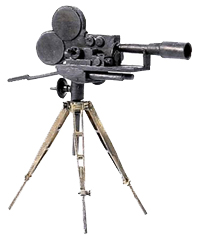 No matter how good the storyline, plot, acting, photography and other elements of a film may be, any poorly edited film will be difficult to watch, understand and enjoy. An editor has the task of not only finding the appropriate length of a film but also putting together scenes so they flow coherently, both visually and story-wise.