In Contention

Tag: David Fincher

  • THE LONG SHOT: When you’re strange

    (Updated predictions available here.)

    I shan’t often find room for Gaspar Noé’s name in a space ostensibly dedicated to the Oscar race, so bear with me if this seems an unlikely opening gambit, but inspiration for this week’s column began with a conversation about his fluorescent, drug-addled ghost story “Enter the Void.”

    A friend had recently caught up with it, and found herself disappointed: having been promised a psychotropic headfuck, she instead found something more sentimental and less questioning than his previous work. “At this rate,” she muttered aggrievedly, “he’s about 10 years away from a bloody Oscar nomination.”

    That’s a flip exaggeration, of course, but there’s a kernel of truth in it: the Academy likes its enfants terribles most when they’ve passed the teething stage and begin to play nice — or at least safe. There’s a long and illustrious list of adventurous, iconoclastic directors who scored with AMPAS either by putting a leash on their wilder creative instincts or making sly concessions to the mainstream.


    (more…)

  • 11/12 OSCARWEB ROUND-UP: ‘Burlesque’ brouhaha, ‘How Do You Know’ concedes cuts for PG-13, box office and Oscar

    • Anthony D’Alessandro on how box office impacts Oscar players. [Thompson on Hollywood]

    • Kim Masters writes up the juicy story of on-set fighting that marked the production of “Burlesque.” [Hollywood Reporter]

    • Christy Grosz on awards season buzz momentum built on the festival circuit. [The Envelope]

    (more…)

  • Zadie Smith on ‘The Social Network’

    It’s fair to say that there aren’t many movies in 2010 — much less in the awards race — that have earned the distinguished attention of The New York Review of Books, let alone a 5000-word essay by a superstar of contemporary literature. But such is the curious magnetism of “The Social Network,” whose queasy social currency has now been nailed, better than any film critic has managed thus far, by New York-based British writer Zadie Smith.

    I’ve always thought Smith a better essayist than a novelist, and her quasi-review of David Fincher’s film is a tour-de-force, using Aaron Sorkin’s script (the verbality of which she likens to “His Girl Friday”-era comedy) as the starting point for a stinging but compassionate address to ‘Generation Facebook,’ its communicative lapses and its identity insecurities. She likes the film quite a bit, but that’s almost beside the point: it’s more of a compliment that she felt it merited this level of scrutiny in a publication dedicated to another medium entirely.

    (more…)

  • 11/4 OSCARWEB ROUND-UP: Sit-down with Swinton, ‘Megamind’ using social gaming, Elise on ‘For Colored Girls’

    • Pete Hammond talks “I Am Love” with dark horse Best Actress contender Tilda Swinton. [Deadline]

    • How DreamWorks Animation is using social gaming to boost “Megamind.” [Hollywood Reporter]

    • Meet the characters of “Morning Glory.” [MakingOf]

    (more…)

  • WEEKLY WRAP: Fincher reflection, ‘Way Back’ in, ‘Valentine’ blues

    • As robust box-office returns for “The Social Network” amplified its Oscar buzz, this week’s Off the Carpet column warned that the awards race is “a marathon, not a sprint.”

    • Keeping the conversation on David Fincher, we counted down the greatest technical achievements in his filmmography…

    • …and invited you to name your favorite Fincher film in our new poll.

    • Oscar-watchers got a new title to play with this week, as it was revealed that Peter Weir’s “The Way Back” will qualify for the 2010 awards after all.

    (more…)

  • Metacritic scrutinizes the ‘Social Network’ critics

    Confession: since their utterly senseless redesign, Metacritic has gone from a daily (many times daily, often) stop on my web rounds to a place I barely visit. “It’s like walking through my old high school,” wrote my friend Nick, echoing my thoughts precisely. “I used to live here, now I can’t even find the bathroom.”
    It’s all for the best, probably: the less brain space I devote to the numerical quantification of critical opinion that, for some folks, now seems to stand in the place of critical opinion itself, the better for my sanity. I know which critics I like and/or which ones matter, and I can just as easily visit them in their own online living rooms.

    That said, I remain fascinated by how the advent of review-scoring has made the media (the new media, in particular) unprecedentedly obsessed with the role of critics — at a time when their opinion seemingly couldn’t have less influence on the paying public. This year alone, we’ve already seen flare-ups on the blogosphere over the critics who dared to sully the Rotten Tomatoes scores for “Toy Story 3” or “Inception”; the notoriously hard-to-please Armond White has become the critic that everyone claims not to care about, yet the arrival of one of his against-consensus pans is now greeted with mass re-Tweeting.

    (more…)

  • THE LISTS: Top 10 below-the-line elements of Fincher films

    With “The Social Network” hitting theaters this weekend, audiences are reminded once again of director David Fincher’s skill and vision as a craftsman. The eight films he has assembled throughout an 18-year career in feature filmmaking have been dazzling showcases for below-the-line talent.

    As you know, we make an effort to keep the spotlight on these elements of the filmmaking process. Art direction, cinematography, costume design, film editing, makeup, music, sound and visual effects are all key ingredients, and Fincher has always been a director consumed by their implementation in his work.

    The seeds of this, of course, were planted early on in his commercial and music video career. They seemed to reach a full apex two years ago with the period and effects detail of “The Curious Case of Benjamin Button” (racking up eight of the 11 total nominations Fincher’s films have amassed in these arenas), but each film in his portfolio sports below-the-line creativity and artistry worth singling out.

    So it seemed to me a great opportunity to dedicate an installment of The Lists to the best craft elements of Fincher’s filmography to date. Let’s dive in…

    (more…)

  • The ‘Social Network’ generation split

    Last week, I mused on the possibility of “The Social Network”‘s highly youth-oriented narrative proving a bit of an obstacle to older audiences, Academy members among them. So far, it seems not to be a problem: judging on reactions I’ve skimmed and conversations I’ve had, interest in the film spans a broad demographic range, as the media saturation has ensured even people who wouldn’t dream of opening a Facebook account are aware of its existence.

    Nevertheless, a couple of articles published over the weekend suggest that the film does still expose a generational divide — just not in simple “will see/won’t see” terms. Rather, as the NYT’s David Carr writes, it’s the way audiences respond to the film and its characters that is likely to differ across age groups, with some seeing it as a cautionary tale and others as a success story:

    “When you talk to people afterward, it was as if they were seeing two different films,” said Scott Rudin, one of the producers. “The older audiences see Zuckerberg as a tragic figure who comes out of the film with less of himself than when he went in, while young people see him as completely enhanced, a rock star, who did what he needed to do to protect the thing that he had created.”

    (more…)

  • POLL: What is your favorite David Fincher film?

    As mentioned over the weekend, I’ll have a David Fincher-themed list coming your way tomorrow.  In the meantime, however, I thought I’d update the poll with a new query.

    Fincher has offered up eight feature films in the last 18 years.  It’s a healthy portfolio and, I think it’s fair to say, a singular one.  I’ve had a blast digging back into his work over the past week or so but I don’t even think I could answer this question fully at the moment.  Still a few more re-viewings to go.

    Now that “The Social Network” is in theaters, I’ll just put it out to you: What’s your favorite film from the director?  Check the left sidebar and pencil in your vote.  And feel free to use this space to discuss your pick and others’.

    Be sure to check back some time tomorrow for that list, our first in, jeez, three months?  We really should knock the dust off that feature.

  • Fincher music video memory lane

    I’m thinking about kicking the tires on our Lists series and offering something up Tuesday in honor of the director of the hour, David Fincher. I’ve been digging back into all of his work looking for an idea (I think I settled on one), and part of the digging was giving his music videos another look. I figured I’d offer a bunch of them up here. My favorite below, tons more after the jump.

    (more…)

  • 9/29 OSCARWEB ROUND-UP: Franco’s poem picks, Bender remembers Menke, Reznor and Ross at a steal

    • James Franco, also starring in “Howl” this year, selects his favorite poems. [Vulture]

    • In remembering film editor Sally Menke, Lawrence Bender discusses the “Hi, Sally” Tarantino tradition. [Arts Beat]

    • Anne Thompson talks, well, a whole bunch of stuff with a busy Guillermo Del Toro. [Thompson on Hollywood]

    (more…)

  • 9/22 OSCARWEB ROUND-UP: Carrey’s Oscar potential, ‘Inception’ with a joystick, demanding to see ‘Beaver’

    • Sasha Stone ponders Oscar possibilities for Jim Carrey in “I Love You Phillip Morris” as the hate-mongering right looks to block the repeal of Don’t Ask, Don’t Tell. [Awards Daily]

    • Anthony Michael Hall, Judd Nelson, Molly Ringwald and Ally Sheedy reunite to celebrate 25 years of “The Breakfast Club.”  Come on, Emilio.  Too cool for school?  (See what I did there?) [People]

    • Christopher Nolan briefly mentions that he’d like to develop “Inception” as a video game (and if you have a film-related news feed then you’ve already seen plenty of webmasters climbing over themselves to re-report this). [Variety]

    (more…)

  • Fincher’s ‘Social Network’ nails human frailty

    The best films are rarely about just one thing, but rather that one thing as reflected through a variety of narrative prisms.  And there is something to be said about a film that manages to distill an era while profoundly conveying a character study within.

    David Fincher’s “The Social Network” may be the quintessential story of young Machiavellian entrepreneurship in an age of streamlined communication, but it is also a story of the social disconnect that can be as galvanizing as any other source of ambition…for better or worse.  The Mark Zuckerberg of Fincher’s film uses the sting of that disconnect to spark a fire of creativity, and the film very much concerns itself with the gauntlet of his motivation.  (The New Yorker’s profile, culled from rare extensive interviews with the 26-year-old billionaire, is a wonderful primer for the dramatization.)

    In some sense, the film could be viewed as a distant cousin of Darren Aronofsky’s “Black Swan,” both presenting protagonists flawed by their own aggressive drive.  But while Nina is a tragic figure of self-destruction, Zuckerberg is a tragic figure of self-alienation.

    (more…)

  • Defriending ‘The Social Network’

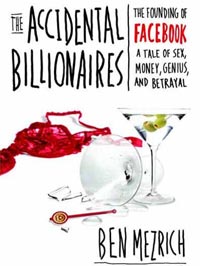
    With David Fincher’s “The Social Network” already accruing positive buzz ahead of its New York Film Festival premiere next month, its handlers would do well to pre-empt the inevitable pushback over matters of factual accuracy — complaints that have already dogged the film’s sloppy source book, Ben Mezrich’s “The Accidental Billionaires” (discussed at length in Page to Screen here).

    No one will (or should) be seeing “The Social Network” for an exhaustive journalistic essay on the origins of Facebook. Rather, what we’re hoping for from writer Aaron Sorkin is a tangy interpretation of the facts that reaches for broader truths about the social-networking generation; dramatic flexibility, then, is the order of the day. Needless to say, the powers behind Facebook, including founder (and “Social Network” protagonist) Mark Zuckerberg, don’t quite see things that way. This recent New York Times piece goes into the friction between them and the film’s producers.

    (more…)

  • Foundas on ‘Social Network’: “Big, brash and brilliant.”

    If you’ve read the script for Aaron Sorkin’s “The Social Network” then you know it’s powerful stuff waiting to be unleashed on the season.  Well, Scott Foundas is first out of the gate with an extremely early critique of the film, and it’s all thumbs up from Brett Ratner’s best bud.  To wit:
    David Fincher’s The Social Network is big and brash and brilliant…It is nominally the story of the founding of Facebook, yes, and how something that began among friends quickly descended into acrimony and litigation once billions of dollars were at stake. But just as All the President’s Men—a seminal film for Fincher and a huge influence on his Zodiac—was less interested by the Watergate case than by its zeitgeist-altering ripples, so too is The Social Network devoted to larger patterns of meaning. It is a movie that sees how any social microcosm, if viewed from the proper angle, is no different from another—thus the seemingly hermetic codes of Harvard University become the foundation for a global online community that is itself but a reflection of the all-encompassing high-school cafeteria from which we can never escape. And it owes something to The Great Gatsby, too, in its portrait of a self-made outsider marking his territory in the WASP jungle.

    To sayt he least, in most conversations I’m having leading up to the awards season, Fincher’s film is perhaps the most anticipated.  If even half of these sentiments are fair, then I think it’s safe to say a bona fide contender is comin’ round the bend.  Read the rest of Foundas’s thoughts at Film Society of Lincoln Center.

    “The Social Network” opens the New York Film Festival September 24.

  • PAGE TO SCREEN: “The Accidental Billionaires” by Ben Mezrich

    (NOTE: This week’s Page to Screen text is the source material for David Fincher’s upcoming film “The Social Network.”)

    If, with its short, sketchy chapters and preponderance of surface-level description, Ben Mezrich’s “The Accidental Billionaires” resembles less a work of literary non-fiction than a treatment for a more substantially developed screenplay, that’s probably precisely what the author intended: after all, the movie rights to Mezrich’s thin, gossipy account of the birth of Facebook were snapped up well before he’d even finished writing it.

    Mezrich has turned this trick before: his 2003 bestseller “Bringing Down the House,” the story of a group of Massachusetts Institute of Technology students who managed to swindle millions out of top Las Vegas casinos, was recently turned into a reasonably profitable (if rapidly forgotten) film, “21.” Mezrich’s work certainly commands more respect from Hollywood than it does from literary critics.

    A former sci-fi author, Mezrich delights in fudging (and often blatantly fabricating) the facts in his non-fiction work: a disclaimer at the start of “The Accidental Billionaires” acknowledges that numerous “conversations and scenes [have been] recreated and compressed,” verbs that sound decidedly euphemistic by the time the writer is casually describing the interior thoughts of people he admits to never having met. (Mark Zuckerberg, the young Facebook founder at the center of Mezrich’s story, refused any meetings or interviews with the author, giving this already skimpily researched volume a distinctly lopsided perspective.)

    (more…)

  • Fincher/Sorkin = Lumet/Chayefsky?

    Steep, STEEP praise for David Fincher and Aaron Sorkin, director and writer of the upcoming “The Social Network.” The praise comes from New York Film Festival director Richard Pena in announcing the film as the opener of this year’s fest.

    From Thompson on Hollywood:

    [The film] powerfully captures the spirit of its time…David Fincher and Aaron Sorkin are a director/writer team, like Lumet and Chayefsky before them, that make this movie not only of the moment, but reflective of larger cultural issues as well, and confirm their position at forefront of contemporary cinema.

    Now, I’m not saying Fincher and Sorkin aren’t worthy of that.  I haven’t seen “The Social Network,” after all.  But I sure wouldn’t want to be in their shoes having to rise to the level of that compliment.  But then again, I consider “Network” to be the best screenplay ever written.  Hey, how about that?  “The Social NETWORK.”

    Anyway, the new trailer, also from Thompson, after the jump.

    (more…)