
In Contention

Tag: Cannes

  • ‘Parnassus’ causes much head-scratching at Cannes

    Heath Ledger in The Imaginarium of Doctor ParnassusIt was always a safe bet that, in spite of the curiosity value of Heath Ledger’s final screen performance, Terry Gilliam’s “The Imaginarium of Doctor Parnassus” wasn’t cut out to be a crowdpleaser. It’s been over a decade since the defiantly eccentric filmmaker made anything approaching the term “accessible,” much less something widely liked. And the apparent opacity of his latest, beginning with that unwieldy title, didn’t suggest he was going any easier on his audience, or himself.

    So it’s no surprise to report that the reviews thus far are mixed at best, with some vocal detractors already apparent. (Catherine Shoard at the Guardian describes it as “a horrible mix of reheated Munchhausen and stale Faustian mumbo-jumbo.) Still, several critics have salvaged some value from the project, and are unexpectedly supportive in their reviews.

    Todd McCarthy asserts that Gilliam has made “a pretty good thing out of a very bad situation,” commending him for his “visual panache” and “considerable discipline,” but is careful to defuse any exaggerated expectations of Ledger’s work:

    It’s another “Alice in Wonderland”-like playground for Gilliam, and while all the specific action may not be entirely coherent or exciting, it’s always visually stimulating and allows the three incarnations of Tony to host assorted guests.

    Tony is not a demanding dramatic role, nor a particularly flamboyant one like the Joker, so this can’t legitimately be described as one Ledger’s most striking performances. Like most of the other actors here, he’s antic and frantic, dirty and sweaty, as the principals flail around trying to cope with their desperate straits.

    (more…)

  • Stronger stomachs

    Charlotte Gainsbourg in AntichristIt may be just a coincidence, but I’ve noticed that, for all the media kerfuffle over its maker’s supposed “woman-hating” agenda, a number of the most level-headed, inquisitive responses to “Antichrist” seems to be coming from female writers. Put it down to thicker skins, stronger stomachs, or nothing whatsoever — I’m just saying. Manohla Dargis, for one, isn’t a great fan of the film, but seems a lot more amused than shocked:

    At one point one of the characters ominously refers to nature as Satan’s playground or some such, which sounds like a line from Woody Allen by way of Ingmar Bergman. By the time the animatronic fox warns the understandably baffled-looking Mr. Dafoe that “chaos reigns,” it’s clear we’re not in Kansas anymore or even a serious movie. Chaos reigns, if not narrative sense, but I would be lying if I didn’t admit that this impossible movie kept me hooked from start to finish.

    Anne Thompson, meanwhile, defends the film, adding an interesting corrective to the plentiful “misogynist” interpretations:

    The movie does hang together. He knows where he’s going. It’s just that much like Ken Russell in The Devils, Trier’s taking you to horrifying, hallucinatory places where anything can happen. (Hieronymous Bosch comes to mind.) And where most people don’t want to go. Accused of misogyny, the film portrays a woman who is man’s worst nightmare, the embodiment of their anxiety about women.

    (more…)

  • Strong reviews for Haneke’s ‘White Ribbon’

    Michael Haneke's The White RibbonCould this year bring a close to Michael Haneke’s bridesmaid’s run at the Cannes Film Festival? Haneke has come within touching distance of the Palme d’Or before, taking the Grand Prix in 2001 for “The Piano Teacher” and Best Director in 2005 for “Caché,” but the big prize has so far eluded him.

    Now Haneke’s latest, “The White Ribbon,” has screened to largely admiring reviews from the Cannes press. The film, a black-and-white, score-free period drama studying the social disintegration of rural German community, was written with the collaboration of master scripter Jean-Claude Carriere, and is now inspiring repeated comparisons to the work of Ingmar Bergman. Nonetheless, it apparently still serves up the clinical narrative jolts we have come to expect from Haneke. IndieWire’s Eric Kohn raves:

    Pairing visual mastery with a quietly immersive story, “The White Ribbon” plays like a morbid version of “Our Town,” patiently revealing the inward discord beneath the surface of a settled community. It’s a frightening depiction of mortality.

    With this detailed exploration of anonymous retribution, Haneke returns to the haunting terrain he last explored in “Cache,” although in this case, the retribution expands from a personal level to a larger critique of religious zealoutry. As the violent acts cumulate, they expand to the larger world surrounding the village – especially with the political assasination and the eruption of World War I closing the movie. However, these events remain notably off-screen. Absence in “The White Ribbon” is the quality that makes it a harrowing work of art, rather than a historical soap opera.

    (more…)

  • 5/21 Web Round-up

    Sasha Grey• AFI launches its own YouTube channel. [YouTube]

    • Robin Sanders reports on the Stephen Frears event from Cannes. [indieWIRE]

    • The wars continue: Patrick Goldstein lays into Peter Bart (and Variety) once again for being soft on the industry. [The Big Picture]

    • Lionsgate launches an impressive new website for festival Sensation “Precious.” [WeAreAllPrecious.com]

    • Chris Lee talks to “The Girlfriend Experience” star Sasha Grey. [Los Angeles Times]

    • Kim Voynar, meanwhile, dissects Grey’s character and wonders whether the film objectifies women. [Movie City News]

    • The publicity floodgates open for “Terminator Salvation,” starting with Irina Aleksander’s interview with the film’s rookie producers. [New York Daily News]

    • Todd Gilchrist, meanwhile, corners director McG. [Cinematical]

    • And finally, headline of the day, from John Anderson’s review of the film: “Hasta La Levity, Baby.” [Washington Post]

    • Aha, headline of the day #2: “Tarantino ‘Basterd’-izes Cannes. Such sweet truth. [USA Today]

  • Mixed early reviews for ‘Basterds’

    Inglourious Basterds

    UPDATE: Variety’s Todd McCarthy bucks the trend with a decidedly enthusiastic review. He cites some problems, including first-half tonal inconsistencies, but otherwise finds himself swept up in Tarantino’s self-reflexive games:

    By turns surprising, nutty, windy, audacious and a bit caught up in its own cleverness, the picture is a completely distinctive piece of American pop art with a strong Euro flavor that’s new for the director.

    The best characters are non-Yanks, all of whom speak their own languages and one or two others to boot. But this commendable gesture toward linguistic accuracy is virtually the only realistic aspect of the picture, which otherwise soars on its flights of fancy and deliberate anachronisms — the use of David Bowie’s “Putting Out the Fire” at a crucial point is particularly inispired — and flattens out only when Tarantino gets too carried away with over-elaborated dialogue scenes, a problem that could easily be addressed with some slight trimming between now and the skedded August opening … (It’s) never less than enjoyable and more than that in the second half.

    EARLIER: Blogger reactions to “Inglourious Basterds” may be scattered, but the first two trade reviews (we’re still waiting for  Variety to chip in) read fairly similarly, and not very positively at that.

    The critics agree that there are tasty morsels in the stew — rapid consensus seems to be emerging that Austrian star Christoph Waltz spectacularly outshines the rest of the ensemble — but accusations of overlength, indulgence and narrative inconsistency are to be found.

    Are we talking another “Death Proof,” a specialized item that will have its critical and public champions but doesn’t return its maker to the world-beating crossover status of this earlier work? It’s early days in terms of gauging critical response, but with the Guardian’s Peter Bradshaw crucifying the film (a “colossal armour-plated turkey from hell”), and the Telegraph indifferent (“not so much inglorious as undistinguished”), it seems the detractors will be plentiful.

    (more…)

  • First ‘Inglourious Basterds’ reactions

    Christoph Watz in Inglourious Basterds

    UPDATE: Jeff Wells’s unenthusiastic take lines up with what I had personally feared from reading the script:

    It’s not great. It’s a Quentin chit-chat personality film in World War II dress-up. It’s arch and very confidently rendered from QT’s end, but it’s basically talk, talk, talk. Tension appears in a couple of scenes (especially the first — an interrogation of a French farmer by a German officer looking for hidden Jews) but overall story tension is fairly low. A couple of shootings occur but there’s no real action in the Michael Mann sense of the term except for the finale. No characters are subjected to tests of characters by having to make hard choices and stand up for what they believe — they all just talk their heads off, is what it comes down to.

    EARLIER: Total Film’s two men on the spot are split on the film. Sam Ashurst finds his expectations happily exceeded, and seconds the good word for Christoph Watz:

    This is Quentin’s best film since Jackie Brown. It might even be his best film since Pulp Fiction … QT’s magpie eye has never been sharper, swooping down on Italian cinema and plucking the very best shots, framing and music to create a deserving homage to the spaghetti westerns of my youth.

    Make no mistake, this is Landa’s (Watz’s) film. He is the Blonde Jules of the movie; the stand-out character that will be on everyone’s lips when they’re walking out of the screen.

    (more…)

  • Teaser for Cannes favorite ‘A Prophet’

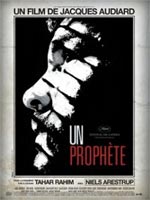
    As I mentioned earlier, Jacques Audiard’s “A Prophet” is the clear critical favorite of the Cannes competition to date, with some calling it the one to beat for the Palme d’Or. If you’re wondering what all the fuss is about, this brief teaser offers a tiny but compelling taste. I can’t say I was expecting something quite so visceral from Audiard.

  • ‘Broken Embraces,’ ‘Vincere’ bow at Cannes

    Penelope Cruz in Broken EmbracesPedro Almodovar’s “Broken Embraces” has just had its Cannes debut, and the notices emerging so far largely supplement the good-but-not-ecstatic slate of reviews the film garnered upon its Spanish release back in March.
    Kirk Honeycutt, in one of THR’s slightly pointless video reviews, labels it “Almodovar lite” and discusses the film’s allusions to “Peeping Tom” (not “an old 50s movie,” by the way). Wendy Ide at the Times coolly calls it a “mixed bag of smart ideas … rather than a coherent, distinct work of art,” while the Telegraph’s David Gritten loves Penelope Cruz’s performance, saying it excels her recent Oscar-winning work, but thinks the film “treads water rather than breaks new ground.”

    The case for the defence comes from Jeffrey Wells, who deems it by far the festival’s standout film at this stage:

    A romantic noir about writing, directing, damage and healing, it’s easily the most fully realized, thematically satisfying, self-assured and purely entertaining film of the festival so far. Not as fully emotional as Almodovar’s best films, but on a very high station in the second tier. Way in front of anything I’ve seen so far. The only thing that could knock it off is the Tarantino.

    Not sure why or how he’s dismissing the other titles he hasn’t seen yet, but anyway. I have a feeling this is one film whose critical consensus could see-saw between now and its eventual U.S. release in November.

    (more…)

  • ‘A Prophet’ leads Cannes race at midway point

    A ProphetWith 12 the 20 Cannes Competition titles out of the way (that’s counting the already critically-examined “Broken Embraces”), a clear favorite seems to have emerged — and I’m both pleased and a little surprised that it’s Jacques Audiard’s “A Prophet.”

    Pleased, because Audiard is a brilliant filmmaker who is owed more recognition. Surprised, because on paper, I didn’t expect an all-male, 2.5 hour prison drama to generate this much excitement. In the event, however, the film has inspired repeated comparisons to “GoodFellas,” and ScreenDaily’s critical panel rates it the best of the fest so far (closely followed by “Bright Star”), an endorsement echoed by a range of critics from Manohla Dargis to the Guardian’s Xan Brooks.

    Of the rest already screened, only “Bright Star” and British film “Fish Tank” really sound like viable Palme d’Or alternatives. Meanwhile, those two films’ respective leading ladies, Abbie Cornish and Katie Jarvis, look to be heading a heated Best Actress contest. (“Vincere’s” Giovanna Mezzogiorno and even “Antichrist’s” Charlotte Gainsbourg are also in the mix.) By contrast, the only actor attracting major buzz at this stage appears to be Tahar Rahim, the young Arab discovery of “A Prophet.”

    Of course, nobody has any idea what the jury is thinking, while jurors are apparently discouraged from reading the press about Competition titles. So when awards are dealt out, surprises are the norm. I’ve thought from the beginning that “A Prophet,” and indeed any other French titles in the lineup, were at a disadvantage; following last year’s winner, jury prez Isabelle Huppert might want to avoid showing too much homeland favor. Meanwhile, can Audiard’s entire male cast win over a mostly female jury? And with critical reactions so scattered, who knows what they make of “Antichrist?”

    So many questions. And with several formidable titles still to bow (including the latest from Michael Haneke and Elia Suleiman, my personal, out-of-thin-air bet for the Palme), plenty more to come.

  • Polite reception for Loach’s latest

    Eric Cantona in Looking For EricAs I expected, Ken Loach’s “Looking For Eric,” his first Cannes entry since winning the Palme d’Or in 2006, hasn’t exactly set the Croisette alight. Critics seem to agree that the football-themed comedy is a modest charmer, but too slight to really hold its own in the competition. (Probably a welcome shift in pace, what with critics still reeling from “Antichrist.”) Variety’s Derek Elley speaks for most of the critics with his kind but reserved take on the film:

    Loach and writer Paul Laverty’s ninth feature together is a curious hybrid: Three movies — boilerplate, socially aware Loach; personal fantasy; romantic comedy — wrap around a central core of a hopeless soccer fanatic who’s given a second chance to sort out his life. As in many of Laverty’s scripts, problems of overall tone and character development aren’t solved by Loach’s easygoing direction, though when it works, “Eric” has many incidental pleasures.

    The Guardian’s Peter Bradshaw also likes it well enough, drawing comparisons to “Play It Again, Sam,” and describing the presence of football legend Eric Cantona — certainly the film’s biggest commercial drawcard, in France especially — as “excellent comic value.” The word “nice” is used at several points, which seems rather telling.

    As much as I like the 72 year-old director’s work — though it’s been aeons since he made anything approaching the level of “Kes” or “Poor Cow” — one has to once more wonder whether this is the kind of film that really needs to be on the Palme d’Or shortlist, at the expense of bolder, less exposed talent.

  • Ebert on ‘Antichrist’

    AntichristCuriouser and curiouser. Roger Ebert is clearly still processing Lars Von Trier’s latest crowd-terroriser, but there appears to be respect in his initial assessment:

    Whether this is a bad, good or great film is entirely beside the point. It is an audacious spit in the eye of society. It says we harbor an undreamed-of capacity for evil. It transforms a psychological treatment into torture undreamed of in the dungeons of history. Torturers might have been capable of such actions, but they would have lacked the imagination. Von Trier is not so much making a film about violence as making a film to inflict violence upon us, perhaps as a salutary experience. It’s been reported that he suffered from depression during and after the film. You can tell. This is the most despairing film I’ve ever have seen.

    What can be said is that von Trier, after what many found the agonizing boredom of his previous Cannes films “Dogville” and “Manderlay,” has made a film that is not boring. Unendurable, perhaps, but not boring. For relief I am looking forward to the overnight reviews of those who think they can explain exactly what it means. In this case, perhaps, a film should not mean, but be.

    There is no film on the planet that I want to see more, right now, than “Antichrist.”

  • ‘Antichrist’ causes outrage on the Croisette

    Oh dear — this is turning out to be a pretty rough weekend at Cannes. We’re still awaiting the first official reviews of Lars Von Trier’s “Antichrist,” which just screened this evening, but it seems to have attracted the full ire of the notoriously excitable Cannes crowd. Boos, gasps and laughter reportedly greeted the screening on the gory, sexually explicit film, which apparently throws everything from talking animals to genital mutilation into the pot.

    Jeff Wells pulls no punches in his assassination of the film:

    Easily one of the biggest debacles in Cannes Film Festival history and the complete meltdown of a major film artist in a way that invites comparison to the sinking of the Titanic … It’s an out-and-out disaster — one of the most absurdly on-the-nose, heavy-handed and unintentionally comedic calamities I’ve ever seen in my life. On top of which it’s dedicated to the late Russian director Andrei Tarkovsky, whose rotted and decomposed body is now quite possibly clawing its way out of the grave to stalk the earth, find an axe and slay Von Trier in his bed.

    (more…)

  • Mixed early word for ‘Agora’

    Rachel Weisz in AgoraI’ve had slight misgivings about Alejandro Amenabar’s much-awaited historical epic “Agora” for a while, and I’m not really sure why. It’s certainly nothing to do with Amenabar’s own track record. For me, “The Others” stands as one of cinema’s great ghost stories, and while “The Sea Inside,” for which he won an Oscar four years ago, wasn’t quite up to his previous film’s immaculate standards, it was a rousing, intermittently stunning effort.

    Perhaps it’s because, even in his most conceptually elaborate work like “Open Your Eyes,” his work has such an intimate scale that the prospect of him taking on a massive sword-and-sandal endeavor like “Agora” doesn’t quite gel. Perhaps it’s because star Rachel Weisz has shown such wildly inconsistent taste in her selections of late. I have no idea, but I’m not particularly comforted after reading the rather mixed slate of reviews that followed the film’s unveiling at Cannes this morning.

    The Hollywood Reporter dithers over the film, declaring it a bit of a slog, but one that repays the effort, with “an unfaltering performance” from Weisz:

    Amenabar gets most of the epic staples out of the way relatively early: flatly acted scenes of textbook exposition, overly earnest extras, main characters who wander unscathed through hordes of butchery and, of course, frequently swelling music. The story then becomes a timely parable on religious intolerance, inexorable fundamentalist violence and the powerlessness of reason and personal freedom in the face of both.

    It is a pleasure to see Weisz’s scenes of scientific inquiry, which capture the passion of research and discovery without artifice or pretension. That the scientist is a woman makes it all the more engaging.

    (more…)

  • Cracks show in Cannes lineup

    Johnny Hallyday in VengeanceAfter surveying the reviews of Johnnie To’s “Vengeance” and Brillante Mendoza’s “Kinatay,” it seems safe to assume that neither film is a contender for the Palme d’Or — in the latter, we may even have our first real critical punchbag of the Competition.

    ScreenDaily dismisses “Vengeance,” an action effort teaming Hong Kong genre lord To with iconic French actor/singer Johnny Hallyday, as a “revenge shoot-em-up which fires mostly blanks,” citing a “contrived plot,” “wooden English dialogue” and a “stilted” lead performance as the key problems. Variety is more charitable, calling it “smoothly executed” but ultimately “more of the stylish same” from the director.

    Less predictable, and a lot more contentious, appears to be “Kinatay,” a grim, ultra-violent (the title translates as “slaughter”) tale of an ordinary man drawn into a crime syndicate — though apparently a lot weirder than that generic premise indicates. Variety slates the film, labelling it both “unpleasant” and “banal,” and predicting a general critical drubbing.

    Roger Ebert confirms that prognosis, with a vicious takedown in which he claims the film surpasses Vincent Gallo’s infamous “The Brown Bunny” as the worst in the festival’s history:

    There will be critics who fancy themselves theoreticians, who will defend this unbearable experience, and lecture those plebians like me who missed the whole Idea. I will remain serene while my ignorance is excoriated. I am a human being with relatively reasonable tastes. And in that role, not in the role of film critic, I declare that there may not be ten people in the world who will buy a ticket to this movie and feel the money was well spent.

    (more…)

  • ‘Basterds’ online

    Blame the lack of U.S. star power on the Croisette this year if you like (the NYT’s Brooks Barnes claims there’s an abnormal amount of empty hotel rooms around), but it sounds like a particularly quiet day at Cannes — and elsewhere.

    If you want to make it a lot noisier, check out the relatively new official “Inglourious Basterds” site here. Grinding guitars, gunfire every time you click a tab … it’s every bit as subtle as you’d expect and want from the film, even if it doesn’t tell you anything you didn’t already know, or thought you knew.

    The ample quoting of dialogue throughout, however, reminds me just how many misgivings I had about that script. Perhaps the clunkiness needs a visual context. I’m genuinely curious to see how this goes down — the film makes its Cannes debut on Wednesday.

  • ‘A Prophet’ impresses at Cannes

    Tahar Rahim in A ProphetAng Lee may have struck out, but happily, another of my favorite auteurs in the Cannes lineup has had better luck today. I mentioned earlier this week that Jacques Audiard’s prison drama “A Prophet” was one of the Competition titles I was most personally interested in, and the reviews from today’s press screening justify my faith.

    Like Audiard’s superb “The Beat That My Heart Skipped,” the film appears to be another genre-infused exercise, though with a broader, grittier touch than that delicate character study — and Screen Daily’s Jonathan Romney thinks that shift could pay strong commercial dividends:

    (Audiard’s) violent, gripping prison drama A Prophet shows him extending his range with unimpeachable command. The story of a gauche young inmate who rises through the criminal ranks to become a formidable player, A Prophet works both as hard-edged, painstaking detailed social realism and as a compelling genre entertainment.

    The film should have the same international appeal as last year’s Cannes crime hit Gomorrah. Its unapologetically testosterone-laden tenor will give the film a resonance way beyond the international art-house constituency that embraced Audiard’s last film, The Beat That My Heart Skipped.

    (more…)

  • ‘Precious’ a hit at Cannes

    Mo'NiqueSince it was announced that it would be playing the Un Certain Regard strand at Cannes, I’ve been interested to see how Lee Daniels’ “Precious” would play on this side of the Atlantic.

    Though the film was an all-round sensation at Sundance back in January, I wasn’t sure if it would receive the same level of adulation here, where there traditionally isn’t much of an audience for U.S. urban-based stories.

    Moreover, the film’s biggest talking-point at Sundance — Mo’Nique’s surprise-attack performance — risked being diluted in Europe, where I suspect few people know who the comedienne is. (It’s telling that the Cannes media has focused far more on Mariah Carey’s de-glamming.)

    All of which hasn’t appeared to matter one jot, as the film screened last night to a rapturous standing ovation, making it one of the heavy favorites for the Un Certain Regard award, which has boosted such arthouse fare as “The Band’s Visit” and “The Death of Mr. Lazarescu” in recent years.

    That “Precious” has been so warmly embraced in a critical environment not particularly predisposed towards such a film speaks volumes. Could its awards prospects go beyond that increasingly likely-looking Best Supporting Actress bid for Mo’Nique? A Best Adapted Screenplay nod, or Best Actress for Gabourey Sidibe, are certainly in the realm of possibility. A Best Picture bid seems to me a bit too great a leap for the Academy at this stage, but as long as the film keeps slaying audiences like this, who knows?

  • ‘Taking Woodstock’ fizzles at Cannes

    Demetri Martin in Taking WoodstockAng Lee’s “Taking Woodstock” appears to have provided Cannes with its first high-profile disappointment. While it doesn’t appear to be a disaster by any means, the general consensus appears to be that it doesn’t meet the very high standard Lee set for himself with his last two features.

    Allan Hunter at Screen Daily finds much to like in the film, calling it a “sweet, meandearing tribute” to the eponymous festival, he ultimately declares it inconsequential:

    Taking Woodstock is accessible but very lightweight and should enjoy moderate commercial success as a specialised domestic release. The very American, softly sentimental nature of the film will make it a harder sell internationally … While the wider themes are persuasive enough its the smaller human stories that are disappointingly banal as Woodstock becomes a form of therapy for Elliot and his parents. Enjoyable in places and merely humdrum in others, Taking Woodstock ultimately feels like a minor Ang Lee digression in between more memorable works.

    Hunter finds the film’s ensemble an equally mixed bag:

    (Demetri Martin’s) gentle, guileless manner makes him perfect casting for Elliot without settling the matter of whether he is charismatic enough to have a sustained cinema career. Liev Schreiber brings dashes of sass and style to cross-dressing Vilma but Imelda Staunton’s dowdy, embittered Sonia is overcooked and all too reminiscent of  Shelley Winters in full flow.

    (more…)