In Contention

Tag: Cannes

  • Resnais and Almodóvar bookend world-flavored NYFF lineup

    Penelope Cruz in Broken EmbracesindieWIRE has the full lineup for this year’s New York Film Festival, which runs from 25 September to 11 October, and at a glance, it looks remarkably like a greatest-hits lineup from May’s Cannes festival.

    This year, both the NYFF’s opening and closing films have been plucked from the Croisette. Alain Resnais’s “Wild Grass,” for which the 87 year-old New Wave master received a special career-achievement award at Cannes, will kick off proceedings, marking the second year in a row that a French title has taken this high-profile slot.

    Palme d’Or winner “The Class” opened NYFF last year en route to an Oscar nod. Whether a similar path awaits Resnais’s film, a high-flown romantic melodrama which was very warmly reviewed in Cannes, of course depends on what the French choose as their entry from a bumper crop of possibilities.

    (more…)

  • Yes, but you didn’t actually WIN

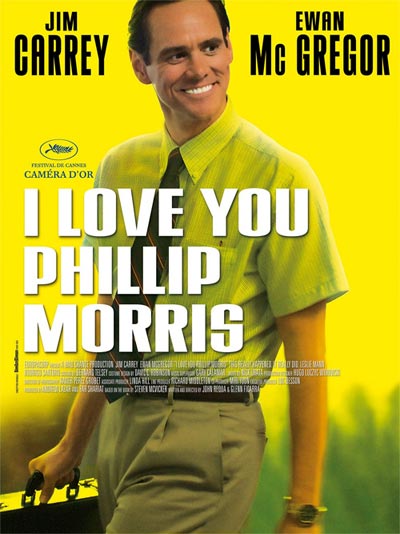
    There are several reasons I’m bothered by this one-sheet for gay rom-com “I Love You Phillip Morris,” which has built up a fair amount of goodwill from its appearances at Sundance and Cannes this year.

    I Love You Phillip Morris

    (more…)

  • REVIEW: “Antichrist” (***1/2)

    AntichristEdinburgh International Film Festival

    “I am the greatest director in the world,” Lars von Trier declared in an already notorious Cannes press conference following the unveiling of “Antichrist” in May.  Unable to resist such shameless baiting, most critics either responded with affectionate exasperation (“Oh, Lars!”) or, as one suspects von Trier preferred, tomato-faced indignation.

    What few did, however, was entertain the possibility that he might be telling the truth. It’s a conclusion that, even on the imperfect evidence of “Antichrist,” this viewer is willing to consider.

    Few contemporary filmmakers are as adept at arousing feeling as Lars von Trier – by which I refer not merely to the ingenious media-provocateur act he performs to market his work, but the actual excesses and polarities of emotion he mines within his own cinema.

    Von Trier’s best films arouse equal measures of devotion and resentment because they engage human empathy with no concessions whatsoever to conventional artistic standards of restraint or good taste; like their psychologically frail heroines – Bess in “Breaking the Waves,” Selma in “Dancer in the Dark,” Grace in “Dogville” – they teeter on the brink of self-destruction simply because they feel too much.

    I must slightly temper that argument upfront by admitting that “Antichrist,” as mercurial and bruising as it so often is, is not one of von Trier’s very best. Though it by and large meets the criteria described above – and its unnamed anti-heroine is a fascinating, near-parodic amalgamation of physical traits and psychological symptoms from all the director’s women – it lacks the emotional breadth of “Breaking the Waves,” or the formal and ideological conviction of “Dogville.” Unusually for von Trier, for all the film’s sledgehammer brutality in its concluding chapters, it’s rather coy about what it actually wants to say.

    (more…)

  • SHORT TAKE: “Looking for Eric” (**1/2)

    Looking for EricIt’s been a long time, if ever, since Ken Loach made a film that could legitimately be called a crowd-pleaser, but this is precisely what he has made in “Looking for Eric.”

    Gentle, undemanding and buoyed by the effortlessly charismatic presence of the titular football god – it’s certainly the first Loach film to possess anything approaching star power – it’s less overtly comedic than the marketing campaign would have you believe, but also warmer and less agenda-driven than most of his work this decade.

    With that said, Loach’s renewed emotional engagement has sadly come at the expense of any tonal cohesion whatsoever. As the veteran filmmaker fumbles for the buttons to alternately tickle and touch his audience, his film lurches wildly from a jolly working-class jaunt in the vein of “The Full Monty” to reflective character-oriented miserabilism à la Mike Leigh.

    Paul Laverty, Loach’s longtime screenwriter, wields neither the broad drollery of the former, nor the penetrating human insight of the latter, so roughly halfway through, he finds a third way: falling back on the earnest social commentary of his and Loach’s own “Sweet Sixteen.” With the film shifting its story emphasis through each of these multiple personalities, any sense of narrative continuity slips through the cracks.

    If it sounds like I’m being overly harsh on a film for which the placatory adjective “nice” might have been invented, it’s because not enough people are doing the same: that such a minor-key and formally slapdash film should have played in competition at Cannes is generous enough, but the multiple festival reviews hailing it as some kind of paean to the human spirit are a little puzzling.

    (more…)

  • WEEKLY WRAP: Closing Cannes and opening ‘Up’

    Isabelle Huppert presenting the Palme d'Or at Cannes• The Cannes Film Festival wrapped up, with Michael Haneke’s “The White Ribbon” taking the gold, and “Antichrist” nabbing honors too. (The Ecumenical Jury was less impressed.)

    • In the wake of the festival, we offered an updated survey of the Oscar landscape ahead.

    • With “Up” finally hitting our screens this week, we chatted to director Pete Docter.

    • And with ten features now under their belt, this week’s list ranked the best (and worst) of Pixar.

    • This week’s Page to Screen also returned to childhood, reflecting on the cinematic possibilities of “Where the Wild Things Are.”

    • The nostalgic vein continues with a revisiting of “Apocalypse Now,” thirty years on.

    • Newly released concept art provided a faint glimpse of what’s coming in James Cameron’s “Avatar.”

    • Speaking of Cameron, a look at what went wrong with “Terminator Salvation” at the box office.

    • On a happier note, “Drag Me to Hell” proved an absolute blast.

  • ‘Prophet’ tops indieWIRE poll

    A ProphetIn case you didn’t get the message while the Cannes Film Festival was running, it’s clear that Jacques Audiard’s Grand Prix champ “A Prophet” is a title we’re going to be hearing a lot this year. True to its preceived status as the critical favorite, the gritty French prison drama has been voted the fest’s best in a mini critics’ poll by indieWIRE, compiled from the votes of a selection of U.S. journos and bloggers (and, oddly, one critic from a UK right-wing rag).

    Runner-up, interestingly enough, was “Antichrist,” which emphasized its divisiveness by also placing second in the category of worst festival film. (What was the worst, you ask? Why, none other than Best Director champ “Kinatay.”) Third-best honors went to Palme d’Or winner “The White Ribbon” and Un Certain Regard darling “Police, Adjective.”

    Although support was clearly scattered, with no film getting the vote of the majority of critics polled, “A Prophet” came out on top in every voting category, including Best Director, Best Screenplay and Best Performance for breakthrought star Tahar Rahim. (Rahim beat the Cannes jury’s Best Actor choice Christoph Waltz into third place, while second was early Best Actress favorite Giovanna Mezzogiorno.)

    (more…)

  • 5/25 Web Round-up

    (from left) Alison Lohman and Lorna Raver in Drag Me to Hell• Tom O’Neil chats up the actors of Broadways’ “God of Carnage.” [Gold Derby]

    • Noah Forrest gets wrapped up in the excitement of seeing “Drag Me to Hell” with an audience (a week or so after decrying the public movie-going experience). [Movie City News]

    • Indie filmmaker and noted script doctor John Sayles is trying to sell a work of historical fiction. [Los Angeles Times]

    • Vicki Reid talks “Last Chance Harvey” with Dustin Hoffman across the pond. [Daily Telegraph]

    • Anthony Breznican wraps up Cannes with a look at the convergence of light and dark subject matter. [USA Today]

    • Quentin Tarantino talks about potential trims to “Inglourious Basterds” with Anne Thompson. [The Daily Beast]

    • Tony Scott talks John Travolta’s villain and scripting a remake of “The Taking of Pelham 123.” [Empire]

    • On the road with the boys from “Spinal Tap.” [New York Times]

  • OFF THE CARPET: Taking the temperature

    Jeremy Renner in The Hurt LockerIt’s somewhat surprising that our year-in-advance Oscar coverage is only three months old.  That now ancient list of predictions seems so long ago, and yet, even with Cannes behind us and this or that indication of a few of the contenders, I have no idea how to offer an educated update beyond general housekeeping.  The season, it seems, will remain elusive for just a little while longer.

    Here’s what we know: Critics didn’t respond to Universal’s “The Boat That Rocked” across the pond.  But the Brits hardly have a soft spot for Richard Curtis.  Along similar lines, Stephen Frears’s “Chéri” hasn’t exactly inspired either.  But both films, from awards savvy studios, could find a second wind when they eventually open Stateside.

    The biggest Oscar hopeful to emerge from this year’s Cannes fest is, in my opinion, Jane Campion’s “Bright Star.”  Heralded in some quarters as a return to form for the director, and snatched up by the intrepid Bob Berney (formerly of Picturehouse and now closing in on a name for his distribution company with partner Bill Polhad), the film could be a nominations hog, anywhere from six to 10 possibilities.  You’ll note all of my ponderings in that regard in the latest chart update below.

    (more…)

  • We, the jury

    (from left) Asia Argento, Isabelle Huppert and Nuri Bilge CeylanIt’s admittedly pretty low-rent, but one of the most enjoyable Cannes traditions is the annual gossip about what went down behind closed doors in the jury room — ranging from minor cultural disagreements to all-out bitter in-fighting. At yesterday’s press conference, juror Asia Argento insisted that their deliberations should remain a secret, but not everyone is so discreet: William Goldman, of course, dedicated half a book to covering his own experience as a juror at the 1988 fest, and most entertainingly too.

    Last year’s Sean Penn-governed jury was reportedly one of the most placid in recent memory, agreeing unanimously on “The Class” for the Palme d’Or. This year’s panel, apparently … not so much.

    Critic Shane Danielsen — who, as the former artistic director of the Edinburgh Film Festival, knows the ins and outs of such proceedings — has done some digging, to juicy effect. Writing in the comments section of the A.V. Club’s Cannes blog, he claims the jury was highly divided, with a notable rift between Isabelle Huppert and James Gray. Meanwhile, contrary to widespread assumption, it might not have been Michael Haneke that Huppert was pushing  hardest for, but Lars Von Trier:

    Unusually troubled, apparently, with president Isabelle Huppert riding roughshod over everyone, and James Grey (sic) reportedly calling her a “fascist bitch” in their final meeting … Huppert reportedly remained ‘Antichrist’s biggest champion on a bitterly divided and fractious jury. Who, as they came onstage, looked either funereal (Lee Chang-Dong, Hanif Kureishi), grimly determined (Nuri Bilge Ceylan) or just plain pissed-off (James Gray).

    (more…)

  • Haneke lands Palme d’Or, Gainsbourg takes Best Actress

    Charlotte Gainsbourg winning Best Actress at the Cannes Film FestivalAs it turned out, the most logical on-paper prediction turned out the be the right one. After emerging as the bridesmaid from several festivals past — winning the Grand Prix in 2001, Best Director in 2005 — the venerable Austrian auteur Michael Haneke has finally won the Palme d’Or for his stark moral drama “The White Ribbon.”

    Whether or not jury president Isabelle Huppert, a two-time Haneke leading lady in the past, wielded much influence on this decision — or indeed, whether she even needed to — is something for the pundits to debate. (I personally doubt it, though there was no mistaking the sly smile on her face as she announced his name at the podium.) Either way, there’s little denying that Haneke was overdue for world cinema’s highest honor; perhaps there was a career-achievement angle to the award, but the critical acclaim for “The White Ribbon” has been extensive.

    From watching the ceremony, it was clear that Haneke wasn’t the most popular winner of the night; that designation clearly goes to hometown favorite Jacques Audiard, whose “A Prophet” — like “Gomorrah” last year — was by and large deemed the favorite for the Palme, but ultimately had to be content with the silver-medal Grand Prix. The rousing standing ovation he received, however, spoke for itself. (I should add that a second-place finish for Audiard was, embarrassingly, the only correct call I made the whole night.)

    The real talking point of the awards, however, will likely remain Charlotte Gainsbourg’s Best Actress prize for her evidently courageous work in “Antichrist” — a clear gesture of support by the jury for a film that has provoked prolonged media outrage since its unveiling, and a blatant slap in the face of Cannes’ alternative ‘ecumenical’ jury who went out of their way to condemn it. The irony of handing a female performance award to a film that has been repeatedly pelted with accusations of misogyny is rather delicious; at the very least, it’s an indication that this is a film to be taken seriously.

    (More commentary, and a full list of winners, after the cut.)

    (more…)

  • ‘Dogtooth,’ ‘Adjective’ top Un Certain Regard winners

    DogtoothIt’s been a while since a Greek production made any impact on the world cinema scene — arguably not since Theodouros Angelopoulos claimed the Palme d’Or in 1998 — so it’s interesting to see that Yorgos Lanthimos’ “Dogtooth,” a dark family drama about three siblings disconnected from the outside world by their parents, pushed past more fancied contenders to take the top prize in Cannes’ Un Certain Regard strand last night.

    In doing so, it beat out the likes of “Precious” and “Samson and Delilah,” both of which enjoyed substantial attention and acclaim on the Croisette but went home empty-handed. (NOTE: “Samson and Delilah” later won the Camera d’Or award at the final awards ceremony.) Not that the former needed any more of a boost after its Sundance sweep, really.

    The runner-up Jury Prize went to “Police, Adjective,” a comic Romanian policier about on a policeman wrestling with his conscience, which also took a FIPRESCI critics’ award yesterday. Raves have been coming thick and fast for this film, with the Guardian’s Mark Cousins one of several critics I’ve heard declaring it the best of the festival, in any section of competition. (Coming on the heels of “The Death of Mr Lazarescu” and “4 Months, 3 Weeks and 2 Days,” one must wonder: what are they teaching in Romanian film schools?)

    Another common critical line doing the rounds is that the Un Certain Regard selection was, pound for pound, stronger than the Palme d’Or lineup. It’s hardly surprising, given that the strand has become more imposing with each year since it was introduced in 1998: UCR winners that have gone on to estimable arthouse success include “The Band’s Visit,” “Tyson” and the aforementioned “Lazarescu.” It’s a sign that, as I’ve said before, the selectors  need to start taking more chances in the main competition.

    More details on the rest of this year’s Un Certain Regard winners here.

  • What will take the Palme d’Or?

    Abbie Cornish and Ben Whishaw in Bright Star It’s all over bar the voting. Tomorrow, Cannes jury president Isabelle Huppert will meet with her formidable, female-dominated team of eight – including the diverse likes of Robin Wright Penn, Asia Argento, James Gray and Hanif Kureishi – to pick over the 20 Competition titles they have seen over the last fortnight and select their collective favorites.

    As I’ve said before, the most surprising thing a Cannes jury can do is not to surprise: to hand the Palme d’Or to the critical and/or popular favorite. It can happen, of course – critics and pundits alike called it for “4 Months, 3 Weeks and 2 Days” the day it screened in 2007, and were proved right – but the list of upsets is long and illustrious.

    As you’ve probably heard by now, if the bookies have their way, French auteur Jacques Audiard will be brandishing the Palme this time tomorrow, his prison drama “A Prophet” having wowed critics and audiences across the Croisette. I’ll be delighted if he does, but I’ve questioned whether a French production can win two years running, after a two-decade drought to boot.

    Of course, such streaks aren’t unheard of: the U.S. held onto the Palme for three years between 1989 and 1991. Other questions running through my mind are whether Frenchwoman Huppert might want to avoid making the festival too much of a local affair, and whether Audiard’s all-male film will resonate as strongly with a mostly female jury.

    If not, there are a number of alternatives. By my count there are six titles seriously in the hunt for top honors. Michael Haneke’s “The White Ribbon” is fancied by many to finally land the director the top prize. Earlier today, the film made its presence felt by claiming the FIPRESCI critics’ prize for best in show, though it should be noted that the jury’s and FIPRESCI’s choices have only lined up three times this decade.

    (More speculation, and my final predictions, after the cut.)

    (more…)

  • Christian Cannes jury tells us what to think

    Willem Dafoe and Charlotte Gainsbourg in Antichrist

    UPDATE: I’m pleased at least to report that Cannes festival director Thierry Fremaux is as outraged by the situation as we are, denouncing it as a “ridiculous decision that borders on a call for censorship … scandalous coming from an ‘ecumenical’ jury which what is more is headed by a film-maker.” Well said, Monsieur.

    EARLIER: I shouldn’t allow myself to get worked up over a petty gesture by a small-minded panel of people, but this can’t pass without comment.

    You may or may not be aware that an annual “Prize of the Ecumenical Jury” has been handed out at the festival since 1974. Established and voted upon by a selected panel of Christian film professionals, it aims to honor “works of artistic quality which witnesses to the power of film to reveal the mysterious depths of human beings through what concerns them, their hurts and failings as well as their hopes.”

    I can’t say I’ve ever really understood the point of the award. Still, it has gone to some fine films over time, and not ones necessarily with a spiritual agenda — from “Paris, Texas” to “Cache” — so I always thought it harmless enough. No more. This year, they’ve decided to mount their moral high horses by handing their first ever “anti-award” to Lars Von Trier’s “Antichrist”:

    “We cannot be silent after what that movie does,” said Radu Mihaileanu, a French filmmaker and head of an international jury that announced the awards Saturday.

    In a statement, Mihaileanu said Antichrist is “the most misogynist movie from the self-proclaimed biggest director in the world,” a reference to a statement by Danish filmmaker Lars Von Trier at a post-screening news conference. The movie, Mihaileanu added, says that the world has to burn women in order to save humanity.

    (more…)

  • Teen director rules Cannes Directors’ Fortnight

    Xavier DolanIt’s news like this that reminds me to haul ass and finish another screenplay. 19 year-old Canadian filmmaker Xavier Dolan has swept three of the four feature-category Directors’ Fortnight prizes on offer at Cannes. Dolan landed the Art Cinema Award, the Regards Jeunes Prize and the SACD Award for his debut feature “I Killed My Mother.”

    The film, which Dolan wrote, directed, produced and stars in, is a semi-autobiographical portrait of the dysfunctional  relationship between a gay 16 year-old and his single mother, and has attracted substantial buzz since bowing on the Croisette. Screen Daily raves:

    A stunning, semi-autobiographical tour de force from writer/director/producer/performer Xavier Dolan, it is a film with the sting of shrewdly observed truth … I Killed My Mother succeeds so well because it reflects a truth about human relationships that any viewer can recognise. The bond between Hubert and Chantale may be more extreme and exaggerated than most but in the pettiness, manipulations, reconciliations and heartache it expertly conveys the way we all have the ability to hurt the ones we love the most.

    It’s at points like this that I prefer not to think about what I was doing when I was 19. Okay, so I was a university sophomore like a million other normal folks, so no shame in that, but it’s sobering all the same. Congratulations to Dolan — I look forward to checking out his film.

    (more…)

  • Final Cannes contenders unveiled

    Paz de la Huerta in Enter the VoidThat’s it — all 20 Palme d’Or contenders have now screened for critics, and the final deliberations can begin. Most of the media attention in the past two days has focused on Gaspar Noé’s new film “Enter the Void,” though it hasn’t aroused anything like the firestorm of controversy that his “Irréversible” did in 2002. (Perhaps the media simply hasn’t the energy for a fight after “Antichrist.”)

    Although reportedly as violent and sexually explicit as one would expect from Noé, the film, which screened at the Croisette in still-unfinished form, seems to have prompted more confusion than outrage from the press. The critical response, meanwhile, is more positive than might have been expected. Manohla Dargis leads the cheer team for the film:

    An exceptional work, though less because of its story, acting or any of the usual critical markers. What largely distinguishes it, beyond the stunning cinematography, is that this is the work of an artist who’s trying to show us something we haven’t seen before, even while he liberally samples images and ideas from Stanley Kubrick and the entirety of American avant-garde cinema. The grungy milieu and calculated shocks might have been designed to make you flee – even while your attention is tethered to the camera – but, really, these aren’t the point. The point is the filmmaking.

    ScreenDaily’s Mike Goodridge is somewhat awed, describing the film as “a wild, hallucinatory mindfuck” that is “nothing short of hypnotic,” even suggesting the film as a future staple for narcotic-fuelled viewings — though like Dargis, he dismisses the characterisation and narrative as being of secondary quality and importance. Variety is less forgiving, labelling the film “tiresomely gimmicky” and implying it is less “pure cinema” than “pure trash.”

    (more…)

  • WEEKLY WRAP: ‘Antichrist’ and action

    Willem Dafoe in Antichrist• Scandalising media and polarising critics, Lars Von Trier’s “Antichrist” emerged as the undisputed talking-point of the Cannes Film Festival.

    • That firestorm even managed to overshadow the Cannes debut of Quentin Tarantino’s divisive “Inglourious Basterds.”

    • In other news from the Croisette, “A Prophet” impressed critics, while “Taking Woodstock” took a hit.

    • We celebrated the start of summer (and provoked some argument) with a list of the all-time Top 10 action sequences.

    • Unfortunately, our review deems “Terminator Salvation” unlikely to earn a place on any such future lists.

    • In the wake of that disappointment, “Up” happily lived up to expectations.

    • In box office news, “Angels and Demons” turned out to be a pale shadow of its predecessor.

    • This week’s edition of Page to Screen reviewed the literary source for Jason Reitman’s upcoming comedy “Up in the Air.”

    • John delved further through his personal cinematic treasure trove, returning to the 1990s, and reappraising last year’s “Revolutionary Road.”

  • Ebert makes a bold prediction

    Xavier Giannoli's In the BeginningOscar talk hasn’t surfaced that much on the Croisette this year, with “Bright Star” the only competition title prompting much speculation from the pundits. Roger Ebert, however, believes he has spotted an under-the-radar title that we’ll still be discussing come February:

    I think I may have just seen the 2010 Oscar winner for best foreign film. Whether it will win the Palme d’Or here at Cannes is another matter. It may be too much of a movie movie. It’s named “A l’origine” (“In the Beginning”) by Xavier Giannoli, and is one of several titles I want to discuss in a little festival catch-up.

    This is one of those movies that catches you in its spell. It’s a hell of a story. There’s a difference between caring what happens in a movie, and merely waiting to see what will happen.

    As someone who thoroughly enjoyed Giannoli’s gentle character study “The Singer,” I’m pleased to hear good word for the new film. Still, Ebert’s statement is surprising for several reasons, not the least of which is that “In the Beginning,” a comic fable about a con man who devises a plan to build a highway in a small French town, has enjoyed a mixed critical reception so far.

    (more…)

  • Sony picks up ‘Prophet’

    A ProphetAnne Thompson confirms what had already been widely anticipated: Sony Pictures Classics has bought the rights to “A Prophet,” Jacques Audiard’s brutal prison drama that is the clear critics’ darling of Cannes so far, and the current bookies’ favorite for the Palme d’Or.

    As mentioned last week, SPC has also acquired Michael Haneke’s “The White Ribbon” and the awfully-titled French biopic “Coco Chanel and Igor Stravinsky” — not to be confused with Audrey Tautou starrer “Coco Before Chanel.” It’s a smaller collection of purchases than SPC made at last year’s festival, but they seem to have picked wisely.

    Thompson also wisely reminds awards-watchers not to be overly swayed by the Palme d’Or buzz for Audiard’s film, something I’ve been thinking too. Cannes has a long history of surprise victors, and more often than not, the annointed critical favorite only lands a runner-up gong. Such was the case when “The Wind That Shakes the Barley” topped “Volver” three years ago, or when the massively polarising “Dancer in the Dark” beat out the universally adored “Yi Yi” in 2000.

    It’s worth bearing in mind that jury members are discouraged from reading the press throughout the festival, so they can vote with open minds. In other words, we have absolutely no idea what they’re thinking. Of course, jury opinion and critical opinion have lined up for the last two years running, with “4 Months, 3 Weeks and 2 Days” and “The Class” emerging as roundly approved winners. There’s no reason why “A Prophet” can’t continue the trend, though I still think it could face twin drawbacks in its nationality and its all-male cast.

    Meanwhile, the competition still looks feisty, with “Bright Star,” “The White Ribbon,” “Fish Tank” “The Time That Remains”  and “Vincere,” among others, all drawing vocal support, and two films yet to screen.