 Oren Moverman’s “Rampart” is absolutely fantastic. Top to bottom, it’s a considerable directorial achievement, and an exciting, brazen departure from his excellent 2009 debut, “The Messenger.”
The film — from an original screenplay by James Ellroy, re-written by Moverman — uses the 1999 Los Angeles Police Department Rampart corruption scandal as a frame, a state of mind, a narrative hook, an atmosphere for conveying an intense, probing, yet curiously vague character study in the form of LAPD officer “Date Rape” Dave Brown (Woody Harrrelson).
“Date Rape” got his nickname from his own scandal, the murder of an alleged serial rapist, which he explains away at a bar with a casual, “I may or may not have done it but he’ll never hurt another woman again.” That gives you an idea where this guy is coming from. The world is black and white for him (or so he’d like it to be). But he’s haunted by its inherent grays.
 We find ourselves right in the middle of the big Toronto press junket, er, film festival, where 200-plus films are landing, many of them as world premieres, and the landscape of this year’s Oscar race is really beginning to take shape.
 The warning signs were there for

 •
 Ben Foster became an actor I knew I would watch for a long time during an episode of the now canceled TV drama “Boston Public.”
 We’ve taken concentrated looks at the
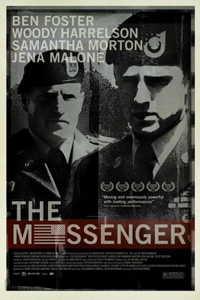 There is a film that succeeds as a cerebral drama, concerned with the impact of war on the individual, free of the genre’s typical tropes and remarkably fresh as a result. And believe it or not, I’m not talking about
 Christian Bale has been given something of a rough ride of late, with the combination of unfortunate media attention and a dreary turn in the woebegone “Terminator Salvation” slightly