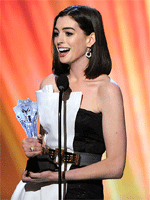
 Last week, I wondered whether Mickey Rourke’s eccentric, yet moving, acceptance speech at the Golden Globes could bolster his chances with the Academy. It may sound like a trivial concern, but the fact remains that Rourke’s speech was a talking point, a bona fide ‘moment’ that made for great TV — and if Roberto Benigni has taught us anything, it’s that onstage personality goes a long way with the Academy. In a tight race, the promise of a memorable acceptance can be just enough to push a contender past the finish line.
Now, Dave Karger is addressing the flipside of the question, and asking whether the relatively sloppy acceptance speeches of Anne Hathaway and Kate Winslet, at the BFCA Awards and Golden Globes respectively, could actually damage their Oscar campaigns:
Upon sharing the Critics Choice prize with her idol, Meryl Streep, Hathaway — who certainly meant to say this a bit more artfully — said it was “fitting” that she tied for the prize with Streep since she thought the Doubt star was the best actress around. But it came off condescending to all the other actresses in the room, particularly her category-mates like Angelina Jolie and Melissa Leo. The usually composed Winslet, meanwhile, nearly had a heart attack when she won her two Golden Globe prizes. To many people, the reactions seemed over-the-top. Or worse, fake.
It must have been overwhelming for both of them to hear their names called. But on the other hand, let’s remember that both of these awards are handed out by groups of journalists, for God’s sake — people that big stars like Hathaway and Winslet usually don’t give a hoot about. Why should they then fall to pieces over what those journalists think about them?
 What else is there to say? Tomorrow we’ll have a new president and the last eight years will, hopefully, start to fade away. In four days we’ll have a fresh slate of Oscar nominees and the last four months of awards speculation will suddenly be a distant memory. The big wheel keeps on turning.
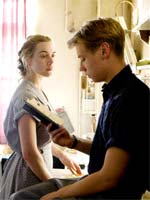 You’d think an artist as established as Sir David Hare might, in the course of his long career, have learned to take a bit of criticism in his stride. However, amid a rather odd flare-up between the venerable British playwright/screenwriter and Guardian critic Peter Bradshaw, Hare comes off looking decidedly thin-skinned.
 (It’s kind of hard to find anything with meat on its bones amid all the boring, derivative Sundance coverage.)
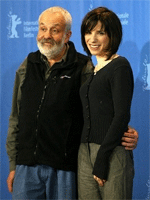
 Oh yeah, another guild (well, industry award I should say) this week: the Visual Effects Society (VES). The group’s typically unnavigable list of kudos contenders can be found below and after the jump.
 Looking back over the previous Oscar winners for Best Picture since 2000, the start of a new century (and a new millennium), I find myself wondering sometimes what the hell the Academy was thinking. It’s no secret I disagree with the Academy a lot, but I can also admit that when they get it right, they get it right.
 Way off topic for a moment, but I am Canadian, proud of my country, happy to be here, though I confess to having always been fascinated with American history and politics. There are many friends of mine in the United States and I enjoy visiting whenever I can. Cocoa Beach, Florida is a popular destination for my family and Los Angeles is always great fun.
 Kris has kindly pointed out a few times in addition to being a very busy film critic up here in Canada, I also have a seven-book (keeps growing) deal with Greenwood/Praeger in the United States. The first, “Clint Eastwood: Evolution of a Filmmaker,” was released December 30, 2008.
 The past week has been exceptionally good to Stephen Daldry’s “The Reader” on the awards circuit. The film followed up its five Golden Globe nominations with the same number from BAFTA, not to mention Kate Winslet’s BFCA and Globe awards for her performance as Hanna Schmitz.
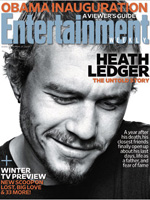 Entertainment Weekly’s current