In Contention

Tag: Secretariat

  • 9/30 OSCARWEB ROUND-UP: Blind-siding Christians with ‘Secretariat,’ chatting up Gibney and Reznor, Armond strikes

    • David Poland sits down with “Client 9: The Rise and Fall of Eliot Spitzer” director Alex Gibney. [Movie City News]

    • On the innovative marketing strategy of “Freakonomics.” [New York Times]

    • Xan Brooks and Henry Barnes talk “Made in Dagenham” director Nigel Cole and actress Rosamund Pike. [The Guardian]

    (more…)

  • OFF THE CARPET: King…for the moment

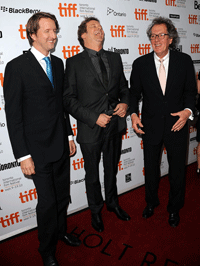
    Tom Hooper’s “The King’s Speech” is on top of the world right now.  Telluride buzz was hot and it carried all the way through the Toronto International Film Festival to a coveted People’s Choice award.  The race is already being boiled down in some quarters to this old school Academy play versus a Gen-Y instant classic opening in just under two weeks.  You couldn’t ask for more if you were The Weinstein Company with this film as your prize pony…

    …except maybe a season half as long as it actually is.  Hooper’s film finds itself in a very precarious spot right now.  Just ask awards consultants at Paramount Pictures.

    After coming out strong with the of-the-moment “Up in the Air” last season, taking the same Telluride-Toronto crowd-pleasing path, their film slowly boiled down to an also ran and even came up short in the one category it seemed assured going into the Academy Awards.

    It’s easy to peak early in an Oscar season.  It takes tactical endurance to really come out on the other side with something to show for yourself and “The King’s Speech” is burning fuel fast and early.  But I imagine if anyone understands this it’s Harvey Weinstein, who, if he does find himself in a battle with “The Social Network” for the big prize, will be going toe-to-toe with one of his former Miramax executives, Cynthia Swartz (who has overseen Best Picture marches for “Crash,” “No Country for Old Men” and “The Hurt Locker” in recent years).

    (more…)

  • OFF THE CARPET: The year of the woman, take two?

    It wasn’t by coincidence that the three photos decorating the season’s introductory installment of this column two weeks ago represented lead actress contenders in the 2010 Oscar race. After all the talk of 2009 being “the year of the woman,” owing much to the number of female directors who found themselves in the mix (and inevitably leading to Kathryn Bigelow’s history-making moment at the Kodak), I’m sensing an even better argument for 2010 as a singular season for the fairer sex.

    Let’s start with the performances. By my count, there are already eight nominatable offerings from lead actresses this year (which contrasts drastically with a dearth of supporting hopefuls).  This is just going by what I’ve seen, mind you.

    For starters, Natalie Portman has dazzled the early festival season with her work in “Black Swan.” Lesley Manville, meanwhile (should she remain a lead focus), sets a high bar in “Another Year.” Despite my feelings on the film, Carey Mulligan really settles into a next-level groove in “Never Let Me Go,” and Jennifer Lawrence, of course (like Mulligan last year), has already become the year’s star-in-the-making story in “Winter’s Bone.”

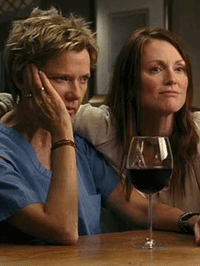
    Dovetailing with the performances themselves, there are also films that seem to reflect the theme in narrative. In “Secretariat,” for instance, Diane Lane capably (if a bit histrionically) portrays headstrong Penny Chenery, a woman of virtue in an era when she was expected to keep her head down and clean house. Similarly, Sally Hawkins absolutely kills as the Norma Rae-ish Rita O’Grady in “Made in Dagenham,” fighting for equal pay in a similar time (and she’s likely to be joined in the hunt by co-star Miranda Richardson for a fiery supporting turn). And we can’t forget the palpable feminism apparent in summer indie “The Kids Are All Right,” where Annette Bening and Julianne Moore both bring their “A” game.

    (more…)

  • TECH SUPPORT: Best Sound Mixing — Volume I

    Last week, while discussing the sound editing category, I explained the difference between that art form and sound mixing.  The Oscar for the latter is shared between two (or more) persons who construct the soundtrack of a movie.  The re-recording mixers bring together everything – dialogue, sound effects, music – into what we hear in the theater.  The production sound mixer is also awarded for capturing the sounds during shooting, an undoubtedly arduous task.

    Many of the films nominated here are also nominated for Best Sound Editing.  In fact, rarely is there more than one film showcased for only one field.  Both categories like loud films, blockbusters and, as always, being a Best Picture contender certainly helps.

    That said, some trends are noticeable between the two categories.  Firstly, the branch has a love of musicals when it comes to sound mixing.  That makes sense, of course, because a musical is fully made by its mix.  Meanwhile, animated films consistently fare better in the sound editing category, which also makes sense given that so much of the sound scape is created separately from production.

    (more…)

  • ‘Secretariat’ poster

    I’m getting a look at Randall Wallace’s “Secretariat” tonight.  It may or may not be an awards play for Diane Lane.  I’ve heard both sides of the argument.  In the meantime, a new poster has been released by Disney, and yeah, it looks a little familiar.  But what else are you going to put on a poster about horse racing?  Check out the full image after the jump.

    (more…)

  • TECH SUPPORT: Best Sound Editing — Volume I

    Now matter how many times I watch the Oscars, someone will always ask, “So what is the difference between the two sound categories?”

    The difference is quite significant.  It is so important that the sound branch is only one of two “tech” branches in the Academy (the other being music) that gives out two separate awards.  Best Sound Mixing awards the individuals who bring the entire soundscape – music, dialogue, effects – together into a balanced mix.

    Best Sound Editing, on the other hand (perhaps better described by its previous name, Best Sound Effects Editing), rewards the artificial creation of sounds to be inserted into the film, but were not captured during the shoot.

    The category, despite its very specific nature, is nevertheless like many other “tech” categories.  Both “loud” films (often war films) and blockbusters are among this category’s favorite fetishes.  And like virtually all categories, being a Best Picture contender can be a big help.

    (more…)

  • TECH SUPPORT: Best Costume Design — Volume I

    Costume design in many ways represents much about the Oscars: glitz, glamor, beauty. But obviously threads do much more than make movie stars look attractive.  They build character, set mood, define period and serve as a defining design aspect of a film.

    Like art direction, the nominees for here overwhelmingly fall into one of two categories: period or fantasy. Indeed, when two contemporary films (“The Queen” and “The Devil Wears Prada”) were nominated in 2006, it was a rare occasion.

    It’s not an exact science, but while a fantasy film is almost always nominated every year, there is usually only one as four films tend to be period. It also should be noted that recent winners in the category have all highlighted British or French royalty and high society.

    Being a Best Picture contender does not hurt with this branch (same with any), but the branch also does a great deal of thinking for itself. Last year, for instance, both “Bright Star” and “Coco Before Chanel” managed nominations here, the only ones for their respective films. In the last four years, four other films (“Curse of the Golden Flower,” “Marie Antoinette,” “Across the Universe” and “Australia”) have also managed the feat, rare for crafts categories.

    (more…)

  • TECH SUPPORT: Best Cinematography — Volume I

    Of the so-called “tech” categories, Best Cinematography is one of the most popular, certainly for me. The invention of the camera took us beyond radio and literature and set modern art on a path aimed toward the moving picture, and this field recognizes those behind the lens.

    Cinematography obviously has a massive impact on a film, everything unfolding within a frame and any nuance specific to the tone, atmosphere and theme of the piece.  It is unimaginable to think of a good movie not having a good Director of Photography (DP).

    “Pretty” films with beautiful landscapes and memorable, postcard-like shots shots are a regularity (and tend to win).  But war films also show up regularly.  And being a Best Picture contender never hurts. Innovative lighting that creates unique mood is frequently rewarded, at least with nominations, as well.

    While this branch does at times play favorites (Robert Richardson and Roger Deakins being the most notable), it always tends to find room for one, two or three first-time nominees every year. From this vantage point, I’m curious who they will be because, the way I see it, most of the obvious contenders have been nominated before.

    (more…)

  • TECH SUPPORT: Best Art Direction — Volume I

    As we like to point out in this space each year, the Academy Award for Best Art Direction is presented to two individuals who have different but key roles in designing a film’s sets and props.

    The first of these, the production designer, is the director of the film’s art department, responsible for the supervision of those in it and the overall architecture of the film’s design. The set decorator, on the other hand, is responsible for filling up those sets with proper scenery to fully bring them to life.  When these individuals, and those who work alongside them in the art department, do their jobs well, we can be fully immersed into the story.

    Historically, the nominees in this field fit into one of two categories: historical or fantastical. At least two – usually three or four – of the nominees every year are set in the past. This is not surprising. Being set outside of day-to-day life, such films require a different sort of research and, moreover, draw attention to themselves by not appearing to be what we encounter every day.

    At the same time, fantasy titles show up at least once, often more, every year as well. Last year’s winner, “Avatar,” is a good example of this.  Rick Carter and Robert Stromberg created a completely different world strictly from imagination.

    (more…)

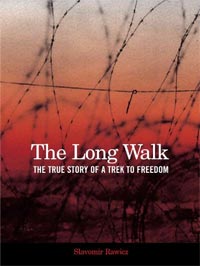
  • PAGE TO SCREEN: “The Long Walk” by Slavomir Rawicz

    In one of the year’s more groan-worthy feats of movie marketing magic, Disney recently slapped their plucky horse ’n’ housewife drama “Secretariat” with a paradox of a tagline in “The Impossible True Story.” No sooner had they done so than assorted sniggering blogger types responded with a perfectly reasonable question: if the story is impossible, how can it be true?

    That said, whoever ends up handling Peter Weir’s currently distributor-less “The Way Back” may rather wish they had bagged this ropey tagline first. Adapted from the ghostwritten 1956 memoir by Slavomir Rawicz, a former Polish cavalry officer and Gulag labor camp survivor, the film tackles a story that is indeed “impossible” in the Disney-dictionary sense – read: extraordinary – but also, to some extent, in the literal one: two years after his 2004 death, Rawicz’s account was entirely discredited by historians.

    In the book, following the 1939 invasion of Poland, a 25 year-old Rawicz is arrested, tortured and unjustly convicted of treason by the Soviets. Sentenced to 25 years’ hard labor in the remote Gulags of Siberia, he is placed in a POW chain-gang and subjected to a gruelling two-month journey northwards, whereupon the scarcely less arduous drill of prison life begins.

    (more…)

  • ‘Secretariat’ trailer

    The obvious question being, can it find the same awards season rhythm as “Seabiscuit?” Diane Lane is front and center: