In Contention

Blog

  • ‘Apocalypse Now’ — 30 years later

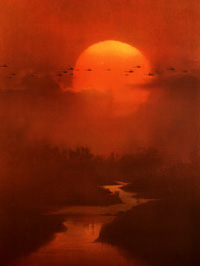
    Apocalypse NowIt was 30 years ago this summer I stumbled out of the old University Theater on Bloor Street in Toronto in shock, too dazed to speak, to stunned to make human contact. Finding a bench on the street I sat down and tried to collect my thoughts.

    I was 20 years old, an acting student minoring in cinema, quite happy with my life though wondering if acting was for me. Going to movies alone was something I enjoyed, even though my girlfriend at the time did not care for this habit. My feelings were it allowed me to see the films she did not care to see, right? Though I was learning the method, it seemed movies were my first love, and not to perform in them. “Apocalypse Now” defined for me what I wanted to do with cinema and my life.

    In this case I had just seen the first public Toronto screening of Francis Ford Coppola’s long awaited film, and emerging from the theater into the summer sun I knew I had been altered in some way, that this film had galvanized me and changed my life. At the time I had no idea that the film had made this impact, of course, but I knew deep in my gut that something extraordinary had just happened.

    As a film junkie I was aware of the history of the film, and because it was Francis Ford Coppola, who had directed “The Godfather,” “The Conversation” and my favorite of all time, “The Godfather Part II,” I was more than a little anxious to see the film. Coppola could do no wrong in the 1970s, having won Academy Awards for writing “Patton” and co-writing ‘The Godfather.”  He received a Best Picture Oscar nomination for the latter and won the DGA award.  For the film’s 1974 sequel, he won his Oscar for directing.

    That same year his film “The Conversation” was also a Best Picture nominee, a remarkable achievement for the young director. He then made the decision to head into the jungles of the Philippines to bring “Apocalypse Now,” a loose adaptation of Joseph Conrad’s “Heart of Darkness,” to the screen, hoping to entice Steve McQueen, Robert Redford, Al Pacino or Jack Nicholson to take roles in the film. All declined. He eventually cast Marlon Brando as the certifiable Col. Kurtz and Harvey Keitel as Willard (who was fired a few days into shooting in favor of Martin Sheen).
    (more…)

  • 5/29 Web Round-up

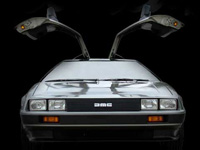
    DeLorean• More news on the James Tobak/Brett Ratner/Robert Evans John DeLorean biopic.  This could be fascinating, but…Ratner? [The Carpetbagger]

    • Patrick Goldstein responds to the news that Sony, Scott Rudin and Kevin Spacey will bring the Somali pirate saga to the big screen. [The Big Picture]

    • Catherine Shoard talks to Diane Kruger about her work in Quentin Tarantino’s “Inglourious Basterds.” [The Guardian]

    • Jon Favreau films on location in the Mojave for military authenticity. [Edwards Air Force Base]

    • Ed Asner is ready for more roles. [Associated Press]

  • One against ‘Up’

    UpNo surprise that the first unmitigated critical slam for “Up” should come from the reliably cranky Armond White, who has made his disdain for Pixar’s output clear on a number of previous occasions. His review goes on to lay out his wider problem with “Pixarism” (good word, that), namely that the films are just too cute:

    Pixar’s price sticker includes enough saccharine emotion to distract some viewers from being more demanding; they don’t mind the blatant narrative manipulation of a sad old man and lonely little boy. They buy animation to extend their childhood like men who buy cars for phallic symbols.

    Pixarism defines the backward taste for animation. Refuting Chuck Jones’ insistence that he didn’t create his great Warner Bros. cartoon for children, Pixarism domesticates and homogenizes animation—as if to preserve family values. The only exceptions have been Brad Bird’s Pixar movies The Incredibles and Ratatouille—both sumptuously executed in Bird’s belief that animation should show “how things feel rather than are. Indulging in the human aspect of being alive.” Yet their conceptual weak point was cuteness—same as Up’s glossing over Carl’s “public menace” court conviction and that inconsistently imagined dog pack.

    As someone who finds Pixar more of a hit-and-miss outfit than is generally perceived — and bearing in mind that I haven’t yet seen “Up” — I still don’t think that’s an entirely fair argument. (I do, however, agree that Bird is their most sophisticated storyteller.)

    (more…)

  • Von Trier: “I am the female character”

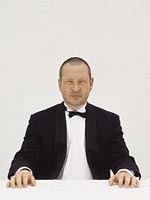
    Lars von TrierThere isn’t very much more I can say about the writhing can of worms that is “Antichrist” until I actually get to see the film. (Anyone who can make this happen, you know where to find me.) But it’s worth mentioning this interview with Von Trier in the Independent, if only because it draws attention to just how carefully the director planned the ensuing controversy, from that thematically tenuous title to his tongue-in-cheek press-conference posturing.

    One reader recently made the observation that Von Trier “much better at marketing his films than actually making them.” As someone who thinks he’s made at least three stone-cold masterpieces, I don’t entirely agree — but replace the words “much better at” with “as good as,” and we’re on the same page.

    He has a near-unrivalled knack for making commercially hostile films into the stuff of widespread dinner-party talk; even my friends who aren’t especially film-literate are now curious about “Antichrist.”For his part, Von Trier has no problem admitting the manipulation at play:

    There is no denying that von Trier is a provocateur. He describes the device as “a tool”. Saying he’s the best director, making challenging films, creating a furore has been his way of getting what are essentially small-budget films from Denmark noticed … Von Trier, for all his foibles, is definitely no fool and the secular characters are clearly in keeping with the perceived reduction of influence on religion in everyday life in Europe. Von Trier simply says, “I started with the title.”

    (more…)

  • Concept art from Cameron’s ‘Avatar’

    All of this, I imagine, will be appearing in “The Art of Avatar: James Cameron’s Epic Adventure,” which will feature a foreward written by Peter Jackson.  Click the images for higher res:

    Concept art from Avatar

    Concept art from Avatar

    (Courtesy: Marketsaw, via /Film)

  • The only ‘New Moon’-related post you’ll see here…ever

    Traffic will take a quantum leap because of this very post alone.  I’ll let you decide what that means for society.

    The press release concerning the debut of the “New Moon” trailer, in part:

    MySpace Movies is excited to announce the trailer debut for The Twilight Saga: New Moon on Sunday, May 31 at 7:45 pm PT/10:45 pm ET. Fans of the highly anticipated film will be able to view the trailer in its entirety at www.myspace.com/trailerpark. They can also share the video with their friends by utilizing the embed code available on the page.

    In The Twilight Saga: New Moon, Bella Swan (Kristen Stewart) is devastated by the abrupt departure of her vampire love, Edward Cullen (Robert Pattinson) but her spirit is rekindled by her growing friendship with the irresistible Jacob Black (Taylor Lautner). Suddenly she finds herself drawn into the world of the werewolves, ancestral enemies of the vampires, and finds her loyalties tested. Based on the best-selling book series, The Twilight Saga: New Moon opens in theatres everywhere November 20. It is the highly anticipated next installment to the movie Twilight, which has grossed $380MM globally at the box office, and has become a worldwide sensation and cultural phenomenon.

  • What are the best post-apocalyptic films ever?

    Denzel Washington in The Book of EliIn our daily web round-up posts there tends to be one or two lists in the mix.  I’m increasingly stunned at Premiere’s capacity for cooking these things up.  It’s almost as if that once-sterling film journalism outlet has become nothing but a list generating machine.
    Of course, the reason for lists — you’ll hear it from any hit-conscious editor — is traffic.  Readers love them.  And if they have a space to debate said list, perhaps even offer up their own, then the hits keep coming.  I literally had a list mandate of sorts when I was working at The Times of London last summer, which is where the obsession over collectives first started to kind of freak me out.  At least I managed to work movies into one of them, and hey, if you can’t beat ’em, join ’em.

    Anyway, this is a long-winded lead-in to a recent post by one of our regulars, Chuck of Entertainment Today and Beyond, picking the Top 10 Post-Apocalyptic Films.  With “Terminator Salvation” already in theaters and “The Book of Eli” (which got a first look feature in USA Today Tuesday) and “The Road” still to come, it seems a rather en vogue topic, I guess.

    Here’s Chuck’s list:

    1. “Dawn of the Dead” (George A. Romero, 1978)
    2. “Planet of the Apes” (Franklin J. Shaffner, 1968)
    3. “The Stand” (Mick Garris, 1993)
    4. “The Day After” (Nicholas Meyer, 1985)
    5. “The Omega Man” (Boris Sagal, 1971)
    6. “The Road Warrior” (George Miller, 1981)
    7. “Day of the Dead” (George A. Romero, 1985)
    8. “The Day of the Triffids” (Steve Sekley, 1962)
    9. “Testament” (Lynne Littman)
    10. “Miracle Mile” (Steve De Jarnatt, 1988)

    Your thoughts?

  • ‘Up”s lovable sidekick protagonist gets some ink

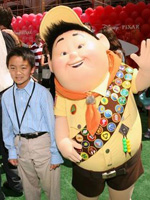
    Jordan NagaiOne of the things I briefly noted (and wish I had expanded upon) in my review of Pixar’s “Up” (releasing tomorrow) was how “pitch-perfect” child actor Jordan Nagai is as the voice of Russell, a Wilderness Explorer sidekick of sorts to Ed Asner’s disgruntled Carl Fredricksen.  Thankfully the young chap is getting a bit of press in the film’s run-up to domestic release tomorrow, like this Susan King LA Times piece featuring Nagai and “Up” director Pete Docter in tandem.

    On the development of the character, as well as the casting process:

    Nagai was chosen from about 500 kids who auditioned to play Russell, a typically rambunctious 8-year-old who befriends a crotchety, elderly widower named Carl (Ed Asner).

    Initially, said Docter, Russell was to be more hyper. In fact, the initial concept was based on the effusive personality of animator Peter Sohn, who was the voice of Emile in “Ratatouille” and is the director of the short “Partly Cloudy,” which will be shown before “Up.”

    “But Jordan [was] a little more calm and relaxed about things,” said Docter, who also directed Pixar’s “Monsters, Inc.” “We started to change the character, and that made him more unique and special.”

    /Film’s David Chen, meanwhile, has put together a thoughtful post dissecting the fact that Disney/Pixar hasn’t made mention of Russell’s Asian-American ethnicity via advertising or, for the most part, press interviews.  As Chen notes, this flies in the face of the Disney’s hyping of the character Tiana in the upcoming “The Princess and the Frog,” who will be the studio’s first African-American princess…

    (more…)

  • 5/28 Web Round-up

    Kate Winslet in Romance & Cigarettes• Kim Voynar goes deep on a male-dominated film world. [Movie City News]

    • Brooks Barnes on an anti-smoking Hollywood effort.  “Thank God we invented the…whatever device.” [The Carpetbagger]

    • Nine straight critical and financial successes.  How does Pixar do it? [CNN]

    • Gina McIntyre talks to horror helmer Sam Raimi. [Los Angeles Times]

    • Ditto Scott Bowles, with some “Spider-Man 4” talk. [USA Today]

    • Ronald Bergan: Why the second coming of 3D is overrated (thank you!). [The Guardian]

    • An open letter to J.J. Abrams concerning the “Star Trek” sequel. [Newsarama]

    • These guys are list machines lately: 10 movie houses you’d love to live in. [Premiere]

    • 10 TV stars who should be in more movies. [Cinematical]

  • ‘Chéri’ website launched

    CheriAs you know, despite a mixed critical reception over here in the UK, I was quite taken with Stephen Frears’ “Chéri,” a tarter-than-expected Belle Epoque romance that showcases the director’s best work in nine years, and Michelle Pfeiffer’s best work in … well, longer than that.

    I’m not sure how the film, a rather subtle specialty item, will play on its American release in a month’s time, but Miramax clearly has hopes for it, and have launched this rather attractive official website to make their case. (They appear to have dispensed with the accent aigu, perhaps to prevent anyone mistaking it for a foreign-language effort.)

    The site features the standard promotional bumf, but does a good job of showing off the film’s lavish technical credits, particularly Consolata Boyle’s costumes and Alexandre Desplat’s lovely score, which is actually more delicate than the selected excerpt here suggests. Both are, I think, very much in the Oscar mix, while Pfeiffer’s radiant performance may need to find more critical champions Stateside to sustain momentum.

  • ‘Prophet’ tops indieWIRE poll

    A ProphetIn case you didn’t get the message while the Cannes Film Festival was running, it’s clear that Jacques Audiard’s Grand Prix champ “A Prophet” is a title we’re going to be hearing a lot this year. True to its preceived status as the critical favorite, the gritty French prison drama has been voted the fest’s best in a mini critics’ poll by indieWIRE, compiled from the votes of a selection of U.S. journos and bloggers (and, oddly, one critic from a UK right-wing rag).

    Runner-up, interestingly enough, was “Antichrist,” which emphasized its divisiveness by also placing second in the category of worst festival film. (What was the worst, you ask? Why, none other than Best Director champ “Kinatay.”) Third-best honors went to Palme d’Or winner “The White Ribbon” and Un Certain Regard darling “Police, Adjective.”

    Although support was clearly scattered, with no film getting the vote of the majority of critics polled, “A Prophet” came out on top in every voting category, including Best Director, Best Screenplay and Best Performance for breakthrought star Tahar Rahim. (Rahim beat the Cannes jury’s Best Actor choice Christoph Waltz into third place, while second was early Best Actress favorite Giovanna Mezzogiorno.)

    (more…)

  • ‘Rescue Me’ is on fire this season

    Anyone watching this?  Best season yet.  Leary’s monologue at the end of this clip (from last night’s episode) is an Emmy clip if I ever saw one:

  • PAGE TO SCREEN: “Where the Wild Things Are” by Maurice Sendak

    Cover of Where the Wild Things Are by Maurice SendakOf all the literary adaptations reaching our screens this year, none is as seemingly impossible – and yet, simultaneously, rife with possibilities – as Spike Jonze’s long-awaited realization of “Where the Wild Things Are.” A work that occupies multiple positions within the popular culture pantheon – grade-school standard, highbrow literary classic, cult hipster item, fine-arts touchstone, pop psychology standby – it arguably nourishes a broader audience than any children’s text published since.
    As such, Jonze’s film has been complicated throughout by shifting lenses of expectation: as a family film perhaps more eagerly awaited by parents than their children, as a mainstream entertainment aiming to appease art house mavens and indie kids, it is essentially required, like its literary source, to be all things to all people.

    His own artistry notwithstanding, Sendak achieved such catholic appeal through the sparseness of his approach. With a narrative of fewer than 400 words – not even half the length of this very article – “Where the Wild Things Are” is an exceptionally porous feat of storytelling that accommodates a wide range of interpretations and identifications from the reader. It is plainly a metaphor-driven story, yet there isn’t enough text to articulate or prescribe the symbolism that is otherwise so lavishly illustrated.

    Sendak employs minimalism to expansive effect: the unadorned narrative allows the imagination to  roam, enabling the reader to take only what s/he wants from the story. Yet a literal reading thereof – such as may be absorbed by younger readers – is no less compelling in terms of tension and atmospherics, than one more interpretive.

    (more…)

  • POLL: the most influential films of all time, round two

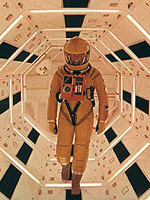
    Keir Dullea in 2001: A Space OdysseyWe’ve made it to the second round in our mammoth series polling In Contention readers for a list of the most influential films of all time.  “Annie Hall,” “Psycho” and “The Wizard of Oz” squeezed past the competition to become our final trio to move on to the next stage.  We’re getting very close now, having whittled down the original set of 66 movies to 20, all of which you’ll find listed in the sidebar poll this week.

    I’ve decided to shake things up a bit in the second round and give more of a voice to everyone, as I’m sure the consistent picking of five and then three titles has made for more than a few hair-pulling moments.  This time, you get to decide on your choice of 10 films from our consolidated 20.  In a nutshell: of the 20 films to the left, what are the 10 films you deem the most influential films of all time?

    When all is said and done, we’ll have 10 clear victors (which will go on to form our list) and 10 clear honorable mentions.  Next week, we’ll take our top 10 and, in the third and final round, have one more poll to determine the ranking order!

    If you’re somewhat confused, be sure to read up on the background of this series here.  Now…get your votes in!

  • Get your votes in!

    We’ll be closing down the latest influential films poll in a couple of hours, and seeing as we’re in a neck-and-neck race for the final slot, every vote counts.  Later this afternoon we’ll move into the second round.

  • Never occurred to me

    Our own John Foote made an interesting point in our Pixar list from yesterday.  Concerning the final shot of “Monsters, Inc.” (which brings your humble teddy bear servant to a near tear every time), Foote writes that it is a “lovely Chaplin homage…when the big monster (Sully) opens the door to Boo’s room and smiles — reminds me of Chaplin in ‘City Lights.’”

    “City Lights” is one of my all time favorite films, so I’m shocked I never made this connection before.  I went searching to see if anything has ever been written about it, but beyond the two shots popping up on numerous “greatest final shots” lists, I can’t seem to dig anything up.  Maybe there’s no connection to be made and it’s purely a coincidental thing, but I don’t know.  I like the idea of something this subtle showing up in a Pixar film.

    Here are both shots, side-by-side and in the context of the final scenes.  The “Monsters, Inc.” clip is a bit long but it’s the best one I could find:

  • SHORT TAKE: “Drag Me to Hell” (***)

    Drag Me to HellIt only occurred to me this week that I have yet to write about Sam Raimi’s “Drag Me to Hell,” which I saw weeks ago and never got around to reviewing in a timely fashion.  I’ve had the artwork for whatever piece I was to conjur sitting here on my desktop, waiting for me to, you know, write the friggin’ words, but for whatever reason, the inspiration hasn’t hit.

    Knowing me and my curmudgeonly self, you’d think that would be the result of the film not registering for me.  After all, I pretty much dislike everything Raimi has ever done, save for “Spider-Man 2” and “For Love of the Game.”  And yes, that includes the precious “Evil Dead” series that established his committed fan base over two decades ago.  It’s that very same following that will no doubt flock to “Drag Me to Hell,” and they’re going to love what they see.

    But no, my writer’s block has nothing at all to do with an aversion to the film.  On the contrary, I was thoroughly entertained by nearly every minute of “Drag Me to Hell.”  I think, perhaps, it has more to do with the idea of reviewing a film this fun being a real drag (pardon the pun).  Who wants to ruin it with the usual analysis?  But here I go…

    (more…)