 As the world prepares to bid farewell to George W. Bush following tomorrow’s election, I came across an apt article in the new edition of Sight and Sound, in which critic Michael Atkinson evaluates how the Bush presidency affected American film, and how the period might be interpreted by future film historians. As always with S&S pieces, it’s not available online, but it’s an insightful (and occasionally contentious) piece worth tracking down if you want to give a cinematic spin to your sense of closure.
As has been noted before, Atkinson believes that the sense of public panic and political insecurity that characterised the presidency has been most clearly manifested in the resurgence of the superhero movie:
It’s easy to imagine that in a decade or two, the Bush years will be viewed as the discouraging ebb in the pop-cult continuum when everyone from eight to 80 was excited about ‘super powers’ … Clearly, a preadolescent bout of night terrors required succour, producing a trend that’s bound to date as badly as the Spielbergian blue light and Rambotics of the 1980s.
This is the kiddie-escapist paradigm tinctured with memories of 9/11; today, the vigilantes in primary-colour tights we hanker for don’t confront the conjectural fears of the Cold War, but the all-too-tangible, falling-bodies verities of the new millennium. In “The Dark Knight,” Christian Bale’s Batman has to wrestle, as the Bush administration didn’t, with the necessity of being perceived as evil for the sake of what’s construed as the common good.
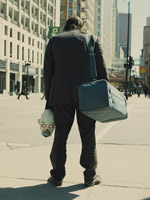 I was sitting in a production company earlier this morning awaiting an interview subject when I picked up the latest Entertainment Weekly from the reading material there in the lobby. It’s the holiday preview edition, with sneak peeks at the upcoming season’s films and Dave Karger’s early stabs at Oscar predictions. There in the middle somewhere was
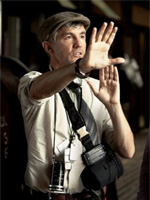 Baz Luhrmann’s massive “Australia” keeps hurtling nearer, with the director apparently in an editing-room frenzy to have it ready in time. A new
 As I’ve said

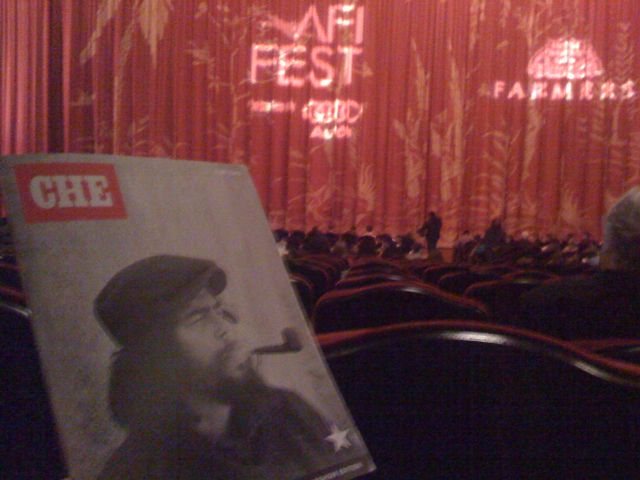
 Four days and three screenings into the 2008 AFI Fest, I’m one-for-two and looking to add to the “win” column as much as possible in the next week. It hit me this afternoon, though, that no two films could be better suited to an introductory update from the festival, two exercises in subverting the conventions of the biopic. One succeeds, one fails, but both maintain a certain spirit that you don’t find in the work of many filmmakers today. And interestingly, both are set for distribution by the always courageous IFC Films.
 The New York Times has compiled a
 This is the second part of a feature running down the 10 best filmmakers working in the English language. For part one, click


 My recent
