 Many pundits were predicting that Lou Ye’s erotic drama “Spring Fever” could nab the Palme d’Or, if only as a political gesture against the Chinese censors who imposed a five-year filmmaking ban on the director — which he has defied with this film. Following last night’s press screening, however, those hopes have taken a bit of a knock, as it appears to be more an intriguing curiosity than a surefire arthouse success.
Screen International’s Howard Feinstein is beguiled by the film’s elaborate floral imagery and “astonishing” cinematography, but feels its narrative opacity and explicit sexual content might limit it to the gay festival circuit:
Close-ups of flowers not only open and close the film, they also pop up intermittently, mirroring shifts in both the story line and the state of mind of its gay protagonist. This integration of visuals and narrative, however, is the exception rather than the rule in this ambitious and – by mainland Chinese standards – daring project. The screenplay is so convoluted and contains so many loose ends that the intense style (fragmented editing, jerky, handheld camera) only highlights the movie’s occasional lapses into incoherence.
 There’s a bewildering wealth of quality Cannes coverage out there, and it tests the realms of possibility to mention it all. In the interests of economy, however, here’s a selection of the more interesting festival-related nuggets I found today:
 One day into the Cannes festival and the gears of commerce are already grinding, with Sony Pictures Classics looking particularly alert. The independent outfit announced two substantial acquisitions today, most notably Michael Haneke’s “The White Ribbon,” a period drama themed around issues of fascism and community that is one of the bookies’ favorites for the Palme d’Or.


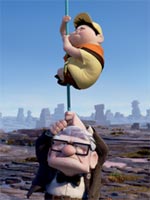 With all the positive word that’s been trickling out this past week, it’s no surprise to hear that “Up” has scored universally breathless raves from the trade papers.
 We’ve certainly waited a while to get any substantial word on “The Road,” not least since it got pushed back by an entire year to ease the pressure of post-production. John Hillcoat’s film screened in unfinished form late last year, provoking a scattering of commentary — the Film Experience’s Nathaniel Rogers