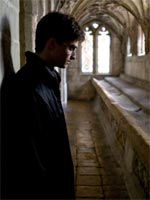
 I must admit upfront that I don’t really get the Harry Potter franchise. I don’t dislike it — not having exposed myself enough to its components to justify such a response — but I’ve never felt remotely compelled to deepen my acquaintance with the material. I’ve tackled one of my J.K. Rowling’s novels, but the lumpen functionality of her prose didn’t tempt me further.
As for the films, I’ve sat through two of them — and yes, one of them was Alfonso Cuaron’s expertly crafted but still personality-deficient effort — and found them both painless yet unengaging watches. I understand that they please millions of viewers, and I commend them for that. But for fear of breeding actual resentment, I think it’s better that I no longer watch them. The Potter films and I have reached an entente cordiale, if you will, and it works for both of us.
All of which is to say that the more enthusiastic reviews emerging for the sixth (!) installment, “Harry Potter and the Half-Blood Prince” (am I the only one who always has to look the full titles up?), don’t really move me one way or the other. It would appear that director David Yates and writer Steve Kloves (are we ever getting another “Wonder Boys” from him?) have maintained their general success in streamlining the unwieldy novels with equal attention paid to character and craftsmanship, which is a significant achievement this far into a franchise. But I remain thoroughly untempted to get in line.
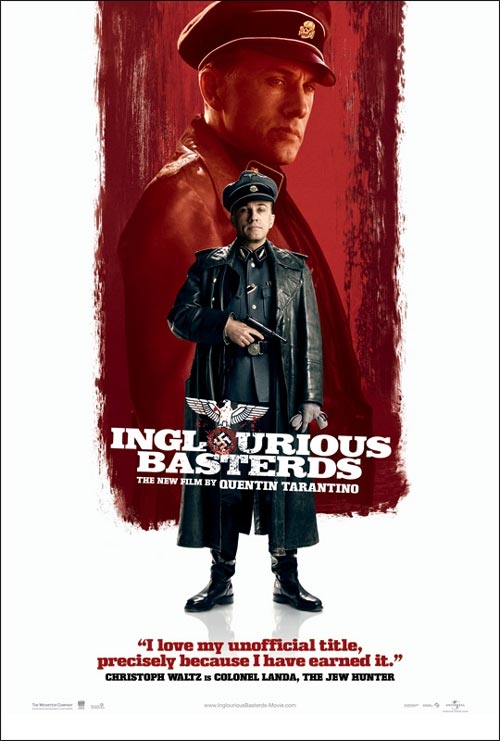
 •
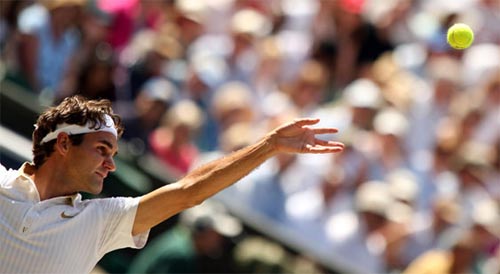
 I’ve had a busy week, so I’m a bit late to
 As far as I know, Nora Ephron’s “Julie & Julia” is still under a reviewing embargo, but the New Yorker’s Ariel Levy has sneakily buried a brief, incisive critique of the film at the tail of a
 •
 By far the boldest, baldest expression of auteur identity I’ve seen in recent times came in the opening credits of Lars von Trier’s
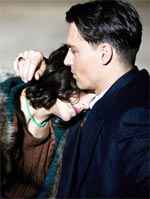 With Stateside critics somewhat split on “Public Enemies,” I was interested to see what the UK reception for the film would be like. For all the brawny Americanness of his aesthetic, Michael Mann has many passionate apologists on these shores — he even received a BAFTA nod in 2005 for “Collateral” — perhaps to some degree because Britain is where he studied film and began his career.
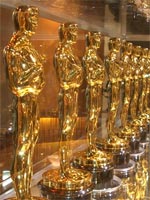 Since the Academy announced the new ten-lane track for the Best Picture race, any number of bloggers have projected which extra films might have made the cut under this format in the last few years, a process that, for many, retrospectively hands hypothetical nods to everything from “Doubt” to “Memoirs of a Geisha” to “My Big Fat Greek Wedding.”
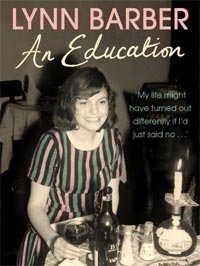 “I was damaged by my education,” writes renowned British journalist Lynn Barber at the end of the captivating centerpiece essay in her newly published memoir “An Education,” a sober conclusion to a personal account that otherwise brims with breezy anecdotal humor.
 Among the many things I love about Woody Allen — his staying power, his eye for talent, more masterpieces than I can count on two hands — is the fact that whenever anyone refers to “the untitled Woody Allen project,” one usually has to ask which one they mean. His unfailing film-a-year work ethic means there are generally at least two upcoming Allen films floating in the general conversation.
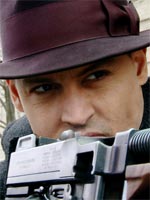 Joe Queenan is one of my least favorite Guardian film contributors — too often perversely hard to please — but I did appreciate the boyish honesty of
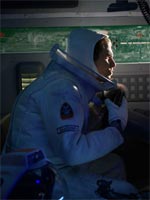 The Edinburgh International Film Festival closed today with an awards ceremony that culminated in Duncan Jones’s sci-fi debut feature “Moon” landing the fest’s most coveted prize, the Michael Powell Award for Best British Feature. The jury, headed by Joe Wright and including Oscar-nominee Frank Langella, said of the film: