In Contention

Tag: Michelle Pfeiffer

  • CINEJABBER: For Your Consideration, ‘Die Hard,’ Best Picture

    Catch up with the idea behind these weekend posts here.

    Jeffrey Wells reminded me last weekend of Movieline’s latest restoration effort, i.e. providing scans of back issues and therefore keeping the magazines of the 1990s available and adding a bit of history to the newly designed outlet.  It also reminded me of an idea I had at Variety three years ago when I was writing the trade’s Oscar blog, Red Carpet District.

    Something people don’t know is that there is a small closet of a room (or at least it was a closet at the old digs across the street from the Los Angeles County Museum of Art, not sure about the new tower down the street) full of handsomely bound back issues of Variety.  You’re talking decades of the print publication at your fingertips.

    But while it’s fun to go back and read old industry stories and news items, the best part is to grab a latter year volume, say something from December-January or February, and get a load of the for your consideration ads.

    (more…)

  • ‘Chéri’ website launched

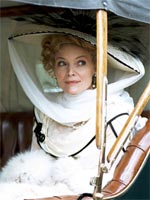
    CheriAs you know, despite a mixed critical reception over here in the UK, I was quite taken with Stephen Frears’ “Chéri,” a tarter-than-expected Belle Epoque romance that showcases the director’s best work in nine years, and Michelle Pfeiffer’s best work in … well, longer than that.

    I’m not sure how the film, a rather subtle specialty item, will play on its American release in a month’s time, but Miramax clearly has hopes for it, and have launched this rather attractive official website to make their case. (They appear to have dispensed with the accent aigu, perhaps to prevent anyone mistaking it for a foreign-language effort.)

    The site features the standard promotional bumf, but does a good job of showing off the film’s lavish technical credits, particularly Consolata Boyle’s costumes and Alexandre Desplat’s lovely score, which is actually more delicate than the selected excerpt here suggests. Both are, I think, very much in the Oscar mix, while Pfeiffer’s radiant performance may need to find more critical champions Stateside to sustain momentum.

  • Cougar in a corset

    Michelle Pfeiffer and Rupert Friend in CheriJane Shilling has a piece at the Telegraph about the gender politics of “Chéri” — specifically, the social disruption engendered by a romantic relationship between a middle-aged woman and a young man.

    Describing “Chéri” author Colette, and by extrapolation the character of Léa (played by Michelle Pfeiffer in the film), as “the original cougar,” Shilling suggests that the story of her love for a man half her age is more provocative to a contemporary audience than the first readers of the 1920 source novel:

    A couple of weeks ago in Grazia magazine an article appeared about a fascinating modern phenomenon. “Until recently,” wrote the author, Rita Sangha, “a woman dating a much younger man was likely to be ridiculed. But things have changed. Thanks to stars like Madonna, a ‘cougar’ – an older woman dating a younger man – isn’t seen as desperate: she’s glamorous and in charge of her own destiny.”

    Perhaps, she would have been amused – though not surprised – to discover that the seductive alchemy of a love affair between a middle-aged woman and a boy young enough to be her son would seem even more scandalous in 2009 than it did when she sat down to write it, 90 years ago.

    Shilling’s rather sketchy argument fails to bridge these two contradictory points — how is the so-called “cougar” phenomenon both laudable and scandalous? — though that perhaps accidentally echoes Colette’s own ambiguity on the matter. As I discussed in my Page to Screen article on the novel, Colette both defends Léa and Chéri’s generation-crossing relationship, but condemns a similar dalliance by of one of Léa’s peers as grotesque; the principal difference, it seems, lying in the two women’s levels of physical attractiveness.

    (more…)

  • REVIEW: “Chéri” (***)

    CheriMy first thought on leaving the theatre after watching Stephen Frears’ crisp, elegantly turned new effort is that it is, in many ways, a consummate Frears film. My second thought, however, ran counter to the first: it has, over the years, become increasingly difficult to define what “a Stephen Frears film” might be.

    We are talking about a filmmaker, after all, who deals in polarities, following up the broad music-hall frivolity of the ghastly “Mrs Henderson Presents” with the austere docu-realism of “The Queen,” or a glib studio bauble like “Accidental Hero” with the jagged domestic comedy of “The Snapper.”

    The uncharitable could call Frears something of a dilettante, subsuming his own long-term artistic preoccupations beneath a veneer of versatile professionalism. That, however, would be to miss the keen emotional detail and bone-dry irony that lace themselves through all of Frears’ best work.

    Whether he finds them in a Chicago record store or an 18th century French chateau, Frears dissects his characters with an amused, academic precision that inevitably reveals the Oxbridge intellectual he is – and it’s a sensibility that meshes beautifully with the prose of Colette, who in 1920, wrote “Chéri” in much the same tartly tragic register that Frears and screenwriter Christopher Hampton tell it. (I discussed the novel in greater depth here.)

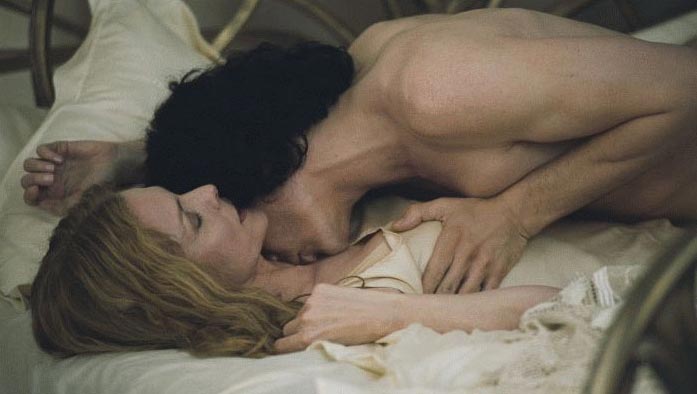
    Contrary to the shrill period rom-com that the trailer appears to be pitching it as, “Chéri” remains a cutting, economic study of love thwarted by the twinned obstacles of aging and social expectation. Painstakingly mapping the end of the affair between the eponymous 25 year-old playboy (Rupert Friend) and Léa (Michelle Pfeiffer), the world-weary courtesan twice his age, it becomes something of a dual coming-of-age story, as the lovers are forced to accept the indignities of adulthood and middle age, respectively.

    (more…)

  • PAGE TO SCREEN: “Chéri” by Colette

    Cover of Cheri by ColetteMerely casual acquaintances of French literature will likely associate the name Colette with her short story “Gigi” – or rather, the flouncy musical film adaptation thereof that swept the board at the 1958 Academy Awards. A sunny, sanitized interpretation of an intricate study in sexual politics, it captured the author’s sensibility in its lavish set-dressing, but little else.

    I doubt 1950’s Hollywood would have known where to begin with “Chéri,” a darker portrait of the louche demimonde of Parisian courtesans – and we are close to finding out if they do even now. Certainly, those who approach the novel with the jolly peals of laughter from the meringue-light trailer for Stephen Frears’ upcoming film still ringing in their ears, may be taken off-guard by the elegiac, often cruel comedy of manners that awaits them.

    Though “Chéri” is a slender, subtle volume, it’s easy to see what drew Frears and screenwriter Christopher Hampton to the material. Much like their previous collaboration, 1988’s “Dangerous Liaisons” (and other Hampton works such as “Atonement” and “Total Eclipse”), this is a story of sexual awakening gone awry — which is not to say that the novel lacks for romance. Amid the rueful cynicism lies a rather tender love story between two people who only realize they are in love a full six years into their relationship.

    The affair between Fred, an aimless 25 year-old dandy known to all by his family nickname Chéri, and Léa, a wealthy courtesan twice his age, is introduced in the novel as a pragmatic transaction: the beautiful yet increasingly insecure Léa feeds vicariously off her lover’s youth, offering material rewards and a sexual (if not sentimental) education in exchange.

    As such, “Chéri” is truly a coming of age story, a gender-reversed “Pygmalion” even, in which an older, more worldly woman grooms a boy for marriage, before releasing him into gentlemanly society. The twist comes when, the ink barely dry on the certificate of his marriage to sweet, shy debutante Edmée, Chéri discovers that carnal and sensual affections are not merely transferrable between different women. Léa, meanwhile, having undertaken this schooling for multiple men in her career and living by the philosophy that “being disinterested is its own reward,” realizes that she’s more emotionally invested in Chéri’s maturation than she knew at the time.

    (more…)

  • Ma belle

    Michelle Pfeiffer in CheriWhile I’m on the subject of Gallic-flavoured Best Actress contenders, I usually try not to get too invested in an individual’s awards hopes before I’ve seen the film carrying them, but I must admit to one sentimental wish this year: that Michelle Pfeiffer and “Chéri” will live up to the delicate beauty of their source material, and in that event, that Pfeiffer will be duly rewarded for her pains.

    Not to step on Nat Rogers’ toes, but we all have a fantasy list of people we want to see receive an Oscar one day — and nestled among the diverse likes of Mike Leigh and Samantha Morton, Pfeiffer is near the top of mine. Partly, I confess, because she was my first cinematic crush (I was nine, and our first date was “Frankie and Johnny”), but more because of the hope that an overdue career celebration might coerce her into working more often, and casting directors into offering her more tempting bait. (Why should Meryl Streep be the only woman headlining films in her fifties?)

    2002’s undervalued “White Oleander” offered an intriguing glimpse of how the actress’s advanced years actually added nuance and fragility to her trademark froideur; “Chéri,” if played right, should do the same, and then some.

    All of which is a long-winded way of pointing you towards this excellent interview with Pfeiffer in today’s Guardian, in which Geoffrey Macnab pays due tribute to her skill and versatility (I love his suggestion that she venture into the Western genre), and the actress explains that “Chéri” is a more complex beast than the bonbon depicted in the trailer:

    “The scope of the movie turned out to be bigger than any of us had realised at the beginning. We were on a limited schedule, but when you see the film, the scope of it is huge. Usually, you have a couple of scenes where you might have pages of dialogue – but this film, every scene was five, six, seven or eight pages of dialogue. It took a tremendous amount of concentration.”

    (more…)

  • Older and wiser

    Hope Davis’s recent complaint about the issue of Hollywood ageism, prompted by being offered characters well over her actual age, seems to have struck a bit of a chord this week. The Guardian’s discussion of the matter was also recently picked up on in the New York Times, while Cinematical contributed to the discussion by celebrating Julia Roberts’ willingness to acknowledge her over-40 status in “Duplicity.”

    Coincidentally enough, the issue also crops up in a recent Guardian interview with the delicious Catherine Keener. Ostensibly to publicise Michael Winterbottom’s “Genova” (a sadly rather negligible work, though Keener is stellar is always), it’s more of a reflective career profile, opening with the staggering (to me, anyway) revelation that she is 50 years old. (Seriously?!) Here, she describes the pleasures of ageing as a character actress rather than as a movie star:

    “Interesting characters are pretty rare if you really want to be the lead. That’s the usual complaint of actresses my age, and they’re not wrong. They depend on you being beautiful. Since I’m not cast for my physicality, I’m not that interested in those parts. I find that playing so many characters in so many films is a way to stay in the moment.”

    She says she feels sisterly towards other women actors her age, and would concur that Hollywood remains ageist and sexist, especially when it comes to big-budget material. Somehow, she has found a niche that avoids these traps. She despairs a bit of the new generation of women coming up: “Everyone seems so frigging young and naive. They had some survey of younger women and they asked them what they aspired to be. The most popular answer was to be the assistant to a movie star – not the movie star, but the assistant!”

    Yeah, as if Catherine Keener isn’t sexy. Anyway, she’s a really smart, engaging interviewee; read the rest here. Meanwhile, with Michelle Pfeiffer shortly to appear on our screens as Rupert Friend’s decades-older seductress in “Cheri,” something tells me this isn’t the last we’ll hear on the “older women in Hollywood” issue in the months to come.

  • Year-in-advance winner predictions

    Yes, I’m insane, but before I leave off this year’s year-in-advance week, by request, I thought I’d throw up a random set of winner predictions and see if I was close to the target next February.  Last year I managed three correct guesses (four if you count Winslet for the wrong movie), two of them in the tech categories, so maybe I can at least up that tally.  I really want to predict Clint’s movie for Best Picture, but I have some weird sense of irritation at predicting an untitled movie.  Oh well, who cares?

    Best Picture: “Nine”
    Best Director: Rob Marshall, “Nine”
    Best Actor: Morgan Freeman, “Untitlted Nelson Mandela Project”
    Best Actress: Michelle Pfeiffer, “Chéri”
    Best Supporting Actor: Matt Damon, “Untitlted Nelson Mandela Project”
    Best Supporting Actress: Mo’Nique, “Precious”
    Best Adapted Screenplay: “Nine”
    Best Original Screenplay: “Up”
    Best Art Direction: “Amelia”
    Best Cinematography: “Nine”
    Best Costume Design: “Chéri”
    Best Film Editing: “Nine”
    Best Makeup: “The Wolf Man”
    Best Music (Original Score): “Broken Embraces”
    Best Music (Original Song): “Nine”
    Best Sound Editing: “Green Zone”
    Best Sound Mixing: “Nine”
    Best Visual Effects: “Avatar”
    Best Animated Feature Film: “Up”

    Those will all be wrong.  Each and every one of them.

    (And in case you missed it: OFF THE CARPET: Handicapping 2009 a year in advance!?)

  • OFF THE CARPET: Handicapping 2009 a year in advance!?

    Ewan McGregor and Hilary Swank in AmeliaAhh.  The dust is settling.  And on the horizon, just visible through the mist and waiting to drive us all up the wall once again: the 2009 Oscar season.

    I’ve been writing this year-in-advance column for probably six years now, and I always look forward to gazing ahead.  No one dives in so pathetically deep this far out as yours truly, but in exchange for not having a life for the past few months, I get to unload this burden the day after our annual season’s peak and forget about little gold men entirely for a few months.

    It’s quite liberating.

    The most interesting thing about the season to come, from my vantage point, is the lack of a dreaded “frontrunner status” for any of the contenders.  Some might say Clint Eastwood’s Nelson Mandela project (which is not called “The Human Factor,” mind you — the director says the film is currently untitled and is based on John Carlin’s book “Playing the Enemy”).

    Others might say Rob Marshall’s “Nine” (coming from a money-tight company hoping to avoid echoes of “Memoirs of a Geisha”).  But I don’t see a “Geisha” from here, or a “Charlie Wilson’s War,” expected heavies waiting to miss the mark.  The field is curiously flat, and as a result, excitingly broad.

    Let’s get to it, shall we?

    (more…)

  • A promising start for ‘Chéri’

    If it isn’t quite the unanimous chorus of approval one might have hoped for, there’s still enough praise for Stephen Frears’ latest film “Chéri,” which premiered in Berlin last night, to mark it as a potential 2009 contender in several areas — among them, Best Actress for Michelle Pfeiffer’s much-anticipated return to dramatic roles. (Thanks, of course, to the ever-diligent Nat Rogers for the heads-up.)

    The Hollywood Reporter’s Kirk Honeycutt is absolutely besotted with the film, gushing that there is “no false moment or off-key note” in the entire production:

    Stephen Frears never makes the same movie twice. What he does do though is make thoroughly professional and immensely entertaining stories that pay particular attention to characters, their flaws, emotions and deepest desires. In “Cheri,” he has another dandy. Whether it will travel as far as his last film, “The Queen,” is hard to say, but with a radiant Michelle Pfeiffer as his heroine, “Cheri” could well be another breakout hit.

    The chemistry between Pfeiffer and (Rupert) Friend is positively combustible. One feels the hunger in each, the rising physical passion and emotional vulnerability in two people who, if asked, would scorn love as a human weakness. The film is in English, of course, but it can’t escape a certain Frenchness: Those who would mock love are done in by love.

    There is also, predictably, much praise lavished on the film’s scrumptious-looking tech credits, with top honours going to Alexandre Desplat’s “nostalgic, romantic, melancholy score.”

    (more…)

  • Crikey

    Thanks to The Film Experience for pointing out this tease of a still from Stephen Frears’ Berlin-bound period romance “Chéri,” which promises something of a return to form for star Michelle Pfeiffer. (IMDB tells me she’s 50. You kidding me?)

    More stills can be found at this fansite, showcasing what looks to be predictably lavish production design and costuming by Oscar nominee Consolata Boyle (“The Queen”). Do we have a 2009 craft-category contender already?

  • Frears’ ‘Chéri’ to premiere at Berlin

    New works from Costa-Gavras, Bertrand Tavernier and Andrzej Wajda are among the 14 titles that have just been added to the Competition programme at next month’s Berlinale, meaning 25 of the 26 slots have been confirmed.

    The most high-profile inclusion, however, is Stephen Frears’ period romance “Chéri,” which was at one point mooted as a 2008 release with an eye on awards season, before getting bumped. It’s a film I’ve been excited about for some time, not least because it’s something of a “Dangerous Liaisons” redux, reuniting the director, writer (Christopher Hampton) and star (Michelle Pfeiffer) of that 1988 Oscar-winner, again within the context of a French-set costume drama.

    An adaptation of Colette’s novella about an affair between a young man and a decades-older woman in 1920’s Paris, it strikes me as an ideal proposition for both director and star. A new Frears film is always worth noting, but I find his work rather more interesting  when he’s visiting themes of taboo and desire (the aforementioned “Liaisons,” “Prick Up Your Ears,” “The Grifters”).

    Meanwhile, Pfeiffer — still, I think, arguably the greatest of her generation — hasn’t had a project equal to her gifts in over 15 years. Could this be one to keep an eye on for next year’s awards derby? It’s ridiculously early to be thinking about such things, but don’t forget that one of the big winners at last year’s Berlinale was a certain Ms. Sally Hawkins. However oddly positioned, it’s always a festival worth paying attention to.

    Among the other intriguing titles set to bow at the fest, which will be opened by Tom Tykwer’s “The International,” is “Rage,” the latest from avant-garde UK auteur Sally Potter, with an eclectic cast including Jude Law, Judi Dench and Steve Buscemi. Another impressive ensemble (Robin Wright Penn, Alan Arkin and Julianne Moore, to name but three) features in Rebecca Miller’s “The Private Lives of Pippa Lee,” while Lukas Moodysson’s “Mammoth,” starring Gael Garcia Bernal and Michelle Williams, has long been one of my most eagerly anticipated films of 2009.

    For a complete list of the Competition entries so far, check out the press releases here and here.

  • Early predix: Nat Rogers pipes in

    So the ever-worthwhile Nathaniel Rogers at The Film Experience has joined in the predictions game – check out his thoughts here. Like many others, his list has “The Curious Case of Benjamin Button” ruling the roost with eight nominations, with “Defiance,” “Doubt,” “Milk” and “Miracle at St Anna” rounding out the Best Picture list.

    The latter is a particularly interesting choice – one wonders whether the controversy-shy Academy voters will be put off by Spike Lee’s increasingly ridiculous quarrel with Clint Eastwood. Of course, January is a long way off, and if “Miracle at St Anna” turns out to be great, chances are this whole debacle will be forgotten by then. I fear it will not – but with “Changeling” not making his Best Picture list, Nat clearly sees Spike having the last laugh here.

    Elsewhere in Nat’s list, most of the usual suspects are present. I’m particularly pleased to see that he shares my faith in a Best Actress nomination for Sally Hawkins (“Happy-Go-Lucky”) – I’m going to be banging this drum all year, so get used to it. Nat, meanwhile, is evidently beginning the campaigning early for Michelle Pfeiffer in “Cheri,” going so far as to call her a “legendary actress.” I admit there won’t be any complaining from me if she finally cops a statuette.

    (more…)