 For a man more accustomed to the dirt-under-the-fingernails highs of hard journalism, the red carpets, photo calls and cosseted hotel suites of film promotion clearly represent a very different kind of strain for Mark Boal, the journalist-turned-screenwriter who on Monday won the prestigious Gucci Group Award at the Venice Film Festival.
Back in August, on the hottest afternoon of the year, the tall, lank-haired writer of Kathryn Bigelow’s “The Hurt Locker” lopes into the lobby of London’s cooler-than-thou Sanderson Hotel, dressed in jeans and a plaid shirt, and politely asks if I’ll join him over a beer.
“I’ve been on coffee all day, and it’s not working,” he grins, his face betraying missed hours of sleep, but still more boyish than its 36 years. “Maybe this’ll make a difference.”
Boal registers a brief flicker of bewilderment upon learning that the only beer on the Sanderson’s ultra-precious bar menu is Sri Lankan, and rather exotically priced at that, but we order two anyway. “It’s still beer, right?” he confirms with the waiter.
It’s regular-guy moments like this that shed a little light onto Boal’s humanistic gifts as a reporter and, now, as a screenwriter: modest, relatable and defiantly no-bullshit, it’s easy to imagine a group of soldiers welcoming him into the fold, as happened in 2004, when Boal was an embedded in (or, to use his term, “hung out with”) an elite bomb disposal unit for several weeks, laying the groundwork for the screenplay he then had no plans to write.
“I was really keen to do a story on the bomb squad,” he explains. “It was clear that IEDs (Improvised Explosive Devices) would be the army’s central logistical element by 2004, but still, nothing was being written on it. Iraq was a bit of a news black hole after the invasion … people simply thought it too dangerous.”

 In what is surely the richest weekend of the year for discerning British cinemagoers since the glut of Oscar contenders in January, both Kathryn Bigelow’s “The Hurt Locker” and Pedro Almodovar’s “Broken Embraces” hit UK screens today.
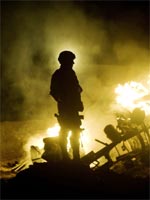 A few months ago, before the Academy completely altered the playing field for this year’s Oscars, “The Hurt Locker” looked like the longest of long shots for Best Picture consideration.
 Anticipating a fresh batch of “Hurt Locker” press ahead of the film’s UK release later this month, The Times’s Kevin Maher
 It’s been a couple of months since I
 Over at MCN, David Poland has offered his first formal
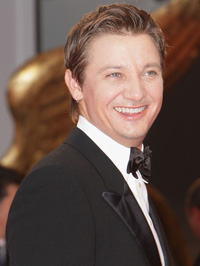 Jeremy Renner doesn’t have one of those handy “I always wanted to be an actor” stories. His journey to the screen was, much like the man, a rather unpretentious, play-it-by-instinct series of events that began to unfold in college.


 In this weekend’s Sunday New York Times, film critic Manohla Dargis
 (Edinburgh International Film Festival)
 Over at

 Only the greenest of awards-watchers needs reminding of the following statistic: a mere three women have been nominated for Best Director in the 81-year history of the Academy Awards. It’s long been an embarrassing state of affairs — never more so than in the late 80s and early 90s, when in three out of six consecutive years, the Best Picture nominee denied a directing nod happened to be made by a woman.
 It’s somewhat surprising that our