In Contention

Blog

  • Reading “W”

    Boy, they sure are leaning on some hyperbolic recent dubya lore to push this thing along. I’m only about 50 pages in or so and already more than a few things turn me off about this script, but I’m also somewhat surprised that writer Stanley Weiser has gone the way of presenting Bush in such a deep character study.

    I’ll probably write up a “Page to Screen” article later in the fall. But I’m definitely looking forward to Josh Brolin in this role.

  • Poland calls ‘Speed Racer’ a “masterpiece”

    speedracer1.jpgWell, as usual, he doesn’t come right out and say it, but his implications are obvious.

    This film looks like an absolute headache to me, and considering the Wachowski brothers have not created something that caught my fancy since the first installment of “The Matrix” nine years ago, I’m not holding my breath here. Poland’s endorsement is also no shock given that he has gone into the well for the Wachowskis over and over and over again. I guess if you can find genius in “The Matrix Reloaded” and “V For Vendetta,” you’re bound to find it in what looks, on the surface, to be a bubble gum time warp and nothing more.

    But wait, there are family values!

    I doubt it’s that deep, but David likes what he likes. As do we all. See for yourself.

  • Boy, if you hated ‘Donnie Darko’

    southlandtalesrockface1.jpgAnd I did. But Jesus, I put myself through Richard Kelly’s “Southland Tales” last night and really, truly, it might be the worst film I’ve ever seen.

    No one wants to be the last guy to show up to a smack down, so I won’t get into all the whys and what fors on this unqualified mess. Plenty have had their say on the matter. But never has a film exhausted me to the point of absolute, unmitigated fury. I was literally pissed at how terrible this thing was.

    What is worse, I decided to check out the flick’s Rotten Tomatoes page, and lo and behold, there are fools out there forgiving and, in some cases, justifying the film. Staggering.

    I’ve thought Richard Kelly was the cinema’s luckiest hack ever since I laid eyes on “Donnie Darko” back in 2002 or so. But somehow, he’s developed a fan base because of that film (and even for his work on another train wreck, Tony Scott’s “Domino”). I don’t get trends like this. I never do. But I hope he goes away now and, if he must come back, I hope he beats this wretched muse out of his creativity.

    Poor Rock.

  • The machine is us

    httpv://youtube.com/watch?v=6gmP4nk0EOE

  • Foundas got served

    I never miss an opportunity lately to read up on someone giving LA Weekly critic (or in this case, Village Voice pundit) Scott Foundas his due. Today, its Ryan Adams at Awards Daily, who lays into Foundas’ rather inane stretch for an observation that Paramount Pictures are doing everything they can to keep Iraq out of the promotion for Kimberly Peirce’s “Stop-Loss.” Take a look:

    Whoa! spoiler alert there, Scotty! Stop Loss is about Iraq, you say? Never woulda guessed from the saturation advertising of, um, soldiers in desert camo and stuff. Way to “spill the beans” there, friendo. And yet Foundas believes the same target audience he belittles are so informed that they’ve seen all the Vietnam movies like The Deer Hunter and Coming Home…

    Of course, Adams is biased here. He’s made no attempt to conceal his pre-ordained love for “Stop-Loss” in recent weeks. But I’ll give him the benefit of the doubt on this one. Give it a read. And if you really want to put yourself through it, check out Foundas’ stretch for a news item at the Voice.

  • Almost there

    shepherd.jpgRobert De Niro’s “The Good Shepherd” has been running on HBO this month. I stopped flipping to watch some of it this evening, kind of caught up in the brief year-ago nostalgia, but mostly transfixed with a film that is so close, yet so far.

    I remember when I first saw the film at the Clarity screening room in Beverly Hills in December of 2006, surrounded by a typically judgmental crowd of HFPA members. I had high hopes. It was, after all, the year’s most anticipated would-be Oscar film, much like 2007’s “Charlie Wilson’s War.” There was a hell of a crew assembled for what sounded like it could be a solid, dense, but meaningful effort. The catch was that I had read Eric Roth’s screenplay some months prior, and “dense” didn’t begin to cover it. I knew this was a script that demanded some sort of device to dig a story, not necessarily bogged down, but still somewhat abstruse, out of the literary and onto the screen in an authoritative manner.

    I had also just finished up a profile of Roth for The New York Times and had grown as fond of the man as I had his work throughout the years.

    (more…)

  • Not that it matters, but…

    …a month or two ago, the last thing I was completely sick of the Oscars. Nowadays, the only thing that gives me peace of mind from the rigors of school is coming here to work on the redesign. Weird.

  • Don’t tread on me

    I’m starting to wonder if a 7-part mini-series was the best way to go on “John Adams.” While there were some great moments with Tom Wilikinson in last night’s third installment, I have to confess, it was largely boring on the whole. Who would go back and re-watch something that tedious?

    The history, thankfully, was accurate enough but they are still hanging their hat on that “Adams sacrificed so much for the country” ho-hum. Four episodes to go. I better see the reasons to hate him and but fast.

    And I want more David Morse. Sure, he was kind of — awkward as Washington. But Washington WAS awkward, so it’s a weirdly perfect fit. Can’t wait to see the story pick up with him once again.

  • Can’t stop watching

    Not Oscar related, but what is in March? Win, lose or draw, this will be one of the all time greatest speeches. And I just keep watching it.

    httpv://youtube.com/watch?v=zrp-v2tHaDo

  • Remembering Anthony Minghella

    9759a.jpgI’ve been tucked away on an island for the past week, stuck largely in a news vacuum and certainly free of the bindings of daily internet briefings. But it saddens me to return to the shocking news of Anthony Minghella’s passing.

    The Variety report indicates a brain hemorrhage as the cause of death, though Minghella’s publicists, Leslie Dart, is saying that is not so. Whatever the case may be, we’ve been swiftly relieved of one of the cinema’s most interesting voices, a man with just six films to his credit but all of them representative of the man and his convictions in some way, shape or form.

    I met Minghella just once, in December of 2006 when I moderated a Q&A with him and actress Robin Wright Penn for the underrated “Breaking and Entering” in front of an audience of SAG actors. What I remember of the man is a delicate touch, a soft-spoken manner that still held a certain adoration of truth in expression.

    He took the utmost care and consideration for any query, always ignorant of the stock answer and always intoxicating in his process, in explaining why he saw the world the way he did on celluloid and why he went to the deep and profoundly affecting places that he did in his work. Whatever one’s opinion of his filmmaking, it would be difficult to argue with his conviction.

    And now, he’s gone — taken from us like some cruel joke. I’m proud to say I shared a stage with him. I’m prouder, still, to say I was able to speak with him about his craft.

    If only once.

    You can read producing partner Sydney Pollack’s touching remembrance here, and actress Juliette Binoche’s eulogy poem here.

  • HBO’s “John Adams”

    John AdamsI must say, I’m slightly agitated by the approach HBO’s latest mini-series, “John Adams,” seems to be taking.

    Granted one cannot build a 7-part event around a hero too clearly flawed, but the fact remains that Adams wasn’t exactly the most noble of our founding fathers. Being a journalist, I can’t personally celebrate he of the Alien and Sedition Acts without considerable pause, for instance.

    The first part has been a typical conception: building the main character as an outcast set on the law first, and last. I’m not overly familiar with Adams’ early professional years, but ultimately he was a part of a paranoid Federalist sect that was more terrified of the notion of true freedom than not. The specter of the guillotine had better hang heavy over other portions of the mini-series if I’m to personally take it seriously as accountable in its history.

    And Paul Giamatti’s Adams had better see a swift fall from the grace of this initial entry. (more…)

  • OFF THE CARPET: 2008, a year in advance

    Another year, another set of wins…and another look ahead at what’s in store NEXT year.

    It’s never too late to take a long gander at what we might see dominating the film awards landscape in 365 days, and with that in mind, I’ve been doing my usual mulling over the possibilities for a few weeks to put together the sadly thorough examination of the 2008-09 award season that follows. Let’s get into it. There are some major considerations to take into account. right off the top.

    Like Leonardo DiCaprio, for instance, who is set to be the entertainer of the year. With performances in “Body of Lies” (Ridley Scott) and “Revolutionary Road” (Sam Mendes), DiCaprio is working with a duo of awards-proven talent this year. Perhaps that will work against him, much like it did in 2006, and no major Oscar success will come knocking. But we’ll wait until we see the performances. Each of them could be enticing.

    This year’s Best Picture Oscar victor Scott Rudin is back again, by the way, with “Revolutionary Road,” recently inherited by Paramount Vantage and probably one of the true “frontrunners” this far out that we could put our finger on. The only other film in Vantage’s arsenal is Edward Zwick’s “Defiance,” which could simply be a commercial success, but might find its way to multiple nods like “The Last Samurai” and “Blood Diamond” in recent years.

    (more…)

  • The top 10 shots of 2007: part two

    Today we round out the top 10 shots of the year with the final five.  Check out part one if you missed it.

    Let’s dive in:

    #5

    Michael Clayton

    “MICHAEL CLAYTON”
    Director of Photography: Robert Elswit

    We were completely ripping off New York filmmaking from the 1970s, things like “Klute” and pretty much everything Owen Roizman has ever shot.  But Tony’s sense of these things was not lots of little pieces; he loves making kind of graphic frames that play as long as possible.

    –Robert Elswit

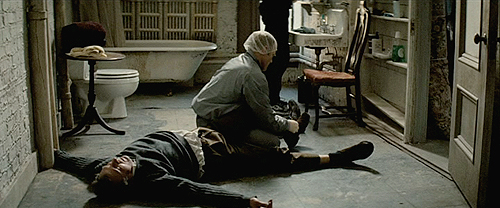
    Robert Elswit had a hell of a year in 2007, finally getting his due from the American Society of Cinematographers who awarded his work in Paul Thomas Anderson’s “There Will Be Blood.”  There was another film featuring Elswit’s unique signature, however, that flew under the radar for its considerable attention to composition and camera movement: Tony Gilroy’s “Michael Clayton.”

    Much is made of the film’s final sequence, a long shot focused on Clayton as he rides away from the hysteria in his life, desperate for his cab driver to “just drive.”  But a companion shot from earlier in the film was just as arresting, if not more so, as a purposeful point of transition to the second half of the endeavor.  A long tracking shot that never misses a beat, both behind and in front of the camera, the scene detailed is the expert, painfully clinical execution of Arthur Edens, played to an award-worthy T by Oscar nominee Tom Wilkinson.

    The final image is steeped in theme, and an initial tracking sequence under Edens’ opening monologue pulls the viewer into the film’s interior world, but this particular shot is so cold as to be frozen in its depiction of something at once gruesome and strangely beautiful, fluid.  I’m not privy to whether it may have been a directorial decision, though I suspect it may have been, but it is the crown jewel in a film packed with precision from Elswit.
    (more…)

  • The top 10 shots of 2007: part one

    Daniel Day-Lewis in There Will Be Blood2007 was, to my mind, the greatest year for cinematography in a long, long time.  I can’t recall the last time I was so thoroughly impressed with the visual artistry of film after film like I was last year, and I attribute that to the intriguing spark of creativity underway in the film medium as of late.  Newcomers and veterans alike were putting awe-inspiring images on film, some of the seasoned pros besting their already exceptional portfolios.
    I wanted to do something special in the way of commemorating the efforts of these individuals, and so I set out to interview a number of them as the year drew to a close.  Sadly, I was never able to piece those interviews together in a proper story like I would have wanted, but in recent weeks it has occurred to me that it may be just as beneficial to offer up something you don’t regularly see: a personal compilation of the greatest single images from the cinematic year.

    And so it goes that I offer the Top 10 Shots of 2007, a two part piece that will run down what I felt were the best of the best in a year full of exceptional cinematographic work.  Today, I’m running down shots 10 through 6, and tomorrow, we’ll wrap it up with the top 5.  Mixed in you’ll find sporadic comments from the lensers in question, as I feel it only appropriate that I give that small gateway into their process for readers and viewers alike.

    I hope you enjoy reading this as much as I did compiling it.

    (more…)

  • REVIEW: “The Assassination of Jesse James by the Coward Robert Ford” (****)

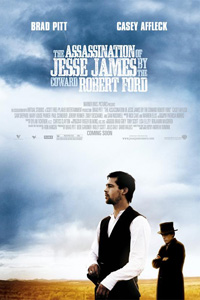
    The Assassination of Jesse James by the Coward Robert FordIn 1983, author Ron Hansen crafted a novel that ought to be considered mandatory reading for anyone fancying himself or herself attracted to the western as a genre and as a conveyor of essential truth. A Shakespearean account of betrayal in the old west, Hansen’s masterful sketches revealed deep and vibrant characters that transcended the nickel-book mythology into which they inevitably found themselves woven.
    Twenty-four years later, filmmaker Andrew Dominik has accomplished a visual telling of that story as close to cinematic perfection as you could hope for. At the risk of sensationalism, I would call “The Assassination of Jesse James by the Coward Robert Ford” the most accomplished work of moving imagery committed to film in nearly a decade. It is a staggering piece of true cinematic art.

    The tale is as simple as it is complex, a trait shared by the greatest of western storytelling. Jesse James (Brad Pitt), the infamous outlaw of old, found himself the subject of obsession, fascination and idolatry by the young and ambitious Robert Ford (Casey Affleck). A yearning to touch greatness, or even reside in similar territory, drove Ford to seek out acceptance amongst James and his gang of outlaws in the waning years of the 19th century. A lethal combination of angst, envy, hubris and government sanctioning brought Ford to a place on April 3, 1882 where firing a bullet into the back of James’ skull seemed the logical course of action. And so it was.

    Dominik and director of photography Roger Deakins have framed the legend of James in some instances by blurring the outer edges of the frame. Perhaps the intention is to convey a legend we know little about, given the cloud of mythology that surrounds actuality. But there are depths of reality here that speak to some fairly grandiose truths, and that, I think, is what Dominik is driving at.

    With all the sensationalized accounts, all of the larger-than-life depiction, there is true poetry in the life and death of the outlaw. And there is true poetry in his assassin’s regret. Myth is born out of realism, and Andrew Dominik, an Australian, seems to understand the American western better than any contemporary, and many who paved the way before him.

    (more…)

  • REVIEW: “Sunshine” (**1/2)

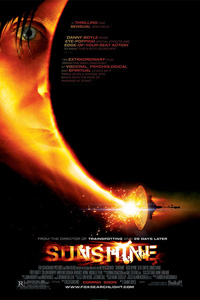
    Fox Searchlight Picutres\' SunshineI really wanted to like Danny Boyle’s latest mind-bending cinematic excursion. The elements were in place for the talented genre director to crank out one of the great science fiction films of our time. Writer Alex Garland was on board, a certifiable genius of the narrative form. A decent cast of actors were assembled. Technical achievements seemed to be lining up to pitched perfection.
    But as I watched the film unfold, I soon stumbled upon that most sickening discovery every filmgoer feels at some point or another: the sense that I needed to let hope slip away. “Sunshine,” I had to admit to myself, was a colossal miss.

    The film tells the story of a last-ditch effort in a future society to save our dying sun. Earth has plunged into an ice of sorts age in the year 2057. One mission to essentially reboot the giant star’s core with a massive bomb explosion has already failed as of seven years ago.

    And now, a new, likely final attempt has been launched with an eight-member crew aboard the Icarus II, a vessel dwarfed by the gargantuan payload it pushes through the cosmos toward an uncertain end. It is the mission or nothing at all, and that is the reality the film embosses at every turn.

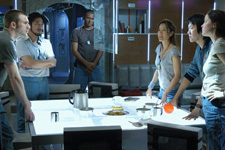
    The Icarus II’s octet serves as the film’s ensemble throughout. Front and center are Mace (Chris Evans), a hard-boiled military mind (though he is the resident engineer) who embodies the spirit of “failure is not an option,” and Capa (Cillian Murphy), a physicist who has to be the most important member of the crew, given the events of the narrative. Also sticking out is Searle (Cliff Curtis), a psychologist losing himself to the wonder of that which the crew seeks to save, as well as Corazon (Michelle Yeoh), a botanist charged with maintaining the vessel’s oxygen garden, the crew’s primary source of oxygen and food.

    Ship captain Kaneda (Hiroyuki Sanada) and navigation officer Trey (Benedict Wong) serve their plot points well enough. Mostly they just fade into the background with second in command Harvey (Troy Garity) and pilot Cassie (Rose Byrne).

    SunshineThe ensemble performance is a solid one. Chris Evans especially proves again that even amidst artistic turmoil he is a charismatic presence. But if this bevy of crusaders sounds similar to “Sphere,” the Michael Crichton novel butchered in cinematic form by Barry Levinson in 1998, it should. It seems a staple of the genre has become the busload of specialists. But that’s not what “Sunshine” does to implode on itself.
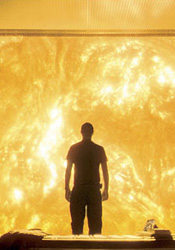
    You see, there is a lot of beauty in “Sunshine”’s visual realizations. Danny Boyle is a filmmaker who specializes in elevating that which should be seen in brighter intellectual and emotional hues to operatic levels. And this is certainly a Danny Boyle experience in that light.

    But on the page, in the confines of story, Alex Garland has managed to mangle what might have been a more than passable sci-fi experience by resorting to tactics we’ve already seen in zingers like “Event Horizon,” “Mission to Mars” or the aforementioned “Sphere.”

    To further expound upon this requiem for Garland’s talents, as they relate to “Sunshine,” never have I witnessed a deus ex machina so blatantly employed and so confusing in its existence. As the third act begins to clumsily unravel, one can’t help but furrow the brow and struggle to comprehend the direction, indeed the point of the narrative – if even on the terms of the story itself, which seem to fly out the window at this crucial juncture. The cinematography even seems to unnecessarily disorient at this stage.

    Cliff Curtis in SunshineThere are elements worthy of praise. As noted, Boyle is a visual technician without parallel. The visual effects are beautiful and seamless. Most especially, the sound work in the effects and mixing stages is another character unto itself, as necessitated by a film taking place in the vacuum of space. And the score offered up by John Murphy and Underworld is original and enjoyable. However, I can’t venture much further out onto the limb of commendation, I’m sorry to say.
    The question “Sunshine” is posing is a valid one, and most important in the science fiction genre, it is a meaningful one. What if the planet’s solitary source of nourishment – in all its phases – were to lose its steam, lose its power? What if the sun were to die?

    Basically, what if the giant light bulb went out? What the film does with that question, most especially in its third act, is somewhat artistically infantile at best.

    It has been respectfully requested by the filmmakers that none of the film’s surprises be revealed through reviews, which is fair enough. If I knew where “Sunshine” was going prior to screening it, I might have waited for DVD.

  • INTERVIEW: Patrick Marber

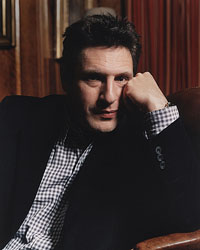
    Patrick MarberIn some sense, playwright and screenwriter Patrick Marber could best be described as he endearingly refers to friend Daniel Craig: “He’s just a dude.”

    He sports a shock of black hair with hints of gray, looking still younger than his actual years. He’s fond of his cigarettes and has the same icy blue eyes as fellow Oscar nominees Peter Morgan and Guillermo Arriaga. However, where he seems to break away from that, or any company, for that matter, seems to be in his idiosyncratic nature. He’s warm and open, but clearly there’s more underneath.

    This is a guy concealing his hand.

    A glimpse at Marber’s film work alone will reveal two strikingly different portraits of obsession and dependency. In “Closer,” which he adapted from his own play for filmmaker Mike Nichols in 2004, the sexes wage war in unforgivable, bitingly honest ways. In “Notes on a Scandal,” adapted from the Zoe Heller novel and directed by Richard Eyre, the scathing realities of “Closer” give way to equally painful notions of fantasy, longing and self-delusion. How does a guy with three young children and a healthy professional status allow himself to “go there?”

    To be fair, “Closer” came at a troubling time for the writer. Though he doesn’t subscribe to “writing as therapy,” the drama and characters of that stage hit certainly served such a function for him at a crucial time. And he’ll be the first to admit the work reads better if you happen to be concurrently experiencing the crushing truths it puts on display. That was a decade ago, however, and even today, he can’t seem to feel those same emotions when he revisits the work. To Marber, it’s just material now.

    (more…)

  • The nominees react

    After a few weeks of frigid, citrus terrorizing temperatures, if you step outside this morning in Los Angeles, it’s a beautiful, cloudless, sunny day. But it’s a little sunnier for those who were greeted with Oscar nominations, whether expected or unexpected. I had the opportunity to talk with a few of the lucky souls who’ve had the pleasure of fielding phone call after phone call this morning. Here’s what they had to say.

    Lots of happiness in the Fox Searchlight camp today, as the little film that could, “Little Miss Sunshine” made its way to four Oscar nominations including Best Picture and, not surprisingly, Best Original Screenplay for Michael Arndt. I called Michael around 7:45 this morning to get his reaction, and he was still the same modest fellow I spoke to face to face over the weekend.

    “I knew that there were a lot of people out there who loved the film,” he told me, “but this is the ultimate validation of the idea that the film industry is democratic. A year ago we were hoping to get a distribution deal and now we have four Oscar nominations.”

    Michael says he went to sleep pretty easily (and who wouldn’t, in his shoes), but that didn’t stop him from waking up at three o’clock and suffering insomnia throughout the rest of the early morning hours. Suffice it to say, he was wide awake when he heard his name called this morning.

    Best Supporting Actor nominee Jackie Earle Haley (“Little Children”) has to be the happiest guy in the business this morning. “I think I’d have to agree with you on that,” he told me, calling from his home in San Antonio. “This is just unbelievably crazy. They need to invent a few more words, because every adjective, this is just a little bit better.”

    The most adorable and giddy Oscar nominee you could expect to talk to, Haley was clearly on cloud nine, even hitting bouts of speechlessness during our conversation. Funnily enough, even in the central time zone, Jackie was asleep when the announcement hit. His wife ran into the bedroom screaming and crying, “You got it!” “We just hugged each other and cried for, like, five minutes,” Haley said.

    One of today’s nominees was actually surprisingly snubbed for his work on “Good Night, and Good Luck.” last year, film editor Stephen Mirrione. Mirrione and Douglas Crise shared one of “Babel”‘s seven nominations this morning.

    “The types of movies I gravitate towards aren’t really mainstream movies,” he told me via telephone shortly after the nominations were announced. “So I’m pleasantly surprised when they become so widely accepted, even if I know the material I’m working with is exceptional. And I owe a lot to wonderful performances.”

    Crise has served as Mirrione’s first assistant editors for ten years. This year he got the bump to co-editor because “Babel” started shooting before Mirrione had finished work on “Good Night, and Good Luck.” Now the longtime collaborators get to share in the spoils of an Oscar nomination together.

    Another nominee who has felt the sting of Oscar’s avoidance is Patrick Marber, nominated today for his adapted screenplay “Notes on a Scandal,” based on the novel by Zoe Heller. In fact, when Marber failed to score a WGA nomination for his work two weeks ago, he says it felt exactly how the circumstance of “Closer” played out in 2004, for which he received BAFTA and Golden Globe nominations, but found no such luck with the guild and with the Academy. Suffice it to say, he was pleasantly surprised this morning.

    “Being nominated is a lot more fun than not being nominated,” he told me, calling from London. “You suddenly get lots of phone calls from people you haven’t spoken to in years. And it’s huge for us, for the film, to get four nominations. Judi and I texted each other, and I got a one word email from Zoe: ‘Yay.’ She’s always to the point.”

    Finally, one of the big stories of the morning was Picturehouse’s six nomination haul for Guillermo del Toro’s “Pan’s Labyrinth.” Hitting the ground running in its inaugural year, Picturehouse had two critically lauded efforts hit screens in “Pan’s” and director Robert Altman’s “A Prairie Home Companion.” Picturehouse president Bob Berney concedes that it was a shame not to land at least one mention for Altman’s golden-hued, poignant swansong, but it was bittersweet considering the surprising glut of appreciation thrown the way of “Pan’s Labyrinth.”

    “We decided to come out at the very end, but to do that, you have to know you’ve got a great film,” he told me earlier this morning. “It’s cool to get these broader nominations outside of the foreign film category, because this really is such a group effort. You get a lot of energy from this film and it just takes you back to the joy of movies.”

    Berney conceded that a lesson learned in this introductory year for his studio was the subtlety of positioning your film as an underdog. The strategy paid off in spades this morning, and the president affirms that he and his team are ready to do it all over again next Oscar season.