In Contention

Blog

  • Oscarweb Round-up (Week of 5/12)

    Reintroducing the Oscarweb Round-ups you probably caught at Red Carpet District last season, I thought it might be worth it to try it on a weekly basis here at In Contention — until the daily onslaught hits us again in a few months.

    –Peter Debruge writes up the Student Academy Award winners. [Thompson on Hollywood]

    –BAFTA/LA spotlights British comedy with new awards ceremony. [Variety]

    –Sasha Stone wonders about the apparently randy nature of Woody Allen’s upcoming “Vicky Cristina Barcelona.” [Awards Daily]

    –Pete Hammond writes up an Oscar preview via this year’s Cannes International Film Festival. [The Envelope]

    –Guy Lodge responds. [In Contention]

    –Blake Rutherford previews the Little Rock Film Festival and takes the opportunity to ponder what the festival circuit means to films looking for traction. [In Contention]

    –Noah Forrest thinks Oliver Stone’s upcoming “W” is a “bad idea.” Meeee tooooo. [Movie City News]
  • Fresh face


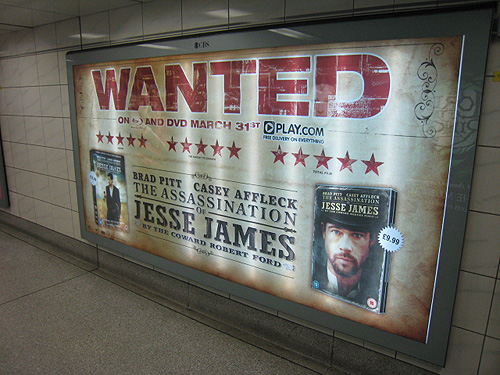
    Snapped in the Bank Street tube station on the Central Line. I like the Region 2 cover art.

  • A shout from the UK

    A nice view overrides an overcast (duh) drizzle here in London. I’m glancing out over the Thames as I write this, while a hop across the hallway here provides a look at Parliament, Big Ben, Westminster Abbey and the London Eye. Very pleasant.

    Meanwhile, down on the continent, the Cannes International Film Festival is catching its stride. The big news so far, as you’ll read below, seems to be that “Blindness” might have come in below expectations. Of course I’ll hold out judgment for myself when I see it, but I hope Fernando Meirelles doesn’t become a flash in the pan. As in love with “City of God” as I was, I was not impressed by “The Constant Gardener.” But his latest has been a must-see for me since the project was announced.

    The crew has done a nice job of rounding up info and perspective in this space, but I always take the opportunity this time of year to spotlight Jeff Wells’s coverage of the fest, without a doubt the most eye-catching aspect of Hollywood Elsewhere in a given film year. Hopefully he comes across a change of clothes soon.

    As for me, I’m sure I’ll be in and out with thoughts as the fest pushes forward and as the summer movie season continues to be unveiled. (Indy 4 posters are splattered across the double-deckers out here, of course.) Mike Leigh’s latest, “Happy-Go-Lucky,” is playing up the street at the Chelsea. I’m sure I’ll duck in there to give it a look within the week, as I’m pretty excited for the director’s latest. (Guy reviewed the film for us in April.)  Otherwise it’s finding the typical balance of work and play — as always.

  • Day-Lewis in line for ‘Nine?’

    OK, so the dream cast potentially just got dreamier.

    Nothing has been confirmed yet, but Variety reports that none other than Daniel Day-Lewis (one almost feels that should be preceded with a Sir, no?) is in talks to play the lead in Rob Marshall’s film version of “Nine” — the Broadway show that is in turn based on Fellini’s “8½,” and is arguably one of the artiest musicals out there.

    If he boards, Day-Lewis will be joining a cast already sagging under the weight of its riches: Marion Cotillard, Penelope Cruz, Judi Dench, Nicole Kidman and (wow) Sophia Loren.

    It is a fascinating casting prospect for a number of reasons, and not just because we know so little of Day-Lewis’ abilities as a song-and-dance man. (And for those unfamiliar with the show, it’s a full-on, virtuoso musical role — no getting away here with shuffling and speak-crooning, a la Rex Harrison.) Of course, it wouldn’t surprise me to learn that a great voice and great moves are merely two other weapons in the man’s well-stocked arsenal of actorly gifts; given how selective Day-Lewis is with his projects, I sense he wouldn’t take the part if he wasn’t sure he could pull it off.

    (more…)

  • What do we learn from film festivals?

    Mr. Lodge was quick to cover the opening film of the Cannes Film Festival, perhaps the most elite in all of cinema, and one that was a springboard for several 2007 Oscar films, “No Country for Old Men,” certainly (“4 Months, 3 Weeks and 2 Days” was shamelessly excluded from Oscar consideration, although it won the top prize at Cannes). The Tribeca Film Festival, a result of Robert De Niro’s vision, recently wrapped in lower Manhattan. Sundance, the hot spot for indy cinema, concluded months ago.

    And while these marquee festivals dominate the news (the chic New York Film Festival takes place in autumn) it’s the wealth of smaller festivals, from Nashville to Connecticut to Tupelo, that allow for muchof the years best independent cinema to find an audience (and in many cases a distributor).

    A few weeks ago, I wrote about a fine independent film made in Arkansas. “Shotgun Stories” found its audience on the film festival circuit, traveling the world screening, practically, in front of anyone that would see it. It was buried in the wealth of offerings at Tribeca, although New York magazine managed to note it (this was almost a year before the film was reviewed favorably by critic David Edelstein). In 2007 it was nominated for an Independent Spirit Award.

    Tomorrow, the Little Rock Film Festival begins its second season. It was founded by documentary filmmakers Craig and Brent Renaud (along with their good friends Owen Brainard and Jamie Moses) who were recently nominated for Director’s Guild Award for their elaborate and compelling documentary “Off to War.” They recently completed a film for HBO on Little Rock Central High School. It was released in conjunction with the 50th anniversary of the desegregation crisis last September.

    By virtue of their background, the festival brings a wealth of documentaries to town. Last year, “War/Dance,” a festival entry, was nominated for an Academy Award. This year, several documentaries may be worthy of Academy acclaim, including one in particular, “Silhouette City.” It is a film about the rise of religious extremism in the United States. Several notable religious figures appear, including former Republican presidential candidate Mike Huckabee, James Dobson and Rick Scarborough. The film is directed by Michael Wilson.

    On the feature film front, it’s hard to overlook “War Eagle, Arkansas,” a film written by Graham Gordy (the upcoming “The Love Guru”). It stars Brian Dennehy, Mare Winningham and Dan McCabe who recently appeared in “The Namesake.” You’ll hear more about him. Like “Shotgun Stories,” this film could find its way up the independent awards chain, maybe all the way to California on the eve of the Oscars.

    In 2000, an up-and-coming director named Jason Reitman directed a short film called “In God We Trust.” It won an award at the Austin Film Festival. Last year, he was nominated for an Oscar for his stunning and hilarious film “Juno.” Filmmakers, actors and writers benefit greatly from these festivals. And so do moviegoers along the communities that support them. Fortunately, we’ve got a gem of a festival right here in Little Rock.

  • ‘Blindness’ misses the bullseye, say critics

    Well, in my last post, I said that “Blindness,” with its immaculate credentials, could hardly miss – which of course was issuing an invitation for it to do just that. The latest from red-hot director Fernando Meirelles opened this year’s Cannes Film Festival a few hours ago, to frustratingly mixed reviews.

    In his review, Kirk Honeycutt of The Hollywood Reporter calls the film both “provocative” and “predictable cinema,” and while he does admire Meirelles’ craft, he ultimately finds the film emotionally lacking:

    This philosophical coolness is what most undermines the emotional response to Meirelles’ film. His fictional calculations are all so precise and a tone of deadly seriousness swamps the grim action … Removing a fable from the comfort of the printed page to the photo-reality of film can sometimes lead to its own kind of blindness.

    Variety’s Justin Chang is similarly lukewarm on the film, bemoaning its “diminished impact and excess of stylish tics,” and is less impressed than Honeycutt is by the film’s technical qualities:

    Meirelles adopts a cooler but, in its own way, no less fussy aesthetic. He often floods the screen in luminous white to mimic the sensation of blindness, at other times bathing his characters in the stuff so they appear to be, in one’s words, “swimming in milk.” This deliberately artificial effect gives the film a stagy, self-conscious air.

    However, it’s not all doom and gloom by any means. On the other side of the Atlantic, Peter Bradshaw of The Guardian offers an unqualified rave of the film:

    Blindness is a drum-tight drama, with superb, hallucinatory images of urban collapse. It has a real coil of horror at its centre, yet lightened with finely judged touches of gentleness and even humour. It reminded me of George A Romero’s Night of the Living Dead, John Wyndham’s Day of the Triffids and Peter Shaffer’s absurdist stage-play Black Comedy, showing humanity groping in the darkness. This is bold and masterly film-making from Meirelles: popular entertainment with challenging ideas.

    (more…)

  • Cannes arrivals: ‘Blindness’ set to bow

    Wow, that seemed to sneak up on us quickly. The 61st annual Cannes Film Festival kicks off today, with Fernando Meirelles’ hotly anticipated “Blindness” opening the proceedings tonight.

    Pete Hammond at The Envelope has a neat round-up of the Cannes arrivals, with an emphasis on the Oscar prospects of the American films in competition. (Although, as I mentioned in an earlier post, the world cinema lineup this year is equally, if not more, mouthwatering.)

    Hammond does take care to point out to the awards-watchers out there that Cannes glory and Oscar victory don’t often go hand in hand, however:

    This year, particularly with the talent involved, there is lots of speculation about Oscar potential for new Cannes entries from past academy nominees and winners like Fernando Meirelles, Atom Egoyan, Charlie Kaufman, Walter Salles, Steven Soderbergh, Clint Eastwood, Woody Allen and others, although the sad fact remains that since it won, no film other than “Marty” has gone on to win the best picture Oscar after also nabbing the Palme d’Or — and that was in 1955!

    Several Palme D’Or victors over the years, like “Friendly Persuasion,” “MASH,” “The Conversation,” “Taxi Driver,” “Apocalypse Now,” “All That Jazz,” “The Piano” and “Pulp Fiction” did go on to best picture nominations.

    Roman Polanski’s 2002 Cannes winner “The Pianist” probably came closest, taking the academy’s director, actor and screenplay awards before what we imagine had to be the narrowest of losses to “Chicago” in the big category.

    All true, of course, but still – it’s been a while since the Cannes slate featured this many Oscar darlings in the official competition. And they don’t come any more Academy-beloved than the venerable Clint Eastwood, whose “Changeling,” starring Angelina Jolie, is one of the Cannes titles generating the most buzz from the awards-geek set. I remain less excited about the film than others, but one cannot overestimate the amount of industry goodwill out there towards Eastwood (and indeed Jolie, whom many feel was unfairly snubbed by the Academy for “A Mighty Heart” – though I thought that was one of their smarter calls, personally.)

    (more…)

  • Will Francis Ford Coppola ever see an Oscar again?

    The first time I saw “Apocalypse Now” I staggered out of the theater stunned by what I had seen on screen. I remember sitting on Bloor Street with this burning need to tell people what I just witnessed, what I had seen and how profoundly it had galvanized my soul. At that moment I began writing about film, giving up the dream of being an actor and becoming a critic-historian. Francis Ford Coppola altered the course of my life, and his films have changed the way I see and think about movies.

    (more…)

  • Heading across the pond

    I’m off to London later this evening for the next two months. I wanted to chime in and say that I’m happy the new digs and philosophy of the site has been met with a good burst of conversation, and I look forward to further growth throughout the year as we approach the Oscar season. Updating may or may not be spotty from me in the coming weeks. I’m not yet sure, as I’ll be in the throes of an internship I REALLY don’t want to screw up (at The Times of London…gulp). But I expect John, Blake, Gerard, Guy and, when he finally starts chiming in, Brian to more than pick up the slack.

    Enjoy yourselves. And, as always, enjoy the movies.

  • Great new Dern book!!

    He was nominated for an Oscar just once for his riveting performance in “Coming Home” as a vet who cannot wait to go to Vietnam, and once there cannot wait to get home, horrified by what he sees, betrayed by the dream of what he believed war should be.

    Bruce Dern was best known in the 70s as the go-to guy to play crazies. Sadly what most people missed is the fact he was a gifted actor, capable of doing so much more. He was the best part about “The Great Gatsby” as pompous Tom Buchanan and gave an Oscar-worthy performance as the Vietnam vet-turned terrorist in “Black Sunday,” still one of the best films ever made about terrorism. Dern was both electrifying and terrifying as Michael J. Lander, who cannot wait to drop a bomb into the Super Bowl.

    He dominated “Smile” with a broad comic performance that is among the finest of his career, and is forever remembered as the dude who gunned down John Wayne, shooting him in the back in “The Cowboys.”

    In the years after “Coming Home” for which he should have won the Academy Award for Best Supporting Actor (sorry Walken) he became a leading man in films such as “Middly Age Crazy” and “Harry Tracy” before fading from view in the late 80s. He emerged on TV recently in “Big Love.”

    I never tired of watching Dern on the screen. Whether it was in “The King of Marvin Gardens” or “Silent Running” he was a charismatic and interesting actor.

    The actor has written a new book entitled “Things I’ve Said But Probably Shouldn’t Have,” which is an exceptionally honest read moving through his career discovering how he landed some roles, and how some others slipped away from him. I read the book in two days — devoured every word. Loved it.

    One of the great actors of the 70s, Dern ended up being typecast. He never enjoyed the career of a Nicholson or a Hackman, but he was (still is) a superb actor. The book is a worthy read, and hopefully will take people back to his films. It did for me.

  • No Oscar for ‘Valkyrie’ in 2008

    I have to admit, I was looking forward to “Valkyrie,” Bryan Singer’s film about the plot to assassinate Adolf Hitler in 1944. Yes, I’m aware that the film stars Tom Cruise, but the remaining cast, Bill Nighy, Kenneth Branagh and Tom Wilkinson was intriguing. The film also re-united Singer with Christopher McQuarrie, his screenwriter from “The Usual Suspects.”

    The Sunday Times now reports that the film has been pushed to 2009. Originally scheduled for a summer 2008 release, the film received its first push-back to the fall earlier this year. The paper cites a senior executive at one of Britain’s leading cinema chains who says, “I know there have been all sorts of problems with this production and we will not be screening it at all this year.” The article also notes, ” The quality of Cruise’s German accent was widely commented on. The film has also had to have reshoots after footage was damaged in labs.”

  • Fans anxious for the ‘Dark’ — What about Dr. Jones?

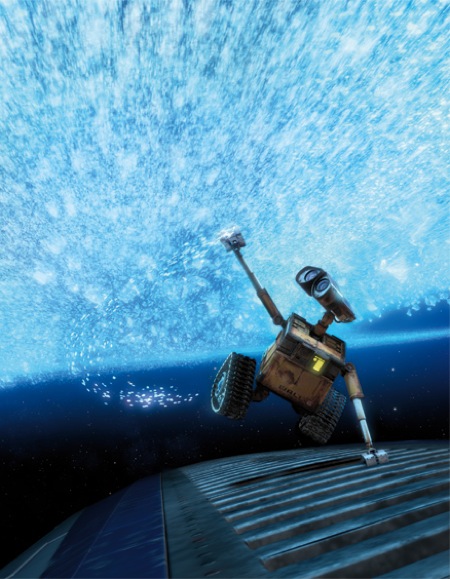
    When I posted last week’s poll regarding most anticipated summer films, I had an inkling Christopher Nolan’s “The Dark Knight” would be a heavy favorite. I didn’t, however, expect it to claim nearly 75% of the readership’s votes. Impressive, indeed. (And you all know which direction I leaned on that one.) “Indy 4” and “Wall-E” were the only other competitors with numbers worth mentioning.

    With that assessment out of the way, and with “Indiana Jones and the Kingdom of the Crystal Skull” set to be the net big thing — both at Cannes and with a May 21 release approaching — I wonder what the general opinion is of this film’s actual existence. It’s been nearly two decades since Indy swung into theaters (ironically, along with a “Batman” installment and a Bond film still to come, like this year). I’ve had my reservations since the beginning, but at times, they are overridden by the strong desire fo rthis flick to kick major ass.

    So what say you? Is it a disaster waiting to happen or, perhaps, the redemption of George Lucas and his recent desire to tinker with cinematic antiquity? Tell is this week’s poll!

  • Best year in film? 1974, no question…for me.

    I love it!

    When I began writing for this site it was my hope to be able to cover current Oscar material and reach back into the past to perhaps gain insight into how the Academy has thought, how that impacts today’s voting, and pay tribute to the films both honored and snubbed. Mr. Rutherford’s comments about 1973 got me to thinking about the best year in film, and while 1939 was a terrific year, as well as 1956, for me the finest year, with great films that hold up equally today is 1974.

    (more…)

  • Out of the bag…

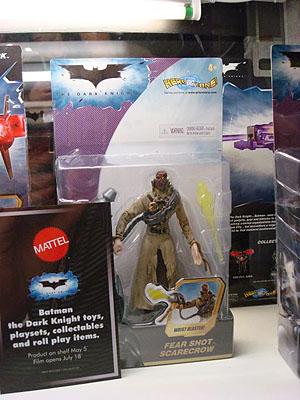
    Call me crazy, but I think it’s a little brave for Warner Bros. to have gone ahead with marketing a Scarecrow figure for the upcoming “The Dark Knight,” despite those of us more than aware that the character shows up in the film.  No?

  • 1973: the best year in film?

    Mr. Foote has prompted several interesting discussions about the Best Picture and Best Director winners and losers, as well as the best film of the 1980’s.

    Taking the discussion a bit broader, I thought it might be appropriate to ask: what is the best year in film?

    1939 stands out, certainly. “The Wizard of Oz,” “Gone With the Wind,” “Mr. Smith Goes to Washington,” “Goodbye Mr. Chips,” “Wuthering Heights,” “Stagecoach,” “Of Mice and Men” and “Love Affair,” to name a few. This year contained the most films listed on the AFI list of Top 100 American movies of all time, so maybe that should answer the question. Or not.

    1942, the year of “Casablanca,” “Cat People,” “The Magnificent Ambersons,” “The Pride of the Yankees,” and “Yankee Doodle Dandy,” also impressed the AFI crowd.

    1964 was another strong year. “The Americanization of Emily,” “Becket,” “Dr. Strangelove or: How I Learned to Stop Worrying and Love the Bomb,” “Mary Poppins,” “My Fair Lady,” “Topkapi,” “Zorba the Greek,” “The Pink Panther,” again to name just a few.

    1980 was a fine year. “Empire Strikes Back,” “Caddyshack,” “The Shining,” “Melvin and Howard,” “Raging Bull,” “Ordinary People,” “Tess,” “The Elephant Man,” “Coal Miner’s Daughter,” “Airplane!” and “Flash Gordon,” are still talked about and watched today.

    Some people loved 1999, a year than included “Being John Malcovich,” “Fight Club,” “Magnolia,” “Election,” “Three Kings,” “American Beauty,” “Cider House Rules,” “Sweet and Lowdown,” “Run Lola Run,” “The Limey,” “The Matrix,” “The Sixth Sense,” “The Insider,” and “All About My Mother.”

    (more…)

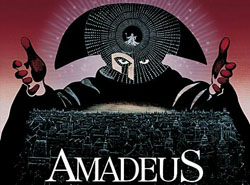
  • Amadeus deserving Best Pic winner

    OK! OK! Right you are, “Amadeus” was indeed a worthy winner in 1984 for best film. It was my hope that by not writing about it, you folks would realize I too liked the film, but in truth I should have covered it. I was worried about the article becoming too long.

    Milos Forman made a masterpiece out of the Peter Shaffer play, a stunning study of art and the differences between genius and mediocrity as played out in the Vienna Court during the time of Mozart. Imagine being old Salieri and listening to your own music become extinct while that of your hated rival becomes immortal.  And the only two people who really knew how brilliant Mozart’s work was were Mozart and Salieri, who quietly in the film despises Mozart the man, but adores Mozart the artist.

    I love the manner in which the wigs of Mozart are pink or purple, slightly different from the rest to suggest his rebelliousness, which came across in his music. He was the punk rocker of the opera set during his short lifetime.

    F. Murray Abraham was superb as Salieri, best of all when he is standing over music written by Mozart and realizes it is truly astonishing, while Tom Hulce is his equal in every frame as the brilliant Mozart.

    What I liked best about the film was the study of two artists, each in love with their art, one reasonably talented, the other gifted beyond human measure, finally coming face to face to create on Mozart’s death bed where Salieri sees and hears first hand how that brilliant mind composed, and simply cannot keep up. And what a stroke of genius to use the music of both on the soundtrack??!! A period masterpiece that never feels like a period film at all.

    And each one of you is right…I should have discussed it because I love it.

  • Retro

    httpv://www.youtube.com/watch?v=i1NKoMNy5bY