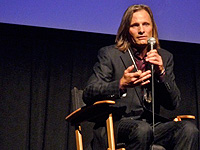
For a man more accustomed to the dirt-under-the-fingernails highs of hard journalism, the red carpets, photo calls and cosseted hotel suites of film promotion clearly represent a very different kind of strain for Mark Boal, the journalist-turned-screenwriter who on Monday won the prestigious Gucci Group Award at the Venice Film Festival.
Back in August, on the hottest afternoon of the year, the tall, lank-haired writer of Kathryn Bigelow’s “The Hurt Locker” lopes into the lobby of London’s cooler-than-thou Sanderson Hotel, dressed in jeans and a plaid shirt, and politely asks if I’ll join him over a beer.
“I’ve been on coffee all day, and it’s not working,” he grins, his face betraying missed hours of sleep, but still more boyish than its 36 years. “Maybe this’ll make a difference.”
Boal registers a brief flicker of bewilderment upon learning that the only beer on the Sanderson’s ultra-precious bar menu is Sri Lankan, and rather exotically priced at that, but we order two anyway. “It’s still beer, right?” he confirms with the waiter.
It’s regular-guy moments like this that shed a little light onto Boal’s humanistic gifts as a reporter and, now, as a screenwriter: modest, relatable and defiantly no-bullshit, it’s easy to imagine a group of soldiers welcoming him into the fold, as happened in 2004, when Boal was an embedded in (or, to use his term, “hung out with”) an elite bomb disposal unit for several weeks, laying the groundwork for the screenplay he then had no plans to write.
“I was really keen to do a story on the bomb squad,” he explains. “It was clear that IEDs (Improvised Explosive Devices) would be the army’s central logistical element by 2004, but still, nothing was being written on it. Iraq was a bit of a news black hole after the invasion … people simply thought it too dangerous.”

 Whether due to general festival raggedness or some iffy shrimp, I’ve been decidedly under the weather today, and a day spent in a darkened movie theater was not the obvious solution. So I’m writing to you from a quiet cafe on a canalside terrace near the Biennale site, where a combination of sunshine and pistachio pastries are doing the healing.

 While still ensconced in Venice, I must admit that the thought of diving into another festival makes me slightly dizzy — but the London Film Festival doesn’t care about that. LFF artistic director Sandra Hebron unveiled a
 I recently had a conversation with someone about Michael Moore and why he has a dicey professional reputation, and the answer — not to put the filmmaker on the couch — was interesting. Here’s Moore, making money hand over fist yet crying out against the evils of capitalism and the greed of corporatism. Perhaps it triggers some sort of guilt/self-loathing.
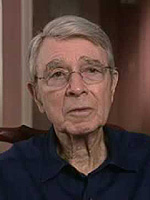 I never knew Army Archerd but I ran into him once or twice when I was at the Variety offices for this reason or that. I was certainly aware of the era he represented, the first daily movie columnist of his kind. He died Tuesday of mesothelioma at 87. Here’s a bit from Tim Gray’s
 The press release, in part:
 Telluride Film Festival
 One of the joys of my life is the 10 days in September I spend at the Toronto International Film Festival, bringing the film world to our city, the world press, and enough stars to take over Hollywood. The little festival that could, as it was known in the 1970s and early-1980s, The Festival of Festivals has become a world cultural event, perhaps the most important film festival in the world, and certainly rivaling Cannes for prestige.