Michaela Watkins has definitely been my least favorite cast member on “Saturday Night Live” as of late. A combination of “she’s kinda creepy” and an honest-to-God lack of any exciting comedic spark.
But then this “Bitch Pleeze” riff on film blogging and online film criticism had me laughing pretty damn hard:
Just a few days after I bemoaned the fact that an actor of Jackie Earle Haley’s calibre must resort to headlining a retread of “A Nightmare on Elm Street,” comes even more depressing news.
Almost fifteen years after collecting an Oscar nomination for a performance that most actresses would find to be career-making, poor Elisabeth Shue is reduced to starring in Alexandre Aja’s remake of “Piranha.” In 3-D, mind you.
Shue’s career trajectory, post-“Leaving Las Vegas,” has long been a mystery to me: beautiful, well-liked ingenue with a decent commercial track record finally gets a chance to show her serious dramatic chops, is duly recognised for her efforts, and then … nothing, save the obligatory Woody Allen ensemble slot, some window-dressing in a few flop action flicks, and now the chance to work with the creative force behind “Switchblade Romance” and “The Hills Have Eyes.” (The remake, of course.) Lucky lady.
Somebody stop the madness. Or the remakes. Whichever comes first.
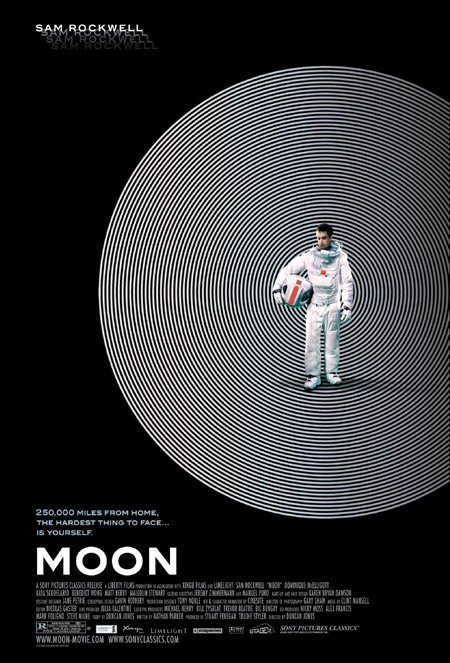
I’ve been quasi-fascinated with Duncan Jones’s “Moon” ever since early talk was making its way out of Sundance back in January. Sam Rockwell really looks to be turning in a special performance and the general anxiety inside me that hopes to see another amazing space film finally stick the landing (Danny Boyle’s “Sunshine” came SO close) has me waiting with bated breath.
The trailer was released last week and today we get a look at the poster. Both are below (though forgive the annoying IGN watermark on the trailer, which is apparently on every single YouTube embed. Gotta raise that awareness!)
Well, here’s something I guess. Rope of Silicon points us to TCM’s list of the top 15 most influential “classic” films of all time. I actually started working up such a list for the site a while back but abandoned it for whatever reason. It was going to include all comers, though, not just classic films. They seem to be listed in chronological order over at TCM.com. The 15:
“The Birth of a Nation” (1915)
“Battleship Potemkin” (1925)
“Metropolis” (1927)
“42nd Street” (1933)
“It Happened One Night” (1934)
“Snow White and the Seven Dwarfs” (1937)
“Gone with the Wind” (1939)
“Stagecoach” (1939)
“Citizen Kane” (1941)
“The Bicycle Thief” (1947)
“Rashomon” (1950)
“The Searchers” (1956)
“Breathless” (1959)
“Psycho” (1960)
“Star Wars” (1977)
My list certainly included most of those, which are by and large hard to argue with. “Birth,” “Battleship,” “Metropolis,” “Night,” “Snow White,” “Wind,” “Kane” and “Star Wars” were definitely included in my tally. If we were to extend it beyond the “classic” realm, I think we’d have to include “Jurassic Park” and the “Lord of the Rings” franchise. “Toy Story” would have to have a secure place, while “Pulp Fiction” obviously sparked a revolution some would argue had roots in “sex, lies and videotape” (also a contender for an “all-time” list).
Since TCM’s idea of “classic” obviously stretches into the late 1970s, I think it’s rather foolish to leave off “Jaws” and/or “The Godfather” considering what they meant to big business theatrical revenue before “Star Wars” came along. And going way back, “The Great Train Robbery” had people running from the theater screaming after the final image of a bandit firing his gun at the camera. There’s something to be said for one of the first films to enthrall like that.
And what about “The Jazz Singer?” How do you leave that title off a list of “classic” cinema? I guess it had to be narrowed to 15 but there are a couple of films on that list that could have been bumped, I think.
Let’s put it to the readership. Assuming an “all-time” list rather than limiting it to the classics, what would you say have been the most influential films? I could make a mean case for “Die Hard,” but I’ll anxiously await your input. Rattle off your lists and maybe we’ll settle things with a series of polls.
Is there anything out there worth talking about? Bueller? Bueller? I got nothin’. Though some recently released stills from Sylvester Stallone’s “The Expendables” (via /Film) remind me just how testosterone-laden that cast is.
Ryan Adams over at Awards Daily reminded me of Ron Howard’s Friday appearance on Real Time with Bill Maher, so I figured I’d offer the same trio of clips here. It was actually a pretty sober and valuable half hour chat, I thought.
For those interested, I reviewed the trade paperback Batman arc “Heart of Hush” for Bill Ramey, a.k.a. “Jett,” over at Batman-on-Film. Reviewing comic books. There’s a first for everything, I guess.
Regular visitors to his entertaining blog will know that Nathaniel Rogers has become the latest lunatic to enter the fray of (nearly) year-in-advance Oscar predictions, and as ever, they make for great reading. He has a number of pretty interesting hunches, some of which line up with my own (sight unseen, I also think “An Education” could emerge as a biggish deal) and some in a decidedly crazysexycool vein. (Terry Gilliam a Best Director nominee? I can’t see it, but I wish I could.)
For his top pick in the Best Picture category, however, Rogers sticks a little closer to the presumed script, guessing (like many others) that Clint Eastwood’s Mandela project is in the driver’s seat. He does, however, cannily note what too many other pundits have not — that the possibly-still-untitled film (we can only hope they find a more flavourful moniker than the bone-dry “The Human Factor”) is not strictly a Nelson Mandela biopic, but a sports drama of sorts:
The inspirational sports film is a regular staple of the multiplex. Most of them come and go with nary an Oscar blip. It’s kind of the ugly stepchild within the family of stories Oscar really loves, the true story period piece. Every once in a while, though, this overly populated genre does attract Academy eyeballs (Chariots of Fire, Seabiscuit, Hoosiers) and if there’s any pairing that comes with automatic prestige cred and appealing “important!” political background, it’d have to be Clint Eastwood and Morgan Freeman mixed with Nelson Mandela and South Africa. It’s guesswork. Maybe it’ll be too light for the Academy.
Having now read both Anthony Peckham’s script and John Carlin’s source book “Playing the Enemy,” I think Rogers might be on to something with the word “light” — though a serious-minded piece, the political content that you might expect in a film concerning arguably this era’s most revered politician is notably played down.
Billy Bob Thornton’s band has canceled the rest of its Canadian tour after the actor compared the country’s fans to mashed potatoes with no gravy in a testy interview that caused a sensation online.
The Boxmasters opened for Willie Nelson on Thursday in Toronto, where they reportedly were booed and met with catcalls of “Here comes the gravy.”
A note posted on Nelson’s Web site Friday said the Boxmasters were canceling the rest of their Canadian dates “due to one band member and several of the crew having the flu.”
The name Brian De Palma first came to me when I saw a screening of the director’s new film “Phantom of the Paradise,” a high energy rock and roll fantasy based loosely on the classic “Phantom of the Opera” story. The film was a knockout, with a marvelous score by Paul Williams that should have earned the attention of the Academy for the many outstanding songs within.
Shortly thereafter I saw a De Palma double feature: “Carrie” and “Obsession,” the former a superb adaptation of the Stephen King novel that earned Oscar nods for lead and supporting actress, while the second was a Hitckcockian thriller with a great musical score. The Hitchcock homage continued with “Dressed to Kill,” a superbly shot thriller that gave Michael Caine one of his most bizarre, yet finest roles. Sexy and terrifying, the film was a huge hit with critics and audiences in the summer of 1980.
One year later De Palma gave us his masterpiece, a moody noir with John Travolta in his first role as an adult. Here we had a director at the top of his game and an actor made into a superstar with his previous films, “Saturday Night Fever,” “Grease” and “Urban Cowboy.” Travolta was hungry, looking for the role that would bring him greater attention as an actor.
People forget Travolta was nominated for an Oscar for “Fever” and won the National Society of Film Critics Award for the performance, which launched his career. His one career fumble, at that time, was the goofy love story “Moment by Moment” with Lily Tomlin that left everyone who saw the film puzzled as to why it was ever made. In De Palma, the actor had a director who understood cinema, who adored actors and allowed them their freedom while gently guiding them towards his vision of the film. Travolta could not have been in better hands.
I love watching the end of the world unfold on screen. It’s just something I enjoy. And sue me if I was a little bummed at a certain caution on the part of Hollywood to offer up the apocalyptic imagery it had serviced to the masses in the action-packed summers of the 1990s following 9/11.
Go back and take a look at “Armageddon,” for instance. Hardly great cinema but I got a kick out of it just as I did “Independence Day” or anything comparable. The shot of the Chrysler Building being sheered in half by meteorites as people plummet to their death — the imagery is obviously prickly in the post-9/11 environment. And everything from “War of the Worlds” to “The Dark Knight” has gone out of its way to comment toward the disasters of that year, to put forth the sense that a thought process is being injected into blockbuster entertainment, that the mayhem actually means something on an artistic level. And I’m all for that. But I prefer not to be held hostage by it, either.
I remember talking with a colleague in New York last month who was bemoaning the failure of Alex Proyas’s “Knowing.” I had not seen the film yet at the time (though I have sense, and it’s certainly a…lesser accomplishment, shall we say, but it also deals with interesting ideas that really should be in mainstream Hollywood cinema). I rebutted with the notion that maybe a good, spectacle, end-of-the-world trip to the movies is just what Hollywood needs to shake out all the cobwebs.
When my list of the year’s most anticipated films hit on New Year’s Day, more than a few people raised an eyebrow at the inclusion of Roland Emmerich’s “2012.” I should come clean with the admission that Emmerich’s films, more often than not, work for me on some primitive, Neanderthal level. But I have to also admit to being fascinated with all of the speculation over the year 2012, which I wrote about nearly a year ago.
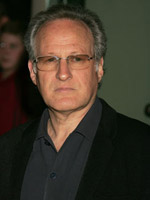
I interviewed Michael Mann on Halloween night back in 2006. Tons of traffic. And there was a Lakers game, so getting back from the West side was a pain. The sit-down was part of a larger piece I was writing for The New York Times on Mann’s friend and colleague, screenwriter Eric Roth. It was a solid hour-long chat and one of the few moments in this business where I really had to buckle down and keep the geekgasm out of sight because not only is Mann my favorite working director, but he’s also a hell of an intimidating cat.
I pulled out my recorder, set it on the desk for the interview. He proceeded to do the same thing with his own recorder. Serious guy.
Anyway, all of this is a long way of getting around to the point that I was floored by Mann’s music collection. It may have become exaggerated in my head by now, but I seem to recall a wall of CDs behind his desk — TONS of music. It made total sense, of course, seeing as Mann has a knack for tossing wonderful, moody, sometimes refreshingly fringe music into his films.
In the 1980s he had a big crush on Tangerine Dream, for better or worse. Moving into the 1990s, the Randy Edelman/Trevor Jones score for “The Last of the Mohicans” was beautiful stand alone work (mostly Jones’s contribution), but Mann also made great use of a couple of Moby tracks in “Heat” (the famous closing credits finale and “God Moving Over the Face of the Waters” being a key moment in my own discovery of cinema as something more than I thought it was.
“The Insider” made fine dramatic use of Lisa Gerrard a year before Hans Zimmer and “Gladiator” made it “cool,” while the opening montage of “Ali” under a live version of Sam Cooke’s “Bring It On Home To Me” is the best part of the film. “Collateral” and “Miami Vice” allowed for Mann to hold on to an obvious interest in Audioslave for a one-two punch (with some nice Roots and Groove Armada mixed in to the former), and now, the trailers for “Public Enemies.”
Both have utilized Otis Taylor “Ten Million Slaves,” perhaps the first trailer doing a better job of showcasing it. The latest example, which debuted today, opens with an eerie tune that I couldn’t place at first. After doing some digging, I discovered the track is “Black Heart” by Calexico.
Of course, a number of our musically savvy readers probably knew that already, but it’s new to me. And further evidence that Mann knows how to use music to drive home his already striking imagery. Here’s a weird YouTube video with the song played over an old burlesque routine by Amalia Aguilar. It’s totally twisted and worth a link here at the end of this somewhat newsless day:
Ever come across a match of star, director and project so uncannily perfect it gives you chills just thinking about it? That’s how I’m feeling upon learning (belatedly, I admit) that Tilda Swinton has signed on to star in Lynne Ramsay’s long-delayed adaptation of the Lionel Shriver bestseller “We Need to Talk About Kevin.”
I’m not sure how it took the news so long to reach me (the NYT’s Carpetbagger blog reported this last month), given that “Kevin” has been my most anticipated cinematic endeavour — bar none — for several years now.
There are a number of reasons for this. Shriver’s extraordinary novel (for the uninformed, it’s an epistolary breakdown of the circumstances leading to a high school massacre, as told by the teenage killer’s guilt-ridden mother) hit me like a well-aimed punch in the gut three years ago and resonates with me still. And Ramsay utterly earned my devotion with her first two features, “Ratcatcher” (1999) and “Morvern Callar” (2002): the young Scot could have the most distinctive aesthetic sensibility of any British filmmaker currently working.
Meanwhile, the lead role is as complex and risky a challenge as any actress could hope to take on — a mother bereft of any maternal connection to her offspring from the outset, as candid as she is ultimately self-deluding, she both invites and repels empathy. Few actresses walk the line between fragility and opaqueness as intelligently as Swinton, and fewer still would be brave enough to take on such a defiantly unsympathetic part. This is a casting bullseye.
Only the other day, I mentioned how glad I was to see David O. Russell keeping himself busy after the lengthy, hobbled production of his upcoming comedy “Nailed.” But I didn’t realize he was keeping himself this busy.
Mere days after the announcement of his attachment to the Weinstein Company’s “The Silver Linings Playbook,” comes news of yet another directorial commitment for the man: this time a romantic comedy, “Aaron and Sarah,” that apparently has John Hughes overtones. Variety reports:
Story centers on a nerdy guy and a popular girl who meet as freshmen and, over four years of high school, four proms and one funeral, become friends and eventually fall in love. Husband-wife team Chad Gomez Creasey and Dana Resnik Creasey penned the screenplay.
Producers Dan Jinks and Bruce Cohen (“American Beauty,” “Milk”) lend extra cred. Meanwhile, if I don’t hear word of another new Russell project before the month is out, I’ll be deeply disappointed.
 Just a few days after I
 Well, here’s something I guess.
 Regular visitors to his entertaining blog will know that Nathaniel Rogers has
 The name Brian De Palma first came to me when I saw a screening of the director’s new film “Phantom of the Paradise,” a high energy rock and roll fantasy based loosely on the classic “Phantom of the Opera” story. The film was a knockout, with a marvelous score by Paul Williams that should have earned the attention of the Academy for the many outstanding songs within.
 I love watching the end of the world unfold on screen. It’s just something I enjoy. And sue me if I was a little bummed at a certain caution on the part of Hollywood to offer up the apocalyptic imagery it had serviced to the masses in the action-packed summers of the 1990s following 9/11.

 I interviewed Michael Mann on Halloween night back in 2006. Tons of traffic. And there was a Lakers game, so getting back from the West side was a pain. The sit-down was part of a larger
 Ever come across a match of star, director and project so uncannily perfect it gives you chills just thinking about it? That’s how I’m feeling upon learning (belatedly, I admit) that Tilda Swinton has
