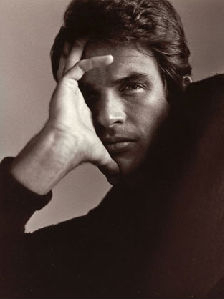
 Interviewing Warren Beatty a few years ago in Toronto, I was struck at once by his intellect, which is laser sharp. The man misses nothing. He speaks slowly, taking long pauses before he speaks, and avoids personal questions, which I dislike and refuse to ask anyway.
He was with Annette Bening at the time, supporting her efforts in “Being Julia.” But all I wanted to discuss was “Reds,” Beatty’s masterful film about John Reed and the Russian Revolution which won him the Academy Award for Best Director and was ousted for Best Pic by the vastly inferior “Chariots of Fire.”
I had heard he could be a nightmare in interviews, but he seemed genuinely interested in discussing the film. He remembers sitting there at the ceremony, and when the other film won Best Costume Design, he said he knew it was over.
Beatty was recently honored by the American Film Institute, which led me to go back and watch many of his films. I’ve come to the conclusion that, not only is he among the more under-appreciated actors and directors working in film today, but he has been for at least 40 years.
I like Warren Beatty, always have. I’ve always felt him to be a fine actor but an even better director. It had always been my hope that his career would follow that of Clint Eastwood’s, that he might devote more time to directing, but for whatever the reason, he has slowly withdrawn from the trade altogether.
“Reds” was truly a masterpiece — epic yet intimate, beautifully made, with great intelligence. It boasted a profound screenplay that captured the essence of a writer forever chasing history and yet having the foresight to write about what he witnessed along the way. And indeed, John Reed’s book “Ten Days That Shook the World” was one of the first truly great journalistic masterpieces ever written — if not THE first.
Beatty, Diane Keaton, Gene Hackman, Paul Sorvino and especially Jack Nicholson, as the great Eugene O’Neill, were superb in the film, witgh Maureen Stapleton winning the Oscar for Best Supporting Actress as the anarchist Emma Goldman. Beatty’s stunning direction was brilliant and Vittorio Storaro created magic with light and shadows to win the Academy Award for Best Cinematography.
The use of real life witnesses, their faces carved with age, people who knew John Reed and Louise Bryant, was nothing short of genius.
Beatty had begun his quest to direct back in the 1960s when he begged Jack Warner to produce “Bonnie and Clyde,” which would of course begin the era of the New American Cinema. Knowing he was not yet ready to step behind the camera, he hired Arthur Penn to helm the picture, on the condition they have at least one argument a day; it was usually one of an artistic nature. Beatty watched every move Penn made, absorbing, learning, preparing himself for the day he would take a crack at calling the shots.
“Bonnie and Clyde” was nominated for 10 Academy Awards, winning two, and it made Beatty a very wealthy man. More than that, it proved he could produce, proved he could be so much more than a movie star.
He would co-write and co-produce “Shampoo” (and some say co-direct), a superb political satire in which the star portrayed the studly hairdresser George, bedding as many women as he can. There were more than a few battles with renegade director Hal Ashby, perhaps fuelling one another’s artistic strengths.
The first time Beatty directed, he chose to do so in tandem, though make no mistake, despite the fact Buck Henry received a co-direction credit, Beatty called all the shots on “Heaven Can Wait.” His whimisical remake of “Here Comes Mr. Jordan” was a huge success, led by an outstanding marketing campaign that featured a memorable poster of Beatty in grey jogging sweats with wings attached. The film scored with critics and at the box office, earning nine Academy Award nominations, including four for Beatty, for co-producing, co-directing, acting and co-scripting. During the making of the film, his co-star and lady love Julie Christie constantly chided him for making such frivolous films, challenging him to step up and make something of substance.
Then we got “Reds.”
A bold masterpiece, “Reds” was named Best Picture of the year by the New York Film Critics Circle, with Beatty winning directing honors from the Directors Guild of America and the Golden Globes. The film was then nominated for a whopping 12 Academy Awards, with Beatty again nominated in four categories. All indicators pointed to “Reds” winning Best Pic, but when the final statuette went to “Chariots of Fire,” all of Hollywood collectively gasped. “Reds” needed that Oscar to allow the film to make money, rather than barely breaking even as it eventually did. Released on DVD in 2006 after 25years, the film holds up incredibly well and remains one of the great films of the 1980s, perhaps of all time.
Beatty would not direct again for nine years, finally stepping behind the camera again for “Dick Tracy” in 1990. In his version of the famous comic strip detective, Beatty canvased the design aspects of the film with primary colors. The villains of the film were heavily made-up as living cartoons while he, the good guy, cut a dashing figure in that familiar yellow trench coat.
I loved the film, but audiences and critics were split on it, perhaps not understanding what Beatty was doing, or reacting to the dreadful Madonna performance within. Al Pacino has a blast as Big Boy Caprice, and has been giving the same performance ever since. The picture would take home Oscars for art direction, makeup and song.
Beatty would wait another eight years to try his hand at directing, and when he did, he lashed out at the political arena with the brilliant black comedy “Bulworth.” A scathing study of what happens to a suicidal politician when he starts spouting the absolute truth, the film contains one of Beatty’s most engaging performances to date. It should have earned him an Oscar nod for Best Actor. Ditto his work as director. Rarely has a political film been so viciously honest.
In between, he gave what might be his most daring and extraordinary performance, as gangster Bugsy Seigel in Barry Levinson’s “Bugsy.” The script was written by James Toback, and thuogh Levinson was on helming duties, Beatty was still way above the line as producer, meaning he would challenge the director to make the best film they could. And it certainly all worked out in the end. The film earned 10 Academy Award nominations, winning two.
(And the less said about his appearance in “Town and Country” the better.)
When accepting the Cecil B. Demille Award at the Golden Globes a couple of years ago, Beatty alluded to the fact that he may direct another film, in fact he said, “Of course I’ll direct another movie.”
We anxiously await. Please, make another movie, Mr. Beatty. Direct another film. Your work has always been intelligent and quite ramrkable. Had you hopped behind that camera more often, you might even be considered among the elite directors working in modern cinema.
To some of us, you already are.
Comments
3 responses to “Mr. Beatty, direct another film please?”
I need to w atch more of his work, that’s for sure.
Nice essay. I liked the portrait of Beatty that emerges from Mark Harris’ recent book Pictures at a Revolution: Five Movies and the Birth of the New Hollywood. Beatty strikes me as one of the most self-conscious of handsome stars. How did he know to latch himself to Bonnie and Clyde as a producer? What did he argue about with Arthur Penn? How much were French New Wave films a factor at the time? At one point Beatty said “What else is making a movie, except attention to detail?” What details were they concerned about? Whatever they were, they worked.
Agree and agree — he is a brilliant man and the book coming from Peter Biskin will be telling I am sure.