In Contention

Tag: Julie Christie

  • The Great Performances: 2004

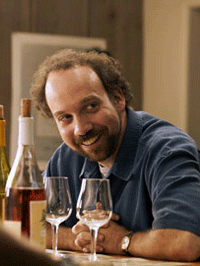
    Paul Giamatti in SidewaysIn Alexander Payne’s “Sideways,” Paul Giamatti gave the best performance by an actor in 2004, so said the New York Film Critics Circle, and how right they were.  So why, why, why was the actor denied an Oscar nomination?  Granted, it was a strong year, but his work was at the top of that heap and that snub was one of the biggest shocks of the year.

    Here was a man giving perhaps the finest performance in a comedic film since Dustin Hoffman in “Tootsie.” His co-stars go were recognized, save for the equally deserving Sandra Oh, but the leading man, around whose performance the film stands, is snubbed.  All I can remember saying is: “Wow.”

    Certainly Jamie Foxx deserved the attention he received for “Ray” and Leonardo DiCaprio was astonishing in “The Aviator,” even though he drew some criticism for before too youthful in the role. Rubbish, I thought.  He was superb, inhabiting Howard Hughes as he must have been in those days, brash, cocky, wealthy and willing to do anything that interested him.

    Clint Eastwood was terrific in “Million Dollar Baby,” while Jim Carrey gave a wonderful performance in “Eternal Sunshine of the Spotless Mind” — a marvelous piece of acting, in fact.  Equally fine, and dark, was Kevin Bacon as a pedophile struggling to start anew in “The Woodsman,” which was one of the most daring American films in a long time.
    (more…)

  • The Great Performances: 1997

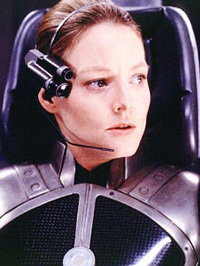
    Jodie Foster in Contact1997 was a great year for actors, but a tough year for Oscar; how do you choose when there are so many deserving nominees?

    It’s that age-old issue that some award-worthy performances are going to be left out, which though unfair and sad, is very much part of the Academy Awards and frankly what makes the whole thing interesting for us.  The Best Actor field ended up largely a battle of the old boys.  The acting warriors from the 1970s gave some of their finest performances in 1997, and four of the five nominees for Best Actor had been icons for 20 years.

    In fact the Academy could have allowed the one upstart to slip past and nominated Al Pacino in “Donnie Brasco,” which was the actor’s best work in years. As it was Pacino was by-passed in favor of young Matt Damon in “Good Will Hunting,” who found himself going toe-to-toe with Robert Duvall in “The Apostle,” Jack Nicholson in “As Good As It Gets,” Dustin Hoffman in “Wag the Dog” and Peter Fonda in “Ulee’s Gold.”

    I first saw Duvall’s performance at the 1997 Toronto International Film Festival and have written about it many times since.  He won the Los Angeles Film Critics Association’s Best Actor award, and then the National Society of Film Critics’ honor, but the Mayor of Hollywood stood in the way of Duvall’s second Oscar.

    (more…)

  • Say it right

    Last week, I wondered whether Mickey Rourke’s eccentric, yet moving, acceptance speech at the Golden Globes could bolster his chances with the Academy. It may sound like a trivial concern, but the fact remains that Rourke’s speech was a talking point, a bona fide ‘moment’ that made for great TV — and if Roberto Benigni has taught us anything, it’s that onstage personality goes a long way with the Academy. In a tight race, the promise of a memorable acceptance can be just enough to push a contender past the finish line.

    Now, Dave Karger is addressing the flipside of the question, and asking whether the relatively sloppy acceptance speeches of Anne Hathaway and Kate Winslet, at the BFCA Awards and Golden Globes respectively, could actually damage their Oscar campaigns:

    Upon sharing the Critics Choice prize with her idol, Meryl Streep, Hathaway — who certainly meant to say this a bit more artfully — said it was “fitting” that she tied for the prize with Streep since she thought the Doubt star was the best actress around. But it came off condescending to all the other actresses in the room, particularly her category-mates like Angelina Jolie and Melissa Leo. The usually composed Winslet, meanwhile, nearly had a heart attack when she won her two Golden Globe prizes. To many people, the reactions seemed over-the-top. Or worse, fake.

    It must have been overwhelming for both of them to hear their names called. But on the other hand, let’s remember that both of these awards are handed out by groups of journalists, for God’s sake — people that big stars like Hathaway and Winslet usually don’t give a hoot about. Why should they then fall to pieces over what those journalists think about them?

    (more…)

  • INTERVIEW: Kristin Scott Thomas

    Kristin Scott ThomasWhen interviewing Kristin Scott Thomas, the woman who for many audiences represents the living portrait of English upper-crust serenity, Led Zeppelin isn’t exactly the first name you expect to crop up in the conversation. And yet, halfway through our Transatlantic chat, that is exactly what happens.
    “Seeing the guys, well into their sixties, just getting up on stage and doing their thing … it’s just so inspiring,” she says, referring to the British rock gods’ reunion concert that took place in London a year ago. “And spanning generations too — my son is into them. It’s a reminder that you don’t stop being interesting or relevant at a certain age. I’d love to do that.”

    As entertaining as the idea of Thomas belting out “Whole Lotta Love” to a screaming arena of thousands is, it’s a weirdly apt comparison. Where many actresses her age recede (albeit not usually by choice) into mumsy bit parts and dreary disease-of-the-week movies, Scott Thomas, now (incredibly) 48, has recently been taking on the most challenging, intriguing work of her career to date.

    As if to prove the point, she is speaking from New York, where she is tackling one of the theater’s greatest female roles in her first ever Broadway gig. Her witty, ferocious interpretation of Arkadina in Chekhov’s “The Seagull” earned her an Olivier Award for the play’s original London incarnation and is now garnering breathless raves Stateside.

    It’s her recent film work, however, that has made 2008 a banner year for the thesp. Two highly entertaining, highly contrasting supporting roles — as a worldly lesbian in the smash French thriller “Tell No One” and an icy matriarch in period comedy “Easy Virtue” — are mere appetizers to her staggering, career-peak performance as an introverted, grief-ridden ex-con, reconnecting with family and society alike, in Philippe Claudel’s superb debut feature “I’ve Loved You So Long.”

    (more…)

  • Mr. Beatty, direct another film please?

    Interviewing Warren Beatty a few years ago in Toronto, I was struck at once by his intellect, which is laser sharp. The man misses nothing. He speaks slowly, taking long pauses before he speaks, and avoids personal questions, which I dislike and refuse to ask anyway.

    He was with Annette Bening at the time, supporting her efforts in “Being Julia.” But all I wanted to discuss was “Reds,” Beatty’s masterful film about John Reed and the Russian Revolution which won him the Academy Award for Best Director and was ousted for Best Pic by the vastly inferior “Chariots of Fire.”

    I had heard he could be a nightmare in interviews, but he seemed genuinely interested in discussing the film. He remembers sitting there at the ceremony, and when the other film won Best Costume Design, he said he knew it was over.

    Beatty was recently honored by the American Film Institute, which led me to go back and watch many of his films. I’ve come to the conclusion that, not only is he among the more under-appreciated actors and directors working in film today, but he has been for at least 40 years.

    (more…)