In Contention

Tag: Al Pacino

  • VENICE: Follow the Lido — a festival preview

    “Why Venice and not Toronto?” a colleague asked when I mentioned I was heading to the Lido for the world’s oldest film festival for the third straight year. Given the North American bent of this site, it was a fair question, but also one I found easy to answer — and not just for the dully practical reason of relative airfare expense.

    Toronto may have become the bigger and, depending on your field of interest, more influential festival (certainly so if you’re in the Oscar-watching business). But with its abundance of pre-premiered films and no juried competition, it’ll never have the grandeur or ever-so-slightly scuffed glamor of the Venice event, with its beachside location, soaring marble delegate halls and saturated aroma of overpriced espresso — not to mention the artsier exclusivity of its film programming, a once hit-and-miss virtue that scored a bulls-eye with a 2010 lineup that beat last year’s Cannes for range, relevance and vitality.

    (more…)

  • THE LISTS: Top 10 performances in Christopher Nolan films

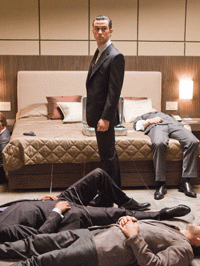
    The word of the day Friday will most certainly be “Inception,” as casually interested movie-goers and anxious fanboys alike line up to take in Christopher Nolan’s latest effort.

    Now, I have suggested in this space that the film’s ensemble is an organic one, alive and driven.  And that the performances are separately less than their sum impact. It nevertheless seemed a good time to look back over Nolan’s septet of offerings thus far and cherry pick the best portrayals for a return to this semi-regular feature at In Contention.

    Nolan always puts together a great cast. His carefully selected leads tend to ably balance themes of identity, control and psychosis, while highlighted supporting parts always prove to be charming outside-the-box considerations.

    With the latter in mind, I’d have loved to make room for the Steven Tobolowskys, Rutger Hauers, David Bowies, Ritchie Costers and Tom Berengers, but I naturally kept settling on the larger roles when push came to shove.

    So, without further ado…

    (more…)

  • Pacino talks past roles, ‘You Don’t Know Jack,’ etc.

    From 60 minutes, last weekend. Somehow part 2 of this thing has been obliterated from cyberspace, but I guess there’s some good stuff in here (though youc an view the interview in its entirety at CBS):

  • The Great Performances: 1997

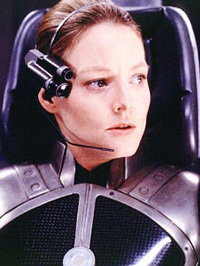
    Jodie Foster in Contact1997 was a great year for actors, but a tough year for Oscar; how do you choose when there are so many deserving nominees?

    It’s that age-old issue that some award-worthy performances are going to be left out, which though unfair and sad, is very much part of the Academy Awards and frankly what makes the whole thing interesting for us.  The Best Actor field ended up largely a battle of the old boys.  The acting warriors from the 1970s gave some of their finest performances in 1997, and four of the five nominees for Best Actor had been icons for 20 years.

    In fact the Academy could have allowed the one upstart to slip past and nominated Al Pacino in “Donnie Brasco,” which was the actor’s best work in years. As it was Pacino was by-passed in favor of young Matt Damon in “Good Will Hunting,” who found himself going toe-to-toe with Robert Duvall in “The Apostle,” Jack Nicholson in “As Good As It Gets,” Dustin Hoffman in “Wag the Dog” and Peter Fonda in “Ulee’s Gold.”

    I first saw Duvall’s performance at the 1997 Toronto International Film Festival and have written about it many times since.  He won the Los Angeles Film Critics Association’s Best Actor award, and then the National Society of Film Critics’ honor, but the Mayor of Hollywood stood in the way of Duvall’s second Oscar.

    (more…)

  • Great performers at their best

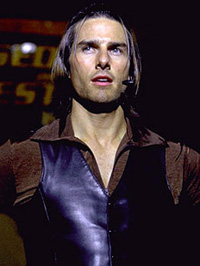
    Tom Cruise in MagnoliaAfter spending some time this summer watching some excellent films on DVD, I was inspired to write this piece about the great actors’ (living, with one exception) greatest performances.

    Narrowing it down to one each (brutal, believe me), I think have come up with a list of actors, young and old, that represents some of the finest talent working in film over the last 40 years, and selected the performance I believe each will be remembered for. This is obviously a subjective endeavor, so if you feel different, tell us why.

    Let’s dive in…

    Jack Nicholson
    Jack is not often given the credit for being the brilliant actor he is because we far too often expect him to be “just Jack.” But when he puts his actor’s hat on there simply may not be a greater actor in film history. For me he was never better than he was as Randall Patrick McMurphy in “One Flew Over the Cuckoo’s Nest,” which is a breathtaking piece of work. Watch him when he’s not speaking and see the emotion he packs into this astonishing piece of acting.

    Meryl Streep
    There is no question here for me. As concentration camp survivor Sophie in “Sophie’s Choice,” Streep gave not only her best performance, but the single finest performance ever given by a woman, in my view. That terrifying silent scream paralyzes the viewer with heartache and dare I say, shame. Sophie may have survived the camp, but she walks through her life more dead than alive because her soul was left behind and somehow Streep conveys that to the audience.

    Robert Duvall
    This is a tough call because Duvall was so good in “Apocalypse Now,” but I think his best work was in “The Apostle” as a preacher challenged by his own flaws and forced to atone for his sins. A volcanic performance in which Duvall never seems to stop moving or speaking.

    (more…)

  • THE LISTS: Top 10 performances from Michael Mann films

    Russell Crowe in The InsiderWith the forthcoming release of Michael Mann’s “Public Enemies” (review) dominating — quite impressively, I might add — the publicity circuit this week, all eyes are on Johnny Depp.  An Ulmer Scale X factor for this character study posing as a summer blockbuster, Depp’s performance is sure to draw champions and detractors alike for its delicate, internalized particulars.  But of one thing we can be certain: the work is of a piece with Mann’s typically detailed approach to character.

    Mann’s collaborative process with his actors typically involves something called “character acquisition,” a tightly-conceived regimen, of sorts, that gives his films’ characters the authentic touch that makes his work so novel.  Many times these details won’t even be discussed in the overall narrative, but their background impact on the performer is unmistakable.  Take, for instance, the photos of the childhood home of Tom Cruise’s hitman Vincent in “Collateral” that Mann brought to the actor’s attention, merely by way of more fully developing the character’s clearly complicated formidable years.

    The result of this hard work has been a slew of captivating, at times career-best performances from some of the most accomplished actors working today.  A Michael Mann production represents the opportunity to go deeper with a performance and perhaps even learn more about the craft.  Will Smith has frequently discussed his collaboration with Mann as the most rewarding experience of his professional life.  And, as Javier Bardem once told me, “When Michael Mann invites you to his party, you don’t turn him down.”

    So with that, a collective representing the best performances to come from Mann’s 10 feature films to date seemed the best way into this week’s installment of The Lists.  It’s a very personal list, of course, as yours would be.  There are three performances from one film, none from two, and a pair of unconventional supporting turns to shake things up.  After going back through the director’s work last week in preparation for the list, even I was surprised my #1 choice was left standing, but regardless of order, see this as a way to compliment a true actor’s director.

    (more…)

  • Great performances in bad movies

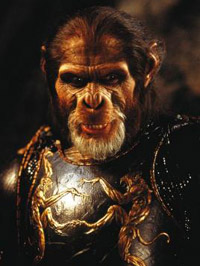
    Tim Roth in Planet of the ApesIt happens, sometimes when a really fine actor manages to give a brilliant performance in a terrible or weak film, a diamond in the rough. In fact, some of the best actors working have shone brightly in bad films as far back as the 1940s, though I will focus on the 1970s to present day here today.

    For whatever reason the respective film fails: perhaps the writing was weak, the direction went horribly wrong, or all the ingredients needed to make a great film, hell even a good film, simply were not there. Yet a single actor did everything right, understood their character, understood the impact they needed to make in their scenes and they give a superb performance despite his or her surroundings.

    Look at Bruce Dern in “The Great Gatsby.”  Here we have an exceptional actor in one of the roles of his career.  He WAS Tom Buchanan, elevating every single scene he was in with sheer presence. Jack Clayton’s direction was lumbering, Robert Redford was woefully miscast and Mia Farrow? Please.  (The single burning question we need to ask ourselves is what about Daisy attracts Gatsby when he can now have anyone — she doesn’t appeal on that level.)

    Dern radiates the sort of danger Redford needed to have in the role of Gatsby, but is far too good as Tom to even think of him in a different role here.  The lead really should have been Jack Nicholson.  Can you imagine the sparks between him and Dern?

    Perhaps one of the best performances ever given in a bad film was Morgan Freeman’s breakthrough in “Street Smart,” portraying a vicious pimp using a journalist portrayed by Christopher Reeve to get off a murder rap without realizing that he too is being used. Freeman is brilliant, all smiles and kindness, the sort of guy you would like to hang out with until his temper flares (to say the least). With just a few moments of screen time he gave an unforgettable performance as Fast Black.

    (more…)

  • Best Actor race — shades of ’74 and ’02

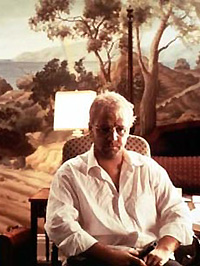
    Richard Jenkins in The VisitorThe 1974 Academy Award nominees for Best Actor were Jack Nicholson in “Chinatown,” Al Pacino in “The Godfather, Part II,” Albert Finney in “Murder on the Orient Express,” Art Carney in “Harry and Tonto” and Dustin Hoffman in “Lenny.”  There had been some mild surprise that Gene Hackman had been passed over for his work in “The Conversation” and Richard Dreyfuss in”The Apprenticeship of Duddy Kravitz,” but other than those minor quibbles, it was a strong field of contenders.

    Essentially it was a two-man race.  The frontrunners were clearly Nicholson and Pacino, both nominated the previous year for their work in “The Last Detail” and “Serpico,” respectively.  For his sly, slick portrayal of Los Angeles private detective JJ Gittes, Nicholson had again displayed his extraordinary range and ability to slip easily inside a character to the delight of audiences.  Pacino, meanwhle, again portrayed Michael Corleone in the sequel to “The Godfather,” moving farther down the path of power, corrupting himself totally, eventually ordering the execution of his own brother.

    Of the two actors, Nicholson had the inside track, having won the Golden Globe and the New York Film Critics Circle award, but there was a lot of Pacino love, too.

    On Oscar night, many jaws hit the ground when the winner was television veteran Art Carney for his performance in “Harry and Tonto,” a nice little film about an old man and his cat traveling across America looking for a home. Carney was terrific in the role, no argument, but it was hardly a performance for the ages. The likely scenario, some thought, was that Nicholson and Pacino split the vote.

    (more…)

  • THE LISTS: Top 10 ‘right actor, wrong film’ Oscars

    As we head into the thick of awards season, one of the biggest “will-they-won’t-they” questions about this year’s Academy Awards concerns one of their most favored sons, Clint Eastwood. Specifically: despite wildly polarized responses to the film, and a widespread perception that he has already been amply rewarded in other categories, can Eastwood ride the wave of sentiment to a first acting victory for “Gran Torino?”

    That sneaky National Board of Review award last week suggests it’s still very much a possibility, whether or not people believe that it’s a performance for the ages — and, more to the point, whether or not it ranks with the best of Eastwood’s own onscreen work.

    It’s no secret that, in the acting races, the Academy frequently bases their vote less on the performance at hand than the actor delivering it — one can point to any number of Oscar victories determined less by merit than by personal affection for an already rewarded star (let’s say Michael Caine in “The Cider House Rules”) or industry guilt over an under-rewarded one (most recently, Alan Arkin in “Little Miss Sunshine”).

    Meanwhile, recent victories by the likes of Russell Crowe and Cate Blanchett point to the familiar “deferred-Oscar” syndrome, where an actor widely believed to have been snubbed in the recent past is hastily handed a statuette as a kind of cumulative acknowledgment of their recent strong work, frequently for a performance that doesn’t represent any particular breakthrough. (Kate Winslet might be vying for one of those this year.)

    All are variations of the oft-lamented “right actor, wrong film” Oscars that are peppered throughout Academy history — a solution generally deemed more credible (though I’m not sure why) than the honorary “quick, before they die” lifetime achievement gongs doled out to the likes of Peter O’Toole and Kirk Douglas, actors who continually slip through the cracks in Oscar voting.

    Age isn’t always the determining factor, though.  The Academy has shown in recent years by passing over Lauren Bacall and Ruby Dee — both of whom would have been exemplary “right actor, wrong film” honorees — they’re not always in a sentimental mood.  As the following list shows, reasons for rewarding actors for lesser work are many and varied: genre bias on the Academy’s part, mainstream emergence on the actor’s, or simply the voters’ collective nostalgia for a familiar face at the podium.

    The one thing all these names have in common is that they’re distinguished, even great actors who deserve to have “Academy Award winner” forever attached to their monikers — just not necessarily for that performance. Will Clint Eastwood be the latest name to join their ranks? The jury is out.

    (more…)

  • 11/28 Oscarweb Round-up

    • David Poland is still in two minds about “Benjamin Button,” but agrees with Kris that “Slumdog” is the one to beat. [The Hot Blog]

    • Kim Voynar, meanwhile, surveys the Best Picture contenders, and is as confused as the rest of us. Interesting point about the potential impact of current events on “Slumdog,” though.  [Movie City News]

    • One Richard on another: with the adaptation of “Revolutionary Road” looming large, Richard Price offers his impressions of Yates. [The Guardian]

    • William Friedkin on the shifting makeup of the movie cop. [The Guardian]

    • Under the threat of the actors’ strike, Screen International calls for a meeting of minds. [Screen Daily]

    • Amid the mixed reactions to “Australia,” Susan King concludes that we still need the epic. [Los Angeles Times]

    • Al Pacino pips Dakota Fanning for the top gong in Lou Lumenick’s holiday-appropriate Turkey of the Year awards. [New York Post]

    • And, keeping it seasonal, a selection of notable DVD releases, in time for your Christmas wishlist. [New York Times]

  • De Niro and Pacino: “Top 10 reasons I like being an actor”

    From last night’s “Late Night with David Letterman.”  These are all keepers, but I especially like #3 and #1:

  • ‘Godfather Restoration’ on DVD generates excitement

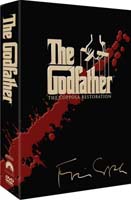
    The Godfather RestorationI wonder if any of us really understands the impact of home entertainment, beginning back in the early 1980s with the advent of the VHS and BETA tapes one could rent to play on new machines known as VCRs.

    My parents, God bless them, bought one right away, perhaps a way to get their eldest son (me), away at college, to come home and visit weekends. I did indeed, and after Dad would pick me up at the bus station, we would stop at the video store and grab 10 or so movies for the weekend.

    I rarely went for new releases.  Instead I chose films that I had seen once on the late show, perhaps, or films of interest I might have heard about.  Sometimes I might even have gone for the films I had never heard a thing about but were directed by someone I recognized or featured an actor I knew.

    I was 19 when I hit university and felt I was pretty well educated cinematically, having seen many films at the rep theaters in town.  I would set my alarm for the late shows, attending showings at the libraries and consuming every book I could find on film. So the advent of the VHS tape was a film lover’s wet dream.

    I watched literally thousands of films at home, over and over, studying them and finding something new each time. When I became a professional critic (when someone finally paid me for it) I made it clear that in addition to reviewing new releases in theatres, I must be permitted to review what was out for the home market.

    The generation of film-goers that followed me me (I am 49) are far better equipped with film knowledge than I was as a teen, but they have seen probably thousands more films than I had seen at that age as well. Furthermore, the special features on DVDs provide audiences with extraordinary knowledge that we were simply never privvy to.

    Yes I know there are disadvantages to home viewing.  Perhaps it has bred bad manners in movie theaters — talking, coming and going, cell phone use — but I still believe that films should be seen on a movie screen whenever possible.

    I am thrilled that Paramount and Francis Ford Coppola have gone back to restore “The Godfather” and “The Godfather Part II” in the upcoming “The Godfather Restoration,” which will also include the film that does not exist in my universe, the wretched “The Godfather Part III.”  Entirely new generations will get to see two of the greatest films ever made, enjoy the insightful commentary and documentaries that come with the set, and hopefully, come to understand that art can also be entertainment.
    (more…)
  • Mr. Beatty, direct another film please?

    Interviewing Warren Beatty a few years ago in Toronto, I was struck at once by his intellect, which is laser sharp. The man misses nothing. He speaks slowly, taking long pauses before he speaks, and avoids personal questions, which I dislike and refuse to ask anyway.
    He was with Annette Bening at the time, supporting her efforts in “Being Julia.” But all I wanted to discuss was “Reds,” Beatty’s masterful film about John Reed and the Russian Revolution which won him the Academy Award for Best Director and was ousted for Best Pic by the vastly inferior “Chariots of Fire.”

    I had heard he could be a nightmare in interviews, but he seemed genuinely interested in discussing the film. He remembers sitting there at the ceremony, and when the other film won Best Costume Design, he said he knew it was over.

    Beatty was recently honored by the American Film Institute, which led me to go back and watch many of his films. I’ve come to the conclusion that, not only is he among the more under-appreciated actors and directors working in film today, but he has been for at least 40 years.

    (more…)

  • Sydney Pollack (1934-2008)

    Trained as an actor at Sanford Meisner’s famed Neighborhood Playhouse — the stomping grounds of Robert Duvall — Sydney Pollack connected to actors because he was one of them…and a damned fine one at that.
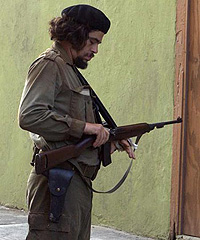
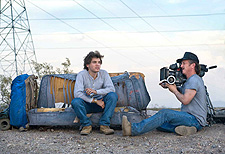
    In fact, his comedy “Tootsie” is not only the greatest American comedy ever made, it is also the greatest study of the art and craft of acting I’ve ever seen. The director, writers and star explored the depths to which an actor will go to get the role right, to find that all-important and essential truth. Without truth in a performance, there is nothing but failure.

    There is a moment in the film when Michael Dorsey, the actor who has become actress Dorothy Michaels to find work, is no longer Michael at all. Dorothy has become a living, breathing character in his life. Hoffman’s astounding performance is the finest work of his career, a jaw-dropping feat of art that is often overlooked (criminally) when the great film performances of all time are discussed. And of course holding the film together, the glue, the guiding hand, was Mr. Pollack, one of the great directors of the 1970s, 1980s and beyond.

    Though he lacked the box office breakthroughs of Francis Ford Coppola or Steven Spielberg, or the nasty edginess of Martin Scorsese, Pollack nonetheless was an artist, one of the few directors able to walk the line between making succesful mainstream films that worked on levels of commerce and artistry.His death at the age of 73 is one of the film world’s great losses, though he leaves behind a legacy that will be remembered for years after many of us have gone to that great screening room in the sky.

    (more…)

  • Best actor contenders join an eclectic list of recent winners

    Sean Penn, Benicio Del Toro and Frank Langella seem to be the names bandied about for Oscar consideration this year, which would place them in some impressive company of nominees and winners these last 20 years. Of course, that said, there have also been some bizarre choices for the Best Actor award, which has often left me shaking my head in disgust and wondering what these voters were actually seeing.

    Since 1988, there have been 10 winners that perhaps should not have been, the award arguably deserved by another of the nominees, or worse, an actor not nominated! Consider Dustin Hoffman in “Rain Man,” a widely acclaimed performance that asked that he not connect with anyone in the film, never make eye contact, rock back and forth and speak in a nasally voice.

    Stop what you are doing right now and try what he did in the film, and trust me it is very easy to do. Now do you deserve an Oscar for doing what Hoffman did in that film? The real perfortmance in “Rain Man” was that of Tom Cruise, who we watched evolve over the course of the film, and of course the best performance of that year was Gene Hackman as the tough investigator in “Mississippi Burning.” Hackman was nominated, but he stood no chance in the wake of the juggernaut of support for Hoffman, who in fact should have won years before for his miraculous work in “Tootsie!”

    (more…)

  • Actors winning Best Director — always deserved?

    Of course not. Quite often the Academy gets behind an actor for the simple reason they pulled of the film without screwing too much up.

    How else can one explain Mel Gibson’s win for “Braveheart” but failure to be nominated for his masterpiece “The Passion of the Christ” and “Apocalypto,” easily two of the finest directed films of the last ten years? Somewhere along the road, the Academy fell in love with actors who try their hand at directing (unless your name is Sean Penn or Barbara Streisand) and began giving away Oscars, quite often over more deserving directors.

    Poor Martin Scorsese has watched actors win the Best Director prize over his work three times. In 1980, of course, Robert Redford won for his drama “Ordinary People” over Scorsese’s searing “Raging Bull,” while ten years later Kevin Costner won the Oscar for “Dances with Wolves,” besting Scorsese for “Goodfellas.” But hey — this is the Academy…right? Clint Eastwood also bested Scorsese’s “The Aviator” in 2004 with a win for “Million Dollar Baby.”

    One year after Redford won his Academy Award for Best Director, Warren Beatty took home the award, much deserved for his criminally under-appreciated epic “Reds.” But he would watch in shock as “Chariots of Fire” ran to the Best Picture award over his film. The following year, a minor British actor, Richard Attenborough directed “Gandhi,” which the Academy fell in love with, honoring the achievements of the film’s subject rather than the effort itself, which even at the time seemed old-fashioned and rather ordinary. Attenborough himself, on the way to accept the Directors Guild Award for the film, stopped to chat with Steven Spielberg to make clear what everyone in the room seemed to know: that Spielberg should have won the award for “E.T.: The Extra-Terrestrial!”

    (more…)

  • The LA Times points and laughs at poor bastards

    It looks like LA Times is still beating that Oscar drum for the old media sect. This week, Susan King writes up the lackluster career choices that followed a number of Academy wins throughout the years.

    Here’s a look:

    Just because you win an Oscar doesn’t mean that every subsequent film you make will be Academy Award-caliber stuff. In fact, Oscar winners inevitably make incongruous missteps in their career after they pick up an Academy Award.

    Just look at Kevin Costner. After being on top of the world when he won the best director Oscar for the 1990 best film, “Dances With Wolves,” he made the gargantuan turkey “Waterworld” and then directed a three-hour celluloid nightmare called “The Postman,” which was DOA with critics and audiences alike. No sooner did Julia Roberts earn an Oscar for “Erin Brockovich” than critics soured on her talents in the ill-fated comedy “America’s Sweethearts.” And what was Oscar-winner Tommy Lee Jones thinking when he signed up for the yawn-inducing comedy “Man of the House,” a film so tepid that it wasn’t even screened for critics?

    She goes on to pour salt on the wounds of Al Pacino, Halle Berry, Whoopi Goldberg, Robin Williams and Nicole Kidman, among others. But I’m left wondering what good a piece like this serves.

    Now I’m no elitist. I understand we all have to stretch for awards content and perspective from time to time. And typically, the LA Times and its awards site, The Envelope, nail down interesting subject matter in that regard. But this piece is like one of those throwaway photo galleries that land on a weekly basis over there on a weekly basis.

    Obviously this was a buttress piece for Patrick Goldstein’s latest think piece (regarding the downward spiral of Robert De Niro and Al Pacino), but I don’t know. It seems a little cheap and unnecessary to me.

    Check out the rest of King’s piece here.