In Contention

Tag: Warren Beatty

  • Beatty, Bonham Carter among 2011 BAFTA LA honorees

    I’ve never been precisely sure what BAFTA Los Angeles is, or what it is that they do — I do know that I’m wary of any group that is chaired by “So You Think You Can Dance” overlord Nigel Lythgoe, but that could be irrational on my part.

    I do know, however, that have their own annual awards, which have very little to do with the actual BAFTAs over in my part of the world — though that won’t stop many members of the “Harry Potter” cult from flipping out over the news that latter-day franchise helmer David Yates is to receive their John Schlesinger Britannia Award for Excellence in Directing. Pop the champagne corks, if you’re so inclined, while Lynne Ramsay weeps quietly in a corner. Or not, probably.

    In a semi-related win, Helena Bonham Carter will receive the British Artist of the Year award, which seems a tad random even if you include her Oscar-nominated work in last year’s “The King’s Speech.” (What have Tom Hardy and Michael Fassbender done this year, anyway?)

    (more…)

  • Beatty got back

    Usually, the news that someone is about to write, direct, produce and star in some film of no clear description for Paramount wouldn’t seem particularly worthy of notice until the parties involved release a few more details.

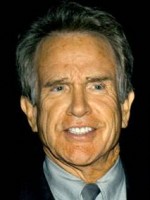
    But when the “someone” in question is 74 year-old Warren Beatty, the one-time Hollywood monarch whose name hasn’t appeared on screen since 2001 (as an ensemble member of all-star embarrassment “Town and Country”), it’s hard not to get curious.

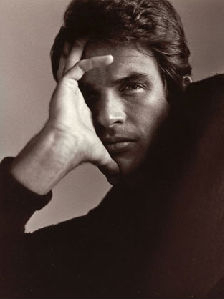
    With Beatty not having steered a film of his own since 1998’s “Bulworth” — the fascinating but frustratingly scattershot political satire that never found a place in the popular imagination, despite netting him a writing Oscar nod and arguably featuring Halle Berry’s strongest performance — there’s likely a generation or two with little concept of what an industry force the man was across four decades. (Perhaps more enduring, on the pop-culture scale, is his reputation as Hollywood’s most storied lothario, though Annette Bening put a stop that 20 years ago.)

    (more…)

  • “Simple” arithmetic?

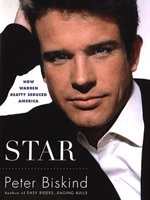
    Cover of Star: How Warren Beatty Seduced America

    But in his rollicking new book “Star: How Warren Beatty Seduced America” (Simon & Schuster), biographer Peter Biskind hazards a guess about the conquests of Hollywood’s most notorious lothario — based, he says, on “simple arithmetic.”

    Biskind estimates “12,775 women, give or take, a figure that does not include daytime quickies, drive-bys, casual gropings, stolen kisses and so on.”

    Alright, so, assuming, naively, one per day, 365 days/year, that’s roughly 32 straight years.  Daily.  Now let’s just assume two per day.  That’s 16 straight years.  We’re talking every…single…day.

    Obviously the math is much more complicated than all of that, because you can bank on any given lost weekends of 10-20 different mates or something, but even then — 12,000?  REALLY?  Stuff like this just…fascinates me.  I’m reminded of similar awe when Wilt Chamberlain’s number was thrown around back in the day.  What does the math that would yield that number even LOOK like?

    (Courtesy: New York Post, via Roger Ebert.)

  • 11/11 Oscarweb Round-up

    Up• Steven Zeitchik plays things from the other side of the coin, says a high Best Picture profile for “Up” could cause the film in the animated feature category. [Hollywood Reporter]

    • Jeffrey Wells takes aim and fires heavily on “Precious.” [Hollywood Elsewhere]

    • The People’s Choice Award nominations are here.  I KNOW you care.  So go ahead and vote. [PeoplesChoice.com]

    (more…)

  • Elia Kazan sparks renewed interest

    Elia KazanSo many of today’s youth have not seen films made before the year they were born and they are missing so much. I remember being 18 and spending some time with my girlfriend at the time at her job, which allowed for me to get a lot of reading done. One of her co-workers expressed some surprise that I was reading Charlie Chaplin’s autobiography.  “Do you have to know everything about movies John?” Without hesitation I answered, “yes,” and still feel that way.  The great directors of cinema past and present knew as much as they could ABOUT cinema past and present.  Aspiring filmmakers should certainly take their cue.

    Once, while showing “Psycho” in my film history class, a student suddenly shouted, “Marcellus Wallace and Butch…man Tarantino lifted this,” and he was right. There is a scene in the film where Marion Crane encounters her boss crossing a street in much the same manner Butch encounters Marcellus in “Pulp Fiction.”  It’s small but I’m so happy someone in that class picked it up.  You have to know where you’ve been to understand where you are and, certainly, where you’re going.

    There is a retro-interest in Elia Kazan, the great director of the 1950s, that I find quite thrilling.  Known as a bi-coastal director, Kazan enjoyed great success in film as well as stage, helming some of the first productions of the greatest plays of the 20th century, including “All My Sons,” “Death of a Salesman,” “A Streetcar Named Desire” and “Cat on a Hot Tin Roof.”  He would direct the film version of “A Streetcar Named Desire” in 1951 to great acclaim.

    No other director before Kazan so understood the art of acting and was able to work with actors in the manner he did. He was among the first directors to make the actor part of the creative team, listening to his or her ideas and admitting when he had actually been wrong. It was unheard of for directors such as John Ford, William Wyler, Chaplin or Orson Welles to admit being wrong — they never were in their minds — but Kazan had no fear, believing the creative process allowed for error.

    Having been trained as an actor befor he became a documentary filmmaker, Kazan understood the actor’s process, but as a director he wanted to be more than just the sort of director who blocked talent; he wanted to work with actors to create something as realistic as possible. Though he started his career as a director with Method Acting guru Lee Strasberg, the two parted ways when Kazan began evolving the style. Kazan went off to direct with his new ideas about the Method and found great success, winning two Academy Awards, Tony Awards and in 1999, under the cloud of controversey, an Academy Award for Lifetime Achievement.

    (more…)

  • Mr. Beatty, direct another film please?

    Interviewing Warren Beatty a few years ago in Toronto, I was struck at once by his intellect, which is laser sharp. The man misses nothing. He speaks slowly, taking long pauses before he speaks, and avoids personal questions, which I dislike and refuse to ask anyway.

    He was with Annette Bening at the time, supporting her efforts in “Being Julia.” But all I wanted to discuss was “Reds,” Beatty’s masterful film about John Reed and the Russian Revolution which won him the Academy Award for Best Director and was ousted for Best Pic by the vastly inferior “Chariots of Fire.”

    I had heard he could be a nightmare in interviews, but he seemed genuinely interested in discussing the film. He remembers sitting there at the ceremony, and when the other film won Best Costume Design, he said he knew it was over.

    Beatty was recently honored by the American Film Institute, which led me to go back and watch many of his films. I’ve come to the conclusion that, not only is he among the more under-appreciated actors and directors working in film today, but he has been for at least 40 years.

    (more…)

  • Movies that Oscar missed

    As film junkies, we all know it happens. Usually every single year there are one or more films the Academy passes over for Best Picture consideration, in some cases because there are, after all, just five slots available, but in others because, well — they blew it.

    Like the rest of you, I sit and listen to the nominees announced live every January and have never had a year when I did not roll my head and ask to no one in particular, “Where is such and such or so and so?”

    I mean for me, the great honor is the nomination, because when “Kramer vs. Kramer” defeats “Apocalypse Now” for Best Picture, how can you possibly take the winners seriously? However, a nomination — that is decidedly different.

    Where was the Best Picture nod for John Ford’s masterful “The Searchers,” arguably the greatest American western ever made? And Alfred Hitchcock’s “Psycho,” which redefined the horror genre?

    Since 1980 there have been a number of truly brilliant films passed over, leaving this critic often shaking his head in disgust, though I get over quick enough to watch the damned awards…talk about hooked. But it amazes me how “The Empire Strikes Back” can be a better film than “Star Wars,” yet not be nominated in the big race. Ditto Brian De Palma’s “Blow Out,” possibly the finest film of his career, ignored in every category despite its artistic mastery. The very same year Milos Forman gave us “Ragtime,” a much stronger film than “Chariots of Fire,” which won the Oscar, or even “On Golden Pond,” one of the five nominees!

    (more…)

  • Where have you gone, Al Pacino?

    It has been more than 30 years since Al Pacino gave his career-defining performance as cold blooded Michael Corleone in “The Godfather Part II.” He radiated quiet danger the moment he appeared on screen without ever raising his voice or allowing his mouth to wrap its way around words and spit them out like venom.

    While a one-two punch of “88 Minutes” and “Righteous Kill” slithers its way to theaters this year, audiences are reminded once again that one of the cinema’s all-time legends has immersed himself once again in either sub-par material or, as has become his cliche, the tendency to overreach and overact on his way to becoming a walking spoof of himself.

    There was a time when Pacino was thought of as one of the greatest American actors in movies…period. His work in the 1970s was nothing short of sublime, with strong performances in “The Godfather,” “Serpico,” “Scarecrow,” the aforementioned sequel to Coppola’s study of La Cosa Nostra and “Dog Day Afternoon.” In the latter he gave his most electrifying and properly energized portrayal.

    Along with many of the fresh-faced actors of the day, Pacino owned the decade. Sure he faltered with “Bobby Deerfield,” which meant he was not the type for romantic films…right? Or was this his limitations beginning to become apparent?

    (more…)