In Contention

Tag: Jack Nicholson

  • CINEJABBER: Close but no Jack

    Catch up with the idea behind these weekend posts here.

    What a coup it would have been if Jack Nicholson really was the first guest on “Conan.”  Shame on Movieline for not catching Andy Richter’s joke and getting my hopes up for the actor’s first talk show interview in nearly four decades.

    Caught up with AMC’s “The Walking Dead.”  Narratively, familiar.  Aesthetically unique at times but I couldn’t settle into it.  It felt like there was no sense of pace.  And I’m getting pretty trigger happy on bailing on shows lately.

    I need to catch up on docs.  A stack of them waiting for me when I can ever find the time.  It’s pitching season for publicity to say the least.

    Speaking of which, coffee with Ben Affleck later today says Warner Bros. is swinging buzz on “The Town” back around and looking for opportunities to stay in the conversation leading up to the film’s DVD release.  After that, the season will have its say on the matter.

    (more…)

  • The Great Performances: 2003

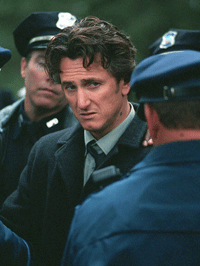
    Sean Penn in Mystic RiverThere is little doubt in my mind I am going to take some heat this week, so let’s kick it off right away with my belief that Sean Penn deserved his Best Actor Oscar for “Mystic River,” a performance of overwhelming ferocity and staggering emotional power.

    Yes, I too loved Bill Murray in “Lost in Translation,” and would have loved to have seen him win, but he didn’t, and frankly he lost to a stronger performance (in my opinion). I know it is a cliche to say the nomination is the reward, but I would hope that Murray would be happy with that.

    But there were so many great male performances in 2003!

    Robert Duvall was superb in “Open Range” as the wily old rancher who ends up in a gunfight for his life with his friend, played by the also fantastic Kevin Costner, by his side. Tom Cruise gave a great performance in “The Last Samurai” for director Edward Zwick, while Russell Crowe was again brilliant in “Master and Commander: The Far Side of the World,” adding to his string of stunning performances.

    (more…)

  • The Great Performances: 2002

    Chris Cooper in Adaptation2002 was probably one of the greatest years for performance excellence in film history, from leading actor right through all the supporting players. They could have easily nominated 10 actors in each of the four acting categories, and still missed some.

    Though Adrien Brody won the Oscar for “The Pianist,” which was a huge shock, I have always felt that Jack Nicholson gave one of his finest performances in “About Schmidt.” I suspect he and Daniel Day-Lewis in “Gangs of New York” may have split the vote in some way, allowing for Brody’s win.

    Michael Caine was up for “The Quiet American” after that film scored with critics at many precursor fests, and Nicolas Cage was the fifth nominee in “Adaptation.” Great performances all, deserving performances all, but there were so many other noteworthy turns.  Like Robin Williams’s chilling performance in “One Hour Photo” as a deranged photo lab worker obsessed with a family. Equally brilliant was Leonardo DiCaprio as the young fraudster in “Catch Me If You Can” while Tom Cruise gave one of his very best performances in Steven Spielberg’s “Minority Report.”

    One of the year’s very best films, “Road to Perdition,” contained one of the year’s best leading performances from Tom Hanks, as a lethal killer on the run from his own mob.  And though I loathe the work of Richard Gere, I must confess he did some of his finest work in “Chicago,” winning a Golden Globe for his performance, but no Oscar nod.

    (more…)

  • The Great Performances: 2001

    Gene Hackman in The Royal TenenbaumsIn one of the weakest years in memory, not just for performances but for great films, 2001 saw Denzel Washington and Halle Berry knock “two birds out with one stone,” as the former declared on Oscar night, as two African Americans won the top acting prizes for the first time ever.  And it was difficult to argue with either.

    Washington was superb in “Training Day,” clearly loving his role as crooked cop Alonzo, walking the line without ever going over the top, blowing everyone off the screen. In many ways it was a make-up award for his having lost for “Malcolm X” in 1992 to Al Pacino’s ranting work in “Scent of a Woman” and perhaps, though lesser so, for his loss for “The Hurricane.”

    Berry gave a raw, sexually charged performance in “Monster’s Ball,” one of such searing truth and rage you could never look away from the screen. Robert Duvall called her performance the finest by an American actress he had ever seen and was not the least bit surprised when she won the Oscar for Best Actress.

    My question remains: Should Denzel Washington have won over the non-nominated performances of Gene Hackman in “The Royal Tanebaums” or the vastly under-appreciated Jack Nicholson in “The Pledge,” one of his finest recent performances? Don’t think so.

    There was a lot of love shown to Tom Wilkinson for his heartbreaking work in “In the Bedroom” as well as Russell Crowe (again) for his performance in “A Beautiful Mind,” which eventually won the Best Picture Oscar. I was very surprised that Sean Penn was nominated for his performance in “I Am Sam” because though I consider Penn one of the greatest actors in the history of the cinema, his work in that film represents one of the very few times I could “see” him acting.

    (more…)

  • Fixing the Oscarcast … get your ideas in early

    Meryl Streep at the 81st annual Academy AwardsWith the 2009 Oscar telecast a little over four months away, it may seem a tad premature for the annual round of “how-to-save-the-show” suggestions, but it’s really the best time — now that Adam Shankman and Bill Mechanic have been handed the reins, they’ll be drawing up plans immediately.

    So the LA Times’s Mary McNamara has handily weighed in with her annual list of ideas and pointers for the show’s producers, ranging from the widely agreed-upon (drop the irrelevant musical numbers) to the slightly more idiosyncratic (“Do something with vampires,” she helpfully advises).

    Given that, like McNamara, I wasn’t as big a fan of the last Oscarcast as many were, it follows that I would agree with several of her ideas. I do think film clips have a necessary place in the acting presentations — as strange as it seems to those of us more familiar with the films on an annual basis, a brief, well-chosen clip from a lesser-known title can arouse interest from less informed viewers. (More so than a smarmy verbal tribute from, say, Adrien Brody.)

    (more…)

  • The Great Performances: 1997

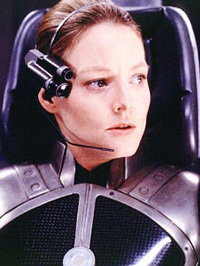
    Jodie Foster in Contact1997 was a great year for actors, but a tough year for Oscar; how do you choose when there are so many deserving nominees?

    It’s that age-old issue that some award-worthy performances are going to be left out, which though unfair and sad, is very much part of the Academy Awards and frankly what makes the whole thing interesting for us.  The Best Actor field ended up largely a battle of the old boys.  The acting warriors from the 1970s gave some of their finest performances in 1997, and four of the five nominees for Best Actor had been icons for 20 years.

    In fact the Academy could have allowed the one upstart to slip past and nominated Al Pacino in “Donnie Brasco,” which was the actor’s best work in years. As it was Pacino was by-passed in favor of young Matt Damon in “Good Will Hunting,” who found himself going toe-to-toe with Robert Duvall in “The Apostle,” Jack Nicholson in “As Good As It Gets,” Dustin Hoffman in “Wag the Dog” and Peter Fonda in “Ulee’s Gold.”

    I first saw Duvall’s performance at the 1997 Toronto International Film Festival and have written about it many times since.  He won the Los Angeles Film Critics Association’s Best Actor award, and then the National Society of Film Critics’ honor, but the Mayor of Hollywood stood in the way of Duvall’s second Oscar.

    (more…)

  • The Great Performances: 1995

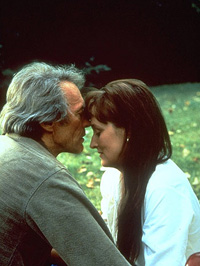
    (from left) Clint Eastwood and Meryl Streep in The Bridges of Madison CountyBased on some of the comments I received last week regarding my article on great acting, I took the suggestion of a young lady and am kicking off a series of articles, one per week, that will explore the best performances ofeach year, beginning today with 1995.  So let’s go back and work our way towards 2008 and discover the great film performances we know about, and maybe a few we do not.

    The Academy did a pretty fine job in 1995 when it came to the acting nominees.  Sure there was some shock when John Travolta was snubbed for his superb work in “Get Shorty,” and those hoping for a three-peat with Tom Hanks missed it when the actor was not nominated for his solid work in “Apollo 13.” I personally would like to have seen Clint Eastwood nominated for his wonderful work in “The Bridges of Madison County,” but there are just five slots open, and so many fine pieces of acting.

    One could also argue for Morgan Freeman and Brad Pitt, both excellent in David Fincher’s “Seven,” or Bruce Willis, who was nobly brilliant in “Twelve Monkeys,” and perhaps even Jack Nicholson in “The Crossing Guard.”

    Nobody could argue with Nicolas Cage in “Leaving Las Vegas,” Sean Penn in “Dead Man Walking” or Anthony Hopkins for “Nixon” as Best Actor nominees.  And frankly I believe Penn gave the best performance of the year, one for the ages in fact. However, Richard Dreyfuss in “Mr. Holland’s Opus?” Seriously?  I love Dreyfuss and I think he’s even been short-changed in the past, but come one.  He does fine work and it’s not his fault the script asks him to be mushy and sentimental, but I have struggled with his nomination over Hanks, Travolta and Eastwood for many years.

    (more…)

  • Great performers at their best

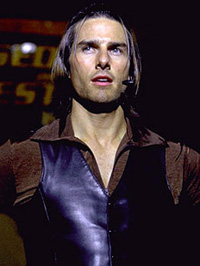
    Tom Cruise in MagnoliaAfter spending some time this summer watching some excellent films on DVD, I was inspired to write this piece about the great actors’ (living, with one exception) greatest performances.

    Narrowing it down to one each (brutal, believe me), I think have come up with a list of actors, young and old, that represents some of the finest talent working in film over the last 40 years, and selected the performance I believe each will be remembered for. This is obviously a subjective endeavor, so if you feel different, tell us why.

    Let’s dive in…

    Jack Nicholson
    Jack is not often given the credit for being the brilliant actor he is because we far too often expect him to be “just Jack.” But when he puts his actor’s hat on there simply may not be a greater actor in film history. For me he was never better than he was as Randall Patrick McMurphy in “One Flew Over the Cuckoo’s Nest,” which is a breathtaking piece of work. Watch him when he’s not speaking and see the emotion he packs into this astonishing piece of acting.

    Meryl Streep
    There is no question here for me. As concentration camp survivor Sophie in “Sophie’s Choice,” Streep gave not only her best performance, but the single finest performance ever given by a woman, in my view. That terrifying silent scream paralyzes the viewer with heartache and dare I say, shame. Sophie may have survived the camp, but she walks through her life more dead than alive because her soul was left behind and somehow Streep conveys that to the audience.

    Robert Duvall
    This is a tough call because Duvall was so good in “Apocalypse Now,” but I think his best work was in “The Apostle” as a preacher challenged by his own flaws and forced to atone for his sins. A volcanic performance in which Duvall never seems to stop moving or speaking.

    (more…)

  • Tim Burton’s ‘Batman’ — 20 years later

    BatmanThere is a reason I am such an embarrassingly devoted Batman fan.

    It’s not because I’m a life-long comic book reader.  That came later.  And it’s not because I grew up watching reruns of the old ABC television series.  Though I certainly did.  It’s because Tim Burton’s “Batman,” released in theaters 20 years ago today, was the first movie that truly owned my anticipatory faculties as a child.  It was the first film that lit my movie-going fire, a designation saved for “Star Wars,” “Indiana Jones” and “E.T.” a generation prior and perhaps “Jurassic Park” and Harrison Ford’s actioners a generation later.

    In the simplest of terms, I wouldn’t be a film obsessive if it weren’t for “Batman.”  I owe it so much.

    For me, the film was an event not to be missed.  I remember watching the commercials flood prime time television: the howling of a Batwing circling a Gothic cathedral, the quips of an actor I knew from comedy somehow tapped to play a brooding character of purpose, “Where does he get those wonderful toys?,” etc.

    The Anton Furst-designed logo was everywhere, seared into immortality by any production that happened to film in Times Square in the summer of 1989, decorating untold numbers of hats and T-shirts, the winged image an absolute specter hanging over the march to June 23.

    And then, finally, the release.

    (more…)

  • Great performances in bad movies

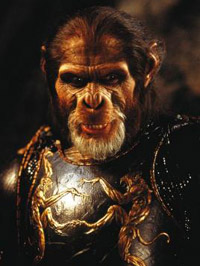
    Tim Roth in Planet of the ApesIt happens, sometimes when a really fine actor manages to give a brilliant performance in a terrible or weak film, a diamond in the rough. In fact, some of the best actors working have shone brightly in bad films as far back as the 1940s, though I will focus on the 1970s to present day here today.

    For whatever reason the respective film fails: perhaps the writing was weak, the direction went horribly wrong, or all the ingredients needed to make a great film, hell even a good film, simply were not there. Yet a single actor did everything right, understood their character, understood the impact they needed to make in their scenes and they give a superb performance despite his or her surroundings.

    Look at Bruce Dern in “The Great Gatsby.”  Here we have an exceptional actor in one of the roles of his career.  He WAS Tom Buchanan, elevating every single scene he was in with sheer presence. Jack Clayton’s direction was lumbering, Robert Redford was woefully miscast and Mia Farrow? Please.  (The single burning question we need to ask ourselves is what about Daisy attracts Gatsby when he can now have anyone — she doesn’t appeal on that level.)

    Dern radiates the sort of danger Redford needed to have in the role of Gatsby, but is far too good as Tom to even think of him in a different role here.  The lead really should have been Jack Nicholson.  Can you imagine the sparks between him and Dern?

    Perhaps one of the best performances ever given in a bad film was Morgan Freeman’s breakthrough in “Street Smart,” portraying a vicious pimp using a journalist portrayed by Christopher Reeve to get off a murder rap without realizing that he too is being used. Freeman is brilliant, all smiles and kindness, the sort of guy you would like to hang out with until his temper flares (to say the least). With just a few moments of screen time he gave an unforgettable performance as Fast Black.

    (more…)

  • Are 70s acting legends on the verge of fading away?

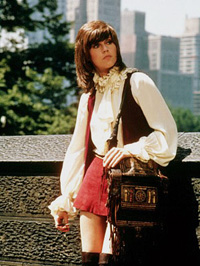
    Jane Fonda in KluteGrowing up I was a huge John Wayne fan, but I remember when the Duke started to fade, and then that shocking evening he presented the Academy Award for Best Picture to “The Deer Hunter” just a few months before his death in 1979.

    Perhaps because we watch these people age in front of our eyes we feel a unique kinship with them, as though we know them, but seeing Wayne at the Oscars was shocking, a terrible reminder that the acting icons are very human, subject to everything life brings: aging and death (as we found out terribly this week).

    The great actors of the 1970s, those that kick-started a second movement in American acting — Jack Nicholson, Dustin Hoffman, Ellen Burstyn, Al Pacino, Robert Duvall, Robert De Niro, Jane Fonda — are all well past 60 these days, some over 70 with Duvall edging ever closer to 80. Their best work may indeed be behind them (one never knows) and to me it represents a point of great sadness. We may never see their like again.

    They brought to the screen an inherent realism, an extraordinary authenticity that only Brando had accomplished. The day is coming when we will never be able to look forward to another great performance from the likes of Nicholson or Duvall or Fonda again.

    I remember the moment I first became aware of Nicholson, seeing him for the first time in “Five Easy Pieces,” in which he established himself as the actor of the decade, that intelligent rebel who simply would never conform to what society felt he should. Nicholson gave us a great array of performances through the 1970s, fearless in the face of risk, even singing in “Tommy,” Ken Russell’s lavish rock opera by The Who.

    (more…)

  • Great point

    This would’ve been a great opportunity: If Nicholson were a supporting-actor presenter and spoke about Heath Ledger’s performance as the Joker.

    Longtime Oscar hound Wayman Wong to Tom O’Neil in O’Neil’s recent Gold Derby blog entry on the conspicuous absence of Jack Nicholson from Sunday’s Oscar telecast.

  • Best Actor race — shades of ’74 and ’02

    Richard Jenkins in The VisitorThe 1974 Academy Award nominees for Best Actor were Jack Nicholson in “Chinatown,” Al Pacino in “The Godfather, Part II,” Albert Finney in “Murder on the Orient Express,” Art Carney in “Harry and Tonto” and Dustin Hoffman in “Lenny.”  There had been some mild surprise that Gene Hackman had been passed over for his work in “The Conversation” and Richard Dreyfuss in”The Apprenticeship of Duddy Kravitz,” but other than those minor quibbles, it was a strong field of contenders.

    Essentially it was a two-man race.  The frontrunners were clearly Nicholson and Pacino, both nominated the previous year for their work in “The Last Detail” and “Serpico,” respectively.  For his sly, slick portrayal of Los Angeles private detective JJ Gittes, Nicholson had again displayed his extraordinary range and ability to slip easily inside a character to the delight of audiences.  Pacino, meanwhle, again portrayed Michael Corleone in the sequel to “The Godfather,” moving farther down the path of power, corrupting himself totally, eventually ordering the execution of his own brother.

    Of the two actors, Nicholson had the inside track, having won the Golden Globe and the New York Film Critics Circle award, but there was a lot of Pacino love, too.

    On Oscar night, many jaws hit the ground when the winner was television veteran Art Carney for his performance in “Harry and Tonto,” a nice little film about an old man and his cat traveling across America looking for a home. Carney was terrific in the role, no argument, but it was hardly a performance for the ages. The likely scenario, some thought, was that Nicholson and Pacino split the vote.

    (more…)

  • Walking away with it

    Tom Cruise in MagnoliaI remember slipping into a small theater in 1987 to see something called “Street Smart,” the new Christopher Reeve film that I had no particular interest in, to be quite honest. Two hours later I emerged knowing two things: Morgan Freeman was a brilliant actor, and he would be nominated for an Academy Award.

    In a rather lacking movie, Freeman was terrifying as Fast Black, a vicious pimp who sees in a young reporter the chance to get off of a murder rap. At one point in the film he holds a pair of scissors to the eye of one of his hookers and invites her to choose which eye she is going to lose. It was an astounding performance that launched the actor’s career, earning him awards from the Los Angeles critics, New York critics and National Society of Film Critics…as well as that Oscar nod I predicted.

    Supporting performances can often be the heart and soul of a film, anchoring the picture and actually elevating the work of the lead actor. Can you imagine what “The Wizard of Oz” would be without the perfection of the cast surrounding Judy Garland, or “The Godfather” without the magnificence supporting Marlon Brando and Al Pacino? Nor can I, and in fact, through the years, supporting performances have become more and more important, certainly earning more press, with lead actors once unwilling to be promoted for an Oscar in these “lesser” categories now only to be happy to do so.

    Tom Cruise, arguably the biggest actor on the planet in 1999, gave his finest performance in a supporting role in “Magnolia” and somehow — SOMEHOW — lost the Oscar to Michael Caine. Jack Nicholson has gone the supporting route many times, winning an Oscar for his work in “Terms of Endearment” and earning nods for “Easy Rider,” “Reds” and “A Few Good Men,” though he was criminally snubbed for “The Departed.”

    Meryl Streep has become no stranger to supporting roles, earning an Oscar nod for “Adaptation” in 2002 (she too should have won) and certainly turning heads for a should’ve-been-nominated turn in “The Manchurian Candidate.”

    Sometimes an actor in a supporting role can dominate the film, as we saw this summer with Heath Ledger in “The Dark Knight.” In “Apocalypse Now” the film actually peaks with Robert Duvall’s napalm-loving surfer, not Brando’s deranged Colonel. Like Javier Bardem in “No Country for Old Men,” Duvall so dominated the screen when he was on it. In just a few scant scenes…we could never forget him.

    The work of the supporting actor, the “job,” so to speak, may seem to be support of the lead actors, secondary figures in the canvas of other artists. But what we see more often than not is their support of the story, and in many cases, their rise to infamy as a result.

    Have your say. What are some of the most sensational supporting performances in film history?
  • Mr. Beatty, direct another film please?

    Interviewing Warren Beatty a few years ago in Toronto, I was struck at once by his intellect, which is laser sharp. The man misses nothing. He speaks slowly, taking long pauses before he speaks, and avoids personal questions, which I dislike and refuse to ask anyway.
    He was with Annette Bening at the time, supporting her efforts in “Being Julia.” But all I wanted to discuss was “Reds,” Beatty’s masterful film about John Reed and the Russian Revolution which won him the Academy Award for Best Director and was ousted for Best Pic by the vastly inferior “Chariots of Fire.”

    I had heard he could be a nightmare in interviews, but he seemed genuinely interested in discussing the film. He remembers sitting there at the ceremony, and when the other film won Best Costume Design, he said he knew it was over.

    Beatty was recently honored by the American Film Institute, which led me to go back and watch many of his films. I’ve come to the conclusion that, not only is he among the more under-appreciated actors and directors working in film today, but he has been for at least 40 years.

    (more…)

  • Greatest non-nominated perfs: too many to count…

    …but I’ll try.  A sprint of sorts through deacades of deserving contenders (in my opinion, of course).

    I ask you this: How did those lovable characters from “The Wizard of Oz,” portrayed so brilliantly by Ray Bolger (Scarecrow), Jack Haley (Tin Man), Bert Lahr (Lion) and Margaret Hamilton (Wicked Witch), fail to be nominated in any of the supporting categories? Any one of them should have won the damned thing let alone be nominated, but in 1939, each and every one of them was snubbed.

    (more…)

  • Actor/movie star — who walks the line the best?

    Continuing the conversation from a few days ago on actors that are more than icons, only one name comes to mind: JACK.
    For more than 40 years Jack Nicholson has been one of the most dominat acting forces in movies, with an impressive array of performances that both challenge him as an artist and also please audiences from time to time with his wild man portrayals.

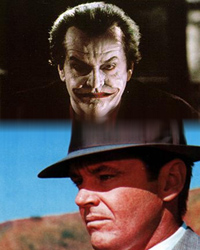
    In fact, after “Batman,” in which he stole the film from under the nose of Michael Keaton, Nicholson was often accused of playing “Nicholson.” It’s a claim I find absurd considering his performances in subsequent films such as “Hoffa,” “A Few Good Men,” and “The Crossing Guard,” one of his most daring performances ever. Recently the actor has given at least two of his most courageous performances, in “The Pledge” for director Sean Penn, and going totally against type in “About Schmidt,” reminding audiences of the great thespian lurking within the body of the movie star they know so well.

    (more…)

  • Great new Dern book!!

    He was nominated for an Oscar just once for his riveting performance in “Coming Home” as a vet who cannot wait to go to Vietnam, and once there cannot wait to get home, horrified by what he sees, betrayed by the dream of what he believed war should be.

    Bruce Dern was best known in the 70s as the go-to guy to play crazies. Sadly what most people missed is the fact he was a gifted actor, capable of doing so much more. He was the best part about “The Great Gatsby” as pompous Tom Buchanan and gave an Oscar-worthy performance as the Vietnam vet-turned terrorist in “Black Sunday,” still one of the best films ever made about terrorism. Dern was both electrifying and terrifying as Michael J. Lander, who cannot wait to drop a bomb into the Super Bowl.

    He dominated “Smile” with a broad comic performance that is among the finest of his career, and is forever remembered as the dude who gunned down John Wayne, shooting him in the back in “The Cowboys.”

    In the years after “Coming Home” for which he should have won the Academy Award for Best Supporting Actor (sorry Walken) he became a leading man in films such as “Middly Age Crazy” and “Harry Tracy” before fading from view in the late 80s. He emerged on TV recently in “Big Love.”

    I never tired of watching Dern on the screen. Whether it was in “The King of Marvin Gardens” or “Silent Running” he was a charismatic and interesting actor.

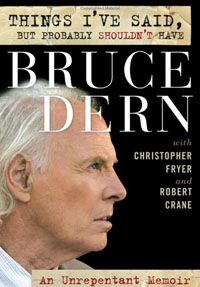
    The actor has written a new book entitled “Things I’ve Said But Probably Shouldn’t Have,” which is an exceptionally honest read moving through his career discovering how he landed some roles, and how some others slipped away from him. I read the book in two days — devoured every word. Loved it.

    One of the great actors of the 70s, Dern ended up being typecast. He never enjoyed the career of a Nicholson or a Hackman, but he was (still is) a superb actor. The book is a worthy read, and hopefully will take people back to his films. It did for me.