In Contention

Tag: Three Monkeys

  • CANNES CHECK: ‘Once Upon a Time in Anatolia’

    The director: Nuri Bilge Ceylan (Turkey)

    The talent: By this point in his career, auteur-photographer Ceylan is a self-standing arthouse brand — which is just as well, since the other names involved are unlikely to ring many bells with non-Turkish viewers. Leading man Yilmaz Erdoğan, a 43 year-old actor-writer-director, is a hugely popular figure in his home country, but his domestic hits haven’t crossed over. IMDb claims Ceylan wrote the film with his wife Ebru, as was the case with 2008’s “Three Monkeys”; other sources give him sole script credit. Cinematographer Gökhan Tiryaki, who shot Ceylan’s last two features, returns — arguably the more important concern, given the director’s reputation as a visual stylist.

    The pitch: Details on this one are closely guarded — even the usually long-winded Thierry Frémaux had nothing to add about the film at the Competition press conference. This much I have gleaned: Ceylan’s most expansive production yet, the 150-minute film covers a night in the lives of a doctor and a prosecutor on the harsh terrain of the Anatolia steppe. (Suffice to say the title’s promise of a Turkish spaghetti western is unlikely to be fulfilled.)

    (more…)

  • SANTA BARBARA: ‘Three Monkeys,’ ‘C’est pas moi, je le jure!,’ ‘War Against the Weak’

    Antoine L\'Écuyer in C\'est pas moi, je le jure!And a few more…

    “THREE MONKEYS” (**1/2)

    I was left scratching my head yesterday afternoon after a screening of Nuri Bilge Ceylan’s “Three Monkeys.”  I can’t for the life of me comprehend what all of the Cannes fuss was about.  It’s a solid exploration of mood and atmosphere, to say the least.  And there are some penetrating performances.  But…?

    The bleakness of the narrative likely appealed to festival jury members looking to reward a filmmaker for “going there,” but there’s a big “So what?” residue to the film and its themes.  The story, in a nutshell, revolves around a family playing blind, deaf and dumb (hence the title) to a time of hardship, and for that, I give it some respect.  There aren’t many films willing to pull back the veil of complacency that settles into families in crisis.

    The cinematography is subdued, and striking as a result.  And like I said, the performances — particularly from Yavuz Bingol and Rifat Sungar — are superlative.  But the whole comes up short of the sum of the film’s parts.  I’ve been impressed by Ceylan’s work so far, but I’m sure he’s got something better, more akin to “Distant” inside him somewhere, so I’ll wait for it.

    (more…)

  • Foreign film shortlist revealed, ‘Gomorrah’ snubbed

    This is the most vile of all Academy committees.  They prove their disdain for truly great cinema year in and year out (let’s not forget last year’s snubs of “4 Months, 3 Weeks and 2 Days” and “Persepolis” early on), and they’ve done it again this year, skewering Matteo Garrone’s blistering “Gomorrah,” leaving it for the dogs, cast aside, abandoned.

    The almighty foreign language film committee has chosen the following to proceed to the next stage of the season:

    “3 Monkeys” (Nuri Bilge Ceylan — Turkey)
    “The Baader Meinhof Complex” (Uli Edel — Germany)
    “The Class” (Laurent Cantet — France)
    “Departures” (Yojiro Takita — Japan)
    “Everlasting Moments” (Jan Troell — Sweden)
    “The Necessities of Life” (Benoit Pilon — Canada)
    “Revanche” (Gotz Spielmann — Austria)
    “Tear This Heart Out” (Roberto Sneider — Mexico)
    “Waltz with Bashir” (Ari Folman — Israel)

    Turns out Guy correctly foresaw only four of these in his post this morning.  From these, I’d anticipate “3 Monkeys,” “The Baader Meinhof Complex,” “The Class,” “Everlasting Moments” and, the likely winner, “Waltz with Bashir” to make the final five.

    (Thanks to Blake for passing along the list, and kudos to him for anticipating the “Gomorrah” shaft.  I just wanted to disregard all that talk about the committee having an issue with the film’s violence, but you can’t give these bozos the benefit of the doubt, I guess.)

  • Best Foreign Language Film: an alternative ballot

    Last month, I played devil’s advocate a little with the Best Documentary Feature category, suggesting five less-discussed titles from the shortlist of contenders as a potential counter to the dizzying advance of the clear frontrunner, “Man on Wire” — not as a slight on the film, which is terrific, but in the interests of diversity.
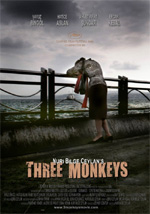
    Now, as we near the end of a busy first phase of precursors, I feel the need to make a similar effort in the Best Foreign Language Film category. It’s not that the names being mentioned as frontrunners for the Oscar aren’t worthy — oft-mentioned titles like “Gomorrah,” “The Class” and “Waltz With Bashir” are more than credible contenders, with the former two among my favourite films of the year. (More on that in a couple of days.) But we all know the Academy can frequently choose to ignore the obvious in this category — and with that in mind, I’d like to point out a few interesting directions in which they can go.

    The critics certainly aren’t helping them out, after all. Excellent film that it is, “Let the Right One In” has stomped all over the precursors almost as comprehensively as “Man on Wire” has: a consensus that strikes me as both surprising and a little disappointing, given what a rich and varied year it’s been for non-American cinema. Share the wealth a little, guys. However, the fact that the Swedish vampire film is ineligible for the Oscar means the Academy’s foreign-language committee is being given very few pointers at this stage.

    So, in the interests of rectifying that, I offer an alternative ballot: four under-the-radar titles from the 67-strong shortlist of foreign-language contenders that the voters would do well to consider. There are no doubt more — I’m drawing from the pool of contenders that I’ve actually seen — but any one of these would be a most worthy, and welcome, surprise:

    “TONY MANERO” (Chile): Pablo Larrain’s wicked little festival favourite first caught my eye at the London fest in October, and has crawled progressively deeper under my skin ever since. A tightly conceived and wholly unique hybrid of black comedy, serial-killer thriller and socio-political study, it takes its title from the character played by John Travolta in “Saturday Night Fever,” a figure worshipped to a disturbing degree by the film’s own protagonist, Raul, a socially inept lowlife eking out a bleak existence in 1978 Santiago, Chile.

    (more…)

  • ‘Three Monkeys’ joins the Foreign Film mix

    Nobody who was paying attention at Cannes will be surprised that Turkey has selected Nuri Bilge Ceylan’s “Three Monkeys” as their entry in the foreign-language derby.

    The film was one of the critical sensations of the festival back in May and was many pundits’ pick for the Palme d’Or — it wound up with the Best Director award. Just to jog your memory, here’s a rave from the ever-reliable Jonathan Romney:

    An ostensibly routine noir-style psychological thriller vaults into the realms of high art in “Three Monkeys” … For the first time, Ceylan really involves himself in narrative complexity, spinning a subtly-twisty yarn with echoes of such crime writers as Simenon and James M. Cain … the smallest amount of trimming could well turn an exceptional film into a near-perfect one.

    I have been excited by this for some time. Ceylan’s 2002 film “Uzak (Distant)” is one of my favourite films of the decade so far, a work of visual wonder and immaculate storytelling grace. While wildly acclaimed, his follow-up, “Climates,” did less for me — it was exquisitely rendered, but on a narrative and thematic level, Ceylan seemed to me to be treading water. So I like the idea of this move into more genre-tinged territory. It’s one of my must-sees at the upcoming London Film Festival.

    I suspect the film may prove a little too resolutely arthouse for the frequently auteur-shy Foreign Film committee, but no matter. As when Mexico selected Carlos Reygadas’ bold, beautiful and thoroughly Academy-unfriendly “Silent Light” last year, I applaud Turkey for the bravery of their selection.

    (more…)

  • No surprises as Cannes jury surprises

    Well, I missed that one badly. As is so often the case, the Cannes jury threw a curveball, handing their top prize to a late-breaking film that had generated very few column inches. Admittedly, I should have paid more attention to “The Class,” French auteur Laurent Cantet’s school-based docudrama.

    I was a huge fan of Cantet’s 2001 film “Time Out,” an ingeniously constructed character study, and while his 2005 follow-up “Heading South” was a major disappointment, Cantet’s name on the competition list should have rung more bells – not least when the very warm reviews started rolling in yesterday. Variety called it “one of the most substantive and purely entertaining movies in competition at Cannes this year.”

    Congratulations to Cantet then, and to France, scoring their first home victory at Cannes since “Under Satan’s Sun” triumphed in 1987. The other awards threw up fewer surprises, with Benicio Del Toro taking Best Actor as I, and many others, predicted. Meanwhile, “Three Monkeys” and the Italian one-two punch of “Gomorra” and “Il Divo” all took home major silverware, if not necessarily in the categories that I anticipated.

    I must admit to being shocked that the widely beloved “Waltz With Bashir” went home empty-handed; an omission for which Sean Penn and fellow juror Natalie Portman seemed almost apologetic. No matter: Ari Folman’s animated war documentary leaves the festival with a dedicated following, and I’m certainly putting it on my Best Animated Feature shortlist.

    The full list of competition winners follows:

    Palme d’Or: “The Class”

    Grand Jury Prize: “Gomorra”

    (more…)

  • Cannes: uneducated guesses

    Well, it’s almost over. The competition films have all been screened, picked over and digested by the world’s critics, and now all that’s left to do is that finicky business of handing out some prizes. Sean Penn and his formidable jury (Marjane Satrapi, Alfonso Cuaron and Natalie Portman are just some of those involved) will be deliberating over a crop of films that has generally been deemed a solid selection, with few outright “Brown Bunny”-style disasters.

    (more…)

  • Which film will take the Palme d’Or?

    Wells is already speculating and Foote is ready to move on, but let’s think it out here. In a festival that has been a bit underwhelming to most, both artistically for the critics and fiscally for the buyers, someone’s still gotta win best in show.

    Matteo Garrone’s “Gomorra” and Nuri Bilge Ceylan’s “Three Monkeys” might be the safe guesses, as both were quite well-received. But the Palme has made a habit of being elusive to the films one would expect to claim it.

    Clint Eastwood’s “Changeling” enjoyed a pleasant love-fest for a time, before the director was roughed up by a colleague and then hit a wall of sorts with The New York Times.

    Then there are the fringe possibilities of Steven Soderbergh’s “Che” — mixed on receipt, but that hasn’t stopped efforts in the past — and “Synecdoche, New York” from Charlie Kaufman, which has the benefit of being the last film out of the gate.

    What’s it going to be?

    If I had to bet, I’d say “Three Monkeys.” If I ventured a guess in the midst of rampant unpredictability (which is Cannes in a nutshell), I’d say “Synecdoche, New York.”

    We’ll see how it pans out over the weekend.

  • The story so far

    The Times of London has a very handy roundup of the highlights of the Cannes Film Festival thus far, echoing the widespread acclaim for such titles as “Gomorra,” “Vicky Cristina Barcelona,” “Waltz With Bashir,” and the long-awaited new film from Terence Davies, “Of Time and the City” – which, while out of competition, has probably been the festival’s most universally adored film so far. They also share my suspicion that Nuri Bilge Ceylan’s “Three Monkeys” may nab the Palme d’Or over the more extravagantly hyped contenders.

  • Cannes update: Italy’s ‘Gomorra’ wows ’em

    (EDITOR’S NOTE: New Cannes poll in the sidebar as of this morning, FYI.)

    We’re at the halfway point now, and this year’s Cannes Festival seems to have been a pretty staid affair so far. With the dust settled, “Blindness” appears to have been labelled an honourable disappointment. Meanwhile, some of the big arthouse names in the competition are widely agreed to be treading water.

    Walter Salles’ “Linha de Passe” appears to be worthwhile, but hasn’t generated the critical heat of “Central Station” or “The Motorcycle Diaries.” “Lorna’s Silence,” the latest from Belgium’s hitherto unimpeachable Dardenne brothers, here aiming for a record third Palme d’Or, has garnered respectable notices (and an outright pan from Jeff Wells), but doesn’t seem to be up to the standard of “Rosetta” or “The Son.”

    There have been some international successes. “Three Monkeys,” the latest from Turkey’s great Nuri Bilge Ceylan, has gathered predictably excellent reviews, of which The Hollywood Reporter’s take (a “brilliant, gorgeously visual film”) is typical. If I were to bet on a Palme d’Or winner (always a silly thing to do), this would be it – though I fear this will have as much trouble crossing over to the US and UK markets as Ceylan’s previous work.

    One of the real breakout films of the festival so far, however, appears to be Italian director Matteo Garrone’s “Gomorra,” an intricate documentary-style look at the Camorra crime empire of Naples, based on a bestselling expose by Roberto Saviano. Amid generally enthusiastic reviews, The Hollywood Reporter states:

    Powerful, stripped to its very essence and featuring a spectacular cast (of mostly non-professionals), Matteo Garrone’s sixth feature film “Gomorra” goes beyond Tarantino’s gratuitous violence and even Scorsese’s Hollywood sensibility in depicting the everyday reality of organized crime’s foot soldiers.

    In his always-worthwhile Cannes roundup, The Guardian’s Peter Bradshaw concurs:

    The competition films have been more than a little upstaged by Matteo Garrone’s Gomorra, a gut-wrenchingly brutal film about notorious Naples gangsters, the Camorra. The title’s twist implies the whole area is sunk in a kind of self-created hell, almost literally, since the mobsters are responsible for unsafe nuclear dumping. Perhaps it tells us nothing we don’t already know about gangsters, but there’s no denying the film’s power.

    I confess I am not very familiar with Garrone’s work, but I, for one, am intrigued by this. It will be interesting to see how this one plays out. From the sounds of things, if the film finds the right buyer, there could be “City of God”-style crossover potential here. Or nothing. You never can tell at Cannes.