In Contention

Tag: There Will Be Blood

  • Alright…the 20 WORST endings of all time from The Times

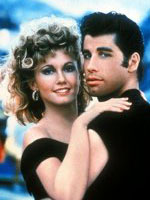
    Olivia Newton John and John Travolta in GreaseSo The Times has followed up last week’s collective assessment of the 20 greatest movie endings of all time today with a list of the worst, and there are some reasonable choices here and there.

    Like “Grease” for starters, probably my favorite movie musical but with an undeniably wretched denouement. And then there’s the cheeky mirror of the “Planet of the Apes” saga (the original made the best list, while Tim Burton’s remake lands here), not to mention “Indiana Jones and the Kingdom of the Crystal Skull,” which would definitely be near the top of my own list (ballsy to go so recent, too).

    I also like the shout out to the never ending ending of “The Lord of the Ring: The Return of the King.”

    But beyond those and perhaps a few others, the rest of the list is populated with terrible choices (many of which landed on my own best list). “There Will Be Blood” (which was deemed the #2 film of all time by The Times’ film critic James Christopher)? “Psycho?” “2001?” Fucking “Citizen Kane” at #1???

    Lots of eyebrow raisers. And from what I can gather, merely an attempt at being controversial.

    Their choices:

    1. “Citizen Kane”
    2. “Indiana Jones and the Kingdom of the Crystal Skull”
    3. “The Lord of the Rings: The Return of the King”
    4. “2001: A Space Odyssey”
    5. “The Maltese Falcon”
    6. “Grease”
    7. “Brief Encounter”
    8. “The Great Dictator”
    9. “Saving Private Ryan”
    10. “The Great Escape”
    11. “Apocalypse Now”
    12. “Psycho”
    13. “There Will Be Blood”
    14. “Magnolia”
    15. “Blade Runner” (original release)
    16. “Monty Python and the Holy Grail”
    17. “Star Wars – Episode VI: Return of the Jedi”
    18. “Planet of the Apes” (2001)
    19. “Cast Away” (totally disagree here…I think it’s a beautiful ending)
    20. “Velvet Goldmine”

  • Israel leaves Vantage: “It’s not the same company”

    This strikes me as very bad news indeed. Amy Israel, head of acquisition and production at Paramount Vantage, has been shown the exit. You’d think overseeing the production of such titles as “No Country for Old Men” and “There Will Be Blood,” and acquiring, among others, “An Inconvenient Truth,” would count for something. Apparently not.

    Replacing Israel is Guy Stodel, a former exec from New Line. He has some history of acquiring arthouse titles (“The Sea Inside,” “The Upside of Anger”), but worryingly, his most emphasised accomplishment in the press release is having brought the two “Texas Chainsaw Massacre” remakes to fruition. Because that’s the kind of thing we’re looking for, right?

    Israel’s parting statement is diplomatic, but somewhat ominous:

    I’m proud of having been a part of building Paramount Vantage from the ground up under John Lesher, making great films. I love the company we built. It’s not the same company. (It) is evolving a different direction.

    Truthfully, we all knew this was coming. When Vantage was incorporated into the main body of the studio last month, it was pretty obvious they wanted to broaden their focus to more commercial genre projects. Vantage president Nicholas Meyer insists specialty films will remain a priority:

    Although the moves signal that Vantage is moving more in the genre direction, Meyer insists the studio is pursuing a more “eclectic and elastic” slate. “We are not abandoning the specialty business. We are too committed to it,” Meyer said. “As the company evolves, we need to morph and mutate in order to survive in a challenging environment.”

    (more…)

  • THE LISTS: Top 20 movie endings of all time

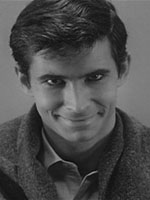
    Anthony Perkins in PsychoAlright, this was painstaking indeed. After The Times of London saw fit to rock out a list of the 20 best movie endings of all time last week, I thought I’d try my own hand at such a collective.
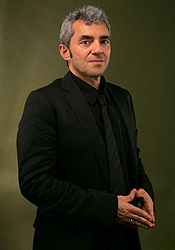
    There are some omissions that might surprise some folks (“Bonnie and Clyde,” “The Graduate,” “Carrie”). At the same time, there are films that, on any other day, would easily slip into the list (“A Clockwork Orange,” “Once Upon a Time in the West,” “Reservoir Dogs”).

    Rest assured they were taken into account, but they didn’t speak to me on whatever levels must have been necessary to push into the top 20. But I can say these are the denouements that most affected me, be it viscerally or emotionally.

    Send in your picks for the top five movie endings of all time and I’ll publish a collective readers’ list in a few weeks. Email me or post your list below in the comments section.

    Here’s what I came up with:

    20. “The Iron Giant” (Brad Bird, 1999)
    “You stay. I go. No following.”
    Animation genius Brad Bird made his feature directorial debut with this effort, packing an emotional punch by film’s end with shades of “E.T.: The Extra-Terrestrial” — and an energizing final shot to boot.

    19.”Jacob’s Ladder” (Adrian Lyne, 1990)
    “He looks kind of peaceful, the guy.”
    Capping off one of the most bizarre cinematic visions ever captured (and, ultimately, quite underrated as well), this closing scene is a twist that has been lifted in various other forms ever since. (see next)

    18. “The Sixth Sense” (M. Night Shyamalan, 1999)
    “I think I’m okay, really. I think it just went in and out.”
    Hot prospect M. Night Shyamalan tainted the original power of the twist ending by attempting to make a career of it, but in the final moments of this early effort, his buried talent poked through the surface.

    17. “The Shawshank Redemption” (Frank Darabont, 1994)
    “Get busy livin’ or get busy dyin’. That’s God damn right.”
    Less a closing scene than a closing sequence, the entire third act of Frank Darabont’s Stephen King adaptation manhandles the heartstrings and lifts the spirit.

    16. “Se7en” (David Fincher, 1995)
    “John Doe has the upper hand.”
    Andrew Kevin Walker crafted a near masterpiece that culminates as perfectly as it could have, death and despair, ambition and art, plus a Hemingway rebuttal for the ages.

    15. “The Conversation” (Francis Ford Coppola, 1973)
    “We’ll be listening to you.”
    The calmly paranoid conclusion to a mind-bender from a mid-“Godfather” Francis Coppola, this finale put Gene Hackman in a position to give perhaps the greatest performance of his career.

    The full list after the jump!

    (more…)

  • Battsek in the pink ‘un

    Flipping through the Financial Times earlier today (a British newspaper famous for the pink paper on which it is printed — “Give me a pink ‘un”), I came across a profile of Miramax honcho Daniel Battsek that made for a pleasant read amid all the TPG and Bernanke mumbo-jumbo.
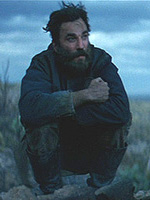
    In a lot of ways the story is rather derivative and even stale. Nothing we’ve not read elsewhere, especially after an Oscar season that saw “No Country for Old Men,” “The Diving Bell and the Butterfly” and “There Will Be Blood” tear through with the media latching on for the ride.

    But Battsek is one of the good guys. Any ink, really, is good ink, considering what he’s done with the company in the wake of the brothers Weinstein. And hey, he’s a hell of a nice guy.  That’s reason enough for me to pass it along.

    Matthew Garrahan has the byline. Here’s a look:

    Making films that achieve critical and commercial success “is not rocket science…and it’s not as complicated as some people make out”. Still, it is not easy. “You have to be very sure of yourself when you acquire the material. You have to be very conscientious and detailed when you’re working with your filmmakers. And you have to find ways of being able to make [the film] as quickly as possible.”

    The physical process of making a film is not of great personal interest. “I’ve never had the movie-making bug. Sitting on a set watching a scene being filmed doesn’t turn me on at all. But I love being in a cinema watching a film. I love the creative side, working with filmmakers, writers, actors . . . and I love the production process.”

    The rest.

  • A ‘legendary’ profile

    I need to ring up John Campea, editor of The Movie Blog, and ask if this Legendary Characters feature is going to be an on-going thing. Whatever the case, Doug Nagy’s extended thoughts on Daniel Plainview add up to one of the more profound assessments of the character I’ve read at any outlet.
    Here’s the quote that sold me:

    As the movie begins, so it ends. With no opponents left to test him, and not a friend in the world, Plainview is left alone in a hole of his own creation.

    Check out the rest here.

    And for some humorous context, don’t forget to check out Doug’s expletive-filled review of “Enchanted.” Good for a laugh any day.

  • Could two potentially great film scores get the AMPAS shaft this year?

    It’s a debate that never gets old regarding the music branch of the Academy of Motion Picture Arts and Sciences. When is it going to clean house regarding shady rules that seem to fly in the face of what the organization sets out to do each and every year: honor the best in cinematic achievement?
    The foreign film committee had a major shakeup last year, and promises of attention were made, but it’s high time the same happened with the musicians. One of the rules seems poised to become a serious talking point later this season, however.

    Within Rule 16B of the Academy’s eligibility guidelines — launched into infamy last year when the caca hit the fan regarding Jonny Greenwood’s “There Will Be Blood” score — you’ll find the key language:

    Only the principal composer(s) or songwriter(s) responsible for the conception and execution of the work as a whole shall be eligible for an award. This expressly excludes from eligibility…scores assembled from the music of more than one composer.

    Specifically, it’s Rule 16B-5f. And it will likely affect two promising works of film music composition this year.

    (more…)

  • Best actor contenders join an eclectic list of recent winners

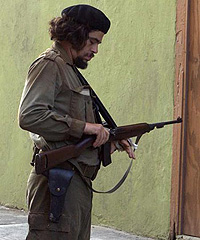
    Sean Penn, Benicio Del Toro and Frank Langella seem to be the names bandied about for Oscar consideration this year, which would place them in some impressive company of nominees and winners these last 20 years. Of course, that said, there have also been some bizarre choices for the Best Actor award, which has often left me shaking my head in disgust and wondering what these voters were actually seeing.

    Since 1988, there have been 10 winners that perhaps should not have been, the award arguably deserved by another of the nominees, or worse, an actor not nominated! Consider Dustin Hoffman in “Rain Man,” a widely acclaimed performance that asked that he not connect with anyone in the film, never make eye contact, rock back and forth and speak in a nasally voice.

    Stop what you are doing right now and try what he did in the film, and trust me it is very easy to do. Now do you deserve an Oscar for doing what Hoffman did in that film? The real perfortmance in “Rain Man” was that of Tom Cruise, who we watched evolve over the course of the film, and of course the best performance of that year was Gene Hackman as the tough investigator in “Mississippi Burning.” Hackman was nominated, but he stood no chance in the wake of the juggernaut of support for Hoffman, who in fact should have won years before for his miraculous work in “Tootsie!”

    (more…)

  • The top 10 shots of 2007: part two

    Today we round out the top 10 shots of the year with the final five.  Check out part one if you missed it.

    Let’s dive in:

    #5

    Michael Clayton

    “MICHAEL CLAYTON”
    Director of Photography: Robert Elswit

    We were completely ripping off New York filmmaking from the 1970s, things like “Klute” and pretty much everything Owen Roizman has ever shot.  But Tony’s sense of these things was not lots of little pieces; he loves making kind of graphic frames that play as long as possible.

    –Robert Elswit

    Robert Elswit had a hell of a year in 2007, finally getting his due from the American Society of Cinematographers who awarded his work in Paul Thomas Anderson’s “There Will Be Blood.”  There was another film featuring Elswit’s unique signature, however, that flew under the radar for its considerable attention to composition and camera movement: Tony Gilroy’s “Michael Clayton.”

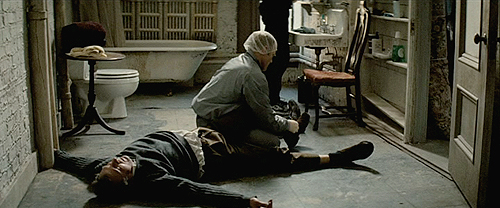
    Much is made of the film’s final sequence, a long shot focused on Clayton as he rides away from the hysteria in his life, desperate for his cab driver to “just drive.”  But a companion shot from earlier in the film was just as arresting, if not more so, as a purposeful point of transition to the second half of the endeavor.  A long tracking shot that never misses a beat, both behind and in front of the camera, the scene detailed is the expert, painfully clinical execution of Arthur Edens, played to an award-worthy T by Oscar nominee Tom Wilkinson.

    The final image is steeped in theme, and an initial tracking sequence under Edens’ opening monologue pulls the viewer into the film’s interior world, but this particular shot is so cold as to be frozen in its depiction of something at once gruesome and strangely beautiful, fluid.  I’m not privy to whether it may have been a directorial decision, though I suspect it may have been, but it is the crown jewel in a film packed with precision from Elswit.
    (more…)