In Contention

Tag: The Godfather

  • ‘Godfather Restoration’ on DVD generates excitement

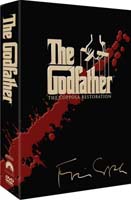
    The Godfather RestorationI wonder if any of us really understands the impact of home entertainment, beginning back in the early 1980s with the advent of the VHS and BETA tapes one could rent to play on new machines known as VCRs.

    My parents, God bless them, bought one right away, perhaps a way to get their eldest son (me), away at college, to come home and visit weekends. I did indeed, and after Dad would pick me up at the bus station, we would stop at the video store and grab 10 or so movies for the weekend.

    I rarely went for new releases.  Instead I chose films that I had seen once on the late show, perhaps, or films of interest I might have heard about.  Sometimes I might even have gone for the films I had never heard a thing about but were directed by someone I recognized or featured an actor I knew.

    I was 19 when I hit university and felt I was pretty well educated cinematically, having seen many films at the rep theaters in town.  I would set my alarm for the late shows, attending showings at the libraries and consuming every book I could find on film. So the advent of the VHS tape was a film lover’s wet dream.

    I watched literally thousands of films at home, over and over, studying them and finding something new each time. When I became a professional critic (when someone finally paid me for it) I made it clear that in addition to reviewing new releases in theatres, I must be permitted to review what was out for the home market.

    The generation of film-goers that followed me me (I am 49) are far better equipped with film knowledge than I was as a teen, but they have seen probably thousands more films than I had seen at that age as well. Furthermore, the special features on DVDs provide audiences with extraordinary knowledge that we were simply never privvy to.

    Yes I know there are disadvantages to home viewing.  Perhaps it has bred bad manners in movie theaters — talking, coming and going, cell phone use — but I still believe that films should be seen on a movie screen whenever possible.

    I am thrilled that Paramount and Francis Ford Coppola have gone back to restore “The Godfather” and “The Godfather Part II” in the upcoming “The Godfather Restoration,” which will also include the film that does not exist in my universe, the wretched “The Godfather Part III.”  Entirely new generations will get to see two of the greatest films ever made, enjoy the insightful commentary and documentaries that come with the set, and hopefully, come to understand that art can also be entertainment.
    (more…)
  • And often, the Academy gets it right…

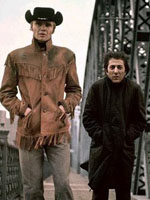
    United Artists' Midnight CowboyAs much as I rant about some of the bizarre choices made by the Academy, let’s be fair…there are times when they are right on the money.

    The AMPAS allowed for an embracing of the New American cinema with their awards for Best Picture and Best Director for “Midnight Cowboy” in 1969, and only they had the courage (and the smarts) to recognize that “The Godfather Part II” was a superior film to the first in handing it the same two trophies. They had awarded “The Godfather” Best Picture two years earlier, but much of the precursor circuit (and all of the critics groups) largely ignored the sequel, opting instead for films such as “Alice Doesn’t Live Here Anymore” and “Chinatown,” among others.

    The five awards betsowed on “One Flew Over the Cuckoo’s Nest” in 1975 are among the group’s best choices ever, in particular the honors for actor Jack Nicholson and director Milos Forman.

    Though far too often dismissed as a chick flick, “Terms of Endearment” was a marvelous slice of life that the Academy embraced with five Oscars, including Best Picture, Best Actress, Best Supporting Actor and Best Director. By the way, is it not odd that first time winner James L. Brooks has never again been nominated in the directing category again, despite two Best Picture nominees in “Broadcast News” and “As Good As It Gets?”

    I remember cheering loudly the many wins for “Amadeus,” “Out of Africa” and “Platoon” three years in a row, and though I believe “Goodfellas” is a better film, I was pleased to see a western, “Dances with Wolves,” win seven Oscars.

    No arguments from me between 1991 and 1993, with “The Silence of the Lambs,” “Unforgiven,” and “Schindler’s List” all most deserving winners. And though I prefer “Pulp Fiction,” I understand why “Forrest Gump” took the top prize in 1994.

    Bravo, too, to the Academy for honoring “The Lord of the Rings: The Return of the King,” a bonafide movie masterpiece, and again the following year for “Million Dollar Baby.”

    So you see, for all my bitching (and we all do it…come on), I concede that the Academy does, from time to time, nail the best.

  • Robert Duvall: the screen’s greatest, ignored too often

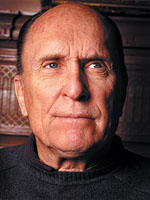
    Robert Duvall“There are two greats in America right now.  The first is Brando, whose best work is behind him, and the other is Robert Duvall.”
    Legendary acting guru Sanford Meisner said those words in the 1960s.  He trained Robert Duvall at the Nieghborhood Playhouse in the late 1950s and early 1960s before the actor’s screen debut in “To Kill a Mockingbird” as the children’s boogey man and savior Boo Radley. In the years since, Duvall has given some of the greatest performances captured on film, yet stands in his seventies now with just a single Oscar to his credit, a Best Actor trophy for his country and western singer in 1980’s “Tender Mercies.”

    There are many, myself included, who consider Duvall the most purely gifted actor in American cinema.  He’s always lacked the leading looks to harness the roles often awarded to other players. Instead he has toiled quietly yet effectively as a character actor, often playing second fiddle to bigger stars and stealing the film more often than not.

    (more…)

  • THE LISTS: Top 20 movie endings of all time

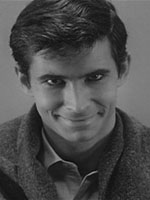
    Anthony Perkins in PsychoAlright, this was painstaking indeed. After The Times of London saw fit to rock out a list of the 20 best movie endings of all time last week, I thought I’d try my own hand at such a collective.
    There are some omissions that might surprise some folks (“Bonnie and Clyde,” “The Graduate,” “Carrie”). At the same time, there are films that, on any other day, would easily slip into the list (“A Clockwork Orange,” “Once Upon a Time in the West,” “Reservoir Dogs”).

    Rest assured they were taken into account, but they didn’t speak to me on whatever levels must have been necessary to push into the top 20. But I can say these are the denouements that most affected me, be it viscerally or emotionally.

    Send in your picks for the top five movie endings of all time and I’ll publish a collective readers’ list in a few weeks. Email me or post your list below in the comments section.

    Here’s what I came up with:

    20. “The Iron Giant” (Brad Bird, 1999)
    “You stay. I go. No following.”
    Animation genius Brad Bird made his feature directorial debut with this effort, packing an emotional punch by film’s end with shades of “E.T.: The Extra-Terrestrial” — and an energizing final shot to boot.

    19.”Jacob’s Ladder” (Adrian Lyne, 1990)
    “He looks kind of peaceful, the guy.”
    Capping off one of the most bizarre cinematic visions ever captured (and, ultimately, quite underrated as well), this closing scene is a twist that has been lifted in various other forms ever since. (see next)

    18. “The Sixth Sense” (M. Night Shyamalan, 1999)
    “I think I’m okay, really. I think it just went in and out.”
    Hot prospect M. Night Shyamalan tainted the original power of the twist ending by attempting to make a career of it, but in the final moments of this early effort, his buried talent poked through the surface.

    17. “The Shawshank Redemption” (Frank Darabont, 1994)
    “Get busy livin’ or get busy dyin’. That’s God damn right.”
    Less a closing scene than a closing sequence, the entire third act of Frank Darabont’s Stephen King adaptation manhandles the heartstrings and lifts the spirit.

    16. “Se7en” (David Fincher, 1995)
    “John Doe has the upper hand.”
    Andrew Kevin Walker crafted a near masterpiece that culminates as perfectly as it could have, death and despair, ambition and art, plus a Hemingway rebuttal for the ages.

    15. “The Conversation” (Francis Ford Coppola, 1973)
    “We’ll be listening to you.”
    The calmly paranoid conclusion to a mind-bender from a mid-“Godfather” Francis Coppola, this finale put Gene Hackman in a position to give perhaps the greatest performance of his career.

    The full list after the jump!

    (more…)

  • Cimino and Oscar

    Lots of talk about deserving (and undeserving) directors in the Oscar chatting this week. Let’s take it to specifics with one race that stood out to a few commenters.
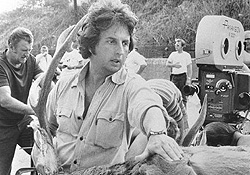
    It seemed in the spring of 1979, following the Oscar ceremony, there was a sense in the industry that if the Academy could have taken back their votes — which saw “The Deer Hunter” and director Michael Cimino winning for Best Picture and Best Director — they would have done so.

    The first screenings of “The Deer Hunter” had begun the summer before, when executives saw the film and were stunned by its raw, visceral power, leading to buzz within the business that a masterwork had been born. Execs at United Artists sought out Cimino and inked him to a contract to make a film before before the release of the Vietnam epic, a move they would live to regret.

    By the time the film was released in December of 1978, word of mouth was so strong Cimino seemed to be defying anyone to dislike the effort or say anything negative about it. Film critics awarded it best picture and director honors, except those in Los Angeles who gave “Coming Home” highest marks, while Cimino won the directing award. Nominated for nine Oscars, “The Deer Hunter” won five, adding Best Supporting Actor (Christopher Walken), Best Sound Mixing and Best Film Editing to the aforementioned Best Picture and Best Director trophies.

    (more…)

  • Where have you gone, Al Pacino?

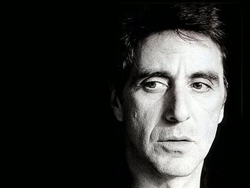
    It has been more than 30 years since Al Pacino gave his career-defining performance as cold blooded Michael Corleone in “The Godfather Part II.” He radiated quiet danger the moment he appeared on screen without ever raising his voice or allowing his mouth to wrap its way around words and spit them out like venom.

    While a one-two punch of “88 Minutes” and “Righteous Kill” slithers its way to theaters this year, audiences are reminded once again that one of the cinema’s all-time legends has immersed himself once again in either sub-par material or, as has become his cliche, the tendency to overreach and overact on his way to becoming a walking spoof of himself.

    There was a time when Pacino was thought of as one of the greatest American actors in movies…period. His work in the 1970s was nothing short of sublime, with strong performances in “The Godfather,” “Serpico,” “Scarecrow,” the aforementioned sequel to Coppola’s study of La Cosa Nostra and “Dog Day Afternoon.” In the latter he gave his most electrifying and properly energized portrayal.

    Along with many of the fresh-faced actors of the day, Pacino owned the decade. Sure he faltered with “Bobby Deerfield,” which meant he was not the type for romantic films…right? Or was this his limitations beginning to become apparent?

    (more…)

  • Will Francis Ford Coppola ever see an Oscar again?

    The first time I saw “Apocalypse Now” I staggered out of the theater stunned by what I had seen on screen. I remember sitting on Bloor Street with this burning need to tell people what I just witnessed, what I had seen and how profoundly it had galvanized my soul. At that moment I began writing about film, giving up the dream of being an actor and becoming a critic-historian. Francis Ford Coppola altered the course of my life, and his films have changed the way I see and think about movies.

    (more…)