In Contention

Tag: Oscars

  • How Harvey corrupted Oscar

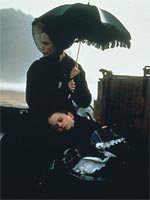
    Holly Hunter and Anna Paquin in The PianoIt’s a little over a week old, but I only just noticed Mike Goodridge’s rather interesting column at ScreenDaily, in which he offers yet another take on the Academy’s expanded Best Picture field. (Is it even a month since the announcement? It feels like we’ve been talking about this forever.)

    Unlike many, Goodridge is wholeheartedly in favor of the move, which he sees as a potential corrective to the more cynical manipulations of Oscar campaigning. I don’t necessarily agree with that conclusion, but I found myself nodding while reading the setup for his argument, in which he traces the Academy’s motivation back to Harvey Weinstein’s earliest campaigning days.

    Though Weinstein is now regarded as the poster boy for disingenuous campaigning, Goodridge looks back to a time (one many pundits seem to have forgotten) when he was a force for good on the Oscar trail, using his unsurpassed savvy to get deserving indie underdogs into the race.

    (more…)

  • Catching up with the ten

    Abbie Cornish in Bright StarIt slipped my mind to update the Oscar nomination predictions I made in early June, which were looking sorrily outdated with a scant 5 Best Picture nominees. (What a difference a month makes!)
    Anyway, if only to get with the 10-strong program, it was time for a midsummer tidy, so my updated predictions can be found here.

    Aside from doubling my Best Picture ranks, I’ve limited myself to mild tweaks elsewhere — after all, with most of the big players still unseen, I’m as clueless now as I was before. As I said back in June, I believe in having fun at this early stage in the game, so I’ve retained a few wildcard inclusions and omissions.

    (more…)

  • Amen, brother

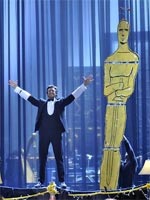
    Hugh Jackman at the 81st annual Academy AwardsI loved this nugget from from MCN columnist Noah Forrest’s constructive rant on how to improve the Oscars (Hint: he doesn’t think the Academy recent changes do the trick.) Rather than try and streamline the ceremony as the Academy has done by ditching the honorary awards (a fate that far too many people feel should befall the technical awards too), he actually wants to extend it:

    Every year we hear the same complaint about how the show is too long. The people complaining about this are the same folks who buy tickets to a baseball game and then whine about how the game is so slow. If you’re tuning into the Oscars, you are already expecting that the show is going to be a bit long, so get over it. The Academy shouldn’t be trying to cater to those curmudgeons who want a shorter show.

    It’s important to recognize who the audience is for this show; a large majority of the people who watch the Oscars are fans of film just like the people who watch baseball games usually enjoy that sport. Catering to people who aren’t particularly big fans of what you’re doing doesn’t really seem like the wisest move.

    (more…)

  • Looking back at potential tens

    The Little MermaidOkay, the decision has been made and there is not a thing I can do about it, and let’s face it, even I am going to get bored bitching about it. So I went back 20 years to find films that might have been among the 10 nominees had they been doing this in 1988. It was an interesting experiment that perhaps makes it clear why the Academy had made the move.

    Attention is drawn to films that might otherwise might not have been seen or heard of by the average Joe on the street, and allows for box office hits to find Oscar attention with a Best Picture nomination. Sure, there would be years that the pickings might be slim, but that is the price of doing something like this, and at that point, is it not smart to look at the foreign language films or — to be a bit self-serving — Canadian work?

    Or would sequels such as the superb “The Empire Strikes Back” be nominated along with other good-to-excellent films? It would have been interesting. I did not go for five films each year, but mentioned those I think would have been cinches had there been 10 nominees.

    Here we go…

    (more…)

  • Counting to ten

    Since the Academy announced the new ten-lane track for the Best Picture race, any number of bloggers have projected which extra films might have made the cut under this format in the last few years, a process that, for many, retrospectively hands hypothetical nods to everything from “Doubt” to “Memoirs of a Geisha” to “My Big Fat Greek Wedding.”

    It’s a process that is as dispiriting as it is occasionally heartening, but so far there hasn’t been much informed analysis of how the Academy’s weighted balloting system might affect the lower reaches of the list. (I must wonder, for example, whether a “Geisha” had enough number-one votes to even crack a list of ten — the new format will certainly test the remaining power of the studio system.)

    Anne Thompson, however, offers by far the most interesting backward-glancing “what-if” piece I’ve yet read, in which an unnamed (but clearly authoritative) film historian digs a little further back to consider what a ten-nominee Best Picture category might have looked like in the years from 1967 to 1979.

    (more…)

  • The Bagger’s take on Oscar’s shake-up

    David CarrDavid Carr’s Media Equation column at The New York Times today is the most well-reasoned, knowledgeable take on the Academy’s recent Best Picture shake-up yet.  He covers some of the same points I brought up in my Off the Carpet column this morning, but thankfully, he offers something of a rebuttal to the Nikki Finkes of the world who somehow think the studios pushed this decision through.

    News flash: this was horribly depressing news for more than a few in the industry last week.  As Carr shrewdly notes, “[t]he people criticizing the studios for watering down their moment of glory have the wrong villain.”

    Unfortunately, a passing comment concerning Bill Condon’s suggestion that the Academy take the category to 10 paints him as someone to blame, but he was merely doing his post-mortem duties, offering up some ideas to make the telecast better.  Plus, I’ve heard conflicting takes as to whether Condon initiated the idea or whether the Academy had been tinkering with it before he came to the table.  But one shocking truth lies in all that contradictory rubble: there were people on the committee unaware of their own history who were shocked that the category ever included 10 nominees.  Sad but true.

    (more…)

  • OFF THE CARPET: The more the merrier?

    OscarsThe Academy dropped a bombshell announcement mid-week, leaving a mixture of cheers and jeers as well as a number of questions that will be answered slowly but surely as a new Oscar season approaches.

    The chief complaint from those who took umbrage with the decision to open the Best Picture category to 10 nominations is the further dilution of prestige.  What is a nomination worth if it is shared with dubious contenders that wouldn’t have a snowball’s chance in a traditional field of five?

    Others felt the change instantly relegated the medium’s most cherished prize to yet another top 10 list, hardly distinguished in the increasingly dense fray that is the film awards season.

    Those who championed the bold move found comfort in the idea, however hypothetical, that the category could now find room for under-appreciated gems from the indie circuit, or better yet, avoid the unfortunate case of AMPAS members ignoring the intersection of art and commerce (i.e. the Best Picture snubs of “The Dark Knight” and “WALL-E”).

    The “bubble” virtually eliminated, Oscar’s sandbox just got a lot bigger, so what’s the harm in allowing as many kids to play as possible?

    I tend to fall in the former category.  The move is troublesome in that it has a whiff of thoughtlessness, a knee-jerk, reactionary decision and perhaps merely a chance to create a larger advertising opportunity for the organization’s telecast.  And I ask this: What will Pixar’s first Best Picture nomination really mean with an asterisk next to it?

    (more…)

  • Sage words

    …longtime Oscar maven Tony Angellotti, who now consults for Universal and Disney Animation, thinks the move could well dilute “both the quality and the impact of the award. I would imagine the studios are grieving over this. They’ll have to spend more money and not likely see a return — just what they don’t need in a recession.”

    From this Hollywood Reporter story in the wake of yesterday’s AMPAS announcement.

  • Comment of the day

    We’re going to get a bunch of “nominated for two academy awards, including Best Picture” movies now.

    Brian, from yesterday’s mammoth Oscar-goes-to-10 thread.

  • This year’s Best Picture category to feature 10 nominees

    OscarsThe headline says it all.  Is this some strange move on the Academy’s part to further dilute an already incredibly suspect process?  Or, more likely, is this a response to the outcry last year against critical favorites such as “The Dark Knight” and “WALL-E” missing the cut.  With 10 nominees, “the bubble” is all but eliminated and it’s a free-for-all.

    As exiting Academy president Sid Ganis puts it in the press release (see below), “Having 10 Best Picture nominees is going allow Academy voters to recognize and include some of the fantastic movies that often show up in the other Oscar categories, but have been squeezed out of the race for the top prize.”  I understand the desire to widen the net, considering the rather heated scrutiny the organization has received for some of its nominee choices, but is this the answer?

    Of course, the way the release puts it, the AMPAS wants to “go back to some of its earlier roots,” back when the 10 nominees was the norm.  But that was 70 years ago.  Additionally, this raises a whole other slate of questions as it regards competition and Oscar advertising.  With consistent awards budget cuts, a move like this could be seen as a breath of fresh air for studios stifled by the competition.  Then again, it could open the door for even more campaign dollars.  Is a “Star Trek” Best Picture push suddenly viable?  But the fact remains, with a widened winner’s circle comes a vacuum where being distinguished is concerned.

    (more…)

  • Spacey offers his services

    AwardsDaily has passed on some talk that Kevin Spacey has his eye on hosting next year’s Academy Awards, suggesting starting a Twitter campaign to make it happen.

    He’s obviously being flippant, but it strikes me as a damn fine idea. Of course, Spacey’s not the first person to suggest he might be the man for the job. I give you the words of one Mr. Kristopher Tapley:

    Think about it.  The guy knows how to put together a production.  He knows how to carry the heavy weight of an undertaking like the Oscars.  His work managing the Old Vic in London should attest to that.  But what’s more, he’s the right mixture of jazz hands and well-postured presentation that an Oscar host needs to be. That’s my pick anyway.

  • Tell me something good

    I quite enjoyed this NYT series of “memos to Hollywood” from Manohla Dargis and A.O. Scott, which include some well-deserved chiding of the Internet, the MPAA ratings board, and romantic comedy producers, among others. But I was disappointed that when it came to the ever-popular sport of bashing the Academy Awards, Scott only had this tired argument to hand:

    It’s just not working: the Academy Awards broadcast, with its mixture of snark and high-mindedness; the pool of pseudoserious, faux-prestigious specialty-division B-pictures; the long, dreary slog of the awards “season.” You’re losing touch with the mass audience on one side and the tradition of popular art on the other. Take some risks, rejigger the formula, expand the membership pool. Do something!

    He’s not wrong, exactly: we can all fill page upon page with a list of the Academy’s recurring failings. Year after year, they demonstrate an aversion to both daring specialist cinema and successful genre work that renders them irrelevant as a yardstick of artistic worth — but it was ever thus. (And to be fair, both critics’ groups and festival juries are capable of making blindingly short-sighted decisions on occasion. Awards are a fundamentally problematic institution, whoever dishes them out.)

    (more…)

  • You said it, not me

    Sandra Bullock in CrashSo, what does Paul Haggis have to say about the recent revelation that “Crash” (not the 1996 Cronenberg film, surprisingly enough) has remained the most rented film on Netflix since September 2005?

    “I have no idea why anyone went to see the movie in the first place, let alone rent it.”

    Truer words, etc, etc. But snarkiness aside, Haggis has a fair point here: the film was never meant to be any kind of phenomenon. Whether by calculation, alchemy or sheer good fortune, it happened to resonate with certain audiences upon its spring release four years ago — and if those Netflix numbers are anything to go by, it still does. Credit where it’s due.

    Academy voters thrust a weighty reputation onto this slender film that forever altered the way audiences would approach it, and I’ve long been unsure how it would support that weight. For my part, I disliked “Crash” immensely when I saw it in the summer of 2005, but I didn’t resent it the way I do today — though the fault there lies with me, not the film.

    “Crash” is a fascinating case study of the way the public’s relationship with art can shift with time, but the film’s evident popularity on DVD suggests that the relationship is more in flux than its detractors may have guessed.

    (more…)

  • Gumption

    If you’re an awards geek and you haven’t yet discovered Nathaniel Rogers and friends’ series of “Best Pictures from the Outside In” discussions, you have a treat in store.

    The premise is both eccentric and beautifully simple: word from both ends of the Oscar timeline, each episode pits two Best Picture winners against other for discussion, re-evaluation and occasional ridicule, with the comparison of two often wholly disparate films bringing out interesting elements in each other.

    In the ring for the latest instalment are “How Green Was My Valley” and “Forrest Gump” — an appropriate match-up in that they are both sentimental pieces that beat out more daring, enduring works in their respective years, and have retrospectively become less popular choices for it.

    I’m pleased to see Rogers, together with his two fellow bloggers Nick Davis and Mike ‘Goatdog’ Phillips, giving “How Green Was My Valley” more respectful attention than most people, who routinely dismiss it as “That Movie That Beat ‘Citizen Kane’” and little more.

    It’s still a John Ford film, after all, and one of his most intimate, visually lyrical works, even if it succumbs to hokum on more than one occasion. As Davis so aptly puts it, it’s a film wherein “you really feel the cycles of the day and the season, sometimes within a single shot.”

    They don’t, however, hold back on their mutual loathing for “Gump,” which I have to agree is one of the most artistically and ideologically objectionable films ever to wins Best Picture. (“Gump” and “Braveheart” back-to-back represent the Academy’s all-time nadir, as far as I’m concerned.)

    (more…)

  • Keep it about the movies

    I don’t think there are many film journalists — much less any Oscar pundits — who wouldn’t admit to feeling some relief when Sunday’s ceremony put a close-fitting lid on months of awards-related speculation, gossip and occasional complaining. (Who, me?) Especially in a season as airlessly uncompetitive as this one, it can be a strain to find new perspectives on old news, and as Kris has already discussed, we’re all longing to leap into the unknown that is 2009.

    Kenneth Turan certainly agrees. While he finds no fault with the awards themselves, praising the new-look Oscarcast to the skies, he is fed up with wall-to-wall Oscar coverage that he deems frequently less than generous in spirit:

    I found myself troubled with the way the protracted Oscar predicting season has become an endless game of gotcha, obscuring the movies themselves and the love of film that should be at the event’s core. 

    While journalists who cared about the Oscars could at one time all fit into a small booth at Nicodell’s on Melrose, the advent of the Web and its ugly, insatiable appetite for anything smacking of celebrity has meant that hordes of folks are now thick on the ground, scorching the earth in search of tidbits and chitchat.

    The problem with this obsessive quest, with constantly taking the temperature of contenders as if they were billionaires in an intensive-care ward, is that it becomes an end unto itself.

    (more…)

  • Congrats to our pool winners!

    First, thanks to all involved for participating in our Oscar pool.  The big winners were Mikey Filmmaker and Justin Wolfhope who nailed 22 of 24 categories for a score of 88 points (out of 100).  I weighted the scoring system based on the predictability of the categories.  Mikey and Justin both missed the same two categories: Best Sound Mixing and Best Documentary Short.  They went for “The Dark Knight” on the former and “The Conscience of Nhem En” on the latter.

    Yours truly came in second with 21 of 24 categories for a score of 83.  I went with my heart on Mickey Rourke and my heart failed me.  Let that be a lesson to us all.

    Mikey and Justin, if you’re reading, send me an email when you can.  I think I’ll offer up a prize for such fantastic Oscar prognosticating prowess.

  • ‘Slumdog’ takes 8 trophies as Oscar keeps it under 190 minutes

    Danny Boyle at the 81st annual Academy AwardsIn the final analysis, there isn’t much to say other than: What a captivating way to put a bow on the worst and, ultimately, most boring Oscar season of all time.  The 81st annual Academy Awards swiftly went down earlier this evening with few surprise winners and a classy new sheen.  It was captivating and, at times, inspiring.  Here are my thoughts on Hollywood’s biggest night:

    The winners
    I did extremely well with my predictions this year, nailing 21 of the 24 categories and making good with gambles in the foreign language film and short film categories.  I stuck with my heart on Mickey Rourke despite the smart money being on Sean Penn, but regardless of the strong desire to see the former holding an Oscar in his hands and delivering one more barn-burning speech, it is, of course, impossible to argue with Sean Penn’s expert work in “Milk.”  His heartfelt acceptance was a highlight and it all felt somehow more complete than it did five years ago.

    That “Departures” win took the wind out of the sails of one of the year’s most ingenious productions and yes, this is a committee that still needs a major overhaul.  I don’t think I could possibly say it enough.  That should take nothing away from Japan’s victory, mind you, because their submission is a delightful film that won’t deserve most of the ill will coming its way from those who haven’t even seen it.  But “Bashir” seems to have wrongfully faced an uphill battle from the start.

    The sound categories (hotly debated all week) proved once again that the Academy doesn’t understand the impact of mixers and editors on animated films.  “Slumdog Millionaire” took the mixing award (I’m kicking myself for changing that), while “The Dark Knight” took the sound editing trophy.

    Regarding those shorts, by the way, Pixar remains winless in the animated field since 2001’s “For the Birds” (the gorgeous “La Maison en Petits Cubes” rightly won tonight), while “Toyland,” with its ambitious structure (for a short) and obviously baity subject matter reigned supreme in live action.

    The only award I missed kind of irritated me, I have to admit: Best Documentary Short.  “Smile Pinki” took down what I thought to be the best of the field (and being the most cinematic, the most likely winner), Steve Okazaki’s “The Conscience of Nhem En.”  But there was a concerted publicity effort behind the former that maybe I should have paid more attention to.

    (More, plus a full list of tonight’s Oscar winners, after the jump.)

    (more…)