In Contention

Tag: Mike Leigh

  • In defense of ‘Happy-Go-Lucky’

    Brad Brevet, over at Rope of Silicon, likes “Happy-Go-Lucky.” A lot. And like me, he’s a bit perturbed by some of the hostile criticism that has been lobbed at the film, and its protagonist Poppy in particular — such as Jeff Wells’ wildly off-base (to my mind) accusation that the film is guilty of “emotional fascism.”

    In response to such critiques, Brevet has written a smart, thoughtful defense of the film. (I praise it not only because he quotes extensively from my own review, though that’s an obvious point in its favour. Ha ha.) The core of his argument is that the film is less an isolated character study than it is a study of its own audience, and how they respond to character:

    Happy-Go-Lucky was hardly about any of the characters in the film as much as it was about the audience watching the film. Taking that into consideration, film critics are perhaps the absolute best audience for this film. Critics of any sort can be cynical and jaded creatures and when confronted with someone that is altogether happy despite not having an abundant amount of wealth or status (i.e. Hollywood reasons to be happy) it annoys the cynical sort.

    I say this in general terms and without direction of blame or accusation, but it is what comes out of judging art as a profession. Why else would the most trying times for the film’s central character be met with the most glowing responses? As Lodge said, the character hasn’t changed … As much as Poppy may want to change the folks she encounters inside the film she ultimately ends up changing the people watching.

    (more…)

  • Best Original Screenplay: beyond the obvious

    Everyone has a favourite Oscar category, and Best Original Screenplay is mine. It’s partly because I’m a screenwriter myself, so I feel a little more invested in the outcome. My evaluation of the category often comes down to the question: “Which screenplay do I most wish I’d written first?”

    More importantly, however, it’s the category where the Academy takes its greatest artistic risks. With the Best Picture category generally weighted towards adaptations, they often use Best Original Screenplay as a way to acknowledge the edgier, more adventurous work that voters can see the greatness of, but don’t yet have the guts to honour with their biggest prize. Hell, once in a blue moon they even give it to (gasp) a foreign-language film.

    It’s this convenient ghettoising mentality that ensures the likes of “Citizen Kane,” “The Red Balloon,” “Chinatown,” “Pulp Fiction,” “Talk to Her” and “Eternal Sunshine of the Spotless Mind” don’t go empty-handed. Sure, it sucks that they couldn’t win more. And, being the Academy, they make more than their share of screw-ups. (Let’s try and forget that, in 1960, “Pillow Talk” beat — wait for it — “Wild Strawberries,” “North by Northwest” and “The 400 Blows,” shall we?) But they occasionally hit on an otherwise-snubbed masterpiece, and for that we should be grateful.

    This year’s Best Picture slate appears to be heavy on prestige adaptations, allowing for a more idiosyncratic ragbag of contenders on the Original Screenplay front, mixing familiar Academy-anointed favourites with some exciting new voices.

    There is, of course, a chance this could be a year when the paths of the Best Picture and Best Original Screenplay races converge, principally in the shape of “Milk” scribe Dustin Lance Black. Already high hopes for “Milk” were amplified by an excellent trailer, and a number of Oscar clairvoyants are labelling it the front-runner in the top race. If this turns out to be the case, Black will likely benefit.

    (more…)

  • 9/2 Oscarweb Round-up

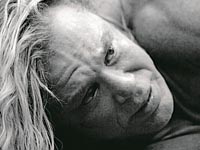
    Mickey Rourke in The Wrestler• Todd McCarthy does cartwheels for Danny Boyle’s “Sulmdog Millionaire.” [Variety]

    • Bruce Springsteen’s “Wrestler” track chokes Darren Aronofsky up every time he hears it. [darrenaronofsky.blogspot.com]

    • Peter Sciretta gives a quick, somewhat lacking review of Mike Leigh’s “Happy-Go-Lucky,” seems to be mixed. [/Film]

    • Across the pond, Penélope Cruz talks “Vicky Cristina Barcelona” and working with masters. [Daily Telegraph]

    • Not really awards-related (yet), but, wait…they’re turning “The Wave” into a German language film? Cool! News to me… [Empire]

    • Andrew Pulver separates the cheers from the jeers in Venice. [The Guardian]

    • If you’re looking for one hell of a spiffy awards section… [Rope of Silicon]

    • Rupert Friend makes one creepy Nazi in “The Boy in Striped Pyjamas.” [The Times]

    • Scott Bowles runs down ten fall flicks bursting with potential. [USA Today]

  • Jeff Wells buys into the Hawkins hype

    As Kris pointed out earlier today, Jeff Wells is no fan of Mike Leigh’s “Happy-Go-Lucky.” I suspected from the get-go that the film and Poppy, its gobby, exaggeratedly high-energy protagonist, would polarise audiences – but I still find Wells’ argument does a disservice both to the film and to his own critical perspicacity.
    In his extended critique, Wells judges the film to a rather alarming extent simply on the basis of his loathing for Poppy herself – going so far as to call her, with typical Wells dramatics, an “emotional fascist.” More crucially, he makes the error of assuming that the perspectives of Poppy and Leigh himself are interchangeable – an interpretation that, in my view, ignores a considerable portion of the film’s irony and pathos. (If anything, the film’s fundamental message is that even the most oppressive optimists are incapable of changing the world around them.)

    But no matter. For all his personal dislike of the film, Wells can see the skill involved in the whole endeavour, and is quick to credit the achievement of Best Actress contender Sally Hawkins:

    It is probably inevitable that Sally Hawkins … will be talked up as a Best Actress nominee once the film starts showing around. An elementary-school teacher who happy-vibes just about everything and everyone, Polly is an unstoppable alpha dispenser — spirited, effervescent — and Hawkins certainly inhabits her whole-hog.

    She carries “Happy-Go-Lucky,” she carries its spirit, and she does handle herself well in the sad-shock scenes at the end of the film with Eddie Marsan, the driving instructor with the correct manner and ferociously uptight, anti-immigrant attitude. In fact, the last 15 to 20 minutes contain the best stuff in the film, and I throughly respect Hawkins for her performance in this section. She handles her scenes with quiet maturity and resigned grace.

    This kind of reluctant admiration suggests to me that Hawkins in conclusively in the race, even if the film could still go either way. As Kris said, this one is gonna divide people right down the middle. For every Jeff Wells, there will be a Patrick Goldstein. At the very least, after an incredibly dull spell for specialty film, it’s nice to have a title that provokes some argument.

  • Revisiting ‘Naked’

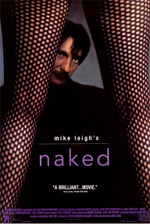
    I’m pleased that at least one person correctly identified Tuesday’s mystery quote (despite my initial absentminded misquoting) as coming from Mike Leigh’s 1993 film “Naked,” a brilliant, bruising urban portrait that still stands, for this writer, as the auteur’s finest film to date. It won Leigh and lead actor David Thewlis richly deserved awards at Cannes, though unsurprisingly, its talkiness (the film is less a narrative than it is a series of ingeniously constructed conversations) and unrelenting pessimism never really caught fire with audiences, least of all Stateside.

    Incredibly, it is only this week that the film has been released on DVD in its home country – a move that, however overdue, at least cunningly coincides with the local DVD release of Leigh’s latest, “Happy-Go-Lucky.” Bringing them out simultaneously is a clever move, not least because the films complement and inform each other so nicely. Very much two sides of the same coin, the films examine the fragile moods and  tensions of middle-class London society through the eyes of two protagonists (dissolute bum Johnny in “Naked” and cheery schoolteacher Poppy in “Happy-Go-Lucky”) poles apart in terms of perspective and ideology.

    Watching the films together, as I did back in April (thanks to the wonder of VHS), puts into quite striking relief the changes (physical, political and sociological) that Britain and its capital have endured in the space of fifteen years. Some would say the contrast points to a change in Leigh himself, though I’m not so convinced – partly because “Happy-Go-Lucky” isn’t as optimistic in its worldview as the title suggests, and partly because “Naked” was preceded by the infinitely warmer and gentler “Life is Sweet,” the closest tonal match for the new film in Leigh’s oeuvre. Like any artist, the man’s moods don’t follow a regular arc.

    (more…)

  • Patrick Goldstein falls for ‘Happy-Go-Lucky’

    With “Happy-Go-Lucky” out on DVD today in my corner of the world, it’s odd to think that America has yet to discover its charms. Early Stateside rumblings, however, suggest that’s just what might happen, as Miramax’s marketing campaign goes out of its way to portray Mike Leigh’s unruly, bittersweet comedy as the cutest thing since newborn kittens.
    Meanwhile, advance press, like this preview from the LA Times’ Patrick Goldstein, plays right into their hands. Goldstein likes the film a great deal, going so far as to portray it as a lone ray of hope in a “calamitous year for specialty films.” Right off the bat, he dismisses the comic competition from the indie sector (“Synecdoche, New York” is “murky,” while “Hamlet 2” runs into into comic “dead ends,” apparently), before singing the praises of Leigh’s film:

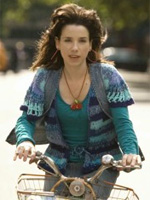
    So now for the good news. After a four-year layoff since “Vera Drake,” which earned three Oscar nominations, Mike Leigh is back with “Happy-Go-Lucky,” a film about an irrepressible free spirit named Poppy (played by Sally Hawkins) who manages to giddily bounce around London, full of life-affirming good cheer, but without an ounce of cloying or mawkish sentimentality. (After all, it’s still a Mike Leigh movie.)

    So far, so familiar. Anyone who hasn’t seen the film (and indeed, many who have) must be sick to death by now of hearing umpteen variations of the term “life-affirming” in connection with it. Refreshingly, however, Goldstein sees in the film the emotional depth and complexity which is so far escaping the general blogosphere, not to mention the Miramax marketing department (though that’s deliberate on their part):

    It being a Leigh film, the story is chock-full of oddball characters, from a high-strung flamenco instructor to a troubled child in the kindergarten class Polly teaches. But the best part of the film is the way it so casually allows us to grasp how intertwined each relationship can be. No one is easily stereotyped. Mike Leigh’s world, even a world dominated by a character who appears full of way-too-much unquenchable optimism, is always a world full of surprises.

    (more…)

  • Gold Derby backs ‘Happy-Go-Lucky’

    All us awards-watchers know that Tom O’Neil’s Oscar prognostications can be a little wacky (let’s just forget that he predicted “Sweeney Todd” would sweep the top four awards last year, shall we?). Still, he knows the game better than most, and his mid-year list of frontrunners (with assistance from Pete Hammond) in the top three categories makes for interesting reading.

    All the usual suspects (“Benjamin Button,” “Frost/Nixon,” “Revolutionary Road,” etc) are present, though there are some surprising choices – he still has “Blindness” and “Synecdoche, New York” (still without a distributor) in his Best Picture shortlist, and “W” crops up there too.

    O’Neil clearly isn’t buying into “The Road,” though Viggo Mortensen makes an appearance in his Best Actor list. Meanwhile, two unexpected choices stood out for me in his acting lists: Eric Bana in the bestseller adaptation “The Time Traveller’s Wife” (a fairly unknown quantity that I haven’t seen mentioned elsewhere), and the terrific Melissa Leo in Sundance champ “Frozen River.”

    What interested me the most, however, is that O’Neil singles out “Happy-Go-Lucky” for discussion, calling it:

    (The) film you may be most underestimating … Mike Leigh’s little flix are often big players (“Vera Drake,” “Secrets and Lies”) and this perky one could be the next “Little Miss Sunshine” or “Juno.” Sally Hawkins already won the Best Actress trophy at the Berlin Film Festival.

    I’ve been predicting big things for Leigh’s delightful film (which, incidentally, gets better the more I contemplate it) for a while now, so I’m pleased to see O’Neil shares my faith in it – though I’m not sure I quite agree with his comparison. It’s certainly a warm and very funny film, but there’s more melancholy and bite to it than either “Juno” or “Little Miss Sunshine.”

    Back in June, Kris wondered where “Happy-Go-Lucky” would land in Miramax’s awards priorities. Since then, the picture has cleared a little bit. With “Doubt” now seemingly the only other prestige contender on Miramax’s slate, Leigh’s film looks well-positioned to get an awards push from the studio – particularly in the event of “Doubt” disappointing. (I still don’t buy the latter as a Best Picture contender.) And with its profile further raised by its inclusion in the Toronto Film Festival lineup, the prospects for “Happy-Go-Lucky” are starting to look as sunny as its title.

  • ‘Happy’ season for Miramax?

    I’ve been meaning to write about Mike Leigh’s “Happy-Go-Lucky” ever since I saw it some three weeks ago, but I haven’t found a window until now. I’m off to Berlin on the weekend and I’d really like to get this off my plate before I leave, so amid all the packing, I thought I’d hammer out some brief thoughts.

    I’m never really let down by a Leigh film. Even his lesser efforts seem to exist on some simple but probing level that makes argument a fool’s errand. More often than not, his work sparks appreciation during the awards season, and he even managed a second Best Director nomination for “Vera Drake” in 2004, which surprised more than a few people.

    “All or Nothing” was one of my absolute favorite gems of 2002, yet it was ignored completely, while going back to the epic year in cinema that was 1999, we find perhaps Leigh’s most ambitious effort in “Topsy-Turvy.” Then, of course, there was “Secrets & Lies,” which captured the hearts of many in an Oscar year dominated by independent film.

    Leigh’s pre-“Secrets & Lies” work is a slightly different breed, but still fundamentally the work of the same artist and, at times, the same vision of the world. And he has come back to it with “Happy-Go-Lucky,” the shrewd observation of which Guy made in his April review of the film.

    Something feels even more off-the-cuff about “Happy” than Leigh’s recent films. There is an even greater sense of spontaneity and improvisation lurking between the frames that can be both exciting and off-putting, but the purpose is served throughout: bringing the audience into the devil may care world of a woman hell-bent on saving the drama for your mama.

    (more…)

  • REVIEW: “Happy-Go-Lucky” (***)

    The common line in the British press so far on “Happy-Go-Lucky,” Mike Leigh’s alternately fascinating and frustrating new film, is that it’s a departure for him — an exuberant comic revelation following the spare, precise despair of “All or Nothing” and “Vera Drake.” How quickly we forget.

    Only nine years ago, Leigh gave us the similarly punctuated “Topsy-Turvy,” a period romp that in some moments rivalled “Shakespeare in Love” for broad music-hall humour. Even his biggest crossover hit, the 1996 Best Picture Oscar nominee “Secrets & Lies,” had a much more explicit comic tone than many seem to recall.

    However, the most accurate precedents for “Happy-Go-Lucky” date farther back still: the film is not so much a new direction for Leigh as a throwback to the gentle character-oriented comedy and wispy, free-form narrative of his breakthrough features “High Hopes” and “Life is Sweet.” It’s a welcome move. As immaculately crafted and performed as “Vera Drake” was, it didn’t, for me, play to Leigh’s strengths as a writer: his witty ear for vernacular language and his preoccupation with the tensions and absurdities inherent in everyday conversation.

    These qualities re-emerge with a vengeance in “Happy-Go-Lucky,” a film bursting with rapid-fire banter, cathartic outbursts and occasionally didactic speechifying. The inimitably fluid language of London’s multicultural, multi-class population is woven through the film’s every exchange; if Leigh could snag a Best Original Screenplay nomination for a film as comparatively underwritten as “Vera Drake,” it’s difficult to see him getting passed over for this.

    (more…)