In Contention

Tag: Magnolia

  • Which films will be remembered in 50 years?

    Daniel Day-Lewis in There Will Be BloodIt is nothing new for a film to be released, find no audience, no critical favor, and disappear to be discovered by a new generation and raised to the level of masterpiece. In fact, this has been going on since the silents.

    Charlie Chaplin’s masterpiece “City Lights” was released four years after the advent of sound, and though popular at the time with both audiences and critics, it was some years later that it was finally hailed as Chaplin’s finest work. “The Wizard of Oz,” one of the most beloved films of all time that celebrates a 70th anniversary this month, was a dismal box office flop when released in 1939.  It wasn’t terribly popular with the critics either, but years later it was finally championed as a work of art and, of course, now the film is considered one of the greatest films of all time and perhaps a more worthy Best Picture choice than the eventual winner that year, “Gone with the Wind.”

    The “Citizen Kane” tale is so well documented I need not continue, and John Ford’s magnificent “The Searchers,” written off as just another John Wayne western, was discovered by film school professors who taught its brilliance to such young minds as Martin Scorsese, John Milius and Francis Coppola. Even Stanley Kubrick’s “2001: A Space Odyssey” failed out of the gate with both audiences and critics, but within a year of its release, many of those same critics had changed their minds about the film.  Within 10 years it was being declared as important a film as “Citizen Kane.”

    When “Gandhi” won eight Academy Awards in 1982, no one was terribly surprised. Yet within a year there were rumblings within the Academy that a mistake had been made and the rightful winner should have been “E.T. : The Extra-Terrestrial,” now recognized as a sublime work of art. And that same year, “Blade Runner” began its life as a major flop, only to re-discovered on home video over the years and become a cult classic.

    Looking back over the last decade or so, which films released since will be recognized 50 years from now? Which films that were passed over by audiences, critics and/or the Oscars will be hailed as masterpieces in the years to come?  I took a stab as choosing a group of films I believe could fall under this label.

    (more…)

  • Those underrated gems of the 1990s

    Miller's CrossingSo here we go again.  The 1990s were an odd decade cinematically, ripe with excellent films, ground-breaking work, innovations as well as a large number of duds. There were also films released to rave reviews that never found an audience.
    I combed through the decade and came up with 15 films worthy of discussion as the more under-appreciated of the 1990s, though I am positive you will all add immeasurably to the list, as you did with my take on the 1980s.

    The independent movement gave us many great films through this span, as well as some formidable new talent, but I must confess I grew tired of the studio slagging through the decade.  Among the critical community it became almost a rite of passage. There was some wonderful studio product here and there, of course: “Goodfellas,” “JFK,” “Unforgiven,” “Schindler’s List,” “Apollo 13,” “Saving Private Ryan” and “LA Confidential” are just a few.

    My list, in no particular order…

    In “Miller’s Crossing,” the Coen brothers do a masterful job of creating a funny and dark gangster film with superb performances from the great Albert Finney, Marcia Gay Harden, and the sleazy John Turturro in a film that gently pulls the audience into its story. Made on the cheap, the art direction and costume designs are great, and that story…man those Coens get so much out of, “What’s the rumpus?”

    (more…)

  • Why does the Academy fear controversy?

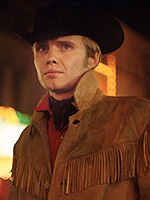
    Jon Voight in Midnight CowboyIn 1969, the Academy saw fit to give “Midnight Cowboy” the award for Best Picture — a first ever for an X-rated film.  Some saw the moment as a bellwether signaling a new dawn for the group, that they were developing a growing acceptance for the films that would start coming at them around this time of creative invigoration in the cinema.  But was it really?

    I remember somewhere that a high-ranking Academy official stated that if “A Clockwork Orange” won the Oscar for Best Picture they would resign their membership! The film had already won top honors from the New York Film Critics Circle and was nominated for four Academy Awards, among them Best Picture and Best Director. A ground-breaking work, the best of Kubrick’s career, still looking futuristic 37 years later, the film is an obvious masterpiece.  But it frightened the Academy for whatever reason.

    A year later Bernardo Bertolucci’s “Last Tango in Paris” came along with a galvanizing performance from Marlon Brando and was certainly a better film than at least two of the pictures nomination int he top race, “The Sting” and “A Touch of Class,” yet as expected, the Academy backed away from the film, nominating only Brando and Bertolucci.

    What is it in the makeup of this esteemed organization of artists that makes them steer clear controversial films, films that push the envelope, that go further out on a limb than most in exploring dark and sometimes daring subject matter?

    (more…)

  • THE LISTS: Top 10 films of 1999

    (from left) Joe Pantoliano, Laurence Fishburne, Keanu Reeves and Carrie-Anne Moss in The MatrixRemember that Entertainment Weekly cover from November of 1999?  The headline boldly proclaimed: “The year that changed movies.”  Indeed, it has become nearly a cliche to harp on and on about those 12 months of solid product as a time not equaled since the glory year that was, 1939, but to many, the truth was the truth.  1999 was the best year for films in a long, long time.

    And it wasn’t a microscopic view of “quality” either.  A broad net was cast, from genre successes aplenty to art house sensations, both finding equal play in the film awards circuit that year.  And so it is that hammering out a list of the 10 best constitutes to be a pastime of sorts for the movie lover, especially those like me who were experiencing an awakening of sorts around that time.

    1999 was my first year of film school — the dark ages, as I like to call them (because I’ve come to know film school as a fool’s errand of sorts, an education not easily passed from one person to the next but better learned through trial and tribulation).  But I was still an eager, unjaded soul and took a trip to the local theater one day with a troupe of friends for our own double feature: Sam Mendes’s “American Beauty” and David O. Russell’s “Three Kings.”  It was our first real understanding of the year that had been unfolding right before our eyes.

    “American Beauty” has, of course, aged quite poorly, though Russell’s Iraq war film remains a staple of sorts, a unique blip in a consistently uneven genre.  This was already the year that had seen the release of the first “Star Wars” installment in over 20 years (however disappointing), the last great exhibit from the portfolio of the cinema’s greatest artist (Stanley Kubrick’s “Eyes Wide Shut”) and a science fiction masterpiece that owed as much to William Gibson as anything else (at least those ideas were making it to the screen).

    Moreover, this was a cinematic year that would see releases from more top-tier directors than any other year: Kubrick, Scorsese, Lucas, Lynch, Allen, Fincher, Burton, Leigh, Minghella, Anderson, Almodóvar, Mann, Lee, Stone, Jordan, Sayles, Soderbergh, Forman, Burton, Pollack, Darabont and Howard, while simultaneously launching the exciting careers of untold newbies.  The range of quality, as expected, was certainly wide, but that all of these guys were in neck deep in their work during the same stretch of time had plenty to do with the perception of 1999, then and now.

    So with that, I felt that this week’s top 10 list (a Tuesday regularity now, if you haven’t been keeping score) would address 1999, the year that was.  Here are my picks:

    (from left) Mark Wahlberg, George Clooney and Ice Cube in Three Kings10. “Three Kings” (David O. Russell)
    David O. Russell is a visionary of sorts, but he seems to always be right at the surface, just about to break through with an unyielding brilliance, never fully harnessing the wicked talent he clearly has.  But for a brief moment in the fall of 1999, he discovered an outlet in this Iraq War dramedy that became more famous for its off-screen drama than what unfolded on-screen.  Pity, because I would rank “Three Kings” in a list of the 10 greatest war films ever made without flinching.  George Clooney, Mark Wahlberg, Spike Jonze and Ice Cube headlined a sprawling cast that probably deserved some ensemble attention.

    (more…)

  • Walking away with it

    Tom Cruise in MagnoliaI remember slipping into a small theater in 1987 to see something called “Street Smart,” the new Christopher Reeve film that I had no particular interest in, to be quite honest. Two hours later I emerged knowing two things: Morgan Freeman was a brilliant actor, and he would be nominated for an Academy Award.

    In a rather lacking movie, Freeman was terrifying as Fast Black, a vicious pimp who sees in a young reporter the chance to get off of a murder rap. At one point in the film he holds a pair of scissors to the eye of one of his hookers and invites her to choose which eye she is going to lose. It was an astounding performance that launched the actor’s career, earning him awards from the Los Angeles critics, New York critics and National Society of Film Critics…as well as that Oscar nod I predicted.

    Supporting performances can often be the heart and soul of a film, anchoring the picture and actually elevating the work of the lead actor. Can you imagine what “The Wizard of Oz” would be without the perfection of the cast surrounding Judy Garland, or “The Godfather” without the magnificence supporting Marlon Brando and Al Pacino? Nor can I, and in fact, through the years, supporting performances have become more and more important, certainly earning more press, with lead actors once unwilling to be promoted for an Oscar in these “lesser” categories now only to be happy to do so.

    Tom Cruise, arguably the biggest actor on the planet in 1999, gave his finest performance in a supporting role in “Magnolia” and somehow — SOMEHOW — lost the Oscar to Michael Caine. Jack Nicholson has gone the supporting route many times, winning an Oscar for his work in “Terms of Endearment” and earning nods for “Easy Rider,” “Reds” and “A Few Good Men,” though he was criminally snubbed for “The Departed.”

    Meryl Streep has become no stranger to supporting roles, earning an Oscar nod for “Adaptation” in 2002 (she too should have won) and certainly turning heads for a should’ve-been-nominated turn in “The Manchurian Candidate.”

    Sometimes an actor in a supporting role can dominate the film, as we saw this summer with Heath Ledger in “The Dark Knight.” In “Apocalypse Now” the film actually peaks with Robert Duvall’s napalm-loving surfer, not Brando’s deranged Colonel. Like Javier Bardem in “No Country for Old Men,” Duvall so dominated the screen when he was on it. In just a few scant scenes…we could never forget him.

    The work of the supporting actor, the “job,” so to speak, may seem to be support of the lead actors, secondary figures in the canvas of other artists. But what we see more often than not is their support of the story, and in many cases, their rise to infamy as a result.

    Have your say. What are some of the most sensational supporting performances in film history?

  • Best of the 90’s

    John Travolta and Uma Thurman in Quentin Tarantino\'s Pulp FictionTime is the enemy of all films as it erodes what was once exciting and original. Truly great movies are able to withstand the test of time, but I wonder if enough time has passed to take a look back at the 1990s cinema and make some decisions.

    There was a major breakthrough in the decade with filmmaker Quentin Tarantino, who did not so much open the door for indies as he did kick it in and stomp on it with his “Pulp Fiction,” a gloriously acted, directed and written masterpiece about criminals in Los Angeles.  When Godard spoke of making films with a guy, a girl and a gun, was this what he had in mind?

    Though Tarantino has strugled to follow up his legendary 1994 effort with an equally powerful offering, there is little doubt he will, or at least could if he wanted to. (Though he keeps stopping and starting on his latest ambitious project.)  After all, he is still growing as a director.  And just look at Steven Spielberg, who for my money has grown artistically through the last 15 years more so than any other major filmmaker. It was as though “Schindler’s List” and the release of winning the Oscar set him free.

    Anyway, for the record and argument, here are my ten best films of the 1990s:

    1. “Pulp Fiction”
    2. “Schindler’s List”
    3. “Goodfellas”
    4. “Unforgiven”
    5. “Saving Private Ryan”
    6. “The Sweet Hereafter”
    7. “Magnolia”
    8. “L.A. Confidential”
    9. “The Shawshank Redemption”
    10. “The Silence of the Lambs”

    You?

  • Movies that Oscar missed

    As film junkies, we all know it happens. Usually every single year there are one or more films the Academy passes over for Best Picture consideration, in some cases because there are, after all, just five slots available, but in others because, well — they blew it.

    Like the rest of you, I sit and listen to the nominees announced live every January and have never had a year when I did not roll my head and ask to no one in particular, “Where is such and such or so and so?”

    I mean for me, the great honor is the nomination, because when “Kramer vs. Kramer” defeats “Apocalypse Now” for Best Picture, how can you possibly take the winners seriously? However, a nomination — that is decidedly different.

    Where was the Best Picture nod for John Ford’s masterful “The Searchers,” arguably the greatest American western ever made? And Alfred Hitchcock’s “Psycho,” which redefined the horror genre?

    Since 1980 there have been a number of truly brilliant films passed over, leaving this critic often shaking his head in disgust, though I get over quick enough to watch the damned awards…talk about hooked. But it amazes me how “The Empire Strikes Back” can be a better film than “Star Wars,” yet not be nominated in the big race. Ditto Brian De Palma’s “Blow Out,” possibly the finest film of his career, ignored in every category despite its artistic mastery. The very same year Milos Forman gave us “Ragtime,” a much stronger film than “Chariots of Fire,” which won the Oscar, or even “On Golden Pond,” one of the five nominees!

    (more…)