In Contention

Tag: Life Without Oscar

  • LIFE WITHOUT OSCAR: 1939 and 1940

    Catch up with the idea behind this series here.

    We’ve come to the year that is generally referred to as the greatest in Hollywood history. Why? As far as I can tell, it’s because somebody said it once and nobody has put up much of a fight since. Plus, there was “Gone With the Wind,” a film that changed cinema and Guy Lodge forever. It also saw the birth of the Visual Effects category, with “The Rains Came” defeating “Gone With the Wind” and “The Wizard of Oz,” in an early example of the Academy’s pathetic short-sightedness.

    We also saw our first African American winner and Bob Hope handle the mic for the first time. David O. Selznick took home the big prize both years, with “Rebecca” earning Best Picture in 1940. No complaints there, but what other treasures were overlooked?

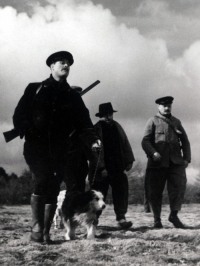
    1939 – “The Rules of the Game” (Jean Renoir)

    Derided by the French public and government upon release, the film didn’t hit the States until 1950 and didn’t achieve masterpiece status until the 1960’s. Now, it commonly sits at the top of Sight & Sound’s list of the greatest films of all time behind “Citizen Kane” and “Vertigo.” Jean Renoir’s classic comedy of manners has influenced everyone from Woody Allen to Paul Thomas Anderson to, most famously, Robert Altman and his Best Picture nominee, “Gosford Park.”

    (more…)

  • LIFE WITHOUT OSCAR: 1937 and 1938

    Catch up with the idea behind this series here.
    1937 saw Spencer Tracy win the first of his back-to-back Best Actor Oscars and Luise Rainer win the second of her back-to-back Best Actress Oscars. The Academy wasn’t as in to spreading the wealth in those days as it is now. Just ask Meryl Streep. In fact, 1938 saw Frank Capra win his third Best Director trophy in five years, Walter Brennan win his second Best Supporting Actor gong in three years and Walt Disney took home his seventh consecutive bald guy for Best Animated Short.

    1938 was also notable for the Best Picture nomination of “Grand Illusion,” the first foreign film to ever be nominated in that category. It wouldn’t happen again for 31 years and is still far too rare an occurrence. If the Academy had been able to look past their nose, they would have noticed these choices.

    1937 – “Confession” (Joe May)

    Sorry to get all obscure on you guys, but I don’t think this film is available on DVD or even VHS. I can’t even remember why I saw it, but I watched it taped off of Turner Classic Movies onto a VHS and buried in my film school’s archives. I think perhaps my Critical Studies professor was trying to get me pumped about Kay Francis. Whatever the reason, I couldn’t have been happier to stumble upon such a wildly schizophrenic, experimental melodrama.

    (more…)

  • LIFE WITHOUT OSCAR: 1935 and 1936

    Catch up with the idea behind this series here.

    Moving right along here, 1935 holds a place in Academy history as the year that MGM launched a press ad campaign for its film “Ah, Wilderness!,” the first of any kind of public baiting. Wouldn’t you know it, the campaign failed and the film was shut out. 1936 saw the introduction of the supporting actor and actress categories, awarding plaques to Walter Brennan and Gale Sondergaard. It wasn’t until 1943 that the winners here earned actual Oscar statues.

    The big winners from this period were “Mutiny on the Bounty” and “The Great Ziegfeld,” representing a phase where the Academy couldn’t get enough of big budget epics and/or biopics. Some things never change. Here’s what they missed.

    1935 – “Triumph of the Will” (Leni Riefenstahl)

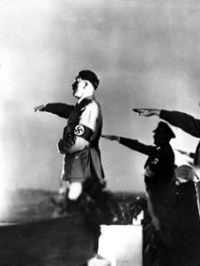
    Four years before the start of World War II, the Adolf Hitler commissioned Leni Riefenstahl to document the week-long Nazi Party Congress in Nuremberg. She was given unprecedented access to Hitler and other party leaders and was entrusted to capture the power of the Third Reich. You probably already know this because “Triumph of the Will” is arguably the most famous propaganda film of all time. Objective by design, it’s ironically the film’s subjectivity that makes it so powerful today.

    By that, I mean that Riefenstahl simply lets the camera roll and capture the events, foregoing narration, background information, graphics and talking heads. The city, the people, the soldiers, the motorcades, the speeches, all speak for themselves. Her compositions are flattering and the music swells appropriately, but it’s a direct cinema, observational approach that allows plenty of time for contemplation by the viewer. And in that time, it’s hard not to think about what would occur within this party in the next ten years.

    (more…)

  • LIFE WITHOUT OSCAR: 1933 and 1934

    Catch up with the idea behind this series here.

    1933 was the only year without an Oscar ceremony as the Academy switched its eligibility calendar around and began honoring films released from January 1 through December 31. The result was the 1934 ceremony honoring films from the past seventeen months. And still they picked “Cavalcade” as the best film from that time. Why do we care about this body again?

    Song, Score and Editing were added in 1934, as was a space for write-in candidates, which lasted all of two years with “A Midsummer Night’s Dream” cinematographer Hal Mohr being the only person ever to win an Oscar they weren’t officially nominated for. So, in these instances, both the nominating committee and the members failed to do the right thing.

    1933 – “Duck Soup” (Leo McCarey)

    I once heard that you’re either a Marx Brothers guy or a Three Stooges guy. It certainly proves true with me, as I can’t stand the constant mugging and bopping on the head of the latter, while I consider the former to be absolute geniuses. Vaudeville caricatures, slapstick physical comedy, sophisticated zingers and showstopping musical performances are all thrown into a stew and blended to perfection in this film and its immediate follow-up, “A Night at the Opera.”

    (more…)

  • LIFE WITHOUT OSCAR: 1931 and 1932

    Peter Lorre in MCatch up with the idea behind this series here.

    1931 was the first time the Academy Awards were broadcast on the radio. Can you imagine having to tune in to Sirius channel 2174 to hear Conrad Nagel announce who won everything? I don’t even know who Conrad Nagel is. 1932 gives us my favorite Oscar story of all time. Apparently, Will Rogers was presenting the Best Director award and after opening the envelope he said, “Come up and get it, Frank!” Frank Capra jumped up and waited for the spotlight to find him before it rested on the actual winner, Frank Lloyd. Someone behind him then yelled, “Down in front!” When Capra did win Best Director the next year, the announcement was also jokingly made by saying, “Come up and get it, Frank!” But enough about what the Oscars did, let’s see what they didn’t do.

    1931 – “M” (Fritz Lang)

    It was a down to the wire call between Lang’s haunting film and Charlie Chaplin’s career peak, “City Lights,” as both were shamefully overlooked masterpieces. In Chaplin’s case, the sound explosion produced a bit of bias against silent films (none were nominated this year), but there’s no such obvious excuse to pass over “M.” Particularly since René Clair’s “À Nous la Liberté” became the first foreign film to garner any nomination in this year (Best Art Direction). Perhaps it was due to the subject matter, a child murderer as protagonist, that caused Hollywood to balk. Whatever the case, history has proven that Fritz Lang’s first sound film is a treasure worth preserving and watching again and again.

    (more…)

  • LIFE WITHOUT OSCAR: 1929 and 1930

    The Love TrapCatch up with the idea behind this series here.

    A thousand apologies to everyone for the lack of a Sunday Cents column. With a respected actor/director duo putting in numbers as disappointing as “Green Zone,” there was definitely a lot to talk about but I just didn’t have the time or the access to my computer that I needed here at South by Southwest. I have managed to sneak a way for a few precious moments to finalize and post this article, which I’m very happy to see got a good response last week. So here we go again.

    1929 – “The Love Trap” (William Wyler)

    If there was one film that best represented the awkward transition from silents to talkies, then William Wyler’s early screwball comedy is it for me. The story is typical American silent melodrama, with a down-on-her-luck chorus line girl falling in love with a wealthy gentleman and facing the wrath of his disapproving family, but the kicker comes in the last reel when the previously silent film starts talking. It’s a jarring moment and Wyler uses the transition during an important story beat, similar to Dorothy opening that door to a wildly colorful Oz. While many films from this era featured sporadic dialogue, none felt as carefully manipulated as this instance. Wyler was only 26 when the film was released but his unobtrusive, economic style was already firmly in place. He would, of course, go on to become one of the most successful men ever with the Oscars, earning three Best Director trophies and guiding more actors to Oscar nominated performances than anyone else in history.

    (more…)

  • LIFE WITHOUT OSCAR: 1927 and 1928

    metropolisIs everybody over their post-mortem depression? Come to grips with your favorite movie winning or not winning? Boned up on your newest bits of Oscar trivia, such as “The Hurt Locker” and “Slumdog Millionaire” premiering a day apart at the 2008 Toronto Film Festival? I certainly hope so, because the world has continued to spin and “The Spy Next Door” has already kicked off the unofficial 2010 Oscar season.

    Before things completely return to revolving around the gold-plated bald guy, I’d like to welcome you to the newest weekly column on In Contention that aims to bridge the gap between increasingly long and grueling Oscar seasons with a look outside of the awards bubble. Here, I will be spotlighting one film per year that received no recognition from the Academy whatsoever but still deserves to be seen and discussed, because let’s face it, sometimes they get it very, very wrong.

    The format here will be two films per article, one from each year, in ascending order. Some of them will be stone cold classics that you simply must see and some will be personal favorites that strike a chord with no one but me. Hopefully all of them encourage you to think of cinema in the broader picture and instigates a desire to seek out titles beyond what one organization has deemed worthy of etching into history. So without further ado…

    (more…)