In Contention

Tag: Life Without Oscar

  • LIFE WITHOUT OSCAR: 1975 and 1976

    Catch up with the idea behind this series here.

    These two years offer two of the best slates of Best Picture nominees ever in my opinion. ’75 of course belonging to the second ever winner of the top five awards, “One Flew Over the Cuckoo’s Nest.” I’ve got no qualms with that particular film, but for my money, “Barry Lyndon” is inch perfect, every frame.

    1976 is viewed as one of the biggest Oscar travesties of all time. “Rocky” beating out films like “Network,” “Taxi Driver,” and “All the President’s Men” doesn’t sit well with most cinephiles. Guess what though, “Rocky” is in my top five films of all time and totally deserved it. Don’t listen to the haters, Sly!

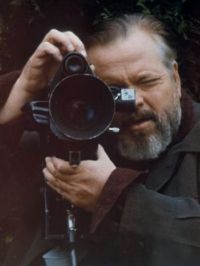
    Stallone would join Charlie Chaplin and Orson Welles as the only people nominated for acting and writing the same film at that time. Lina Wertmuller would also make history as the first female ever nominated for Best Director, possibly taking Marty Scorsese’s spot.

    The underdog box office champion winning top honors didn’t help the broadcast from becoming the lowest rated ever, and the first to last longer than three and a half hours.
    (more…)

  • LIFE WITHOUT OSCAR: 1973 and 1974

    Catch up with the idea behind this series here.

    “The Sting” swept the 1973 awards and it remains one of the breeziest films to win top honors. The combination of Newman and Redford, working at the top of their game and re-teaming with “Butch Cassidy and the Sundance Kid” director George Roy Hill proved irresistible.

    Unbelievably, it was joined in the Best Picture race by films from Best Director nominees George Lucas and Ingmar Bergman. If ever there was a pair that represented polar opposites of the filmmaking spectrum, they were nevertheless cinematic equals for a night here.

    Tatum O’Neal became the youngest winner of a competitive Oscar while 1974 saw Art Carney win over Pacino, Nicholson, Hoffman and Finney in some of the roles of their careers. Try explaining that one to anyone today without having to google Art Carney.

    1974 also gave us the first sequel to ever win Best Picture in “The Godfather Part II” and you’ll find no complaints here, although Coppola’s other Best Picture nominee that year, “The Conversation” is equally good.

    Oh, and Oscar’s one and only instance of full frontal nudity. So far…

    (more…)

  • LIFE WITHOUT OSCAR: 1971 and 1972

    Catch up with the idea behind this series here.

    Kubrick gets robbed again as his visionary, “A Clockwork Orange” loses out to a well-executed genre flick in 1971. The Oscars like nothing more than a slightly better version of the crap that Hollywood continually churns out. It’s almost as if one film doing it really well justifies them lazily attempting to film the same thing over and over. All that said, “The French Connection” is quite good.

    You can directly trace the recent win for “The Departed” back to this precedent, not to mention the debt Eminem and Three 6 Mafia owe to Isaac Hayes, who picked up a Best Song Oscar for “Shaft” this year.

    “The Godfather” won in 1972 and nobody can really complain about that, can they? Apparently, “Cabaret” was the heavy favorite at the time, but thank Christ that didn’t happen (although it did win Best Director and seven other Oscars). The ceremony is best remembered as the one where Marlon Brando sent an Indian to turn down his Oscar.

    It also saw 14-year old Michael Jackson perform the nominated song, “Ben.”

    Oh, and Peter O’Toole lost.

    (more…)

  • LIFE WITHOUT OSCAR: 1969 and 1970

    Catch up with the idea behind this series here.
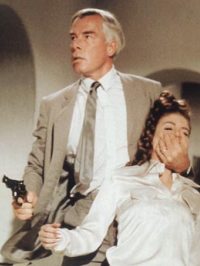
    As the 60’s came to a close, Oscar decided to embrace its dirty side and give X-rated “Midnight Cowboy” the top prize. Coming a year after “Oliver!” makes it quite a juxtaposition and the film remains one of the most interesting picks by the Academy, particularly as it triumphed in the “Year of the Western.”

    “The Wild Bunch,” “True Grit,” “Paint Your Wagon” and “Butch Cassidy and the Sundance Kid” all found themselves up for top prizes in a year that Tapley would probably have died to cover. Also great to see “Z” become the second foreign language Best Picture nominee in a year that Wikipedia claims is still the highest rated Oscar telecast ever. Take note current producers- there was no host and it lasted 145 minutes.

    The 70’s were introduced with “Patton” earning Best Picture. War, epic, biopic, strong male lead; it completely fits the bill for a Best Picture winner. Of course, George C. Scott would famously become the first actor to refuse his award this year.

    It was also the year The Beatles finally won an Oscar (for “Let it Be”) but had already broken up and failed to appear. Timely as ever, Academy.

    (more…)

  • LIFE WITHOUT OSCAR: 1967 and 1968

    Catch up with the idea behind this series here.
    The civil rights struggle raged through America in the late 60’s and the issue found its way to Oscar’s front door in 1967 with “In the Heat of the Night” triumphing over “Guess Who’s Coming to Dinner.” Neither has the lasting impact of fellow nominees “The Graduate” or “Bonnie and Clyde” but we can’t expect the Academy to award progressive filmmaking over safe filmmaking with a progressive message.

    1968 was a strange year indeed, with two big musicals, two historical, costume dramas and one independent thriller. “Oliver!” came away with the Best Picture prize while “2001: A Space Odyssey” had to settle for one win in the Visual Effects category. So…. why do we care about the Oscars again?

    More exciting is the fact that 1968 saw an exact tie in the Best Actress race. How thrilling must that have been to the Oscarwatchers in that day? Assuming there were any. And Alfred Hitchcock picked up the Irving “whoops, sorry we didn’t award you an Oscar” G. Thalberg award and gave the best speech in Oscar history.

    So, what failed to impress Ernest Borgnine and company these years?

    (more…)

  • LIFE WITHOUT OSCAR: 1965 and 1966

    Catch up with the idea behind this series here.
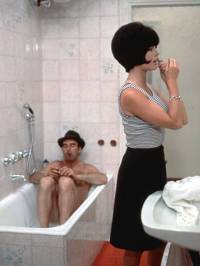
    I’m back guys. Sorry for taking a week off but my older brother got hitched and I had a drunken Best Man speech that needed attending to. I trust you spent the week watching all the wonderful movies being highlighted in this column.

    We’re halfway through my favorite decade of film and 1965 is the first time the Oscar telecast came to you live and in color (any readers actually old enough to remember?). Going into the ceremony, bookies were split between “The Sound of Music” and “Doctor Zhivago,” but it was the light-hearted former that waltzed away with top honors.

    The Academy continued to show courageous love to foreign titles with Hiroshi Teshigahara earning a Best Director nomination for “Woman in the Dunes” in ’65 and Claude Leloach doing the same for “A Man and a Woman” in 1966.

    That was the year that Fred Zinnemann’s morality play, “A Man for All Seasons” took Best Picture and five other awards, beating out Mike Nichols’s “Who’s Afraid of Virginia Woolf?,” which remains one of the greatest film debuts of all time in my book. The Oscars were making some risky choices but they still missed out on honoring these timeless films.

    (more…)

  • LIFE WITHOUT OSCAR: 1963 and 1964

    Catch up with the idea behind this series here.

    The Beatles weren’t the only British invasion happening around 1963 as “Tom Jones” took the big prize at the Academy Awards and British talent racked up no less than 9 of the 20 acting nominations. It also became one of the few comedies to win, slaying proud heavyweights like “Cleopatra” in the process.

    Also worth mentioning is Sidney Poitier’s historic Best Actor win for “Lilies of the Field.” Normal business resumed the following year as the lavish musical, “My Fair Lady” swept the board, although Julie Andrews got a bit of sweet revenge by stealing the Best Actress award away from Audrey Hepburn, who was cast in the role Andrews made famous on stage.

    Not winning an Oscar that year? You guessed it, Peter O’Toole. And maybe the biggest snub in Oscar history occured when none of the songs from “A Hard Day’s Night,” including the title number received a nomination for Best Song. Nice job Academy, it’s only The Beatles.

    (more…)

  • LIFE WITHOUT OSCAR: 1961 and 1962

    Catch up with the idea behind this series here.
    I know it’s a fool’s game to do any kind of post that doesn’t mention “Inception,” but I just did so I guess it’s all good. Back at the Oscars, a big film swept the proceedings for the third year in a row with “West Side Story” earning ten statues from eleven nominations. Wikipedia tells me that 1961 is the first time the televised ceremony ran over two hours long. Slippery slope.

    1962 gave us the first nomination for Oscar’s favorite loser, Peter O’Toole, in another epic sweep for “Lawrence of Arabia.” It’s hard to argue with that film’s broad appeal but it also does seem like at this point, the Academy was just like, “Can’t we just pick one film per year and give it all the awards?”

    Luckily, there are more than enough excluded films worth mentioning from these years so get your Netflix queue’s ready for these bad boys!

    (more…)

  • LIFE WITHOUT OSCAR: 1959 and 1960

    Catch up with the idea behind this series here.

    The epics kept rolling at the turn of the decade with “Ben-Hur” taking the 1959 Best Picture prize, picking up a record 11 wins in the process, yet to be eclipsed but matched twice by “Titanic” and “The Lord of the Rings: The Return of the King.”

    That year also saw “Pillow Talk” walk away with the Best Screenplay award under the nose of Truffaut’s “The 400 Blows” and Bergman’s “Wild Strawberries.” Painfully embarrassing, the Academy almost pulled the exact same stunt in 2002 with “My Big Fat Greek Wedding” competing against “Talk to Her” and “Y tu Mama Tambien.” Thankfully, cooler heads prevailed that time.

    “The Apartment” started the swinging 60’s off on a winning note, and remains one of the Academy’s most atypical Best Picture winners. The decade’s winners would be almost evenly split amongst epics, musicals and socially conscious drama, making Wilder’s light hearted comedy stick out like a sore thumb.

    As for this column, we’ve hit an unwelcome first. No eligible film I’ve seen from 1959 has really wowed me in a way that usually merits inclusion. It’s especially frustrating since 1960 has no less than seven Oscar ignored masterpieces giving me a veritable Sophie’s choice on that front.

    (more…)

  • LIFE WITHOUT OSCAR: 1957 and 1958

    Catch up with the idea behind this series here.
    The Academy was knee-deep in blacklisting around 1957 and Best Adapted Screenplay was given to novelist Pierre Boulle for “The Bridge on the River Kwai,” despite him not writing the film or being able to speak English. The three hour epic dominated the proceedings and Lean’s masterpiece and subsequent work would help lay the groundwork for the genre we now know as “Oscar bait.” Ridiculously, “Sweet Smell of Success,” “Paths of Glory,” and “A Face in the Crowd” all received no love and could easily be featured in this column.

    1958 saw “Gigi” break records with nine Oscar wins, while the telecast ended twenty minutes early, leaving Jerry Lewis having to try and improvise for that amount of time on live television. Can you imagine Chris Rock having to do that today? I’d watch that in a heartbeat.

    Film industries from all over the world were blossoming and titles from this era are more accessible to us now so my choices have become harder and harder to make. If it comes down to it, I’ll err on the side of obscure because really, you all should know that “Touch of Evil” is required viewing without me saying so.

    (more…)

  • LIFE WITHOUT OSCAR: 1955 and 1956

    Catch up with the idea behind this series here.

    1955. The year my father was born and the year the Oscars threw the biggest curveball in their short history. A tiny, 91 minute romantic comedy that made no money at the box office and was initially just meant to be a TV movie won the Best Picture award. The film, of course, is “Marty” and it’s also the second, and to this day last, film to win both Oscar’s top prize and the Palm d’Or at Cannes. Unassuming, pleasant and genuine, Delbert Mann’s directorial debut is one of my favorite choices the Academy has ever come up with. Only downside? Borgnine’s lifetime membership in the Academy begins here.

    Fellini kicked off the official Best Foreign Langauge film category in 1956 with a win for “La Strada.” He’d win it again the next year and remains one of the most obtuse filmmakers ever wholly embraced by the Academy. Lest you think the Academy was all of a sudden into personal, independent filmmaking, the Best Picture prize went to straight up stinker “Around the World in 80 Days.” Old habits die hard. If only they made room for the following stone cold classics.

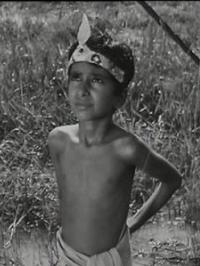
    1955 – “Pather Panchali” (Satyajit Ray)

    There must be some kind of outstanding rights issues, because Satyajit Ray’s debut feature is almost impossible to find on DVD, despite consistently being cited as one of the greatest films ever made. I was lucky enough to catch a 35mm print at the Aero a few years back and the film was able to live up to the hype. The title translates to “Song of the Little Road” and the languid pace of the film matches the lyrical insinuation of that moniker. The film premiered at Cannes and single-handedly put Indian film on the map and has influenced everyone from Kurosawa to Spielberg to Wes Anderson.

    (more…)

  • LIFE WITHOUT OSCAR: 1953 and 1954

    Catch up with the idea behind this series here.
    Did you guys see that USA-Algeria game today? I mean, talk about a life without Oscar. How can anyone think of movies while the World Cup is going on? Can we start a petition to give Landon Donovan the Jean Hersholt award this year? I suppose not everyone has the fever so let’s talk about some films that should be burning up your Netflix queue.

    1953’s big prize went to “From Here to Eternity,” a serious film that few probably argued about then and warrants uninspired admiration today. 1954 gave us “On the Waterfront,” another serious film that briefly brought the Academy back to social drama before awarding more shitty, bloated epics later in the decade. So what should have gotten some love?

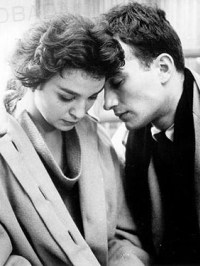
    1953 – “Tokyo Story” (Yasujiro Ozu)

    Yasujiro Ozu is one of the few directors I can think of that actually got better with age. The films made in the twilight of his career show a maturation of technique that rivals all masters of the medium, but they also show a maturation of storytelling that favors simplicity, as if he’s realized that life is too short to bother with anything but the heart of the matter. People can’t seem to stop talking about how “Toy Story 3” made them cry, but I can watch the last five minutes of “Rudy” with zero context and cry. “Tokyo Story” made me want to call my parents and tell them I love them, and that is the real power of the movies.

    (more…)

  • LIFE WITHOUT OSCAR: 1951 and 1952

    Catch up with the idea behind this series here.
    So sorry to have neglected this column for two weeks but life got in the way. A life without Oscar, you could even say. 1951 saw some major shakeups in Oscar-land, with producers taking the Best Picture award rather than the studio for the first time in a symbolic shift away from Hollywood’s mogul origins. “An American in Paris” landed an upset victory over more typical Academy fare like “A Streetcar Named Desire” and “A Place in the Sun,” giving rise to a decade that would see the debut of cinemascope, 3D, VistaVision and a number of other gimmicks meant to enhance the theatrical experience.

    The Academy would see fit to honor a number of extravagant but hollow titles throughout the decade, including 1952 winner, “The Greatest Show on Earth.” A gluttonous example of combating TV, it ironically won the first year that the big show was televised, easily becoming one of the largest commercial broadcasts in history at that point. (Video evidence!) Distracted by flashy colors and sets, the Academy missed the chance to honor these excellent titles.

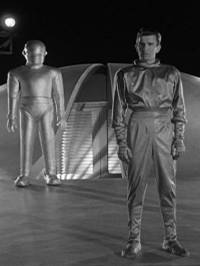
    1951 – “The Day the Earth Stood Still” (Robert Wise)

    Robert Wise is probably the most famous and accomplished director to come from one of the other technical crafts of filmmaking, specifically editing, where his credits include a little ditty called “Citizen Kane.” He won two Oscars for directing, yet remains an unsung hero because his ability to switch genres and styles effortlessly prevented any kind of recognizable continuity to his work. I mean, did you know the same man directed “West Side Story” and “Star Trek: The Motion Picture?”

    (more…)

  • LIFE WITHOUT OSCAR: 1949 and 1950

    Catch up with the idea behind this series here.
    “All the King’s Men” won the Best Picture prize in 1949, appropriately closing the book on the decade of socially conscious dramas hogging all of the attention. Somewhere, an eight year old Mike Medavoy sat in a dark theater watching and said, “I’m gonna grow up and produce a lifeless remake of this film. That’s what I’ll do.”

    The 1950’s were kicked off with “All About Eve” earning a record breaking 14 nominations and narrowly pipping “Sunset Boulevard” to the top prize. Again, the selection was appropriate as the two show business stories represented the new decade that would be considered a new “Golden Age of Hollywood”. As per usual, the Academy couldn’t fit all of the masterpieces into one show so the following missed the cut but are worthy of your time.

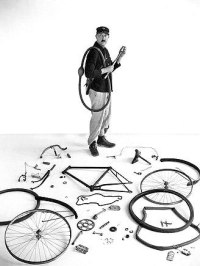
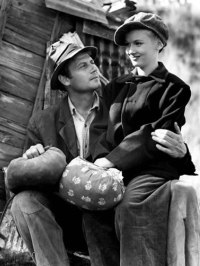
    1949 – “Jour de Fête” (Jacques Tati)

    Jacques Tati’s first feature came four years before his international breakthrough, “Mr. Hulot’s Holiday,” and doesn’t feature that titular character that would become his trademark, but it does feature all of the great things you would expect from a Tati comedy. Chiefly, that entails a lovable protagonist bumbling through his day to day life oblivious to the changing world around him and the effects his interactions have on it.

    (more…)

  • LIFE WITHOUT OSCAR: 1947 and 1948

    Catch up with the idea behind this series here.
    1947 kept the preachy, socially conscious train rolling at the Oscars with “Gentleman’s Agreement” taking the top prize. Anything exposing anti-Semitism was going to be hard to beat in the post-World War II period and the fact that it was actually well-made didn’t hurt either. More impressive is the fact that the Original Screenplay category that year featured both Charlie Chaplin and Vittorio De Sica as nominees.

    1948 saw the Brits take over and “Hamlet” becoming the first non-Hollywood production to ever take Best Picture. It also saw the debut of the Best Costume Design category and the first of thirty-four nominations for Edith Head. The Academy was at last, thinking a bit more globally, but they still missed out on some great titles. Such as….

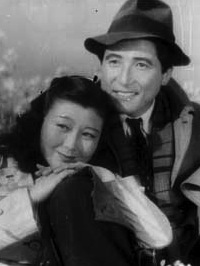
    1947 – “One Wonderful Sunday” (Akira Kurosawa)

    Three years before “Rashomon” would make him an international celebrity and Academy Award recipient, Kurosawa was honing his craft with small, contemporary stories that focused on post World-War II Japan and its inhabitants. This small gem is exactly what it says on the tin, a wonderful Sunday in the life of an engaged couple. The man has only 15 yen to his name and the woman only 20, but they conspire to make the best of their day in any way they can.

    (more…)

  • LIFE WITHOUT OSCAR: 1945 and 1946

    Catch up with the idea behind this series here.
    World War II was winding down and the nation was ready to be happy again. So, naturally the Best Picture award went to “The Lost Weekend.” Perhaps it was a show of unity with war partners France, as it would be the first film to win both the top Oscar and the Palm d’Or at Cannes (a feat only duplicated once more, by “Marty.”). The solidarity continued the following year, with Jacques Prevert and Federico Fellini both landing screenplay nominations for foreign films.

    “The Best Years of Our Lives” swept the 1946 ceremony, positioning itself as the definitive end of war story and earning sentimental points for casting a real-life wounded veteran. Said veteran, Harold Russell, is the only person to take home two Oscars for the same role when he won Best Supporting Actor and nabbed an honorary gong for inspiring the nation. But what did blind patriotism prevent from getting recognized?

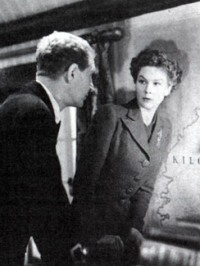
    1945 – “I Know Where I’m Going!” (Michael Powell, Emeric Pressburger)

    Powell and Pressburger may not have reached their artistic peak at this point, but they were already internationally acclaimed, accomplished, Oscar nominated filmmakers. Fresh off the quaint, small town romance, “A Canterbury Tale,” it could be considered treading creative water that they decided to follow it up with another quaint, small town romance, but if ain’t broke… They had also spent the previous few years working exclusively in war films and were determined to focus their attentions to more personal, human stories.

    (more…)

  • LIFE WITHOUT OSCAR: 1943 and 1944

    Catch up with the idea behind this series here.
    The Academy and America were in the thick of World War II and patriotism or sentimentality were the order of the day. “Casablanca” and “Going My Way” were the two big winners in the history books and while I can hardly argue with the former, the latter hasn’t aged well at all. It was the first film to win Best Picture in front of a nationwide audience as ABC broadcast the ceremony for the first time… on the radio. The event was still filmed for newsreel purposes though. Don’t believe me? Ask the dishes (Youtube!)

    The ceremony was beginning to look more and more like what we are used to, with Best Picture getting whittled down to five, powerhouse films taking more and more of the awards and one guy getting nominated for Best Actor and Best Supporting Actor for the same performance. Okay, maybe we never got used to that last one. A quickly changed rule made sure that never happened again but it’s too bad they can’t as easily change the history books to reward these films instead.

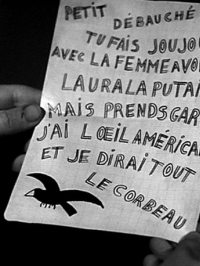
    1943 – “Le Corbeau” (Henri-Georges Clouzot)

    I’m not sure why some foreign titles retain their original title in popular conversation and some don’t, but the American DVD release of this film goes by “Le Corbeau” and so shall I. Translated as “The Raven,” it’s an early film made by one of my absolute favorite filmmakers of all time, Henri-Georges Clouzot, who only ever received one nomination for Best Foreign Film in his life.

    (more…)

  • LIFE WITHOUT OSCAR: 1941 and 1942

    Catch up with the idea behind this series here.

    1941 is already famous for an Academy oversight with “Citizen Kane” losing the Best Picture race to “How Green Was My Valley.” At least Welles’s masterpiece got a handful of nominations and a screenplay win, unlike all of the films highlighted in this series. Still, to choose John Ford’s snooze-inducing drama over Welles’s magnum opus should never be lived down.

    These two ceremonies came right in the thick of World War II and “Mrs. Miniver” perfectly embodied the mood of the nation heading to war so it’s no surprise that it racked up Best Picture in 1942. Interestingly, William Wyler also directed the Best Picture winner in 1946 that perfectly embodied the mood of the nation returning from war, “The Best Years of Our Lives.”

    1941 – “Sullivan’s Travels” (Preston Sturges)

    How the Academy could not see fit to nominate Preston Sturges for his greatest work is beyond a mystery. Granted, he had just won an Oscar for writing “The Great McGinty” the year before but that didn’t stop the Academy from handing John Ford Oscars like they were going out of style. Legend also tells of directors and studio heads being unhappy with the idea of Sturges, a writer, directing his own material, but that also doesn’t explain the love for “McGinty.”

    (more…)