 “I didn’t buy all this stuff blockhead. I’ve lived here for fifty years. A man stays in one place long enough he tends to attract a decent set of tools.”
There are a lot of admirable things about “Gran Torino,” a simple yarn precariously told by screenwriter Nick Schenk. It wallows unforgiveably in the bigotry of its central character, Walt Kowalski (to be played by Clint Eastwood), pushing that boundry to laughable distances at times. But thematically, it works.
Walt hates gooks, chinks, slopes, call the Asians who’ve moved onto his block what you will. He’s a Pabst-chugging, VFW-trolling, inner-child- and soft-undberlly-suffocating ex-military man with a chip on his shoulder for religion and a dysfunctional relationship with his children. He’s pretty standard, by all indications.
We come into Walt’s life at the funeral for his deceased wife, Dorothy, and we’re given the immediate indication that this won’t be a weeping widower. Walt looks on as a fresh-faced preacher hangs a string of fancy words out over the crowd, and in ironic disgust he can only mutter, “Jesus.”
When a Hmong family moves next door, it seems to be the last straw for Walt, who has watched the neighborhood’s decline for a number of years. His house is pristine amid the rubble of homes unkempt by their Asian inhabitants, so it’s one more log for his racist fire.
The thematic thread woven into the character from the start is Walt as the fixer. A former Ford employee of 30 years, Walt’s prized posession is the 1972 Gran Torino sitting under a tarp in his garage. He has a tool collection to rival a small construction outlet and is persistent with maintenance and upkeep. The tendency drifts to the people in his life as well, always finding a solution to whatever he perceives as a problem. It’s the workhorse in him — even if, ultimately, he won’t be able to fix himself.
(more…)
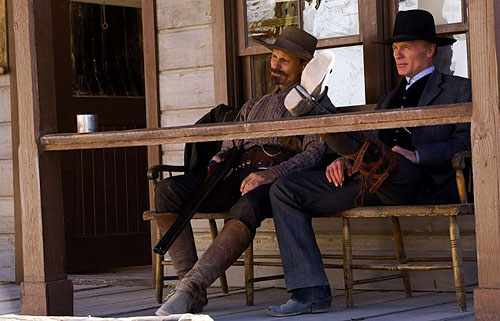
 The season is upon us. One month from today the industry’s first major stepping stone on the way to the Kodak Theater will arrive in the form of the Toronto International Film Festival: 10 days of put up or shut up by a number of the year’s prospective contenders.
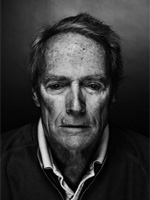 Now I know I
 In response to Tom O’Neil’s contender shortlist that I
 Had anyone said to me in the 1970s that Clint Eastwood would in time become one of the finest and most important American directors in modern cinema, I would have laughed — quite loudly — in their collective faces.
 We’ve already
