In Contention

Blog

  • Programming note: ‘Smile Pinki’ set to premiere on HBO

    You might recall my woefully off-base assumption that the sublime “The Conscience of Nhem En” was all set to win the Oscar last year for Best Documentary Short.  Well, I was wrong, but at least I wasn’t wrong with a crowd (most people were predicting “The Witness from the Balcony of Room 306”).

    Anyway, we all probably should have seen the eventual winner coming, given all the press and hoopla surrounding “Smile Pinki” on the way to last February’s Oscarcast.  If you never had a chance to see the film, now’s your chance.  “Smile Pinki” will premiere Wednesday, June 3 on HBO at 7:00pm EST.  Have a few tissues handy.  Here’s a great shot of the film’s subject, Pinki Sonkar, with filmmaker Megan Mylan at the Oscars this year:

    (from left) Pinki Sonkar and Megan Mylan at the 81st annual Academy Awards

  • Early rave for Cannes entry ‘Thirst’

    ThirstPark Chan-wook’s erotic vampire film “Thirst” opened over a week ago in its native South Korea, but it will soon make its international bow at Cannes, where it’s one of several adventurous-looking films in the competition. Screen International, however, has got a head start and offered this review — and the news is good.

    Park has been in the wilderness for a few years, but critic Darcy Paquet (awesome name, by the way) calls the film a return to the award-winning form of his 2004 hit “Oldboy.” He raves:

    Since his breakthrough with Sympathy For Mr. Vengeance in 2002, Park’s work has been characterised by its visual inventiveness, dark humour, intense acting performances, and strange but compelling shifts in tone. The first 90 minutes of Thirst is a robust display of these talents, but it is anchored in a melancholic lyricism that is new to Park’s oeuvre. Although the focus of its narrative movement is not always clear, in its best moments, Thirst offers something of the poetic force of cinema’s timeless masterpieces.

    He also adds the interesting (to me, anyway) factoid that the film — about a Catholic priest who becomes a vampire following a botched medical experiment — is a loose adaptation of Emile Zola’s 1867 novel “Therese Raquin.” Well, there you go. I must admit I’ve never really connected with Park’s work before, but the current spate of contemporary vampire tales is an intriguing trend. This could be one to keep an eye on at the fest.

  • Troublemakers united

    IrreversibleYours truly began a two-part Cannes preview this morning, but there is plenty more such coverage around if you’re beginning to get festival fever. I particularly liked Jonathan Romney’s rundown in the Independent, in which the critic points out an interesting trend in this year’s lineup: namely the convergence of several renowned enfants terribles in one year.

    There’s almost always one title in contention whose extremities — whether of sex, violence or other — set tongues wagging along the Croisette, but this year looks to be particularly hard on the faint-hearted. Quentin Tarantino’s bound-to-be-grisly “Inglourious Basterds” looks positively milquetoast compared some of the other fare on offer, including “Oldboy” director Park Chan-Wook’s decidedly adult vampire tale “Thirst” and Lars Von Trier’s seemingly unnerving foray into horror territory, “Antichrist.”

    Michael Haneke’s new effort doesn’t look like a box of kittens either, but as Romney writes, none of these filmmakers instil quite as much fear in mild-mannered filmgoers as Frenchman Gaspar Noé:

    These days, the shocks come a little stiffer. A hardened colleague of mine walked out of Gaspar Noé’s Irréversible (2002) after the opening salvo of 13 blows to the head with a fire extinguisher – thereby missing considerably worse to follow … With Enter the Void, it’s more than likely that he’ll attempt to up the ante on Irréversible. Touted as “a hallucinatory maelstrom”, it involves a stripper’s brother who reviews the violent circumstances of his death, from the afterlife. Laden with special effects and screeching neon colours, Noé has promised it will be more psychedelic than violent – but at two-and-a-half hours, it certainly won’t be an easy ride.

    I’m interested to see whether Noé can build more critical cache this year beyond the controversy that greeted his previous work — for all its look-at-me theatrics, “Irréversible” is a much better film than it’s usually given credit for. With several other title jostling for the attention of the more excitable media outlets this year, perhaps there’s more of a chance people will find the film beneath the fuss.

    And as Romney points out, if anyone can handle it, it’s a jury that includes such notably fearless figures as Isabelle Huppert and Asia Argento. Bring it on.

  • All ‘Up’ all the time

    UpDisney/Pixar’s “Up” is set to open this year’s Cannes International Film Festival Wednesday on the Croisette (Guy will be all over festival coverage for you, by the way), so the papers from here to there were obviously a little toon happy over the weekend.  The most encompassing was L.A. Times writer John Horn’s look at the film’s four-year history from a passenger seat at the studio’s insider screening in Northern California last month, but it was this aside concerning deliberation over a music cue (Michael Giacchino is once again scoring) in a key sequence:

    As “Up’s” poster and trailer make clear, the film’s central image is a house, tethered to thousands of balloons, soaring into the sky. When septuagenarian Carl Fredricksen’s ( Ed Asner) residence took flight at the Skywalker screening, Giacchino’s score was big and dramatic, the kind of music that typically accompanies an action sequence.

    “What we had I think works,” said Docter. “But I didn’t feel like we were quite capturing it.” Specifically, the music wasn’t magical, poetic. The house’s taking off needed to play more like a mystical metaphor — Fredricksen’s trying somehow to join his late wife, Ellie, in the heavens — and less like a prison break.

    “There’s something about the lyricism of the floating house that appealed to me from Day One,” said Docter, a tall man whose 10-year-old daughter, Elizabeth, provided young Ellie’s voice. With a new piece of music, the scene played closer to how he always imagined it should. “Now, it’s almost like he’s waltzing with Ellie as the house takes off.”

    (more…)

  • Geek savvy is changing the world

    William Shatner in Star TrekDavid Hinckley, writing in the New York Daily News, has taken the release of “Star Trek,” the upcoming release of “Terminator Salvation” and Wednesday night’s season five finale of television’s “Lost” (can’t…wait) to champion the age of geek in a more thoughtful way than you might imagine.  It’s become perhaps a bit too easy to say things like “the future is now,” but spinning off on his own (arguably stretching) tangent, Hinckley presents the entertaining case that sci-fi/fanboy entertainment’s dominance over pop culture signifies perhaps a shift in the overall tactical mindset of the world.

    Pick a teen movie from “American Grafitti” to “Porky’s” to “American Pie,” and you’re almost certain to find a scene where some sneering muscle guy menaces the scrawny kid with glasses and straight A’s in math.  It’s always been a little scary to be the geek.

    But even back in the 1950s, long before schools had policies on bullying, it was clear to many readers of those Charles Atlas comic book ads that the guy washing the sand out of his eyes would someday own the business where the muscleman would be applying for a minimum-wage job.  Being a well-tanned bully might make you king of the beach on sunny days, but it’s not a skill that translates well to the rest of life.

    The geek has a lot more options, especially after his girlfriend has left him and he has more time to study math. Just kidding. Today, the geek’s got a real shot at keeping the girl, because in the larger perspective, our whole culture has shifted over the last 60 years from the muscle world to the geek world.

    To oversimplify only a little, we now develop computer applications and cyber-ideas the way we used to build Thunderbirds and iceboxes.

    It’s a nice piece well worth the read.  Check out the rest here.

  • The theatrical experience sucks…there, we said it

    movie theaterTime to be perfectly honest.  I get a little irritated every time someone talks to me about the “sanctity” of a movie theater.  The “house of worship” B.S. that tends to precede a holier-than-thou, painfully romanticized assessment of seeing films on the big screen, in a packed house, it just rings a terribly false note with me.  Maybe I’m getting older and crankier.

    Maybe I’ve been spoiled by years upon years of seeing films in studio screening rooms surrounded by a handful of people who know how to shut the hell up for two hours (though you’d be surprised).  Whatever the reason, one thing is for sure: if your line is that seeing a film in a movie theater with the public is the only way to see a film, I’m not buying.

    This was more or less the point of Noah Forrest’s recent piece at Movie City News, and though Forrest gets smacked around from time to time for going against the grain, I’m arm-in-arm with him on this one, and I’m glad someone in his racket said it.  Here’s a taste:

    My problem remains that going to the movies now doesn’t offer much of an escape. And if you’re a kid, you might not want to blow all your allowance money for a single movie ticket and then break open the piggy-bank if you want some popcorn and a soda. And if you’re an adult, you’re stuck watching movies that are either out of focus or not properly displayed on the screen amidst a sea of rude people who will gladly put their stinky shoes right next to your face while they text message their friends about how bored they are…

    The problem of cell phones is not merely the nuisance of being around someone who is texting, calling or twittering constantly but the concept that people are bringing the outside world into a movie theater. For me, going to the movies was a sacred experience; again, not just watching the movie but watching the faces of the people around me and laughing with an audience or crying with an audience. Now, I find myself resenting the audience I’m around because they don’t want to immerse themselves fully in the film; they want to do business or talk to friends on their phones while the movie plays in the background. I understand bringing a cell phone with you and keeping it on silent in case of an emergency or if you might use it as a watch, but you should be in that theater to watch a movie – or to make out, which is fine with me as long as you’re not puckering too loudly.

    (more…)

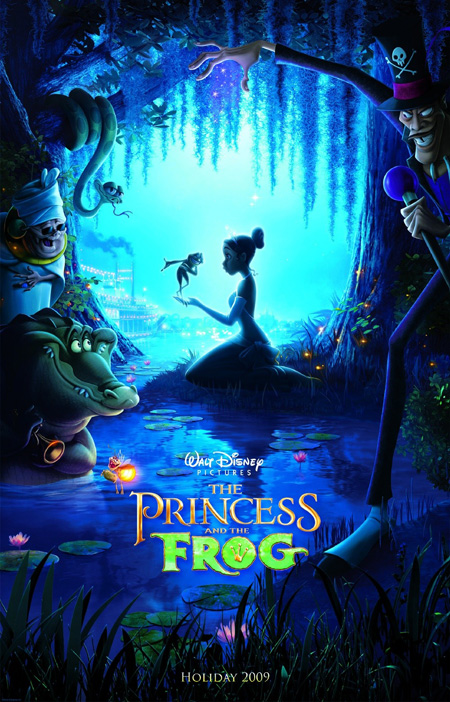
  • ‘Princess and the Frog’ poster and trailer

    I’m really holding out hope that Disney’s “The Princess and the Frog” is something special. As much as I love the future of animation and the dazzling capacity of CGI throughout the industry, I have a special place for 2D traditional animation (my all-time favorite animated film remains “The Lion King”).

    The good folks at Cinematical got their hands on an exclusive first look at the poster for the film, which I’m including below, along with the new trailer, which was released last week.  Also, check out Peter Sciretta’s report from a WonderCon panel in February on the future of traditional hand-drawn animation in this brave new world.

    The Princess and the Frog

  • 5/11 Web Round-up

    Tilda Swinton in Julia• With J.J. Abrams’s reboot landing in theaters this weekend, and Emmy talk on the brain, Tom O’Neil asks which versions of the popular series deserved small screen awards attention. [Gold Derby]

    • Geoff Boucher, meanwhile, talks to Leonard Nimoy and gets the actor to admit that some “Star Trek” fans can be “scary.” [Hero Complex]

    • Sukhdev Sandhu: “Why I love Cannes.” [Daily Telegraph]

    • The editing of an NPR review of “Outrage” sparks same. [indieWIRE]

    • Neil Gaiman discusses the adaptation of “Coraline” across the pond. [Empire]

    • Donna Freydkin talks to actress Tilda Swinton about her role in “Julia.” [USA Today]

    • David Poland loses himself in a dazzling 63-second shot from Steven Soderbergh’s 1999 film “The Limey.” [The Hot Blog]

    • Similarly, Glenn Kenny gets caught up on a “strangely evocative” frame from Sidney Pollack’s “Three Days of the Condor.” [Some Came Running]

    • Stephen Frears talks “Cheri,” which released in the UK over the weekend.  (Guy’s review here.) [The Guardian]

  • Cannes: sizing up the Competition, part one

    Penelope Cruz in Broken EmbracesWith the Cannes Film Festival only two days away, it’s time to take a long hard look (or just a look, if you prefer) at the 20 films in contention for the Palme d’Or, a typically eclectic bunch married by only one factor: all but one are from directors who have been in the race before. (And people accuse the Oscars of playing favorites.)

    Cannes is a notoriously tricky (and often well-nigh impossible) contest to predict: partly because the voting body is an ever-changing template, but largely because there’s been no time ahead of the festival for any kind of critical or popular consensus to build around the mostly unseen films on the shortlist.

    This may mean that in some cases the jury is susceptible to a film’s auteur cache — think “The Wind That Shakes the Barley” in 2006 — but it also allows for surprise attacks by less heralded titles on the basis of quality alone. Though it may seem an obvious winner in retrspect, few were talking about “The Class” last year before it snuck up on the last day and slayed the competition.

    With those caveats on the table, here’s a film-by-film (10 today, 10 tomorrow) rundown of this year’s lineup, detailing the Cannes credentials of each director, and offering some thoughts as to where they may sit in the competition. I make no promises — except that at least half my speculation will likely be proved wildly wrong in a fortnight’s time.

    “BROKEN EMBRACES” (Pedro Almodovar)

    The pitch: Already widely seen and reviewed, the film marks a return to film noir territory for the Spanish master, a complex melodrama headed by Penelope Cruz as an actress trying to rid herself of an aging lover. (Spanish dialogue)

    The history: On his two previous Competition appearances, for “All About My Mother” in 1999 and “Volver” in 2006, Almodovar entered the race as the bookies’ favourite, only to land the consolation prizes of Best Director and Best Screenplay, respectively.

    The outlook: Reviews so far have been kind, if reserved; several critics appear to delight in Almodovar’s trademark color-saturated visuals and off-kilter humor, but few have suggested that this ranks among his finest works. Almodovar is surely overdue for the festival’s top honor, but if a more unanimously lauded work like “Volver” couldn’t do the trick, my guess is that “Broken Embraces” won’t either. I think the jury may pass altogether.

    (more…)

  • Paramount marketers getting a bit lazy?

    Oh, I kid the good folks over on Melrose.  But tell me these two layouts weren’t switched at birth:

    (from left) Iron Man poster and Star Trek poster

  • SUNDAY CENTS: A ‘Star’ is reborn

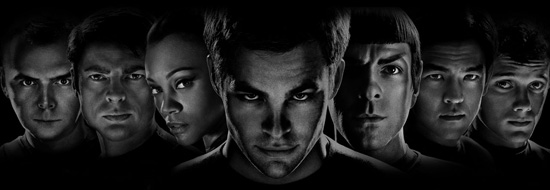
    Star TrekParamount broke the summer sophomore weekend slump with the impressive launch of “Star Trek” this weekend, earning $72.5 million for the three days and an extra $4 million from Thursday evening showtimes. On the same weekend that supposed summer blockbusters “Speed Racer,” “Poseidon” and “Battlefield Earth” all imploded out of the gate, J.J. Abrams and company successfully rebooted yet another franchise and you can expect Paramount to start production on a sequel as soon as humanly possible.
    No “Star Trek” film had ever previously opened with more than $50 million, as the series has always catered to a pretty specific niche audience. Abrams and Paramount did all they could to destroy that perception and convince people that this version was hipper, sexier and more action-packed. The buzz worked and the film should continue to perform well in the coming weeks, easily out-earning “Wolverine” in the long run and probably becoming only the third “Trek” film to pass $200 million after the 1979 original and 1986’s “The Voyage Home.”

    Summit Entertainment had the only other new release in “Next Day Air,” and they limited it to only 1,138 screens across the country. The resulting $4.0 million finish is a mediocre amount for that kind of release and didn’t really work as counter-programming like the studio probably hoped. Who would have thought that nearly 15 years after “Clueless,” Paul Rudd and Donald Faison would still have careers and Alicia Silverstone would not?

    “X-Men Origins: Wolverine” dropped a disastrous, but not unexpected, 68% to $27 million and $129.6 million total. Brett Ratner’s entry in the franchise passed $100 million in three days while Gavin Hood’s took a full week. $200 million ain’t happening and foreign grosses will have to put the gloss on this film for Fox.

    (more…)

  • The long haul

    Patrick Goldstein has already covered this matter in some detail, but I must admit the news that Judd Apatow’s “Funny People” is due to clock in at 150 minutes in length gives me some pause.

    Editing is a sensitive and flexible art, and one shouldn’t presume to have a better sense than the director of the rhythmic requirements of an unseen film. And as Goldstein points out, if James L. Brooks-style dramedy really is Apatow’s creative touchstone here, a languid running time is par for the course.

    But as someone who found both “Knocked Up” and “The 40 Year-Old Virgin” on the over-extended side of things, I’ll just say that the film will have to be very sharp indeed for me to enjoy two-and-a-half hours in the company of Adam Sandler.

  • All over it

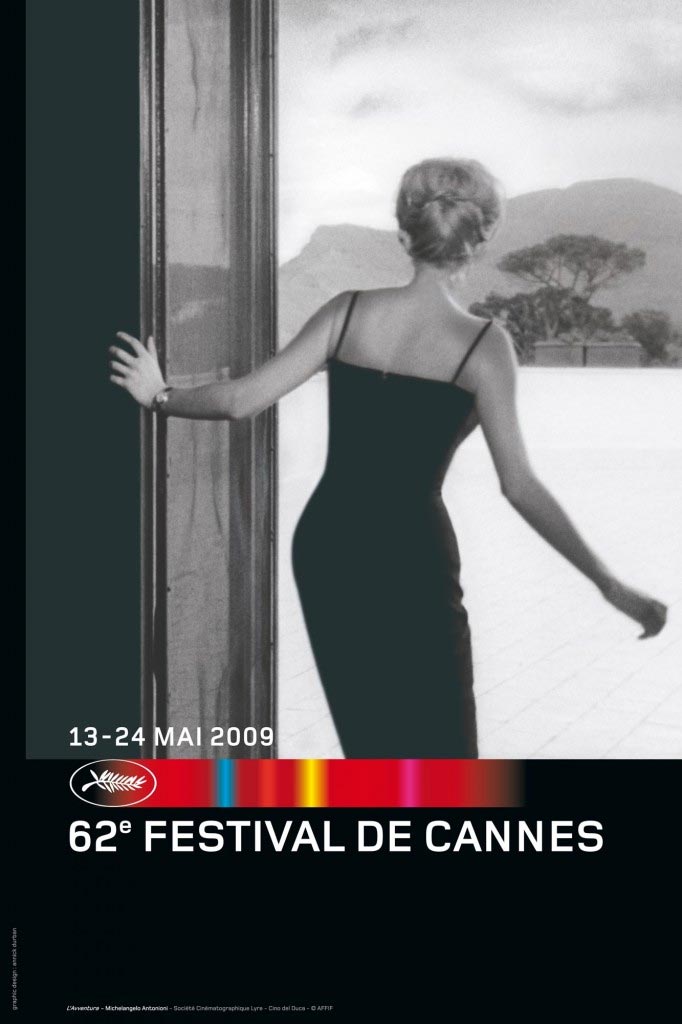
    It’s been around for a few weeks now, but since next week is going to be pretty Cannes-heavy (the fest kicks off on Wednesday), this is as good a time as any to say that I want to buy this year’s official, Antonioni-referencing festival poster, frame it, and stick it on my living room wall. Forever. Sheer perfection.

    Official Cannes 2009 poster

  • REVIEW: “Chéri” (***)

    CheriMy first thought on leaving the theatre after watching Stephen Frears’ crisp, elegantly turned new effort is that it is, in many ways, a consummate Frears film. My second thought, however, ran counter to the first: it has, over the years, become increasingly difficult to define what “a Stephen Frears film” might be.
    We are talking about a filmmaker, after all, who deals in polarities, following up the broad music-hall frivolity of the ghastly “Mrs Henderson Presents” with the austere docu-realism of “The Queen,” or a glib studio bauble like “Accidental Hero” with the jagged domestic comedy of “The Snapper.”

    The uncharitable could call Frears something of a dilettante, subsuming his own long-term artistic preoccupations beneath a veneer of versatile professionalism. That, however, would be to miss the keen emotional detail and bone-dry irony that lace themselves through all of Frears’ best work.

    Whether he finds them in a Chicago record store or an 18th century French chateau, Frears dissects his characters with an amused, academic precision that inevitably reveals the Oxbridge intellectual he is – and it’s a sensibility that meshes beautifully with the prose of Colette, who in 1920, wrote “Chéri” in much the same tartly tragic register that Frears and screenwriter Christopher Hampton tell it. (I discussed the novel in greater depth here.)

    Contrary to the shrill period rom-com that the trailer appears to be pitching it as, “Chéri” remains a cutting, economic study of love thwarted by the twinned obstacles of aging and social expectation. Painstakingly mapping the end of the affair between the eponymous 25 year-old playboy (Rupert Friend) and Léa (Michelle Pfeiffer), the world-weary courtesan twice his age, it becomes something of a dual coming-of-age story, as the lovers are forced to accept the indignities of adulthood and middle age, respectively.

    (more…)

  • Tell us what you thought of ‘Star Trek’

    Star Trek

    If you were disappointed last weekend, hopefully you’ll get a kick out of this weekend’s big release, which had me at hello.  Like I said in my review, try to catch it on the loudest screen possible.  Come on back here and give us your thoughts on J.J. Abrams’s reboot of the “Star Trek” mythos once you see it.

  • Those underrated gems of the 1980s

    BirdFor me, no decade was as overall weak for films as the 1980s, a 10-year span when bad movies made a fortune good ones went unnoticed. Of course there were exceptions to that rule.  “Amadeus,” “E.T.: The Extra-Terrestrial” and “Platoon” were brilliant productions that also scored at the box office, but more often than not, great films were discovered on video, sometimes years after release.

    A quick glance at the decade will show you that “Raging Bull” was not hailed as a masterpiece right away, and was by all acounts a failure at the box office, as was Warren Beatty’s masterful “Reds.” Phillip Kaufman’s extraordinary space adventure “The Right Stuff” had all the makings of a great American film (which it was and remains) and a box office smash, but sadly never found an audience, falling by the wayside in the summer of 1983. Audiences were flocking to see junk like “Flashdance,” “Footloose,” “Top Gun” and “Dirty Dancing” while many great films opened and closed without causing a ripple.

    I went back through the 1980s recently and re-visited 15 films that deserved attention when they were released, deserved Academy Award nominations (or more than they got), and certainly should have found an audience at the time of their release. Many of them were admired by critics, but I have left out the obvious — “Raging Bull,”  “Blade Runner,” etc. — to include smaller films that need a little love. Here they are, in no particular order…

    (more…)

  • WEEKLY WRAP: Loving ‘Trek,’ reading ‘Chéri,’ awaiting ‘Basterds’

    Anton Yelchin in Star Trek• In a bumper season for the sci-fi genre, Kris was thoroughly impressed by both “Star Trek” and the lower-profile “Moon.”

    • Meanwhile, we kicked off this year’s Page to Screen series with a look at the literary origins of “Chéri’.”

    • In a sad week for the business, we bade farewell to both actor Dom DeLuise and filmmaker Marc Rocco.

    • Quentin Tarantino declared “Inglourious Basterds” a masterpiece. (And Eli Roth a bastard.)

    • Following “Angels and Demons,” could cinema be the wrong medium for Dan Brown’s storytelling?

    • Continuing our new Sunday Cents feature with a breakdown of “Wolverine’s” box office performance.

    • Speaking of which, the “X-Men” franchise continues to grow new limbs. This time, a Deadpool spinoff.

    • We got a taste of Francis Ford Coppola’s “Tetro” with both a trailer and the opening minutes of the film.

    • Yours truly admitted to some reservations about Christian Bale’s recent work, and lost further cool points by fessing up to his Jennifer Garner weakness.

    • Finally, our contentious quest for the most influential films of all time continues apace.