In Contention

Tag: Ramin Bahrani

  • OFF THE CARPET: Original players

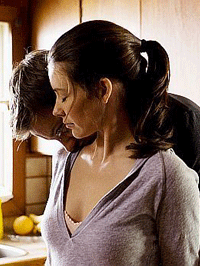
    (from left) Jeremy Renner and Evangeline Lilly in The Hurt LockerWhen I had the unmitigated gall last week to project a set of winners for this year’s Oscar race, I was a bit startled at how easy Mark Boal’s script for “The Hurt Locker” slid into the Best Original Screenplay slot.  Looking over the landscape of contenders in the category, it’s a little obvious why such a somewhat non-traditional entry would be pegged as a frontrunner: this is a pretty thin year for original screenplays.

    That should take nothing away from Boal’s work, which is certainly commendable.  But beyond Pixar’s “Up” (penned by Pete Docter and Bob Peterson) and the Coen brothers’ “A Serious Man” (my pick for best-in-show in the category), there isn’t much competition for Boal’s play at the statuette.  I even find myself struggling with two more solid bets for nods after that trio.

    Fox Searchlight, however, is making some pretty strong moves on behalf of “(500) Days of Summer,” written by Scott Neustadter and Michael H. Weber.  The pair has already been cited by the Hollywood Film Festival as well as the Hamilton Behind the Camera awards.  Given the studio’s campaign prowess (and the undying spirit of the film’s champions), it makes sense to expect a spot to be reserved for the film here.

    To fill out the set, you’ve got a slot that is undeniably up for grabs.  So let’s dig into the field and see what we come up with.
    (more…)

  • Dante, Bahrani added to Venice lineup

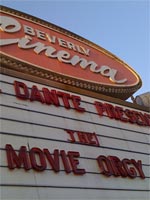
    The Movie OrgyEarlier this morning, Kris pointed you to the news that four features have been added to the Venice lineup: Joe Dante’s “The Movie Orgy: Ultimate Version,” Angela Ismailos’s “Great Directors,” Hana Makhmalbaf’s “Green Days” and Peter Greenaway’s “The Marriage.” Under the radar (and out of competition) they may be, but all of them further my anticipation for my trip to the Lido next week.
    The former two are intriguing American cinema-themed documentaries: Ismailos’s film, her debut, lives up to its rather blunt title by examining the work of ten contemporary helmers, including Todd Haynes, Richard Linklater, John Sayles and David Lynch. Dante’s film, meanwhile, is a slightly (and, at 280 minutes, I mean only slightly) more disciplined cut of his mammoth 1968 film, a 7-hour valentine to B-movies of the 1950s and 1960s.

    (more…)

  • Not getting it

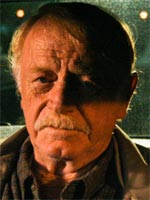
    Red West in Goodbye SoloA little over six months ago, I saw “Goodbye Solo,” Ramin Bahrani’s highly regarded fourth feature film, at the London Film Festival. As I said in my capsule review at the time, I found several elements to like in this genial, commendably sincere work — not least a greatly moving performance from 71 year-old former stuntman Red West — but found the whole overextended and dramatically underpowered. Narrative parallels to Kiarostami’s masterful “A Taste of Cherry” did Bahrani’s film no favours in my mind either.
    Anyway, after being mildly appreciative while watching it, I promptly forgot about “Goodbye Solo” altogether. That is, until last week, when its limited U.S. release was greeted with such breathless critical adulation — Roger Ebert and A.O. Scott are just two of the poetically enthusing critics contributing to the film’s lofty Metacritic score of 88 — that I began to wonder if I had lost the plot altogether.

    What resonance have I missed in Bahrani’s slight, bittersweet narrative? Why does the minimalism of “Goodbye Solo” strike me as self-conscious, where the similar approach of, say, “Wendy and Lucy” feels wholly organic? Is it a film that might repay the effort of multiple viewings? All are questions that have run through my head. I was interested, however, to read this Huffington Post piece by Marshall Fine that suggests I’m not the only one scratching my head over this. Calling the film the most overrated of 2009 so far, Fine continues:

    Turgid and uneventful, built around two characters of opposite demeanor whose paths temporarily reach a confluence, Goodbye Solo is another under-paced, under-dramatized film that falls into “neo-neo-realism” category that A.O. Scott went on about at such great lengths in a recent Sunday Times magazine piece.

    Say what you will about the so-called mumblecore school of filmmaking — with its slapdash aesthetic and endless self-regarding conversations — but at least those movies seem to have something on their minds, beyond creating a mood. Goodbye Solo, however, is a thin character study over which critics wank themselves into a state of ecstasy at all the meaning they can superimpose on the film — sort of the way people imagined that the emperor was wearing beautiful clothes.

    (more…)

  • LONDON: ‘Dean Spanley,’ ‘1234,’ ‘Goodbye Solo’

    Long day today, with some complicated scheduling: after a press screening of Atom Egoyan’s “Adoration” turned out to be full, I was presented with the choice of catching up with either “Miracle at St. Anna” or Kazakhstani Oscar submission “Tulpan.” I opted for the latter — well, it’s got more of a chance of getting an Oscar nomination than Spike Lee’s film, right?

    Anyway, as I have six films to discuss from today, for the sake of economy (and my own sleep requirements) I’ll look at three of them now, and deal with the rest early tomorrow. We’ll start with the English-language contingent.

    I missed tonight’s main attraction, Richard Eyre’s tepidly received “The Other Man.” However, Eyre’s film was preceded by another UK-set Toronto title, “Dean Spanley” (**), a sophomore effort from Kiwi helmer Toa Fraser, whose debut “No. 2” was, oddly, rather more ambitious than this amiable but over-extended skit.

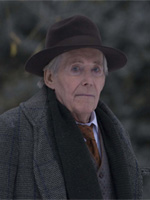
    The ornate animated credit sequence and jaunty score announce upfront that the film demands high whimsy-tolerance levels from the audience. In the interest of full disclosure, mine are pretty low. Still, that doesn’t distract from the fact that the narrative is barely feature-film material. Set in London at the turn of the 20th century, the film focuses on the brittle relationship between mild-mannered gentleman Fisk (Jeremy Northam) and his batty, emotionally distant father (Peter O’Toole). Idly attending a lecture on reincarnation one afternoon, they encounter the enigmatic Dean Spanley (Sam Neill), whose own account of his imagined past life as a dog strikes an unexpected emotional chord with both father and son.

    (more…)