In Contention

Tag: No Country for Old Men

  • Mood swings

    I’m having a hard time deciphering Peter Bart’s point in his cryptic new blog post, in which he reflects on the Academy’s malleable taste, and how quickly it can shift.

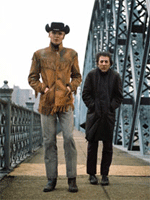
    As his primary case study, he cites the bizarre contrast between two back-to-back Best Picture winners, wholesome musical “Oliver!” and X-rated, gay-tinged drama “Midnight Cowboy” in 1968-9, a turnabout which Bart feels reflected significant social change at the time. True enough. But he goes on to imply obliquely that we may be in the midst of a similar situation:

    It’s hard to recall a more dramatic example of a professional organization displaying such a dramatic mood swing. But this was 1969, the year of Woodstock, Charlie Manson, Altamont, the Chicago Seven – a year of turmoil when just about everyone changed their attitudes toward just about everything.

    Sounds a bit like 2009, doesn’t it? Well, not really. The country is opening up to new ideas and new leaders, but even today “Midnight Cowboy” would provide a measure of culture shock.

    (more…)

  • The new millennium Oscars?

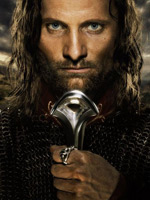
    Viggo Mortensen in The Lord of the Rings: The Return of the KingLooking back over the previous Oscar winners for Best Picture since 2000, the start of a new century (and a new millennium), I find myself wondering sometimes what the hell the Academy was thinking.  It’s no secret I disagree with the Academy a lot, but I can also admit that when they get it right, they get it right.

    But since 2000, their Best Pic choices have run the gamut from incredibly ridiculous, “Gladiator” and “A Beautiful Mind” being just goofy, to bang on, with “The Departed” and “The Lord of the Rings: The Return of the King.”  I am told the Academy is moving in a more progressive direction, willing to take more risks, and I suppose some of these winners do just that.  But they could have gone further.

    Year by year, here’s a quick look, with some thoughts about who might have won, and who should have at least been nominated…

    (more…)

  • Too many independents?

    I know I’m just one of many who have been concerned about the future of independent film, following the closing in quick succession of Picturehouse and Warner Independent Pictures, and the incorporation of Paramount Vantage into the main body of the studio.

    Someone who has a different perspective on matters, however, is Miramax head Daniel Battsek. Screen Daily reports that, in his keynote speech at the London Film Finance Market, he expressed the view that the specialty field is, if anything, overcrowded:

    Asked whether Miramax had been helped by the recent closure of Warner Independent Pictures, Picturehouse and Paramount Vantage, he replied:

    “Not significantly…the sector of the business was definitely overcooked. There were too many players. There probably still are too many players … Even with the slight reduction of companies operating in this space, there are still too many movies being released. It is very, very difficult to get your voice heard.”

    (more…)

  • More buzz for Brolin

    The mixed notices for Oliver Stone’s “W.” — some of which seem to be simultaneously admiring and bewildered — make it quite clear that the film isn’t going to be a player in the top categories. But we pretty much knew that all along.

    Josh Brolin’s performance, however, is another story altogether. After the stunning breakthrough that he’s had in the past year, playing an incumbent president — and a widely-loathed one at that — in a film by an off-the-boil director might not have seemed the safest career move.

    But the gamble appears to have paid off: whatever the ultimate fate of the film, Brolin’s interpretation of Bush has been widely hailed as a courageous and accomplished addition to an increasingly interesting filmography. Naturally, Oscar talk is swirling, and Screen International’s review minces no words on the matter:

    A wonderfully brash and fearless performance … If the film itself fails to figure in the year-end awards shortlists, Brolin must surely be considered a likely best actor nominee. Wholly immersing himself in the part, he doesn’t imitate the president so much as breathe human complexity into him. Rudderless and restless as a young man, Brolin nonetheless plays him as a likeable enough fellow, a harmless jock, attractive to women and tortured by his father’s expectations. As a president, Brolin plays him as a man of some intelligence, even if his arrogance and machismo are on full ugly display.

    (more…)

  • Adapting Philip Roth

    Cover of The Dying Animal by Philip RothPhilip Roth is author of 25 novels and other works of non-fiction.  Revered in America, he has won every major American literature prize, including the National Book Foundation’s Award for Distinguished Contribution to American Letters in 2002.  Despite his literary success, his films have had a difficult journey to the silver screen.

    I joined the long line of Roth fans that were disappointed with Robert Benton’s adaptation of “The Human Stain,” the 2000 novel that received the National Book Award for the best work of American fiction. It was an extraordinary book and perhaps Roth’s finest. And I believed that it would translate nicely onto the silver screen. While the novel weaved in and out of the past and present, the transitions weren’t so frequent that it would create a problem for the screenwriter, Nicholas Meyer (Oscar-nominated for “The Seven-Per-Cent Solution.”

    Benton was able to attach an exceptional cast that included Anthony Hopkins, Nicole Kidman, Ed Harris and Gary Sinise. But when the film bombed with critics and audiences alike, it was quickly pulled from mainstream movie houses and relegated to small boutique theaters, and for short periods of time. It made only $5.3 million against a production budget of $30 million.

    Mr. Roth’s work has been adapted again by Mr. Meyer this year. Taking the pages of “The Dying Animal” and turning them into the film “Elegy,” Mr. Meyer and the film’s director, Isabelle Coixet have managed to create a finer adaptation of the text, and a far better film.

    (more…)

  • “This town needs an enema!”

    Why can’t Hollywood just get along?

    Lots of lawsuits dropping in the film and entertainment buisness lately.  J.K. Rowling and the “Harry Potter” Lexicon, “Rear Window” vs. “Disturbia,” Watching the “Watchmen” tug of war, No Cash for Old Tommy Lee…and let’s not forget all the SAG drama, as studios fortify their ranks to do battle, be it now or in the future.

    Sometimes…I don’t know, it’s weird.  It’s like you can just TELL this blessed burg needs to chill out sometimes.

  • 9/8 Oscarweb Round-up

    Seth Rogen and Elizabeth Banks in Zack and Miri Make a Porno• Jen Yamato wonders what the hell happened to Oscar-winner Cuba Gooding Jr. [Rotten Tomatoes]

    • Jeffrey Wells puts up a positive review of Kevin Smith’s “Zack and Miri Make a Porno,” philosophizes on the photographical approach to actually shooting a porno. [Hollywood Elsewhere]

    • Logan Hill profiles “The Brothers Bloom” star Rachel Weisz back East. [New York Magazine]

    • Scott Macaulay goes party-hopping in Toronto. [Filmmaker Magazine]

    • Dave Karger and Missy Schwartz put together a video mid-term report for Toronto. [Entertainment Weekly]

    • Focus Features honcho James Schamus is honored with the Trailblazer Award at the Woodstock Film Festival.  WELL deserved. [MovieMaker Magazine]

    • Lou Lumenick considers Dakota Fanning a “formidable actress” in “The Secret Life of Bees,” but doesn’t see Oscar on the horizon. [Lumenick on Film]

    • A preview of Clint Mansell’s “Wrestler” score pops up online…I’m loving it. [MySpace]

    • Tommy Lee Jones sues Paramount over “No Country for Old Men” profits.  Show me the money. [Associated Press]

    • Anne Thompson’s heart goes out to Charlie Kaufman. [Thompson on Hollywood]

  • Javier Bardem: Defending the character

    Some actors just have it. Javier Bardem is one of them.

    A few weeks ago, Kris posted that engaging Penelope Cruz interview with Lynn Hirschberg of the New York Times. Now, in a neat bit of symmetry, Bardem is next in the series — and he is as articulate and perceptive an interviewee as he is a performer.

    I particularly like his description (borrowed from Victoria Abril) of the acting process as being akin to that of a lawyer, defending their characters through their portrayals — even when they’re as despicable as Anton Chigurh. Further on, it’s nice to hear someone who appears genuinely honoured and humbled by his whole Oscar experience.

    And just in case he wasn’t cool enough… the first film he saw was “All That Jazz.”

  • Walking away with it

    Tom Cruise in MagnoliaI remember slipping into a small theater in 1987 to see something called “Street Smart,” the new Christopher Reeve film that I had no particular interest in, to be quite honest. Two hours later I emerged knowing two things: Morgan Freeman was a brilliant actor, and he would be nominated for an Academy Award.

    In a rather lacking movie, Freeman was terrifying as Fast Black, a vicious pimp who sees in a young reporter the chance to get off of a murder rap. At one point in the film he holds a pair of scissors to the eye of one of his hookers and invites her to choose which eye she is going to lose. It was an astounding performance that launched the actor’s career, earning him awards from the Los Angeles critics, New York critics and National Society of Film Critics…as well as that Oscar nod I predicted.

    Supporting performances can often be the heart and soul of a film, anchoring the picture and actually elevating the work of the lead actor. Can you imagine what “The Wizard of Oz” would be without the perfection of the cast surrounding Judy Garland, or “The Godfather” without the magnificence supporting Marlon Brando and Al Pacino? Nor can I, and in fact, through the years, supporting performances have become more and more important, certainly earning more press, with lead actors once unwilling to be promoted for an Oscar in these “lesser” categories now only to be happy to do so.

    Tom Cruise, arguably the biggest actor on the planet in 1999, gave his finest performance in a supporting role in “Magnolia” and somehow — SOMEHOW — lost the Oscar to Michael Caine. Jack Nicholson has gone the supporting route many times, winning an Oscar for his work in “Terms of Endearment” and earning nods for “Easy Rider,” “Reds” and “A Few Good Men,” though he was criminally snubbed for “The Departed.”

    Meryl Streep has become no stranger to supporting roles, earning an Oscar nod for “Adaptation” in 2002 (she too should have won) and certainly turning heads for a should’ve-been-nominated turn in “The Manchurian Candidate.”

    Sometimes an actor in a supporting role can dominate the film, as we saw this summer with Heath Ledger in “The Dark Knight.” In “Apocalypse Now” the film actually peaks with Robert Duvall’s napalm-loving surfer, not Brando’s deranged Colonel. Like Javier Bardem in “No Country for Old Men,” Duvall so dominated the screen when he was on it. In just a few scant scenes…we could never forget him.

    The work of the supporting actor, the “job,” so to speak, may seem to be support of the lead actors, secondary figures in the canvas of other artists. But what we see more often than not is their support of the story, and in many cases, their rise to infamy as a result.

    Have your say. What are some of the most sensational supporting performances in film history?
  • Deakins on the web

    OK, it seems to have been around for a few years, so a lot of you are probably aware of it already, but I’ve only just discovered the great Roger Deakins’ website.

    It’s a pretty bare-bones affair, but there’s some fascinating stuff on it nonetheless. I for one am gobsmacked at how this prolific man, between shooting some of the most significant films of the past few years, somehow finds time to answer so many queries in the forums section. You have to wade through a lot of drivel there, as does Deakins – there are a depressing number of people out there who see fit to ask one of the most gifted DPs alive such probing gems as, ‘How is Leo and Kate’s acting in “Revolutionary Road?”‘ (Only without the correct spelling and capitalisation.)

    Dig around, however, and there’s a wealth of technical information and insight for fans and filmmakers alike. As if that weren’t enough, he’s posted some of his lighting diagrams too, including ones for “No Country for Old Men” and “The Man Who Wasn’t There.”

    Finally, for those who can’t get enough pretty pictures, he’s put up some of his photography work too. (I’d pay good money for a print of that “Rain Begins” shot.) The man’s a true artist.

  • Israel leaves Vantage: “It’s not the same company”

    This strikes me as very bad news indeed. Amy Israel, head of acquisition and production at Paramount Vantage, has been shown the exit. You’d think overseeing the production of such titles as “No Country for Old Men” and “There Will Be Blood,” and acquiring, among others, “An Inconvenient Truth,” would count for something. Apparently not.

    Replacing Israel is Guy Stodel, a former exec from New Line. He has some history of acquiring arthouse titles (“The Sea Inside,” “The Upside of Anger”), but worryingly, his most emphasised accomplishment in the press release is having brought the two “Texas Chainsaw Massacre” remakes to fruition. Because that’s the kind of thing we’re looking for, right?

    Israel’s parting statement is diplomatic, but somewhat ominous:

    I’m proud of having been a part of building Paramount Vantage from the ground up under John Lesher, making great films. I love the company we built. It’s not the same company. (It) is evolving a different direction.

    Truthfully, we all knew this was coming. When Vantage was incorporated into the main body of the studio last month, it was pretty obvious they wanted to broaden their focus to more commercial genre projects. Vantage president Nicholas Meyer insists specialty films will remain a priority:

    Although the moves signal that Vantage is moving more in the genre direction, Meyer insists the studio is pursuing a more “eclectic and elastic” slate. “We are not abandoning the specialty business. We are too committed to it,” Meyer said. “As the company evolves, we need to morph and mutate in order to survive in a challenging environment.”

    (more…)

  • Battsek in the pink ‘un

    Flipping through the Financial Times earlier today (a British newspaper famous for the pink paper on which it is printed — “Give me a pink ‘un”), I came across a profile of Miramax honcho Daniel Battsek that made for a pleasant read amid all the TPG and Bernanke mumbo-jumbo.

    In a lot of ways the story is rather derivative and even stale. Nothing we’ve not read elsewhere, especially after an Oscar season that saw “No Country for Old Men,” “The Diving Bell and the Butterfly” and “There Will Be Blood” tear through with the media latching on for the ride.

    But Battsek is one of the good guys. Any ink, really, is good ink, considering what he’s done with the company in the wake of the brothers Weinstein. And hey, he’s a hell of a nice guy.  That’s reason enough for me to pass it along.

    Matthew Garrahan has the byline. Here’s a look:

    Making films that achieve critical and commercial success “is not rocket science…and it’s not as complicated as some people make out”. Still, it is not easy. “You have to be very sure of yourself when you acquire the material. You have to be very conscientious and detailed when you’re working with your filmmakers. And you have to find ways of being able to make [the film] as quickly as possible.”

    The physical process of making a film is not of great personal interest. “I’ve never had the movie-making bug. Sitting on a set watching a scene being filmed doesn’t turn me on at all. But I love being in a cinema watching a film. I love the creative side, working with filmmakers, writers, actors . . . and I love the production process.”

    The rest.

  • As Cannes winds down, TIFF looms…

    With Cannes on the downswing, it becomes time to to start making preparations for the annual Toronto International Film Festival, for which screening announcements begin next month. I have been covering Toronto for more than 15 years and can safely say it is Christmas to a film critic.
    Each September I move into the Delta Chelsea Hotel for the duration of the festival — it makes no sense to make the 90 minute drive home each night as the days begin at dawn and often tie into the following morning. My wife and girls make the drive into the the city for the weekend and swim while I screen. And if time permits, I take Sherri to a Gala screening at Roty Thomson Hall.

    Over the course of each festival I see between 30 and 50 films (50 being my personal high, in fact) and though it sounds like tons of fun, and I would not miss it for the world, it is exhausting to say the least.

    (more…)

  • Who joins the great Best Picture snubs this year?

    It happens every year, a great film, in some cases destined to be remembered more than the eventual Oscar winner is snubbed for a Best Picture nod, or gets nominated and loses to an inferior film that happened to capture the public’s attention at that particular point in history.

    Some of the greatest films of all time lost the top award, “Citizen Kane” among them, arguably the greatest of all time (though I disagree). “The Treasure of the Sierra Madre”, easily John Huston’s best work, joins the list, as does “The Searchers,” which is in my opinion the finest western ever made and contains the greatest John Wayne performance of all time.

    Remember “Rocky” winning over “All the President’s Men,” “Network” and “Taxi Driver?” Or “Kramer vs. Kramer” over “Apocalypse Now?” In the last twenty years, Oscar has pulled some howlers, some choices that left me nearly putting my foot through the television upon the announcement. The first time I remember being really, truly angry at a lame decision was in 1981 when “Chariots of Fire” bested Warren Beatty’s “Reds,” which I believe to be among the best films of the 80s.

    (more…)

  • OFF THE CARPET: 2008, a year in advance

    Another year, another set of wins…and another look ahead at what’s in store NEXT year.

    It’s never too late to take a long gander at what we might see dominating the film awards landscape in 365 days, and with that in mind, I’ve been doing my usual mulling over the possibilities for a few weeks to put together the sadly thorough examination of the 2008-09 award season that follows. Let’s get into it. There are some major considerations to take into account. right off the top.

    Like Leonardo DiCaprio, for instance, who is set to be the entertainer of the year. With performances in “Body of Lies” (Ridley Scott) and “Revolutionary Road” (Sam Mendes), DiCaprio is working with a duo of awards-proven talent this year. Perhaps that will work against him, much like it did in 2006, and no major Oscar success will come knocking. But we’ll wait until we see the performances. Each of them could be enticing.

    This year’s Best Picture Oscar victor Scott Rudin is back again, by the way, with “Revolutionary Road,” recently inherited by Paramount Vantage and probably one of the true “frontrunners” this far out that we could put our finger on. The only other film in Vantage’s arsenal is Edward Zwick’s “Defiance,” which could simply be a commercial success, but might find its way to multiple nods like “The Last Samurai” and “Blood Diamond” in recent years.

    (more…)

  • The top 10 shots of 2007: part one

    Daniel Day-Lewis in There Will Be Blood2007 was, to my mind, the greatest year for cinematography in a long, long time.  I can’t recall the last time I was so thoroughly impressed with the visual artistry of film after film like I was last year, and I attribute that to the intriguing spark of creativity underway in the film medium as of late.  Newcomers and veterans alike were putting awe-inspiring images on film, some of the seasoned pros besting their already exceptional portfolios.

    I wanted to do something special in the way of commemorating the efforts of these individuals, and so I set out to interview a number of them as the year drew to a close.  Sadly, I was never able to piece those interviews together in a proper story like I would have wanted, but in recent weeks it has occurred to me that it may be just as beneficial to offer up something you don’t regularly see: a personal compilation of the greatest single images from the cinematic year.

    And so it goes that I offer the Top 10 Shots of 2007, a two part piece that will run down what I felt were the best of the best in a year full of exceptional cinematographic work.  Today, I’m running down shots 10 through 6, and tomorrow, we’ll wrap it up with the top 5.  Mixed in you’ll find sporadic comments from the lensers in question, as I feel it only appropriate that I give that small gateway into their process for readers and viewers alike.

    I hope you enjoy reading this as much as I did compiling it.

    (more…)