In Contention

Tag: Martin Scorsese

  • 1/3 Oscarweb Round-up

    Ralph Fiennes• Patrick Goldstein responds to that B.S. Daily Beast Penn/Rourke thing.  Probably a little too lax but at leat he somewhat lays into the “journalist” responsible for the piece. [The Big Picture]

    • Michael Cieply scopes out tobacco use in the year’s Oscar contenders. [The Carpetbagger]

    • Andrea Hubert catches up with “Slumdog Millionaire” star Dev Patel. [The Guardian]

    • Kevin Maher talks “The Reader,” among other things, with Ralph Fiennes. [The Times]

    • Susan Wloszczyna takes a first journalistic stab at Martin Scorsese’s upcoming “Shutter Island.” [USA Today]

    • A creepily in depth look at the top “Jeffrey Wells moments” of 2008.  Yeah.  We’re the story. [Spout Blog]

  • Oscar nominations that made me cheer

    Over the years I have been watching and studying the Oscars in earnest, since about 1974 (age 13).  It has always been a nice surprise when an unexpected actor, director or film made the cut to the final five.  It’s a special kind of high.

    I remember reacting with surprise and genuine happiness when Giancarlo Giannini was nominated for Best Actor for his performance in “Seven Beauties,” but even better was the inclusion of Lina Wertmuller, the film’s director (becoming the first woman ever to receive a designation in the directing category — nd for a foreign language film, no less).  I loved the film, so this put me over the moon, even though Giannini’s nod likely cost John Wayne his nomination for “The Shootist.”

    In 1997 it was Atom Egoyan, nominated for Best Director and Best Adapted Screenplay for “The Sweet Hereafter,” a brilliant study of grief in small town Canada; the L.A. Times named it the best film of the year but up here in Canada, we never expected Oscar attention for Atom and his film.

    I was equally thrilled when Martin Scorsese was rewarded with a nomination for his direction of “The Last Temptation of Christ,” a bold, passionate film made from the heart by one of our greatest directors.

    (more…)

  • ‘Departed’ sequel sorta, kinda, maybe mooted

    As far as these sort of rumours go, it’s not completely fabricated, but it’s hardly solid either. Still, Mark Wahlberg (perhaps looking towards brighter things than “Max Payne”) has been dropping vague hints concerning a potential follow-up to 2006’s Best Picture. The Guardian tells it like this:

    “They were talking about bringing in a couple of new guys like [Robert] De Niro, maybe Brad Pitt or someone like that playing the bad guy, a corrupt politician or something,” Wahlberg told Digital Spy. “Then, like the Hong Kong trilogy that the movie is based on, come back and do a prequel and bring everyone else back who was in the first.”

    Indeed, “Infernal Affairs,” the Hong Kong thriller from which Scorsese’s film was adapted, inspired both a prequel and sequel, so it’s hardly an outrageous notion. Wahlberg did add that he’d only be on board “if we can make it better than the first,” which is a pretty tall order. I won’t start holding my breath just yet, but it sure sounds like a fun idea.

  • Why does the Academy fear controversy?

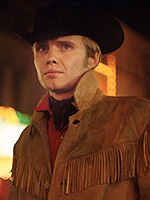
    Jon Voight in Midnight CowboyIn 1969, the Academy saw fit to give “Midnight Cowboy” the award for Best Picture — a first ever for an X-rated film.  Some saw the moment as a bellwether signaling a new dawn for the group, that they were developing a growing acceptance for the films that would start coming at them around this time of creative invigoration in the cinema.  But was it really?

    I remember somewhere that a high-ranking Academy official stated that if “A Clockwork Orange” won the Oscar for Best Picture they would resign their membership! The film had already won top honors from the New York Film Critics Circle and was nominated for four Academy Awards, among them Best Picture and Best Director. A ground-breaking work, the best of Kubrick’s career, still looking futuristic 37 years later, the film is an obvious masterpiece.  But it frightened the Academy for whatever reason.

    A year later Bernardo Bertolucci’s “Last Tango in Paris” came along with a galvanizing performance from Marlon Brando and was certainly a better film than at least two of the pictures nomination int he top race, “The Sting” and “A Touch of Class,” yet as expected, the Academy backed away from the film, nominating only Brando and Bertolucci.

    What is it in the makeup of this esteemed organization of artists that makes them steer clear controversial films, films that push the envelope, that go further out on a limb than most in exploring dark and sometimes daring subject matter?

    (more…)

  • Helmers of the English language, the best and why: part two

    Peter JacksonThis is the second part of a feature running down the 10 best filmmakers working in the English language.  For part one, click here, and stay tuned in the coming weeks for a similar feature on European helmers.

    PETER JACKSON
    I know this one will bother some people but what Jackson accomplsihed with “The Lord of the Rings” trilogy was fucking historical. Who would have thought the man who made the small, personal thriller “Heavenly Creatures” could guide a film as big as “The Ten Commandments?” Furthermore, he gave the Tolkein story heart and soul, never sacrificing character for scope.

    “The Lord of Rings: The Return of the King” was such a staggering work of brilliance I never wanted it to end (some felt like it never did, with multiple denouements).  But after investing nearly 12 hours with these characters, I wanted to know every last detail of what would become of them. And “King Kong” (I love it!) was among the best films of its year, a massive work with superb visual effects, spectacular art direction and design and a terrific Naomi Watts performance.

    I look forward to “The Lovely Bones,” one of the very few books I have read in the span of two days, unable to put it down. If any director can take us to the heaven described in that book, it is Jackson.

    (more…)

  • More announcements from TIFF

    Toronto International Film FestivalPaul Dano and Zooey Deschanel are to be featured in “Gigantic” with John Goodman in a supporting role. In “Lovely Still,” acting icons Martin Landau and Ellen Burstyn portray two seniors who find love late in life struggling with the baggage that comes with a life so long lived.

    “Lymelife” looks interesting, a film seen through the eyes of a young boy, portrayed by Rory Culkin, and what happens when an outbreak of Lyme disease hits a small town. Alec Baldwin portrays the boy’s loud mouth father with strong support from Cynthia Nixon, Timothy Hutton and Kiran Culkin in a film executive produced by no less than Martin Scorsese.

    One of the more intriguing films of the fest will be the US film, “The Stoning of Soraya M”, a study of an Iranian woman falsely accused of adultery which is a crime punished with death by stoning. Oscar nominee Shohreh Aghdashloo stars in the film.

    Mark Ruffalo is back in town with more than one film, co-starring with Ethan Hawke in “What Doesn’t Kill You” about two friends looking out for one another in a tough Boston neighborhood. The film was produced by filmmaker Rod Lurie, who’ll be in the thick of the Oscar hunt this year with his own “Nothing But the Truth.”

    The other titles include “Rain” from the Bahamas, “Cold Lunch” from Norway, “Vacation” from Japan, “Apron Strings” from New Zealand, “Better Things” from the United Kingdom, and “Daytime, Drinking” from South Korea.

  • Thrilling Oscar nominees…when the Academy took a chance

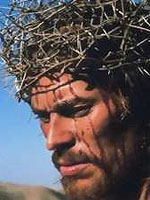
    Willem Dafoe in The Last Temptation of ChristI love it when the Academy steps out and provides us with a genuine shock that is so richly deserved you feel like weeping for joy that they got it…they really got it.

    For all the ranting I do about the Academy’s lack of vision, every so often they pull something out of the air that so defies the odds, so stuns the critics and Oscar forecasters, it is a hearty reminder that these people do love film.

    I think the first time I really stood and cheered a shocking inclusion was Martin Scorsese’s directing nomination for “The Last Temptation of Christ,” a powerful film that it took a great deal of courage to make, and an equal amount for the Academy to acknowledge given the storm of controversy the film faced upon release.

    I remember going to see “Last Temptation” on opening day and asking one of the men picketing the film what he had thought. “Oh I haven’t seen it,” he stated, “my church warned me against it.” It was a clear indication of the power of religion over the masses.

    Two years earlier I championed David Lynch’s being nominated for “Blue Velvet,” a dark and frightening film that Roger Ebert and Gene Siskel dissed at every turn. What would have made the year complete would have been a nomination for Dennis Hopper in the film as opposed to his supporting nod for “Hoosiers.”

    In 1998 as I cheered when Canada’s Atom Egoyan found his way to the Best Director list for his haunting “The Sweet Hereafter.”  The film had been named the year’s best by the Los Angeles Times and finished runner-up for Best Picture and Best Director in the New York Film Critics Circle voting. Not only was this a huge accomplishment for Egoyan, a uniquely gifted director, but for Canadian cinema.

    Just last year, Sarah Polley was nominated for her screenplay “Away From Her,” which also earned Julie Christie a nod for best actress. In my opinion Polley should have been a nominee for Best Director as well.

    I guess I wonder today, in this age of super Oscar campaigns, does the Academy really sit up and take notice of the daring work, or should most of the credit rest at the feet of savvy PR pushes?  I have to think, at least in a number of cases, it has to be the Academy.  The aforementioned films did not have the money to spend on any major campaign, of course.

    So that leaves me feeling good about the AMPAS and what they are doing, despite my moaning.  They are still watching and appreciating art in cinema, and the proof shines through form time to time.

    Any bold choices you can think of to celebrate?

  • Is Dennis Lehane the new Jane Austen?

    Okay, perhaps not. Maybe more like the new Elmore Leonard. But the quintessential Boston writer is clearly Hollywood’s favourite author du jour. After the adaptations of “Mystic River” and “Gone Baby Gone” reignited the careers of Clint Eastwood and Ben Affleck, respectively, it seems the studios are snapping up his titles faster than he can write them.

    I hardly need to remind you about a little film coming up next year called “Shutter Island,” based on Lehane’s 1950’s-set suspenser. With Scorsese hoping for lightning to strike twice for him in Beantown, and Leonardo DiCaprio, Mark Ruffalo, Max von Sydow and Michelle Williams just some of the names on board, who isn’t excited about that?

    With less fanfare, but interesting nonetheless, we also have an upcoming adaptation of Lehane’s brilliant short story “Until Gwen,” with Josh Olson, the Oscar-nominated writer of “A History of Violence,” taking both scripting and directing duties on the project.

    Now Variety reports that the latest filmmaker to take on Lehane is Sam Raimi. Columbia has got in early and nabbed the author’s yet-to-be-published “The Given Day” for Raimi to direct.

    (more…)

  • Great Oscarless directors

    Alfred Hitchcock, Charlie Chaplin, Howard Hawks, Stanley Kubrick, Preston Sturges, Ernest Lubitsch, Hal Ashby, Alan J. Pakula, Sidney Lumet, Spike Lee, Paul Thomas Anderson.

    Collectively they represent some of the greatest directors in the history of the cinema, and together they share one rather unbelievable fact…not one of them is a Academy Award winner for Best Director.

    Each has the distinction of nominee, of course.  But to think that filmmakers such as James Cameron (The King of the World, remember?), Richard Attenborough, Ron Howard, Sir Carol Reed (for “Oliver,” man?), John G. Avilden, Michael Cimino, Robert Benton, Robert Redford, Robert Wise (for “The Sound of Music??”) and George Roy Hill, to name a few, have Oscars on their mantles and the giants above do not is simply insane to me.

    (more…)

  • 1976: a great year and Oscar blew it

    Continuing the conversation on great years for movies (1974 being my pick for the best), I thought I’d dig into a season rich with material that slipped through Oscar’s fingers.

    The American bicentennial year was loaded with wonderful films — ground-breaking works that stunned both audiences and critics with their mastery. Three of them were nominated for Best Picture, some of the others were not, yet the eventual winner was a low budget love story about a boxer that wanted to prove he wasn’t just another bum from the neighborhood.

    The true greats of 1976:

    “All the President’s Men”

    Alan J. Pakula’s superb adaptation of the Pulitzer Prize-winning book written by Bob Woodward and Carl Bernstein about their investigation of the Watergate burglary was born out of an astonishing script by William Goldman. Making sense of the politics within a dense book, incredibly detailed, Goldman’s work had the good sense to make the film a detective-like thriller with well-defined characters.

    This could have been a dull, political film made to exploit the happenings in the United States at the time, but Pakula instead made one of the great films about journalism in the days before the Internet and e-mail. Robert Redford bought the rights to the book and produced the film, starring as Woodward, with Dustin Hoffman as Bernstein, both giving exceptional performances, but it was Jason Robards who blew them off the screen with his excellent performance as the crusty, wise, and ultimately loyal Washing Post editor Ben Bradlee.

    (more…)

  • The 80s yielded one great Best Pic winner: ‘Platoon’

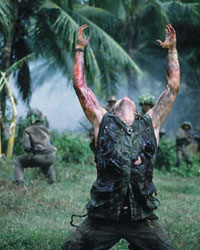
    Ten awards for Best Picture were handed out throughout the 1980s, one of the worst decades for film in history, and I’d wager that only “Platoon,” the Oscar winning giant of 1986, can lay claim to being a great film.

    Oh, that is not to say there were not great films made in the 80s; there were indeed, but nobody went to see them, despite rave reviews. Many of the decade’s very best films were released and abandoned, to be re-discovered on video, at that time a very new addition to the film industry.

    “Raging Bull” ended up being the finest film of the decade, hell one of the five greatest films of all time, yet Oscar did not see it that way. Somehow, Martin Scorsese’s masterpiece lost the Oscar for Best Picture and the New York Film Critics Circle award for Best Film to Robert Redford and “Ordinary People” — a well crafted film, but hardly the raw and angry work of the former.

    That same year would see the releases of “The Empire Strikes Back” — a superior film to the first “Star Wars” installment, yet snubbed for a nomination for Best Picture — and Richard Rush’s “The Stunt Man,” which might have been a strong choice for a nomination as well.

    (more…)

  • REVIEW: “The Departed” (****)

    Warner Bros. Pictures\' The DepartedOne of the most artistically ruthless films to be produced in decades, “The Departed” is a spike of adrenaline straight to the heart of an audience desperately in need of such rambunctious filmmaking.  A loose but paradoxically loyal remake of the Hong Kong thriller “Infernal Affairs,” the film is doused with a cast of familiar faces, each performer offering portrayals unique to anything in their respective repertoires.

    The script, tuned down to deafening perfection by screenwriter William Monahan, is as frenetic as director Martin Scorsese’s visual vernacular.  And the atmosphere, molded by Scorsese as if he were twenty years younger, is as saturating and penetrating as one could hope for out of a freewheeling, balls-to-the-wall entry in the cops and robbers genre.

    This is truly one of the best films of the year.

    Scorsese fell off his throne in the eyes of many when he began tackling epics like “Gangs of New York” and “The Aviator” in recent years.  Some felt the fixture of 1970s cinema was chasing awards glory in earnest and therefore watering down his artistic capabilities.

    Still, those films have much more to offer than most viewers allow, affording dense portraits of 19th century America and the unraveling world of Howard Hughes respectively.  But it admittedly goes without saying the director hasn’t been near the top of his game in well over a decade, and the worry was he might be slowing down.  With “The Departed,” that line of thinking flies right out the window.

    The story is one of deception and lies, the hardships of undercover life and the effect such particulars have on a human being.  The heights Michael Mann was aiming for in “Miami Vice” in this regard are cleared with considerable comfort by Scorsese’s effort.

    Leonardo DiCaprio stars as William Costigan, a good kid from a working class family who hopes to make a difference in the Massachusetts State Police.  But his superiors, Queenan (Martin Sheen) and Dignam (Mark Wahlberg), see through him immediately as just a kid playing the role of cop more so than living it.

    Undercover work in the Irish mafia, however, might be something up his alley.  After all, deception seems to be one of his outstanding qualities.

    Colin Sullivan (Matt Damon), meanwhile, is a young buck who was introduced to organized crime at an early age.  Presented as a surrogate son to Irish crime lord Frank Costello (Jack Nicholson), Sullivan also rises quickly through the ranks of the Boston Police Academy.  He is soon positioned as Costello’s mole on the inside, greasing the rails for the mob boss to live his evil and criminal life as he sees fit, without recourse or precaution.

    Leonardo DiCaprio in The DepartedAs the film pushes forward at an unforgivable pace, each respective mole becomes cognizant of the other’s existence.  The drama therefore introduces itself in the form of a race against odds (and in the most hair-raising of environments) for each to discover the other before their rapidly evaporating time expires.

    These are roles most actors spend a lifetime hoping to nail, but in “The Departed,” even the supporting elements are tough enough to chew and find significant flavor.

    Alec Baldwin, for instance, continues to tap into a post-Kim Basinger era of confident, sleazy, yet somehow appealing portrayals as Ellerby, an officer in charge of the building case against Costello.  Martin Sheen commands a father figure for DiCaprio’s Costigan with relative ease, while Mark Wahlberg sparks a curious foil to Sheen’s Queenan as a sharp-tongued Sergeant overseeing undercover operatives.

    Vera Farmiga adds another delicate and layered performance this year (along with work in Anthony Minghella’s “Breaking and Entering”) as Madolyn, a department psychiatrist who becomes involved with both Costigan and Sullivan.  And Ray Winstone fits comfortably into the mold as Costello’s right-hand man Mr. French.

    But DiCaprio and Damon’s front-and-center portrayals are what the film hinges on.

    Damon’s is a specific and moderately callous turn, one less merely villainous than it is antagonistic by necessity.  DiCaprio’s performance as Costigan, meanwhile, might be his most accomplished to date, or at least closely rivaling his work in “The Aviator” two years ago.

    An actor consistently relegated to the “pretty boy” column, DiCaprio proves time and again that he is a performer capable of reaching certain emotional depths that others in his generation can’t quite claim for themselves.  And though both of these performances are showcases for each actor, it’s still not enough to steal the show.

    If there is one thing audiences will be talking about regarding “The Departed” for years to come, it will be Jack Nicholson’s flagrant bloodlust and vicious insanity as Frank Costello.

    Costello is the vilest of human occurrences, a truly despicable creature whose sole purpose in the world is to rail against the status quo and push his own boundaries as far as he can to get the maximum stretch out of life.  As the character admits later on, “I haven’t needed the money since I took Archie’s milk money in the third grade.  I haven’t needed p***y either, but I like it.”

    Jack Nicholson in The DepartedIndeed, Costello is one of the true villains of the modern cinema, as morally filthy as he is fascinating.  And Nicholson wallows in the role like he was born to wear it, savoring every feral gaze and relishing every blood-splattered grin.  It might be his best work since “The Shining” 26 years ago, and a performance Academy voters are likely to eat right up like Ben Kingsely’s Don Logan in 2001’s “Sexy Beast.”

    William Monahan’s erratic screenplay is enough to give anyone an anxiety attack, but Scorsese plays the thing like a fiddle.  Utilizing a crew of usual suspects, the filmmaker finds the pulse of the tale in a hurry and never relents.

    Thelma Schoonmaker deserves awards consideration for piecing together parallel narratives while still implementing the greatest of techniques scene after scene.  Michael Ballhaus’s camera glides through each sequence and constructs time and space in a manner reminiscent of his work on “Goodfellas,” and most recently, Janusz Kaminski’s underappreciated efforts on Steven Spielberg’s “Munich.”

    And I can only hope theaters across the globe crank the volume up to the level it was at in the screening room on the Warner Bros. lot, because the soundscape of the film is as much a character in the tale as Costigan, Sullivan or Costello.

    But the real story of “The Departed” has to be Scorsese’s reclamation of his former relentless ways.  This is an effort that fills out a trilogy of sorts with “Mean Streets” and “Goodfellas,” further securing the director’s status as the greatest of urban film artists.

    What makes the accomplishment all the more appealing is the sense that Scorsese is a beast awakened, done with a slumber that appealed to some and still puzzled others.  “The Departed” is crafted like he just recently discovered the medium of cinema and all its wondrous possibilities, fresh out of film school and desperate to express himself.

    It’s energizing just thinking about it.

    And, like the best of Scorsese cinema, I expect “The Departed” could be largely ignored by the awards season outside of performance respect and potential craft consideration.  But it really doesn’t matter what happens to the film in the approaching Oscar derby, does it?

    This is as hard boiled as filmmaking can get, and it proves a talented director still has more finesse and spirited determination than half the industry around him.  So take note.  An old dog can teach as many new tricks as he can learn.