 “Time is the most precious of God’s gifts. It is untouchable, unseeable, unknowable…it is as light as a feather…as heavy as a stone…Time, my darling, what precious little there is, is all we have…”
I’ve known from Eric Roth for a few years now. I’ve spent some time investigating his process, picking apart his tendencies and have committed such findings, in addition to personal impressions of the man, to print. So one thing I’ve always taken to heart when sitting down to read one of his scripts is that, “bastardized art form” or not, he is insistent on challenging himself with his screenwriting, stretching the potential for thematic resilience and above all, treating the work like an exercise in elegant prose.
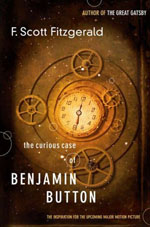
Such is the case with “The Curious Case of Benjamin Button,” a 159-page adaptation of a 30-page F. Scott Fitzgerald short story. It’s a rare thing to flip through the pages of a script written by someone focused on the words almost more so than the images he or she expects them to become. And as part of an art form that can be insufferable as a result, I have to say that “Benjamin Button” is something of a masterpiece.
The script begins with an aging Daisy (to be played by Cate Blanchett), recounting, via the reading of a diary by her daughter Caroline (Julia Ormond), the life and times of Benjamin Button (Brad Pitt). The love of her life, the one that got away, the one that came back and the one that will stay in her heart forever, Benjamin was born, as you certainly know, “under unusual circumstances.”
Roth decides to do away with the hilarity of Fitzgerald’s take on Benjamin’s birth. We aren’t treated to a full-grown 85-year-old man in a baby crib greeting his father with a hearty hello. Instead, he treats Benjamin’s early years as something of a potential disease that makes a newborn aged beyond his or her years, so to speak. Frail skin, deformities…”His body is failing him before it has begun,” a doctor conveys with flabbergasted wonder.
Benjamin’s mother does not survive childbirth, while his father instinctively passes him off on a lonely Baltimore doorstep before disappearing from his life…for a time. It is there, not hours old, that Benjamin is taken in by Queenie (Taraji P. Henson) at an old-timers’ home, for lack of better vernacular on my part.
It was actually a stroke of brilliance by Roth to place Benjamin in such a setting for his formative years (and he’ll come back frequently throughout the tale). The writer’s commentary on wisdom and its many vessels is perfectly conveyed in this environment, simultaneously providing a fair share of comedic relief here and there, most of the time via unexpected flatulence (but it works).
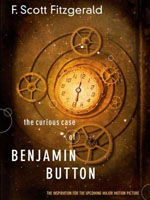 I sat down last night to spend a half-hour with F. Scott Fitzgerald’s short story “The Curious Case of Benjamin Button.” It’s been ages since I first gave the story a look and I don’t even think I ever read it throughout until yesterday, but the measured simplicity of it all was striking.
 I’ve read three stories today indicating that Robert De Niro wants to spin “The Good Shepherd” into a trilogy. This…is not news. Not exactly.