In Contention

Tag: Charles Portis

  • The Coens’ ‘True Grit’ a “truly religious movie”

    I gave the Coens’ “True Grit” another look last night with the family.  Hailee Steinfeld’s commanding presence alongside a scenery-chewing Jeff Bridges was as striking as ever.  I’d be lying if I didn’t say my biggest Oscar wish this year is that the Academy’s acting branch sees the performance for what it is: a leading lady showcase.  But we’ll just have to see.

    As for the film, it’s as rich as ever and takes on more textures each time I give it another look.  I can easily see it ultimately being more of a fixture in my DVD player than most other 2010 entries, but it’s really the reverence for Charles Portis that continues to be so rewarding.  There is no question in my mind that the Coens found the thematic pulse of the material more absolutely than Henry Hathaway’s original hokey take.

    Writing in The New York Times, literary theorist and legal scholar Stanley Fish seems to be in total agreement.  And of all the items I’ve come across in response to the film these last few weeks, I’d have to say, for me, it has the most complete understanding of what’s lurking between the lines.
    (more…)

  • 12/22 OSCARWEB ROUND-UP: The reclusive Charles Portis, ‘Avatar’ most-pirated, Harvey’s holiday ‘King’s Speech’ hustle

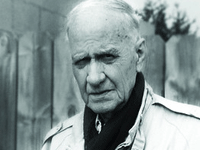
    • On the language, cult following and press-shyness of reclusive “True Grit” author Charles Portis. [Speakeasy]

    • Mike Leigh discusses “Another Year” and why he’ll never make a superhero movie. [Movieline]

    • “Avatar” tops list of 2010’s most pirated movies. [New York Post]

    (more…)

  • INTERVIEW: ‘True Grit’ writers, producers and directors Joel and Ethan Coen

    Directors Joel and Ethan Coen have evolved into the quintessential American filmmakers of our time since charging onto the indie scene over 25 years ago. It was a trajectory hinted at in early depictions of Prohibition-era gangsterism (“Miller’s Crossing”), post-war Capitalism (“The Hudsucker Proxy”), Midwestern slice-of-life peculiarity (“Fargo”) and epic folk land adventurism (“O Brother, Where Art Thou?”), but it was a trademark that snapped into clarity in 2007 with their thematically potent examination of a country at a crossroads, “No Country for Old Men.”

    It seemed only a matter of time before they turned their attention to the quintessential American genre: the western.  But the word “western” didn’t really figure into their thinking when they set about re-adapting Charles Portis’s novel “True Grit” for the big screen.

    “To us, in a weird way, if you were going to put it into a genre, it was just a young adventure story,” Joel says. “It takes place in America in Oklahoma in 1878, so yeah, it’s a western, but the other thing almost kind of preceded it in our thinking. So I guess it wasn’t consciously approaching it as a ‘western’ in quotation marks. It’s an adventure story with the trappings of the old west.”

    (more…)

  • The Coens’ no-frills ‘True Grit’ hearkens to western heyday

    I’ve seen the Coen brothers’ “True Grit” twice now, and it’s not because the film is some “Inception”-like, mind-bending narrative maze. Quite the opposite, actually. I saddled up to it a second time yesterday morning because I wasn’t quite anticipating what I got the first time around and I wanted to consider it further knowing what it was.

    You see, this isn’t really “a Coen brothers film” to me. Outside of an opening act bathed in their usual trappings, the film feels almost anonymous, lacking the fingerprint stirringly present in each and every one of their efforts. And it’s all very much by design, by the way.

    “True Grit,” in its second screen iteration, is a classic western cut from traditional cloth. With its wide vistas, simple narrative and focus on character dynamics (as well as a handful of unrefined horse-back riding effects shots), it’s fair to say it bears more of a resemblance to the work of Anthony Mann, John Ford and Budd Boetticher than it does that of the Coens. The film isn’t focused on being as tight and complete as most of their films, and indeed, inchoate was very much a goal here.

    (more…)

  • CINEJABBER: Drifting along in the same stale shoes

    Catch up with the idea behind these weekend posts here.

    And speaking of the weekend, thank God it’s here.  That’s all I can say.  I’m still pushing through Peter Weir’s catalogue.  Next up: “Dead Poets Society,” which I probably haven’t watched since I owned the VHS.  But more and more, I’m finding that “The Way Back” is more reflective of his early work, and it perhaps has the most in common with “Gallipoli.”

    After that I’m thinking about re-visiting Kurosawa’s work.  Much of the early stuff I’ve never seen, actually, and it’ll be a nice reprieve from Oscar madness during the season.  Boy is that absolutely necessary.

    But I also need to hunker down and finish reading Charles Portis’s “True Grit.” I’m hoping to do something special list-wise around the release of the Coens’ new adaptation and as much as I loathe the first film, I never sat down and read the novel until recently.  It’s a real charmer and easy to see why the Coens were drawn to it’s no-nonsense prose.

    (more…)