In Contention

Tag: Anthony Minghella

  • 11/27 Osarweb Round-up

    (from left) Penelope Cruz, Daniel Day-Lewis and Marion Cotillard in Nine• The significance of “Nine” for Anthony Minghella’s legacy. [The Guardian]

    • Steven Zeitchik catches on to the year’s thin original screenplay race and bangs the drum for “Sugar.” [Risky Business]

    • Lauren Shucker talks “Up in the Air” with director Jason Reitman. [Wall Street Journal]

    (more…)

  • OFF THE CARPET: Field of adaptations

    Amy Adams in Julie & JuliaAs always, the year’s adapted screenplay race is much more competitive than the original screenplay race. But what’s intriguing to note is that of the anticipated “big four” still to be widely screened, three of them are right in the thick of this discussion.

    In the case of “Nine,” there is a chance for Anthony Minghella to receive his second posthumous Oscar nomination in as many years, something I don’t think we’ve seen since James Dean. But sometimes the razzle-dazzle of a movie musical can overshadow what craft there might be on the page, so it’s no slam dunk. Michael Tolkin is co-writer on the script, and even though I’ve seen the film, I’m prohibited from offering my thoughts on the work.

    “The Lovely Bones,” meanwhile, is adapted from a beloved novel, looks to feature a more reserved and refined Peter Jackson than we’ve seen in recent years and could see the lovable trio (Jackson, Philippa Boyens and Fran Walsh) back in Oscar’s good graces. We’ll know when we see it.

    The Royals and invited British press get their look on the 24th. Harry Knowles has received his typical peek (as Paramount continues to nurture the relationship as if it’s 2002 and AICN still moves the needle). The rest of the US press corps has to wait until the other side of the holiday on the 27th to judge. Hopefully we’ll still care by then. I heard some scathing criticisms out of an exhibitor screening last week.

    (more…)

  • It shouldn’t be a “rule” in the first place

    (from left) Sydney Pollack and Anthony Minghella at the premiere of Breaking and EnteringI’m sure the Academy will pat itself on the back for having the courage to ignore its own specifications that only three producers be credited for the Best Picture nominations, but the fact remains, this is and has been a stupid, troublesome rule, far too conservative for its own good.  We all remember the unfortunate case of “Little Miss Sunshine” two years ago, but if I were Albert Berger and Ron Yerxa, I’d be calling foul.

    Here’s indieWIRE’s Peter Knegt on the “Reader” news of the day:

    Producer credits for Academy Award Best Picture nominee “The Reader” have been determined by the Producers Branch Executive Committee of the Academy of Motion Picture Arts and Sciences. The official nominees for the film are Anthony Minghella, Sydney Pollack, Donna Gigliotti and Redmond Morris.

    Because four producers were listed on the credits form submitted for Oscar consideration and Academy rules allow for only three producers – except in “a rare and extraordinary circumstance” – to be nominated and potentially receive Oscar statuettes, a meeting of the executive committee was necessary.

    “Rare and extraordinary.”  Just another example of AMPAS allowing for random subjectivity to enter the picture, as we’ve seen in the music branch over and over, for instance.

    The point, however, is that it’s great to see Pollack and Minghella get the notice they deserve.  When I first saw the film back in November, I mentioned that there were “echoes of [Minghella’s] work” throughout the film and that Daldry was perhaps “the only filmmaker with the right doses of prestige and dramatic flavor to take up Minghella’s mantle.”  Looking back, I should have mentioned Pollack’s influence as well.

    I just hope Harvey Weinstein doesn’t milk these credits for all their worth.  We all know the stories about that supposed death-bed visit, pleading with Pollack to give his blessing on a 2008 release for the film…

  • The battle over ‘The Reader’

    Cover of Bernhard Schlink\'s The ReaderThe news that Scott Rudin and Harvey Weinstein are in a tug-of-war over the release date of “The Reader” isn’t really news at all.  We were talking about this over a month ago, back when it seemed Rudin had won the debate.  But the pieces slowly fell into place and a 2008 release became a reality, so here we are.

    The problem: the film isn’t finished yet.  That’s all well and good.  Neither is “Revolutionary Road” or, last I checked, “Milk.”  The issue with “The Reader” is that it likely won’t be finished by the time Weinstein wants to release the film, and that is where the efforts of those involved could go to waste at the whims of an awards-hungry big-wig desperate for a major Oscar contender for the first time in four – count ’em – four years.

    What’s worse — or at least could be perceived as worse — is the notion floating out there that Weinstein is banking on good will for “Reader” producers Anthony Minghella and Sydney Pollack.  Both filmmakers passed away earlier this year.  Steven Zeitchik aludes to this in his Hollywood Reporter piece.

    Zeitchik has a lot of smoke but not much fire, though, since both Weinstein and Rudin declined commen.  And he’s likely peddling anonymous quotes from publicists on one side or the other — sentiments we’ve all heard, and probably from the same publicists.

    My guess, at the end of the day (and as one of Zeitchik’s sources concludes), is that Weinstein wins the battle.  He’s proven recently enough that he’ll push something down the collective AMPAS throat if he doesn’t have the goods (Sienna Miller in “Factory Girl.”)  It’s that insatiable awards appetite.  The tragedy this time around isn’t that he won’t have the quality, though, but, more likely, that he’ll have an incomplete product that could have been better serviced.  We’ll see how it turns out, but here’s a look at Zeitchik’s collection of a month-and-a-half’s worth of rumors:

    Weinstein is pushing for a December release for the movie, which director Stephen Daldry is working on in post. The romance set in postwar Germany and based on Bernhard Schlink’s novel already has buzz from strong test screenings, though there are post elements left to be completed…

    Rudin, however, has been lobbying hard for a 2009 release. The producer already has two Oscar candidates — “Revolutionary Road,” with Leonardo DiCaprio and Winslet as a married couple in the 1950s, at Paramount Vantage, and the Broadway transfer “Doubt,” toplining Meryl Streep and Philip Seymour Hoffman, at Miramax — and a third would mean he is vying heavily against himself.

    The producer faced a similar scenario last year when his “No Country for Old Men” and “There Will Be Blood” competed against each other for Oscar kudos.

    The fact that Winslet stars in both “Revolutionary Road” and “The Reader” would mean the actress too could wind up competing against herself.

    The rest.

  • Kate Hudson joins ‘Nine’

    I wrote back in May about the embarrassment of riches that is the cast of “Nine” – Rob Marshall’s upcoming filmization of the hit Broadway musical based, in turn, in Fellini’s “8½.”

    Now, as if Daniel Day-Lewis, Sophia Loren, Nicole Kidman, Judi Dench, Penelope Cruz and Marion Cotillard weren’t enough names to fit on the marquee, word is out that room must be made for another – Kate Hudson. (I must have missed the memo when Day-Lewis was confirmed for the project, but it appears he’s definitely in.)

    You could say that she’s the least accomplished thesp on the list so far, but nevertheless, I’ve always liked Hudson, and it sure would be nice to see her in a good (or at least promising) film again. (“Almost Famous” is starting to seem awfully long ago.) The role – a Yank fashion reporter abroad – has reportedly been created especially for the film adaptation to showcase what Marshall describes as Hudson’s “revelatory skills as a singer and dancer.”

    Finally, an interesting detail that I hadn’t heard before: credit for the screenplay is shared by Michael Tolkin (already interesting enough, no?) and none other than the late Anthony Minghella. Shooting begins in the UK on October 10; sounds like The Weinstein Company have a very hot property on their hands here.

  • The buried

    Okay, I think we’re done cleaning out all the kinks here for the night. I wanted to mention, however, that the old site is still out there in cyberspace for you to peruse. Check it out here. It’s a little buggy over there in the wake of the move, but I’ll iron all that out in due time. But now that the new design is out and about, I wanted to link back to a few posts from the last month by both myself and a few contributors, lest they be lost in the shuffle of today’s goings-on:

    1) Guy Lodge previews the Cannes line-up. (4/22)
    2) John Foote takes a look at Brad Pitt’s Oscar hopes this year. (4/21)
    3) Steve Lopez talks about his new book, “The Soloist,” in Pasadena. (4/19)
    4) The “Valkyrie” pile-on knows no bounds. (4/8) and (4/22)
    5) Anticipating the summer movie season. (4/8)
    6) Very brief notes on the “W” screenplay. (4/1)
    7) Remembering Anthony Minghella. (3/23)
    8) And of course, the year-in-advance Oscar column. (2/26)

    That should cover it.

  • Remembering Anthony Minghella

    9759a.jpgI’ve been tucked away on an island for the past week, stuck largely in a news vacuum and certainly free of the bindings of daily internet briefings. But it saddens me to return to the shocking news of Anthony Minghella’s passing.

    The Variety report indicates a brain hemorrhage as the cause of death, though Minghella’s publicists, Leslie Dart, is saying that is not so. Whatever the case may be, we’ve been swiftly relieved of one of the cinema’s most interesting voices, a man with just six films to his credit but all of them representative of the man and his convictions in some way, shape or form.

    I met Minghella just once, in December of 2006 when I moderated a Q&A with him and actress Robin Wright Penn for the underrated “Breaking and Entering” in front of an audience of SAG actors. What I remember of the man is a delicate touch, a soft-spoken manner that still held a certain adoration of truth in expression.

    He took the utmost care and consideration for any query, always ignorant of the stock answer and always intoxicating in his process, in explaining why he saw the world the way he did on celluloid and why he went to the deep and profoundly affecting places that he did in his work. Whatever one’s opinion of his filmmaking, it would be difficult to argue with his conviction.

    And now, he’s gone — taken from us like some cruel joke. I’m proud to say I shared a stage with him. I’m prouder, still, to say I was able to speak with him about his craft.

    If only once.

    You can read producing partner Sydney Pollack’s touching remembrance here, and actress Juliette Binoche’s eulogy poem here.

  • OFF THE CARPET: 2008, a year in advance

    Another year, another set of wins…and another look ahead at what’s in store NEXT year.

    It’s never too late to take a long gander at what we might see dominating the film awards landscape in 365 days, and with that in mind, I’ve been doing my usual mulling over the possibilities for a few weeks to put together the sadly thorough examination of the 2008-09 award season that follows. Let’s get into it. There are some major considerations to take into account. right off the top.

    Like Leonardo DiCaprio, for instance, who is set to be the entertainer of the year. With performances in “Body of Lies” (Ridley Scott) and “Revolutionary Road” (Sam Mendes), DiCaprio is working with a duo of awards-proven talent this year. Perhaps that will work against him, much like it did in 2006, and no major Oscar success will come knocking. But we’ll wait until we see the performances. Each of them could be enticing.

    This year’s Best Picture Oscar victor Scott Rudin is back again, by the way, with “Revolutionary Road,” recently inherited by Paramount Vantage and probably one of the true “frontrunners” this far out that we could put our finger on. The only other film in Vantage’s arsenal is Edward Zwick’s “Defiance,” which could simply be a commercial success, but might find its way to multiple nods like “The Last Samurai” and “Blood Diamond” in recent years.

    (more…)

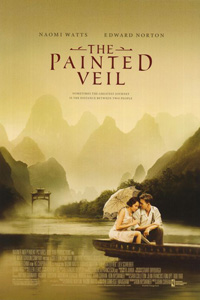
  • REVIEW: “The Painted Veil” (***1/2)

    Warner Independent Pictures\' The Painted VeilRomance seems to be the theme that sparks the most diverse reaction from the artistic community, filmmakers in particular.  There are various methods and structures utilized to tell tales of the elusiveness of love, and new, fresh takes on this binding structure of human interaction come into the cinematic arena every year.

    Some audiences prefer the restraint but equal probing of, say, “The Remains of the Day.”  Others might yearn for the creative ferocity of “Eternal Sunshine of the Spotless Mind.”

    John Curran’s “The Painted Veil” might not be as calm as the former, and certainly not as unique as the latter, but it is nonetheless a story fabulously woven and penetrating in its exhibition of a new kind of love story.  It is one of the year’s finest films.

    Based on the M. Somerset Maugham novel of the same name, “The Painted Veil” is a tale of forgiveness above all else.  It is a deconstruction of our surface frailties and a call to understanding the virtues that lie beneath, and certainly, the lessons that might be learned all too succinctly with the experience of poor decision.

    Conveyed through a creative structure and filmed with long, deep breaths of beauty and compassion, John Curran’s effort propels him from an independent background and into a stoic place of assured filmmaking competence.

    He might be a director to keep an eye on in the future.

    Naomi Watts stars in the film as Kitty, a spoiled and monetarily nurtured sort who longs to break away from her meddlesome mother and tiresome life in London.  She meets Dr. Walter Fane (Edward Norton) at a family gathering one night and the good doctor falls for her immediately.

    Inevitable courtship commences, though Kitty doesn’t seem to take a specific interest over the course of two years (which fly by in the tight structure of the first act) until Walter asks for her hand in marriage.

    Kitty agrees, if only to break free of the ties of London, and the doctor whisks her away to Shanghai, where he will be working and studying.

    All of this is told betwixt scenes depicting a very different Mr. and Mrs. Fane making an overland voyage to a Chinese village, a couple uncomfortable with one another and uninterested.

    This cross-editing comments directly upon the present in a structure recently apparent in Christopher Nolan’s “Batman Begins.”

    As the past blends with the here and now, the first act comes to a head with Walter’s discovery of Kitty’s affair with Charles Townsend (Live Schreiber), a popular diplomat in Shanghai who is also married.  Under the threat of divorce (and therefore scandal), Walter forces Kitty to accompany him to the faraway village where he will study and help treat a cholera epidemic, and in so doing, perhaps glean some sort of pleasure from Kitty’s distress at the expedition.

    Naomi Watts and Edward Norton in The Painted VeilTensions, meanwhile, are running high between nationalist Chinese and the westerners they feel are invasive to their way of life.  Held somewhat emotionally captive in this unfamiliar environment, Kitty spends her days and nights wasting away and feeling useless.

    Walter avoids her, quite clearly considering her with disgust and disdain.  But the man Kitty married, she never bothered understanding or even knowing, and so a trying excursion to the Far East, it seems, might reveal the good man she was too selfish to discover, and the life she has wasted on herself for far too long.

    “The Painted Veil” is a complicated but delicate film.  It really is a lasting sort of story, however, and credit seems to be best served to writer Ron Nyswaner.

    I personally have never read Maugham’s novel, so if the first act structure of the film is apparent therein, forgive my ignorance.  But my assumption is that is not so and it was the clever creation of Nyswaner to comment directly on the Fanes through a simple but purposeful structure from the first frame of the film.

    Whoever is responsible, the device is a brilliant one because it works on so many levels.  Nyswaner (who was nominated for an Oscar in 1993 for his original screenplay “Philadelphia”) also takes a certain care to pace the story with a sense of measure, but never at the expense of interest.  A film that might seem boring to some is in fact quite engaging throughout.

    Edward Norton and Naomi Watts have a specific chemistry that is extremely organic to the piece.  Norton in particular (who also served as one of the film’s producers) provides perhaps his best performance since “American History X,” and certainly his best since “25th Hour.”

    He trumps the quality he tends to have difficulty shaking, that tendency to be Edward Norton first, the character second.  Here, he is fully believable and lived-in as Walter.

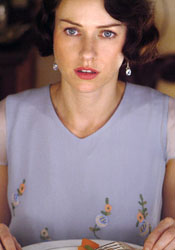
    Naomi Watts in The Painted VeilNaomi Watts shines and has the clear character arc of a woman who grieves for her past mistakes.  Kitty is extremely child-like at the film’s start.  By the end, she is a woman with a life of experience and a future that would have been uncertain otherwise.

    It is a slow revelation for the character, which in some ways makes it more poignant.  To paraphrase, a convent nun puts it to her late in the film, “When duty and love are one, then you are truly full of grace.”

    And that is the lesson Kitty learns a thousand miles from familiarity.

    Another performance worth commenting upon is Toby Jones’s portrayal of Mr. Waddington, a liaison for the Fanes who is quite the warm friend of the family, so to speak.  It’s the kind of small but meaningful turn that Harvey Weinstein would have ushered to a supporting actor nomination in the 90s, one that typically slips under the radar in today’s movie-going environment.

    The technical elements of the film are quite lovely, hinting at the works of James Ivory or Anthony Minghella in some instances.  Stuart Dryburgh’s cinematography thankfully avoids the temptation of drowning the scenery out in golden hues and tonal recreations, rather depending on putting forth beautiful imagery to tell the story first.

    The work of editor Alexandre de Franceschi is some of the most understated but clearly exemplary efforts at the AVID this year, and Alexandre Desplat’s majestic score is his finest work to date, fit with soaring themes and delicate subtlety.

    “The Painted Veil” is the crowning jewel of producer Bob Yari’s output this year.  It is also a fantastic get for Warner Independent Pictures, who might try harder with the film than a larger distributor would (though that is yet to be seen).

    It is a comforting reminder of the filmmaking medium, that stories can be told with beauty and simplicity and still evoke effective emotional impact.  A fantastic effort.

  • REVIEW: “The Departed” (****)

    Warner Bros. Pictures\' The DepartedOne of the most artistically ruthless films to be produced in decades, “The Departed” is a spike of adrenaline straight to the heart of an audience desperately in need of such rambunctious filmmaking.  A loose but paradoxically loyal remake of the Hong Kong thriller “Infernal Affairs,” the film is doused with a cast of familiar faces, each performer offering portrayals unique to anything in their respective repertoires.

    The script, tuned down to deafening perfection by screenwriter William Monahan, is as frenetic as director Martin Scorsese’s visual vernacular.  And the atmosphere, molded by Scorsese as if he were twenty years younger, is as saturating and penetrating as one could hope for out of a freewheeling, balls-to-the-wall entry in the cops and robbers genre.

    This is truly one of the best films of the year.

    Scorsese fell off his throne in the eyes of many when he began tackling epics like “Gangs of New York” and “The Aviator” in recent years.  Some felt the fixture of 1970s cinema was chasing awards glory in earnest and therefore watering down his artistic capabilities.

    Still, those films have much more to offer than most viewers allow, affording dense portraits of 19th century America and the unraveling world of Howard Hughes respectively.  But it admittedly goes without saying the director hasn’t been near the top of his game in well over a decade, and the worry was he might be slowing down.  With “The Departed,” that line of thinking flies right out the window.

    The story is one of deception and lies, the hardships of undercover life and the effect such particulars have on a human being.  The heights Michael Mann was aiming for in “Miami Vice” in this regard are cleared with considerable comfort by Scorsese’s effort.

    Leonardo DiCaprio stars as William Costigan, a good kid from a working class family who hopes to make a difference in the Massachusetts State Police.  But his superiors, Queenan (Martin Sheen) and Dignam (Mark Wahlberg), see through him immediately as just a kid playing the role of cop more so than living it.

    Undercover work in the Irish mafia, however, might be something up his alley.  After all, deception seems to be one of his outstanding qualities.

    Colin Sullivan (Matt Damon), meanwhile, is a young buck who was introduced to organized crime at an early age.  Presented as a surrogate son to Irish crime lord Frank Costello (Jack Nicholson), Sullivan also rises quickly through the ranks of the Boston Police Academy.  He is soon positioned as Costello’s mole on the inside, greasing the rails for the mob boss to live his evil and criminal life as he sees fit, without recourse or precaution.

    Leonardo DiCaprio in The DepartedAs the film pushes forward at an unforgivable pace, each respective mole becomes cognizant of the other’s existence.  The drama therefore introduces itself in the form of a race against odds (and in the most hair-raising of environments) for each to discover the other before their rapidly evaporating time expires.

    These are roles most actors spend a lifetime hoping to nail, but in “The Departed,” even the supporting elements are tough enough to chew and find significant flavor.

    Alec Baldwin, for instance, continues to tap into a post-Kim Basinger era of confident, sleazy, yet somehow appealing portrayals as Ellerby, an officer in charge of the building case against Costello.  Martin Sheen commands a father figure for DiCaprio’s Costigan with relative ease, while Mark Wahlberg sparks a curious foil to Sheen’s Queenan as a sharp-tongued Sergeant overseeing undercover operatives.

    Vera Farmiga adds another delicate and layered performance this year (along with work in Anthony Minghella’s “Breaking and Entering”) as Madolyn, a department psychiatrist who becomes involved with both Costigan and Sullivan.  And Ray Winstone fits comfortably into the mold as Costello’s right-hand man Mr. French.

    But DiCaprio and Damon’s front-and-center portrayals are what the film hinges on.

    Damon’s is a specific and moderately callous turn, one less merely villainous than it is antagonistic by necessity.  DiCaprio’s performance as Costigan, meanwhile, might be his most accomplished to date, or at least closely rivaling his work in “The Aviator” two years ago.

    An actor consistently relegated to the “pretty boy” column, DiCaprio proves time and again that he is a performer capable of reaching certain emotional depths that others in his generation can’t quite claim for themselves.  And though both of these performances are showcases for each actor, it’s still not enough to steal the show.

    If there is one thing audiences will be talking about regarding “The Departed” for years to come, it will be Jack Nicholson’s flagrant bloodlust and vicious insanity as Frank Costello.

    Costello is the vilest of human occurrences, a truly despicable creature whose sole purpose in the world is to rail against the status quo and push his own boundaries as far as he can to get the maximum stretch out of life.  As the character admits later on, “I haven’t needed the money since I took Archie’s milk money in the third grade.  I haven’t needed p***y either, but I like it.”

    Jack Nicholson in The DepartedIndeed, Costello is one of the true villains of the modern cinema, as morally filthy as he is fascinating.  And Nicholson wallows in the role like he was born to wear it, savoring every feral gaze and relishing every blood-splattered grin.  It might be his best work since “The Shining” 26 years ago, and a performance Academy voters are likely to eat right up like Ben Kingsely’s Don Logan in 2001’s “Sexy Beast.”

    William Monahan’s erratic screenplay is enough to give anyone an anxiety attack, but Scorsese plays the thing like a fiddle.  Utilizing a crew of usual suspects, the filmmaker finds the pulse of the tale in a hurry and never relents.

    Thelma Schoonmaker deserves awards consideration for piecing together parallel narratives while still implementing the greatest of techniques scene after scene.  Michael Ballhaus’s camera glides through each sequence and constructs time and space in a manner reminiscent of his work on “Goodfellas,” and most recently, Janusz Kaminski’s underappreciated efforts on Steven Spielberg’s “Munich.”

    And I can only hope theaters across the globe crank the volume up to the level it was at in the screening room on the Warner Bros. lot, because the soundscape of the film is as much a character in the tale as Costigan, Sullivan or Costello.

    But the real story of “The Departed” has to be Scorsese’s reclamation of his former relentless ways.  This is an effort that fills out a trilogy of sorts with “Mean Streets” and “Goodfellas,” further securing the director’s status as the greatest of urban film artists.

    What makes the accomplishment all the more appealing is the sense that Scorsese is a beast awakened, done with a slumber that appealed to some and still puzzled others.  “The Departed” is crafted like he just recently discovered the medium of cinema and all its wondrous possibilities, fresh out of film school and desperate to express himself.

    It’s energizing just thinking about it.

    And, like the best of Scorsese cinema, I expect “The Departed” could be largely ignored by the awards season outside of performance respect and potential craft consideration.  But it really doesn’t matter what happens to the film in the approaching Oscar derby, does it?

    This is as hard boiled as filmmaking can get, and it proves a talented director still has more finesse and spirited determination than half the industry around him.  So take note.  An old dog can teach as many new tricks as he can learn.

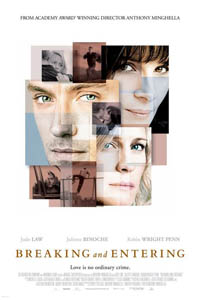
  • REVIEW: “Breaking and Entering” (***1/2)

    The Weinstein Company\'s Breaking and EnteringAnthony Minghella’s “Breaking and Entering” is one of the most sincerely penetrating films of the year.  It’s most unique quality is the sense of legroom it provides, a healthy stretch of a film with deep breaths and drawn out considerations, as opposed to the typical anxiety of temperamental manipulation (which all film tends to be by nature).
    The film cannot be approached by the director’s past offerings, most of them over-reaching in their intentions and ultimately short of greatness as a result.  “Breaking and Entering” is not a masterpiece, but it certainly treads such waters as an honest and tangible portrayal of mid-life confusion and crisis.

    In the film, Jude Law stars as Will, a London architect and head of a somewhat unorthodox household.  He lives with his girlfriend of ten years, Liv (Robin Wright Penn), yet they remain unmarried.  The two are at that point in a relationship when the boredom of familiarity have finally given way to something else, something utterly lacking and altogether confusing.

    Together, Will and Liv have raised Liv’s daughter, Beatrice (Poppy Rogers), a behaviorally dysfunctional teenager very representative of the trauma Will and Liv’s emotional schism has imposed on the family.

    Will’s company has recently set up new office space in a seedy district of London.  After receiving a large shipment of computer components, the office is burglarized one night by a team of acrobatic youngsters.  One such child is Miro (Rafi Gavron), a Bosnian refugee living with his mother, Amira (Juliette Binoche).

    Miro lost his father before fleeing his homeland, and his own story is not an unfamiliar one, one of longing and despair manifested in his getting himself into frequent trouble with the authorities.  He now thieves for his dead father’s brother, perhaps to keep some sort of touch with his former, all but forgotten life.

    Amira, meanwhile, is as sick with worry as one can imagine.  Making ends meet as a seamstress, she frequently expresses disgust with Miro’s extracurricular choices, but overshadowing that disappointment is an unwavering love for her child.

    Binoche’s more playful scenes with Gavron are the emotional center of the film, representative of a spirited devotion and affection that seems missing from Will’s life, and a sham if ever apparent therein.

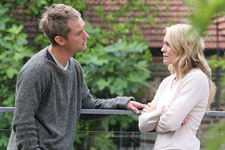
    Jude Law and Robin Wright Penn in Breaking and EnteringAfter a series of such robberies, Will begins staking out the building with partner Sandy (Martin Freeman) and an inquisitive prostitute, Oana (a humorous and insightful Vera Farmiga).  He finally catches Miro in the act one night, and in chasing him he follows the boy to his home.  There Will encounters, from a distance, Amira and her concern for her son.
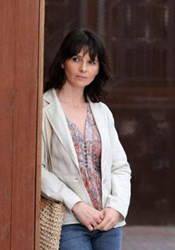
    The moment is the beginning of an emotional whirlwind that will become increasingly confusing before clarity will be restored.  Will ultimately engages in an affair with Amira, perhaps searching for love as he later will claim to Liv, but more likely discovering a void to fill, one he cannot seem to fill at home.

    “Breaking and Entering” is an awakening experience.  At its core, the film is about honesty.  It is about being truthful to yourself, your needs, your desires, your love, your family and your impulses.

    Will is a man turned around and without direction.  His confusion is not his fault, nor is it his family’s.  It is our very nature to search out our boundaries and our limitations.  It is also our very nature to seek assurance in where we find ourselves.

    In that light, “Breaking and Entering” has much in common with Todd Field’s “Little Children.”  Both films speak to mid-life indecision and discomfort, and both films weave tales of lost souls finding their way back to their life roles.

    Jude Law’s performance as Will might be the greatest performance of the year.  It is a textured and nuanced turn that has a blistering emotional veracity.

    I would perhaps go so far as to call it his best work to date, but his is still a resume bursting with diverse portrayals throughout.  In “Breaking and Entering,” however, Law has tapped into the leading man potential he has only threatened in efforts such as “Cold Mountain” and the phenomenal “Closer.”

    Juliette Binoche in Breaking and EnteringJuliette Binoche is appropriately self-aware and headstrong in her performance as Amira.  Driven yet still full of the youth she had ripped from her through tragedy, Amira is an extremely interesting creation and a vibrantly unique character.

    No one has carried across beautiful and tired so capably since Meryl Streep in “The Bridges of Madison County.”  She also works quite beautifully off of the balanced anxiety and mother-love of Rafi Gavron’s performance.

    Elsewhere, Ray Winstone turns in a cheeky performance as investigating CID officer Bruno, while Martin Freeman’s brief stint as Sandy is further proof he deserves more roles with meat on them.  Poppy Rogers has some integral scenes as Beatrice, but if there is a weak link in the cast, it pains me to say it might be Robin Wright Penn.

    Some may find her emotional recoil fitting and appropriate, but something about the performance feels as though the actress doesn’t fully understand her character.  The work recalls Patrick Wilson’s ambivalence in “Little Children.”

    The technical aspects of the film deserve accreditation of the highest order, most especially Gabriel Yared’s piano-infused original score and Benoît Delhomme’s subdued cinematography.  Each element goes toward making the piece a truly unique experience, and certainly a unique Minghella experience.

    “Breaking and Entering” really feels like Anthony Minghella’s most personal and convincingly sincere film yet.  It boasts a lived-in quality making it feel like a story the writer/director has been playing over and over again in his head, perfecting every glance and sigh, tuning every emotional pitch to tonal superiority.

    From an opening shot bleeding subtext and sporting an initial narration more enlightening than most, it is a film and, more importantly, a screenplay, that commands respect and appreciation.  In a year exploding with accomplished filmmaking, “Breaking and Entering” fits right in.