“We wanted the look of Public Enemies to have a high level of realism, not an over period feel…Among the historical aspects are a lot of action, romance and drama, and Michael [Mann] and I talked about achieving an immediate feel. One thing you can do with a digital camera that you can’t do with film is shoot with a 360-degree, or no, shutter…We tested that with gun-muzzle flashes from the machine guns and some flares that we planned to use to light a few scenes, and the 360-degree shutter had a really great look in those situations.”
Dante Spinotti, talking to Jay Holben in this month’s issue of American Cinematographer magazine. The article isn’t online yet but the magazine is on the rack, so pick it up, give it a look.

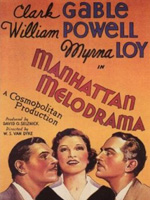 Speaking of John Dillinger’s final hours, it’s worth pointing out that TCM will be showing a slew of classic gangster titles tonight, including the Clark Gable starrer “Manhattan Melodrama,” which was the last film Dillinger would ever see. Mann makes considerable thematic use of the film in “Public Enemies,” as
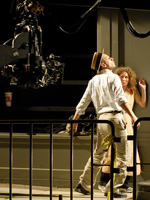 “Public Enemies,” opening nationwide today, is the first film to bring Michael Mann back to his native Chicago since his feature filmmaking debut, 1981’s “Thief.” Fellow Midwesterner Ignatiy Vishnevetsky was on the set for a few days in the summer of 2008 and has been collecting his thoughts over at


 The headline says it all. After bringing in 105 new members
 I’m late to the table in some sense given that Lone Sherfig’s “An Education”
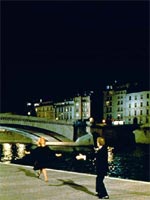 Among the many things I love about Woody Allen — his staying power, his eye for talent, more masterpieces than I can count on two hands — is the fact that whenever anyone refers to “the untitled Woody Allen project,” one usually has to ask which one they mean. His unfailing film-a-year work ethic means there are generally at least two upcoming Allen films floating in the general conversation.
 While “Transformers: Revenge of the Fallen” tears up the box office while simultaneously rubbing the critical fraternity wrong, some of us can’t help but wonder how the money will effect its performance in the technical categories (a concentrated focus of In Contention in Gerard Kennedy’s seasonal

 Yesterday was
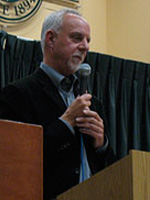 Speaking of David Carr, he points us (via his must-follow
 David Carr’s Media Equation
 It’s not like we didn’t see a divided take coming on Michael Mann’s latest, but the reviews that are trickling in, updated frequently over at