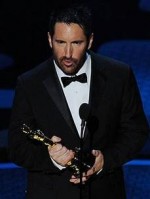
 I generally try to ignore film opinion pieces I think are fundamentally misguided — à chacun son goût and all that, plus the fact that fighting one mind is generally more trouble than it’s worth — but Ben Walsh’s idle article in The Independent today on the supposed demise of the movie soundtrack does such an absurd disservice to the current landscape of film music that it can’t pass without objection.
Walsh’s standpoint is a dully nostalgic one: movie scores were so much more memorable in the old days, when greats like John Williams, Ennio Morricone and Danny Elfman (who are all dead, apparently) conjured whistle-ready themes by the dozen, while scores today “seem so completely unmemorable” by comparison.
His pool of case studies for this assertion is a shallow one — he speaks mainly of the recent Oscar winners by Best Picture, Original Score and Original Song, oddly conflating the last two categories as if the two disciplines are somehow comparable — and even through that narrow prism, his preferences are hard to justify.
For example, Trent Reznor and Atticus Ross’ inventive, insistent electronic score for “The Social Network,” which deftly encapsulated both an individual mood and the surrounding era, is summarily dismissed as “pretty unexceptional”; by contrast, Randy Newman’s inoffensive but color-by-numbers theme song for “Toy Story 3” is deemed “outstanding.” Focusing largely on Oscar nominees conveniently means he can leave such exciting names as Clint Mansell, Jonny Greenwood, Nick Cave and Carter Burwell out of the conversation, though he grudgingly concedes that Daft Punk’s thrilling, genre-leaping electro-orchestral score for last year’s “TRON: Legacy” is “decent.”
Strangely, the ubiquitous Alexandre Desplat, widely viewed as the standard-bearer for the new generation of film composers, doesn’t rate a mention. He may have some rote scores on CV counterbalancing his unsettling flashes of “Birth”-level genius, but so does any prolific major composer — John Williams may be a master, but to pretend he hasn’t churned out some functional filler in his day is obtuse. (What do you mean, you don’t recall the score for “Heartbeeps?”)
Walsh’s conservative ideal of film scoring seems to hinge on notions of catchiness and melodic immediacy — he goes so far as to phonetically spell out John Williams’ themes for “Jaws” and “Raiders of the Lost Ark” — while ignoring the fact that only certain commercial films benefit from this approach. What manner of score does he think would serve a film as sober and seething as “The Social Network” better than the one it has? Why, in his snap survey of recent Oscar winners, does he skip over Gustavo Santaolalla’s spare but immediately identifiable guitar theme for “Brokeback Mountain” when it most closely matches his film-branding requirement? He seeks solace in the wistful romanticism of Michael Giacchino’s beloved, classically built “Up” score, but to pretend that it’s an anomaly in the era of “The Fountain,” “A Single Man,” “Bright Star” or “The Illusionist” suggests he’s not seeing (or at least listening to) enough movies.
Walsh’s sounding of the death-knell for the great movie soundtrack oddly comes at a time when I find myself buying and downloading more film music than ever before — I recently shelled out for an essential box set of Tindersticks’ spine-tingling collected scores for Claire Denis, have had the Chemical Brothers’ pulsating “Hanna” compositions on regular iPod rotation (fellow runners, this is your new best friend), and am eagerly awaiting my pre-ordered copy of Cliff Martinez’s witty, sexy synth exploration for “Drive.”
Among the soundtracks I’ve acquired recently is the one Walsh singles out as some kind of great white hope for the artform: Arctic Monkeys frontman Alex Turner’s elegant collection of melancholic throwback shuffles for charming British indie “Submarine.” It’s a lovely listen, and a neat idea for this year’s Best Original Song race, but only the latest in a healthy line of striking recent song scores, from “Where the Wild Things Are” to “Once,” that suggest — together with the instrumental contributions of numerous names from the realm of popular music, many of them mentioned in this piece — that film music is a broadening field rather than a shrinking one.
Add to that the fact that many of the traditional composers mourned by Walsh are still active, with established but unmentioned names like Hans Zimmer and Philip Glass (wait’ll you hear his work on the upcoming “Elena”) still very much in their creative prime, and it’s difficult to see what even the staunchest purists (Walsh isn’t alone in his concern, as a trip to the message boards of sites like Filmtracks.com will tell you) have to complain about. Turn it up.
Read Walsh’s decidedly opposed view here.
[Photo: Rolling Stone]
Comments
56 responses to “In praise of the modern movie soundtrack”
I actually think scores are better today than ever before. Sure Williams and Morricone were making some legendary music but there is a greater amount of talent now working on film and a wider range of music.
I called last year the “year of the film score” due to the overwhelming number of flat out classic scores on offer: The Illusionist, TRON, Social, Dragon, Monsters, Black Swan, Mother, Inception, True Grit, Ghost Writer… exceptional.
I too have found myself listening to and downloading more film music (I’ll have to check out that Hanna score for my workout mix).
What I found mot troubling bout the article is the way he compares film songs and film scores. These are two completely different entities (unless its a musical) and shouldn’t be compared. Creating a song to serve as a theme for a film such as My Heart Will Go On is a completely different beast from creating music that will enhance and compliment a film.
I always feel like we tend to boost up classic film scores to the detriment of the newer scores. There have been some amazing leaps in how movies are scored (The Social Network being the best example) and it’s sad he doesn’t recognize that.
I’m someone who agrees with a lot of points in the article, but I can also understand where Guy is coming from. I think that the biggest problem with the music today is the lack of true compositional intricacy and talent. Sure Social Network functions really well within the film, but outside of it, its basic constructs don’t really hold up. Add into all of this the stupidity of modern blockbuster scores like Transformers and it’s no wonder so many people long for music that strived to rise above just pulsating in the background. It’s not an argument against minimalism, but against minimalism that is not intelligent in its constructs.
I listen to the Social Network soundtrack all the time on my MP3 player so I disagree with that idea that it only works well within the film.
I welcome PosterGuy’s measured disagreement, but I would also counter that the comparative discordance of the score for The Social Network (which I don’t think wants for intricacy) actually makes it a more arresting listen in isolation than many perfectly lovely orchestral scores in a more conventional mode. Like Matthew, I find myself listening to it often.
This guy should just be dismissed… Guy, glad you mentioned (knew you would) Clint Mansell, Jonny Greenwood, and Nick Cave (and Warren Ellis), the work these guys have been doing for film scores have been sublime.
“but to pretend that [Michael Giacchino’s beloved, classically built “Up” score] is an anomaly in the era of “The Fountain,” “A Single Man,” “Bright Star” or “The Illusionist” suggests he’s not seeing (or at least listening to) enough movies”.
I think Guy summarized the heart of the matter to perfection in this sentence.
It is such a thoroughly British newspaper thing to take auch an absolutist (all or nothing) approach to a subject and then to proceed to present an opinion as if it was undeniable fact.
Look, this guy is proudly wearing his biases on his sleeve and from where I stand he doesn’t even know what a good movie is (by what he leaves as much as what he mentions name checks), let alone good score. Here he not so much comments on lack of “great” composers in general (via his own rigid standards on what constitues a good score) but his own lack of imagination. And awareness! Goodness, I don’t necessarily think that we are in the Golden period of film scoring either, but I sure as heck am not lacking in modern themes I can hum or think are memorable. Even with Williams, I don’t have to go back, pretty much at all.
Nevertheless, I have read far, far worse on the subject and Guy, reading you write up had made me thing it was going to be much worse than it is. I also think that in your assesement of what constitutes filler, you are commiting the same mistake of not taking into account this might have been just the score that the director wanted. It’s a collaborative process.
“Daft Punk [did] decent work on the baffling Tron: Legacy”
No kidding.
I also listen to “The Social Network” score regularly, and I praise it for the lack of even one dull composition. They all work perfectly in the film, a compliment owed on some level to Fincher, but work every bit as well outside of the film.
Also, like Guy, I listen to a great deal of modern film music. I think Clint Mansell is probably the most interesting composer working in film, and that Aronofsky’s films bennefit a great deal from his odd but distinct orchestrations. I think the fact that he, along with Reznor/Ross, Cave/Ellis and Greenwood (though I wasn’t as much a fan of his score as everybody else was) have had notable success inside of modern rock before venturing into films makes their compositions distinctly edgier, which I think is something that a modern film should have a sense of.
I’m very surprised that Walsh makes no mention of the LOTR soundtrack, considering how popular that soundtrack was when the trilogy came out (I remember reading about numerous orchestras around the globe doing performances of it, something you don’t often see for movie music). And it seems to fit the “memorable” criteria he lays out, as the themes from it are instantly recognizable.
In any case, I agree with Guy through and through.
“I think Guy summarized the heart of the matter to perfection in this sentence.”
I think the problem that the word “minimalism” has become such a catch-all as to lose all it’s meaning (not that it had much to begin with).
The scores of Transformers films have about as much to do with Minimalism as they do with the work of Bernard Herrmann.
Count me as one of the people who regularly listens to ‘The Social Network’ score. I bought the CD soundtrack so I can listen to it in my car, and it’s on my iPod as well.
I also purchased the pulsating and altogether exciting scores for ‘TRON: Legacy’ and ‘Hanna’, and they’re most definitely good listens for workouts or jogs.
And as far as memorable scores that can conjure up the feelings of the film in an instant, Giacchino has mastered that. ‘Up’, ‘Ratatouille’, ‘The Incredibles’, and his score for television’s ‘LOST’ are like throwbacks to John Williams at his best.
This is why I come to InContention. You guys really know what you’re talking about.
I don’t think there’s anything more misguided than film pieces bemoaning ‘what used to be.’
In 1984, all five Best Song nominees reached #1 on the pop charts. While that isn’t necessarily a measure of greatness, I can sing the chorus to all five songs.
I know I’m being nostalgic here, but, the Best Song category used to mean something. “Once” is a beautiful song and a rare exception for our modern times. As far as other recent memorable songs, there is “Jai Ho” and “Lose Yourself.” It’s not until you go back to 1998, that I can recognize more than a few songs.
I think Ryan Bingham’s “The Weary Kind” is another rare gem of reccent winners in that category. And though I also admire the choice of the song from “Once”, where the fuck were the songs Eddie Vedder did for “Into the Wild”?
I love TSN score. From the moment I left the theater I wanted it to be nominated and win.
As for preferring more traditional film scores like the ones we all grew up with — I know exactly what he’s talking about, especially since my number one favorite composer is decease, Jerry Goldsmith (ST: The Motion Picture, Total Recall, Basic Instinct) — I watch the latter two on DVD mainly for Goldsmith’s music which elevates the films well beyond the Verhoeven (who I love) schlock value.
This is utterly brilliant and so on the money. Mansell is so underrated it’s criminal, as is Jablonsky (slightly embarrassing? Not a bit) Williams and his bombastic ilk were perfect for the blockbusters of yore but for a more sophisticated modern audience the wealth of talented composers provide more than a match.
Having said that, it’s CRIMINAL that Thomas Newman hasn’t got an Oscar yet.
Oh, as long as Michelle Kwan can skate to it, I’m good.
From the original article:
“In fact, probably the most distinctive one was back in 1997, with Celine Dion warbling “My Heart Will Go On” on Titanic.”
You lost me there. Jorge Drexler’s “Al Otro Lado Del Rio” from Motorcycle Diaries is without a doubt one of my favorite songs ever – and I haven’t even seen the movie yet.
—
“John Williams, in particular, was a master of the unforgettable soundtrack, composing the background music to Jaws (“Der-dum der-dum dum dum dum dum”)”
I hate when people type melodies – wow I can totally read that as just the sheet of music you’re talking about, and not some random onomatopeias.
Also, what. Adding to the Celine Dion song from Titanic, then apparently if it’s not a massive blockbuster like Jaws, Star Wars or the Bond films, then its music is rather forgettable. What about Pirates of the Caribbean or Harry Potter, for that matter?
—
“Why bother creating new songs when there’s so much pop music out there you can use? And film scores feel sloppy as a result. The same tired tracks – ELO’s “Mr Blue Sky”, Buggles’ “Video Killed the Radio Star”, or anything by Coldplay used again and again.”
Because movies like Juno, Scott Pilgrim vs. the World or for that matter, Tarantino’s Kill Bill series, had totally sloppy and ‘tired’ soundtracks. Well, maybe if John Williams had scored them…
I have yet to see a movie with Coldplay songs in it.
—
“Maybe we just need better films…”
If only, *sigh*, if only~ . . . !!
These articles are the worst. Written so hardly through the lens of nostalgia they’re ignoring that great things are happening around them.
I used to read filmtracks.com a lot but noticed, just as you have, that their near-universal contempt for Hans Zimmer had gotten a little overboard. I personally think he’s one of the best in the business right now, and the likes of Desplat, Burwell, Reznor/Ross are all worthy of mention. Film music is diversifying now, just as music and movies in general, and new types of scores must be given its due. One cannot wallow in the depths of John Williams forever. Synth is the new in-thing now and should be made use of wisely and creatively!:)
Great piece Guy!
I don’t think the film score is dead, just what the academy qualifies for nomination.
Black Swan and True Grit were last year’s greats. I’m one of those who never cared for The Social Network’s music. I’m sure thats just a matter of taste but….meh.
I would actually agree that the golden age of film scoring is over. The sheer quality of the older film score classics is unmatched today.
John Williams is really a standard bearer. Even a lesser work like Harry Potter is better than the entire career of almost any composer working today.
There is a pleasure to be taken in a great composition. Where you can hear each and every instrument ring out in a dazzling tapestry.
What I miss most is the complexity or layering of the older scores and the absence of memorable themes. Social Network is good but from a compositional point of view it is rather trivial. Its not a dazzling virtuoso display like say a Williams score or Max Steiner score.
Giacchino is the closest to the great composers of lore I agree. Desplat too in bursts and spurts, though he does a lot of filler work throughout the year. There are rarely films these days where I come back and think – what a magnificent score.
In terms of complexity, I loved Tron Legacy. Now that is a stunning score with the orchestra climaxing together in a burst of inspiration and harmony.
I’ll also say this – Avatar has a GREAT score.
I can see both sides, but generally as far as Oscar winners go they seem to be on a great roll of rewarding really challenging, innovative and refreshing sounds whether it be Rahman with Slumdog and two more nominations for 127 Hours or Reznor for his work on The Social Network and possibly again for Dragon Tattoo later this year with memorable throwback odes like Up for good measure in between. And, I think, had There Will Be Blood been eligible then Johnny Greenwood almost certainly would have won as well. It’s a refreshing and good direction to head in, even if they don’t tend to necessarily be as “iconic” as some of those (oftentimes) hokier epic scores of yesteryear.
I think today’s movie music landscape is really great, not just because of the quality and variety of it, but also because of how easy it’s to download scores through mainstream sites at competitive prices. I remember how difficult sometimes was to found music stores with good selection of movie scores (for me anyway), but now they’re just a click away. From this year’s crop I’ve enjoyed thoroughly Jane Eyre and Hanna’s original scores, both completely enhanced their respective films, but also stand on their own really well.
“I would actually agree that the golden age of film scoring is over. The sheer quality of the older film score classics is unmatched today.”
I think you really need to replace the word quality with the word quantity for this argument to hold any water. We still get great scores, just not as often. Or at least, it seems that way.
Can I just say “Kudos!” to Guy for acknowledging the score to ‘The Fountain’? Very few times has that score gotten its due. I’m glad someone finally did.
The “unmemorable” argument is pretty stupid when in the last decade you’ve got:
“Crouching Tiger, Hidden Dragon”
“Harry Potter and the Sorcerer’s Stone”
“The Lord of the Rings” (all of them)
“Road to Perdition”
“The Hours”
“Pirates of the Caribbean: The Curse of the Black Pearl”
“Finding Neverland”
“Brokeback Mountain”
“The Fountain”
“Pan’s Labyrinth”
“There Will Be Blood”
“Atonement”
“Ratatouille”
“The Curious Case of Benjamin Button”
“WALL-E”
“A Single Man”
“Up”
“Avatar”
“The Social Network”
Bring back Tangerine Dream!
I dunno, sometimes older scores could sound cheesy and overwrought. A little understated music can work wonders. While POP MUSIC in general was vastly better in the 60’s and 70’s (I’m 21, so this isn’t a nostalgia trip), film music is no better or worse today, just different, which is, hopefully, ideal.
I’ll second the notion that it’s criminal for Thomas Newman to still be Oscarless. I think his work on “The Shawshank Redemption” is mabye my personal favorite score of all time. It adds so much character to that film in such a subtle way. Not to mention his great work with American Beauty and the two Stanton/Pixar films.
I’d like to add praise to an underappreciated composer, Carter Burwell. His score for Fargo makes the movie one hundred percent more compelling than it would be without it.
Sorry English,
But you used to get that many great scores in a year way back when. Not that I think we have reached hard times. There are plenty of scores I really love from the past decade, I just don’t think we get enough.
Yeah, I can’t get behind his argument. I’m a huge fan of the scores for Brokeback Mountain, Social Network and Where the Wild Things Are. The music from those films are so much a part of their emotional fabric that I can’t imagine the the films/scores any different.
As for lush soundtracks, what about the gorgeous score for Far From Heaven, so lovingly detailed and evocative of the Douglas Sirk films?
I love the old scores, but there are plenty from contemporary film I also love. Walsh’s position just strikes me as a grouchy, the old days were better, kind of stance. That’s too easy–I’ve been guilty of such wide eyed nostalgia myself. Styles change. Scores aren’t the only aspect of film that has changed–that doesn’t mean wonderful, artful films (and scores) aren’t being made.
I have plenty to say on the matter elsewhere so I won’t rehash old arguments here.
The willy-nilly use of film score and soundtrack gets under my skin, since the former makes up the latter and not the other way around.
As for SUBMARINE, there’s more to the music in the film than just the high-profile name of Turner. Andrew Hewitt composed a lovely and eclectic, albeit brief, underscore that shouldn’t be overlooked.
If the real point of Walsh’s article is mourning the style of film music from days of yore, it ain’t ever coming back. And why? Because the young composers of the last decade or so are brought up on the styles (there’s not just one in any period anyway) of today’s composers.
To change that trend will take the combination of someone with the crossover appeal of a major blockbuster like STAR WARS. That score changed film scoring for a time, much like Hans Zimmer’s GLADIATOR did. The style of the Remote Control composers is now firmly entrenched, for better or worse, depending on your viewpoint.
Sure, there was great film music in the “old days,” but there was also a lot of crap. There’s great film music today, and there’s a lot of crap. The more things change, the more they stay the same…
I have yet to see a movie with Coldplay songs in it.
Wedding Crashers, Igby Goes Down, Nolan’s version of Insomnia: All worth viewing.
Haven’t seen the first two, but I always had the latter in a corner of my mind to see one day. Thanks for the recommendations, Shawn! ☺
Guy: I’d be very intrigued to see you do a top 10 list for the best film compositions of Modern Cinema (or 21st century cinena, to be more exact).
Guy: I second Dylan’s suggestion. :)
I’d like to see that as well.
Guy,
I am a huge Philip Glass fan and so I was very intrigued by your mention of the “Elena” score. I did some research and it turns out that the score isn’t original. Here is what happened (transalted back from a Russian news article):
Andrei Zvyagintsev is fan of Glass’ work and finds it very cinematical. One day he saw one of his CD’s for sale in an airport, containing “Symphonies 2&3”. After he listened to them, he realized that the 3rd movement of the third symphony be perfect for the movie and it synced up very well. So he had his manager contact Glass to ask for a permission to use it. Glass replied, saying that he’d be glad to write new score for the film. Zvyagintsev realized that Glass existing pieces were already perfect and said that he’d l ike to collaborate on a future project instead. So unless they needed more music this is what he used.
The article is right about the lack of “hummable” themes these days, but the landscape of movies have changes. Music is more organic and electronic these days, also because of the advent of modern (electronic) musical artists entering the field of film scoring. True, I also prefer the grand gestures of a live action orchestra but most of my favorites today offer mainly synthesized music too.
I find Phillip Glass’ soundtrack to ‘The Hours’ to be one of the most memorable, and moving scores (especially with regards to the film’s narrative). It’s just gorgeous, imo.
I’m glad you called this out – I agree his analysis is week…not to mention Social Network’s score is pretty fantastic.
And if we’re only talking about best picture winners why are all those John William’s scores mentioned???
I’m a little late to this discussion, but I just want to add my two cents, which is….
The real problem with Walsh’s argument is that there are still stand-out scores, just as there were then, but the problem is that we really only remember the great scores from yesteryear while we’re constantly exposed to middling and forgettable scores in a contemporary setting.
I’m sure in the 1970’s people were saying, “Sure, John Williams is composing great scores, but whatever happened to the days of Max Steiner’s and Alfred Newman’s masterpieces? Today’s scores are crap!”
I do think the Academy has the horrible propensity for rewarding the worst of the original score nominees many years, however. I’ll kill myself if Santaolalla ever wins again.
Great article Guy! I agree with what you are saying – sometimes you have to go off the beaten path to find some terrific songs and scores for films. Just right now I finished watching a movie that you and Chad had been raving about last year, “Cold Weather,” and not only did I find the movie incredible, it also had one of the most dynamic and enchanting (not to mention enhancing) musical scores that I’ve heard in some time. I can’t recommend the film highly enough, but even more so the music by Keegan DeWitt is extraordinary!
Just here to throw my hat in the ring for last year’s How to Train Your Dragon’s score, which is pretty ‘traditional’ as far as this author’s definition of great film scores goes (which I don’t buy one bit, personally).
DylanS, Keith and Fitz: Your request has been noted. Keep an eye out.
Maxim: Thanks, that’s really interesting. The credit in the film simply attributed the score to Glass — rather as I Am Love does to John Adams — so I wasn’t aware it was previously existing material.
Michael: I couldn’t agree with you more about Cold Weather and DeWitt’s score, which I really should have mentioned in this article. It’s guaranteed a place on my hypothetical 2011 Oscar ballot.
I don’t have a whole lot to add, and I agree with all accounts Guy has written here, but I’m surprised no one has mentioned Eternal Sunshine of the Spotless Mind. Anyone else absolutely love it? The music after Winslet says “That’d be…nice” is beautiful. As well as during the flashback in the rain, and during the elephant parade. All of it is amazing. Jon Brion overall has pretty wonderful and eccentric compositions.
As with most articles of this kind, the writer is obviously looking at the “golden age” with rose tinted glasses. Take away “Jaws” and what have you and is that era of film scoring all that more impressive? Hardly. I’m sure there were just as many bland and uninteresting scores back then as there are today except now we’re able to talk about modern day scores whilst ignoring the old crummy ones that have since been forgotten to time.
JJ1, I agree with your comment on Glass and his soundtrack to “The Hours”–easily one of the most memorable, moving, and haunting scores I’ve heard, and it lifts the movie to an entirely new level just by being there and by being in the right places.
I really heartily disagree–artists like Glass, and Desplat are very much in their prime. And then there’s Reznor and Ross and Daft Punk. I’m curious as it is to see what The Chemical Brothers will bring to “Hanna”. Then there’s Sondre Lerche, who helped up the “Dan in Real Life” experience for me with his music.
Not to mention Michael Giacchino–it was remarkable how deceptively simple and humble the “Up” soundtrack was, but even without the sequence it covers, “Married Life” evokes the same emotions in me as a track as it did in the film. That’s something.
I think Walsh’s mistake was to confuse “good” with “memorable”. Surely they have overlapped in more than one instance, but I hardly think we’re in a dearth of good, even brilliant, movie soundtracks.