 Venice Film Festival
“I’m not a Christian. I’m not an atheist. I’m not a Muslim. I’m not Jewish. I believe in the American constitution,” intones a spiffily-suited and even fresher-faced-than-usual Ryan Gosling as the opening line of “The Ides of March,” George Clooney’s crisp, diverting and typically (even overly) studious political thriller.
Standing at the podium, he hesitates a moment — teasing us with the tantalizing possibility that he might launch into an even less rhythmic rendition of the rap interlude from Madonna’s “American Life” — before the camera pulls back to reveal the context of the rhetoric: he’s merely timing an address that his boss, a Brylkreem-slick presidential candidate played by Clooney himself, will deliver later.
It’s the first of several occasions where the film strips political speech down to its mere machinations, and where the mind of one character is filtered through the voice of another. It’ll come as no surprise to anyone familiar with Clooney’s work as a filmmaker and as an activist that “The Ides of March” takes a wearily disapproving stance on the manipulations and (mostly bad) manners of US politics, prizing the candid idealism of Stevie Meyers, Gosling’s gifted 30 year-old press secretary, over the more urbane truth-parsing of Clooney’s Democratic hopeful Mike Morris — loosely inspired, as in the play, “Farragut North,” from which the film is adapted, on failed 2004 campaigner Howard Dean.
 I generally try to ignore film opinion pieces I think are fundamentally misguided — à chacun son goût and all that, plus the fact that fighting one mind is generally more trouble than it’s worth — but Ben Walsh’s
 After two internet-free weeks in the Italian countryside, I’m gradually sifting through recent film news and coming to the conclusion that I chose as good a fortnight as any to drop out of the world. (File
 I’ll make this brief.
 The director: Terrence Malick (USA)
 Recently the International Film Music Critics Association were the last critics group to offer their (specialized) thoughts on the 2010 film year. The announcement made for an interesting counter to the year in score awardage. And the eventual nominees for Best Original Score reflected, if nothing else, a continued break with tradition.
 Alexandre Desplat has enjoyed a brilliant career in U.S. features as of late (on the back of immense talent, naturally). 2010 was a grand year for the composer as he, once again, balanced scoring duties on a number of notable films.
 This year’s Best Original Score race really has me at a loss. I freely admit that I have no idea what will happen there. Some days I think we’ll get a small surprise like Alexandre Desplat sliding in for his best work this year in
 They may have enjoyed a three-year run of nominations in the category, finally taking the gold with
 A great score can take a film from memorable to unforgettable. Whether it be Vangelis’s synthesizer on the beach in

 The World Soundtrack Awards aren’t quite as authoritative as their lofty names implies — established in 2001 to accompany the annual Ghent Film Festival in Belgium, they are voted upon by an educational organization of film composers dubbing themselves the World Soundtrack Academy. Given their European origins, it’s interesting how much their awards overlap with those of American awards bodies.
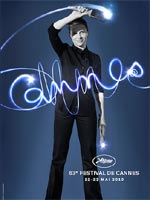 Those who were hoping that the promised additions to the Cannes Competition selection announced
 I think everyone who has seen Pixar’s
 LA Times music critic Todd Martens has posted a useful series of short interviews with the men behind some of the year’s most distinctive film scores. Indeed, it’s group of five names that isn’t too hard to imagine mirroring the year’s eventual Oscar slate:
 Some categories haven’t had that much renewal since I last reviewed them. Best Original Score is an exception. Principally, this is because the category is very difficult to judge before hearing the scores, not to mention last minute personnel changes (as composers always seem to be the most disposable members of film crews).
 You’d be hard pressed to disagree that Alexandre Desplat is pretty much at the top of the game in contemporary film scoring. In addition to his genius (