In Contention

Tag: The Usual Suspects

  • Pete Postlethwaite (1946-2011)

    Pete Postlethwaite had one of those faces — weathered, folded, kneaded, endlessly interesting — that demanded to be on camera, even as it denied him any possibility of leading man status.
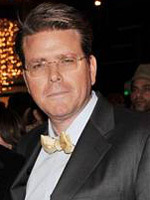
    And yet, in the latter half of his career, Postlethwaite, who sadly passed away yesterday after a lengthy battle with cancer, made a convincing case for the character actor as star. Neither his visage nor his gratifyingly alliterative name threatened more than a career as “that guy,” but somehow we got to know him better than that.

    The turning point, of course, was a hard-earned and wholly unexpected 1993 Academy Award nomination for “In the Name of the Father” (speaking as we were, recently, of nods that came without any precursor warning), his granite-hard and quietly mournful performance as Maguire Seven convict Giuseppe Conlon joining a gallery of performances I cited last year as one of the finest Oscar fields in history.

    (more…)

  • That dude who wrote ‘The Usual Suspects’ makes the rounds

    Christopher McQuarrieAlright, I’m only joshing Christopher McQuarrie with the “that dude” quip.  Count me in the “Usual Suspects” boat, a film I’ve been in the tank for ever since it sparked something in me 13 years ago (along with Michael Mann’s “Heat”).  Both movies played a serious part in forging the film lover before you.

    McQuarrie’s latest project is another Bryan Singer effort, the Tom Cruise starrer “Valkyrie.”  AP writer Jake Coyle cornered the scribe recently to discuss McQuarrie’s Oscar-winning work over a decade later as he and Singer make the press rounds on their somewhat under-reported reunion.

    In an interesting anecdote toward the end of the piece, McQuarrie notes that only after finishing production on “Suspects” did he and Singer realize they had completely different conceptions of the film’s narrative:

    “I pulled Bryan aside the night before press began and I said, ‘We need to get our stories straight because people are starting to ask what happened and what didn’t,’” recalls McQuarrie. “And we got into the biggest argument we’ve ever had in our lives.”

    He continues: “One of us believed that the story was all lies, peppered with little bits of the truth. And the other one believed it was all true, peppered with tiny, little lies. … We each thought we were making a movie that was completely different from what the other one thought.”

    So who believed what?

    With a broad grin, McQuarrie responds: “I’ll never tell.”

    Meanwhile, over at Cinematical, James Rocchi speaks with McQuarrie from New York concerning the project at hand, “working alongside the German government, how producing a mega-million [dollar] war film was like ‘drinking from a firehose,’ forgoing German accents, his possible future take on superheroic franchise ‘The Champions’ and much more.”  Listen to Rocchi’s podcast here.

  • Will BAFTA stick by their own?

    I have a bit of a love-hate relationship with the BAFTA Awards. On the one hand, they can be far more daring and playful in their choices than the American Academy — this is an organisation, after all, that has handed their Best Film award to such enduring works as “The Purple Rose of Cairo,” “GoodFellas” and “Lacombe, Lucien,” while nominating the Oscar-snubbed likes of “Eternal Sunshine of the Spotless Mind” and “The Usual Suspects.”

    Their technical awards are invariably more imaginatively awarded, too — take a look at their Best Film Editing category, for example, which in recent years has crowned “Eternal Sunshine,” “City of God” and “Mulholland Drive” as winners. And they can often be counted upon for gratifying upsets, as when Pedro Almodovar pushed past Sam Mendes for Best Director in 2000, or when “Trainspotting” blindsided “Sense and Sensibility” in the 1996 screenwriting race.

    For an awards show that fancies itself world-class, however, BAFTA can be infuriatingly parochial in their selections, stubbornly rewarding their own in the face of bigger, bolder competition. I doubt most of the voters could say with a straight face that “Four Weddings and a Funeral” was the very best film of 1994, nor “The Full Monty” of 1997, but they cleaned up nonetheless.

    For the last two years running, that kind of provincialism has ruled the voting, with this year’s awards looking particularly suspect. I think “Atonement” is a fine film, but handing it their top award seemed tokenistic at best, not least when the only other gong it took was for Best Art Direction.

    It’s a trend that Variety thinks could continue this year. In an article previewing the British contenders in the acting categories, they point out that Limeys have taken 16 acting BAFTAs in the last decade, compared to seven Oscars. Needless to say, they are frequently justified. It’s fair to say that this year, several British names will be cropping up in awards lists on either side of the Atlantic, and deservedly so — particularly in the Best Actress category, where thesps like Kristin Scott Thomas, Sally Hawkins and the ubiquitous Kate Winslet are all likely to figure.

    (more…)

  • THE LISTS: Top 20 movie endings of all time

    Anthony Perkins in PsychoAlright, this was painstaking indeed. After The Times of London saw fit to rock out a list of the 20 best movie endings of all time last week, I thought I’d try my own hand at such a collective.

    There are some omissions that might surprise some folks (“Bonnie and Clyde,” “The Graduate,” “Carrie”). At the same time, there are films that, on any other day, would easily slip into the list (“A Clockwork Orange,” “Once Upon a Time in the West,” “Reservoir Dogs”).

    Rest assured they were taken into account, but they didn’t speak to me on whatever levels must have been necessary to push into the top 20. But I can say these are the denouements that most affected me, be it viscerally or emotionally.

    Send in your picks for the top five movie endings of all time and I’ll publish a collective readers’ list in a few weeks. Email me or post your list below in the comments section.

    Here’s what I came up with:

    20. “The Iron Giant” (Brad Bird, 1999)
    “You stay. I go. No following.”
    Animation genius Brad Bird made his feature directorial debut with this effort, packing an emotional punch by film’s end with shades of “E.T.: The Extra-Terrestrial” — and an energizing final shot to boot.

    19.”Jacob’s Ladder” (Adrian Lyne, 1990)
    “He looks kind of peaceful, the guy.”
    Capping off one of the most bizarre cinematic visions ever captured (and, ultimately, quite underrated as well), this closing scene is a twist that has been lifted in various other forms ever since. (see next)

    18. “The Sixth Sense” (M. Night Shyamalan, 1999)
    “I think I’m okay, really. I think it just went in and out.”
    Hot prospect M. Night Shyamalan tainted the original power of the twist ending by attempting to make a career of it, but in the final moments of this early effort, his buried talent poked through the surface.

    17. “The Shawshank Redemption” (Frank Darabont, 1994)
    “Get busy livin’ or get busy dyin’. That’s God damn right.”
    Less a closing scene than a closing sequence, the entire third act of Frank Darabont’s Stephen King adaptation manhandles the heartstrings and lifts the spirit.

    16. “Se7en” (David Fincher, 1995)
    “John Doe has the upper hand.”
    Andrew Kevin Walker crafted a near masterpiece that culminates as perfectly as it could have, death and despair, ambition and art, plus a Hemingway rebuttal for the ages.

    15. “The Conversation” (Francis Ford Coppola, 1973)
    “We’ll be listening to you.”
    The calmly paranoid conclusion to a mind-bender from a mid-“Godfather” Francis Coppola, this finale put Gene Hackman in a position to give perhaps the greatest performance of his career.

    The full list after the jump!

    (more…)