
In Contention

Tag: The Time That Remains

  • IFC previews its wares

    Isabelle Huppert in White MaterialDo you live in New York? Lucky you. I say that for many reasons, but chief among them right now is that you can attend this weekend’s Focus on IFC Films mini-festival, in which the dedicated indie distributor previews a selection of their upcoming theatrical and VOD titles at Brooklyn’s BAMcinématek.

    I mention this principally as another excuse to plug my favorite film 0f 2009, Claire Denis’s “White Material.” IFC acquired U.S. rights to this staggering Isabelle Huppert-led study of post-colonial Africa last month, and will introduce it under their banner on Friday night.

    Other films in the lineup include Ken Loach’s “Looking for Eric,” which I reviewed upon its UK release last June, Ji-woon Kim’s batty Korean spaghetti western “The Good, The Bad, The Weird,” which I thoroughly enjoyed at the London fest in 2008, and Elia Suleiman’s “The Time That Remains,” which I briefly reviewed in October.

    (more…)

  • LONDON: ‘Micmacs,’ ‘The Time That Remains’

    Dany Boon in MicmacsI am presently seeing films at the London Film Festival at a greater pace than I can write them up — expect a round-up of curt (by my standards, at least) capsule reviews either later today or tomorrow.

    Some films, however, demand to be reviewed in pairs, as is the case with Jean-Pierre Jeunet’s latest, the frothy action caper “Micmacs,” and Elia Suleiman’s rather more subdued Cannes entry “The Time That Remains,” which I saw this afternoon and yesterday respectively — two polar-opposite films that nonetheless both blend naive physical comedy with a political agenda, to very different tonal effect.

    “Micmacs” (**)

    As a filmgoer, few things are as dispiriting as the sensation that everyone on screen is having more fun than you — and not being able to join in. Such, I regret to inform, was my experience watching the latest eccentricity from Jean-Pierre Jeunet (“Amélie,” “Delicatessen”), which floods the screen with inventiveness, enthusiasm and his trademark sepia-stylized visuals — special kudos to Aline Bonetto’s production design — but is so claustrophobic, and so convinced of its own charms, that the narrative is lost somewhere in the bustle.

    (more…)

  • What will take the Palme d’Or?

    Abbie Cornish and Ben Whishaw in Bright Star It’s all over bar the voting. Tomorrow, Cannes jury president Isabelle Huppert will meet with her formidable, female-dominated team of eight – including the diverse likes of Robin Wright Penn, Asia Argento, James Gray and Hanif Kureishi – to pick over the 20 Competition titles they have seen over the last fortnight and select their collective favorites.
    As I’ve said before, the most surprising thing a Cannes jury can do is not to surprise: to hand the Palme d’Or to the critical and/or popular favorite. It can happen, of course – critics and pundits alike called it for “4 Months, 3 Weeks and 2 Days” the day it screened in 2007, and were proved right – but the list of upsets is long and illustrious.

    As you’ve probably heard by now, if the bookies have their way, French auteur Jacques Audiard will be brandishing the Palme this time tomorrow, his prison drama “A Prophet” having wowed critics and audiences across the Croisette. I’ll be delighted if he does, but I’ve questioned whether a French production can win two years running, after a two-decade drought to boot.

    Of course, such streaks aren’t unheard of: the U.S. held onto the Palme for three years between 1989 and 1991. Other questions running through my mind are whether Frenchwoman Huppert might want to avoid making the festival too much of a local affair, and whether Audiard’s all-male film will resonate as strongly with a mostly female jury.

    If not, there are a number of alternatives. By my count there are six titles seriously in the hunt for top honors. Michael Haneke’s “The White Ribbon” is fancied by many to finally land the director the top prize. Earlier today, the film made its presence felt by claiming the FIPRESCI critics’ prize for best in show, though it should be noted that the jury’s and FIPRESCI’s choices have only lined up three times this decade.

    (More speculation, and my final predictions, after the cut.)

    (more…)

  • Final Cannes contenders unveiled

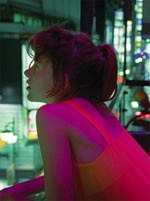
    Paz de la Huerta in Enter the VoidThat’s it — all 20 Palme d’Or contenders have now screened for critics, and the final deliberations can begin. Most of the media attention in the past two days has focused on Gaspar Noé’s new film “Enter the Void,” though it hasn’t aroused anything like the firestorm of controversy that his “Irréversible” did in 2002. (Perhaps the media simply hasn’t the energy for a fight after “Antichrist.”)

    Although reportedly as violent and sexually explicit as one would expect from Noé, the film, which screened at the Croisette in still-unfinished form, seems to have prompted more confusion than outrage from the press. The critical response, meanwhile, is more positive than might have been expected. Manohla Dargis leads the cheer team for the film:

    An exceptional work, though less because of its story, acting or any of the usual critical markers. What largely distinguishes it, beyond the stunning cinematography, is that this is the work of an artist who’s trying to show us something we haven’t seen before, even while he liberally samples images and ideas from Stanley Kubrick and the entirety of American avant-garde cinema. The grungy milieu and calculated shocks might have been designed to make you flee – even while your attention is tethered to the camera – but, really, these aren’t the point. The point is the filmmaking.

    ScreenDaily’s Mike Goodridge is somewhat awed, describing the film as “a wild, hallucinatory mindfuck” that is “nothing short of hypnotic,” even suggesting the film as a future staple for narcotic-fuelled viewings — though like Dargis, he dismisses the characterisation and narrative as being of secondary quality and importance. Variety is less forgiving, labelling the film “tiresomely gimmicky” and implying it is less “pure cinema” than “pure trash.”

    (more…)

  • Cannes: sizing up the Competition, part two

    Charlotte Gainsbourg in AntichristContinuing yesterday’s survey of the runners and riders in the race for the Palme d’Or…

    “ANTICHRIST” (Lars Von Trier)

    The pitch: You’ve seen the trailer. Charlotte Gainsbourg and Willem Dafoe star as bereaved parents who retreat to a remote woodland cottage to nurse their grief, only to be terrorised by unnamed forces of evil. (English dialogue)

    The history: Over his seven previous Competition appearances, Von Trier has enjoyed a gradual ascent from the Technical Grand Prize for 1984’s “Element of Crime,” to the Jury Prize for 1991’s “Europa,” to the Grand Prix for 1996’s “Breaking the Waves” (1996) to, at last, the Palme d’Or for 2000’s “Dancer in the Dark.” Nothing since then, however, with his masterful “Dogville” coming up surprisingly (and undeservingly) empty-handed.

    The outlook: The film may appear to be familiar (albeit bloody terrifying) horror fare in the trailer, but we should know by now never to presume what a maverick like Von Trier has up his sleeve. Cannes is usually averse to the genre, so whether the film made the lineup because it’s something more subversive, or simply because it’s directed by one of their favourite sons, remains to be seen. Either way, the film will need to be something special to get Von Trier back in the winner’s circle – after all, “Dancer in the Dark” proved so polarising, juries have been unwilling to take a chance on him since. He tends to put his actresses through the wringer, so perhaps there’s a chance for Charlotte Gainsbourg here – but who knows?

    “SPRING FEVER” (Lou Ye)

    The pitch: Erotic drama follows a young man hired to survey a married man’s homosexual affair; tangled relationships ensue as the spy and his girlfriend become sexually drawn to the adulterous couple. (Mandarin dialogue)

    The history: Not counting an unfortunate 2006 withdrawal after his “Summer Palace” fell foul of Chinese censors, this is Lou’s second Competition appearance.

    The outlook: There is a great deal of goodwill in the world-cinema fraternity for Lou, who has fought a continuous battle with the Chinese censorship board. His last film, the politically charged “Summer Palace,” resulted in the director receiving a five-year ban from filmmaking – a ruling Lou is flagrantly flouting by screening his new film (which was shot in secret on handheld cameras) at this year’s festival. It’s a courageous move, and I think there’s a strong chance the jury might like to demonstrate their support for the embattled auteur with a prize of some variety.

    (more…)