
In Contention

Tag: Philippe Claudel

  • 12/13 Oscarweb Round-up

    Michelle Williams in Wendy and Lucy• Rod Lurie wants to steer comparisons of “Nothing But the Truth” away from Judith Miller, evokes Susan McDougal. [Los Angeles Times]

    • The company behind releasing his film, meanwhile, goes into chapter 11. [Variety]

    • Is the Academy ready to award digital performances? [Variety]

    • Sasha Stone spotlights the seasons actor reunions. [Awards Daily]

    • 10 best Christmas bits from non-Christmas movies. [Cinema Blend]

    • Theater (er, theatre) chains across the pond plan to invest in digital technology to capitalize on upcoming releases from Steven Spielberg and James Cameron. [Daily Telegraph]

    • Iranians don’t seem to understand the correllation of the Ayatollah in Darren Aronofsky’s “The Wrestler” to The Iron Shiek of 20 years ago. [Daily Telegraph]

    • Gaby Wood talks to “Revolutionary Road” helmer Sam Mendes. [The Guardian]

    • Clint Eastwood digs into his star and its purpose with Bruce Headlam. [New York Times]

    • Mark Olsen chats with Kelly Reichardt and Michelle Williams about “Wendy and Lucy.” [Los Angeles Times]

    • Kind of difficult not to take stabs at Fox lately. [The Big Picture]

    • Erica Abeel talks “I’ve Loved You So Long” with director Philippe Claudel. [indieWIRE]

    • A couple of talking points with John {atrick Shanley, Meryl Streep and Viola Davis on “Doubt.” [Newsweek]
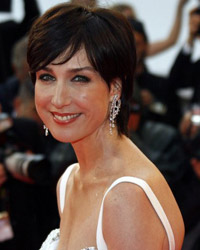
  • INTERVIEW: Elsa Zylberstein

    Elsa ZylbersteinThough still in her 30s, Elsa Zylberstein’s career has been so rich and multi-stranded — in addition to two decades of screen performances, she has also worn the hats of a classical dancer and a United Nations Goodwill Ambassador in the past — that it’s odd to think she is only now achieving Stateside recognition for a role in one very modest film.
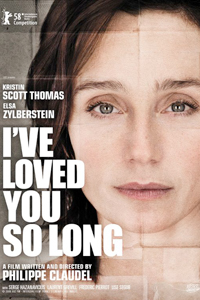
    Or it would be, at least, were that film not “I’ve Loved You So Long,” Philippe Claudel’s searing, critically acclaimed study of lives undone by grief and separation.  The film has quietly emerged as one of the most memorable entries in another banner year for French cinema. You have no doubt heard the well-deserved buzz for star Kristin Scott Thomas, but she’s not the film’s only name generating whispers in awards circles.

    As Thomas’ onscreen sister, a seemingly grounded wife and mother whose carefully organized sense of self begins to collapse as she is confronted directly with her past, Zylberstein’s delicate, empathetic portrayal is a dark horse to watch in the Best Supporting Actress race. The term “supporting,” however, isn’t entirely accurate.  Not unlike the season’s other highly-praised story of sisterly reunion, “Rachel Getting Married,” the film sees two sterling actresses supporting each other, each playing impeccably off the other’s gestures and silences.

    For Zylberstein, it marks the clear high point of an already-fascinating career, and she doesn’t mind admitting that she’s been taken happily off-guard by the response to the film.

    “It’s just exploded,” she enthuses down the phone line, in her limber, beguilingly accented English. “Nothing like this was meant to happen, was it? I mean, it’s just this tiny little film. And now… bang! I’ve just been in London, and I’m now I’m going to L.A. tomorrow, and people there know the film. And they know me in it. I’m just, like, what?”

    She laughs, as do I: her giddiness is infectious. I’ve caught her at her Paris home, relaxing for a few moments just before she heads off to her father’s birthday party.  (“I got him an iPhone.  You do think that’s a good idea, right?” she sidetracks, as if I was one of her oldest friends.)

    (more…)

  • Best Original Screenplay: beyond the obvious

    Everyone has a favourite Oscar category, and Best Original Screenplay is mine. It’s partly because I’m a screenwriter myself, so I feel a little more invested in the outcome. My evaluation of the category often comes down to the question: “Which screenplay do I most wish I’d written first?”
    More importantly, however, it’s the category where the Academy takes its greatest artistic risks. With the Best Picture category generally weighted towards adaptations, they often use Best Original Screenplay as a way to acknowledge the edgier, more adventurous work that voters can see the greatness of, but don’t yet have the guts to honour with their biggest prize. Hell, once in a blue moon they even give it to (gasp) a foreign-language film.

    It’s this convenient ghettoising mentality that ensures the likes of “Citizen Kane,” “The Red Balloon,” “Chinatown,” “Pulp Fiction,” “Talk to Her” and “Eternal Sunshine of the Spotless Mind” don’t go empty-handed. Sure, it sucks that they couldn’t win more. And, being the Academy, they make more than their share of screw-ups. (Let’s try and forget that, in 1960, “Pillow Talk” beat — wait for it — “Wild Strawberries,” “North by Northwest” and “The 400 Blows,” shall we?) But they occasionally hit on an otherwise-snubbed masterpiece, and for that we should be grateful.

    This year’s Best Picture slate appears to be heavy on prestige adaptations, allowing for a more idiosyncratic ragbag of contenders on the Original Screenplay front, mixing familiar Academy-anointed favourites with some exciting new voices.

    There is, of course, a chance this could be a year when the paths of the Best Picture and Best Original Screenplay races converge, principally in the shape of “Milk” scribe Dustin Lance Black. Already high hopes for “Milk” were amplified by an excellent trailer, and a number of Oscar clairvoyants are labelling it the front-runner in the top race. If this turns out to be the case, Black will likely benefit.

    (more…)

  • REVIEW: “I’ve Loved You So Long” (****)

    Sony Pictures Classics' I've Loved You So LongA quietly extraordinary debut from French novelist and screenwriter Philippe Claudel, “I’ve Loved You So Long” interweaves so many narrative strands familiar from various other domestic dramas it’s hard to believe this particular story hasn’t been told on screen before.

    Yet these elements — sisterly estrangement, parental insecurity and the social rehabilitation of a chronic introvert among them — have been assembled here with such authorial dexterity, emotional immediacy and narrative audacity that the resulting film feels at once inventive and essential. This is that rarest of things in contemporary cinema: a story that needed to be told.

    It seems perverse, then, that I am unable to furnish this review with anything more than the most fundamental aspects of said story. But to do otherwise would detract both from the delicacy and patience with which Claudel unfurls his narrative, and the visceral emotional response felt by the viewer upon each successive revelation. (In my opinion, some readers may indeed have learned too much already from reading certain gauche reviews.)

    Claudel’s storytelling accumulates information on a strictly need-to-know basis, forming a structural house of cards in which each plot point fragilely supports the next — until, in the film’s very last reel, the intricate system of withheld knowledge can no longer sustain itself, and the protagonist’s staggering truth emerges.

    (more…)